
Fitness Center Roofing in Escondido, CA
Property Types We Roof · Escondido, CA
A drip above a fitness floor can force an immediate class change. The repair plan should protect members and keep staff informed. Commercial Roofers Escondido reviews the roof surface, penetrations, exhaust equipment, and drainage before setting work areas. Downtown and East Valley Parkway are commercial areas with different surrounding uses and circulation. Neither district establishes a gym’s entrance or parking rules. The operator should confirm those details for the specific property. Confirm class times, peak periods, locker access, and member notices with the operator before opening a roof area. We map roof zones against activities below and identify interior protection and daily closeout steps. The scope should also name who approves shutdowns for fans or other equipment. A clear sequence helps the owner compare repair and replacement while members continue using unaffected areas.
Classes, members, and entry routes
Start with the operating calendar. Identify group classes, personal-training sessions, youth programs, special events, and peak member periods. Map the main entry, accessible routes, emergency exits, loading area, and staff-only doors. The facility manager should show where deliveries can stage without blocking arrivals. If an area must close, agree on the notice, alternate route, and reopening check.
Noise may carry across a large fitness room. Schedule cutting, fastening, and equipment movement around agreed hours. Do not assume a quiet room sits below a quiet roof area. Coordinate with the operator before opening any section over active space. If a class must relocate, the gym sets that decision and communicates it to members.
Where fitness tenants share retail space, a shopping-center roof scope also needs separate tenant entries and delivery paths. A school roof project can require similar separation of work zones and pedestrian routes, while the operator sets each facility’s schedule.
Roof details above activity areas
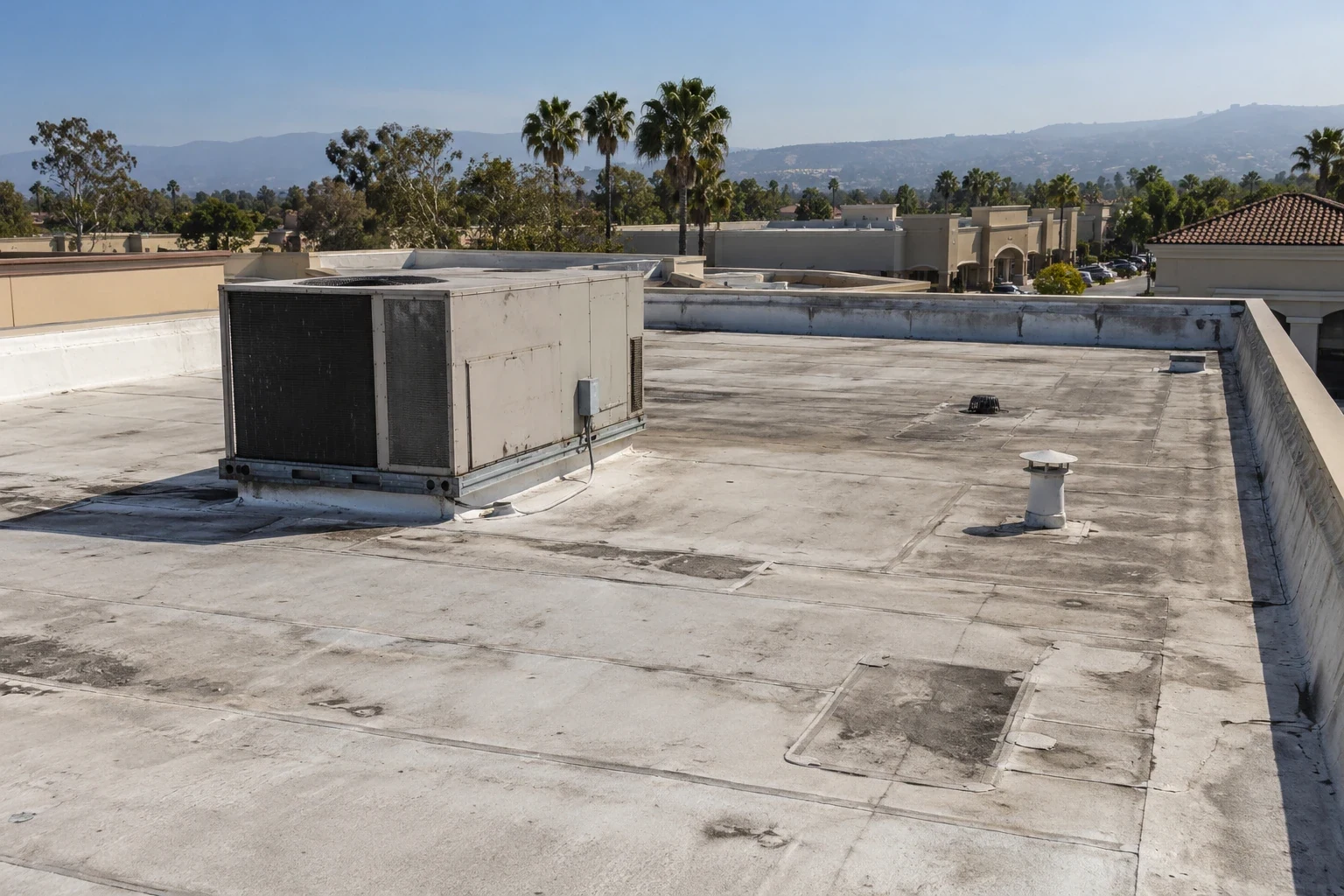
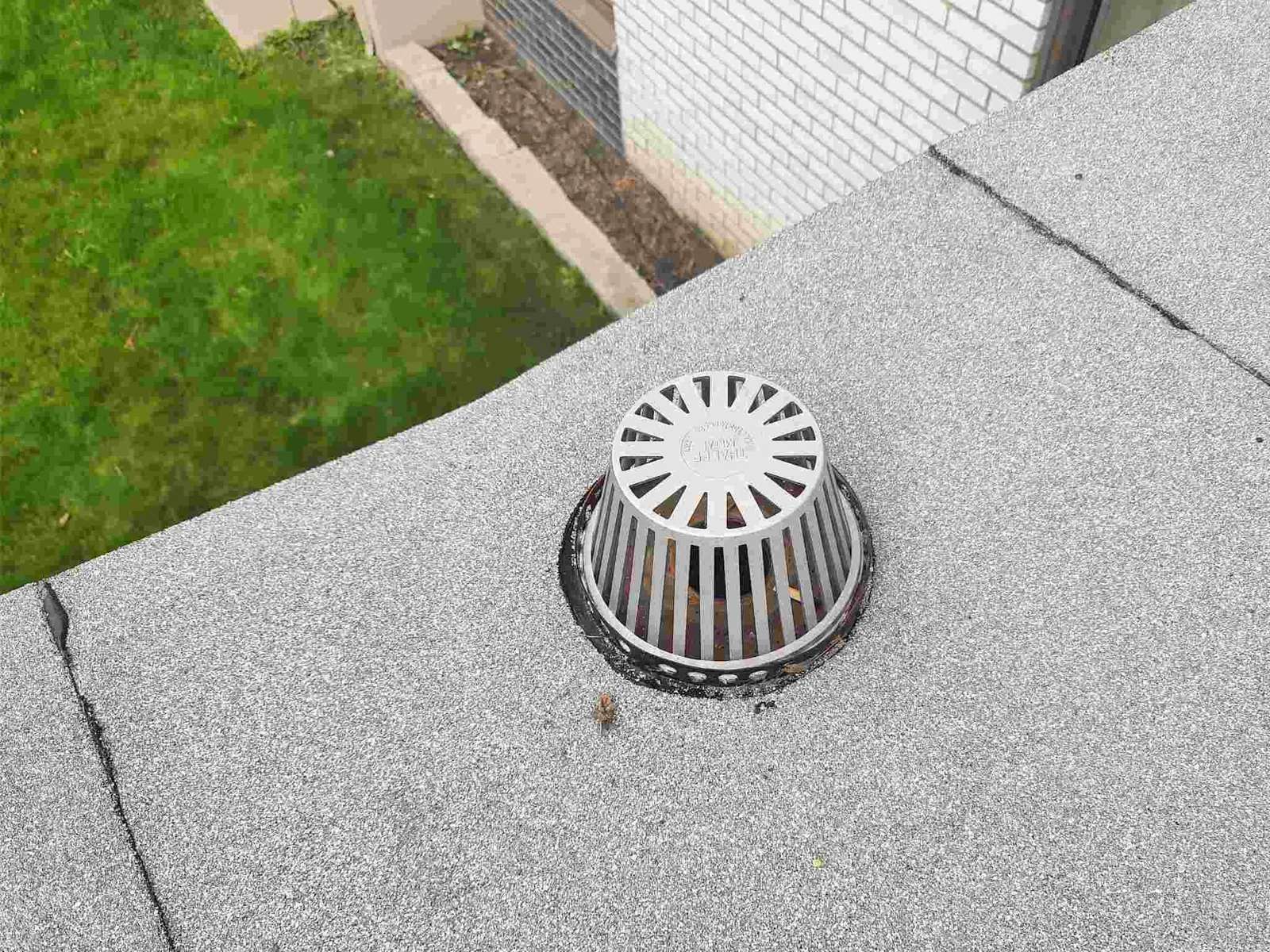
Trace a reported drip to the roof area above, then inspect seams, flashings, vents, curbs, drains, and prior patches. Record whether the leak is active and whether nearby insulation feels wet or has changed. Roof moisture can travel before it appears indoors. Mark the observation and identify where further testing is required rather than widening the repair by guesswork.
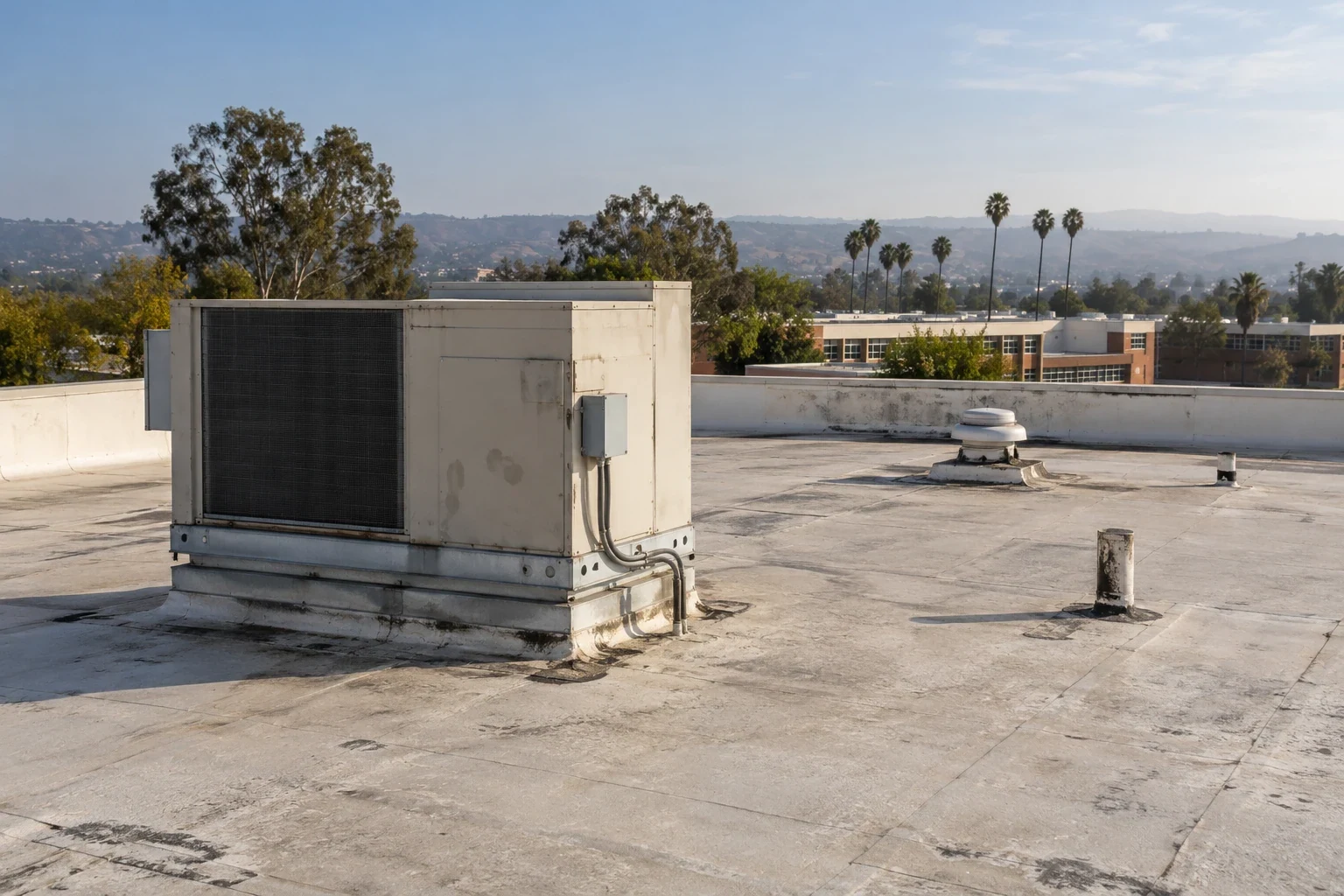
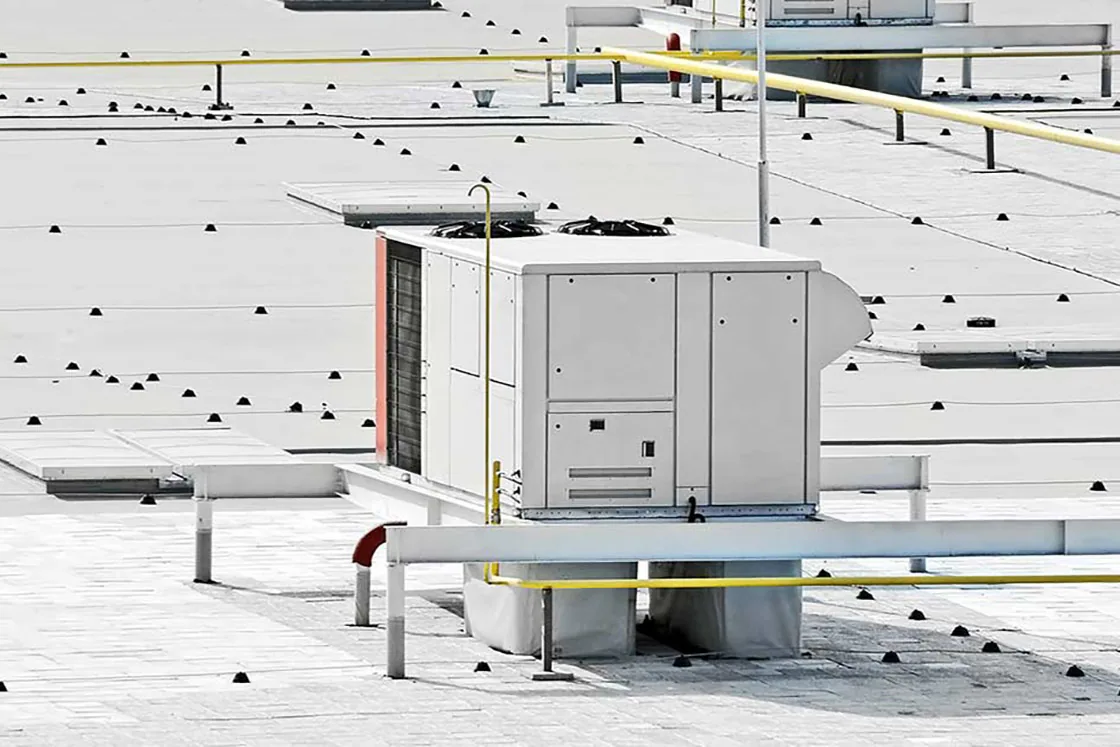
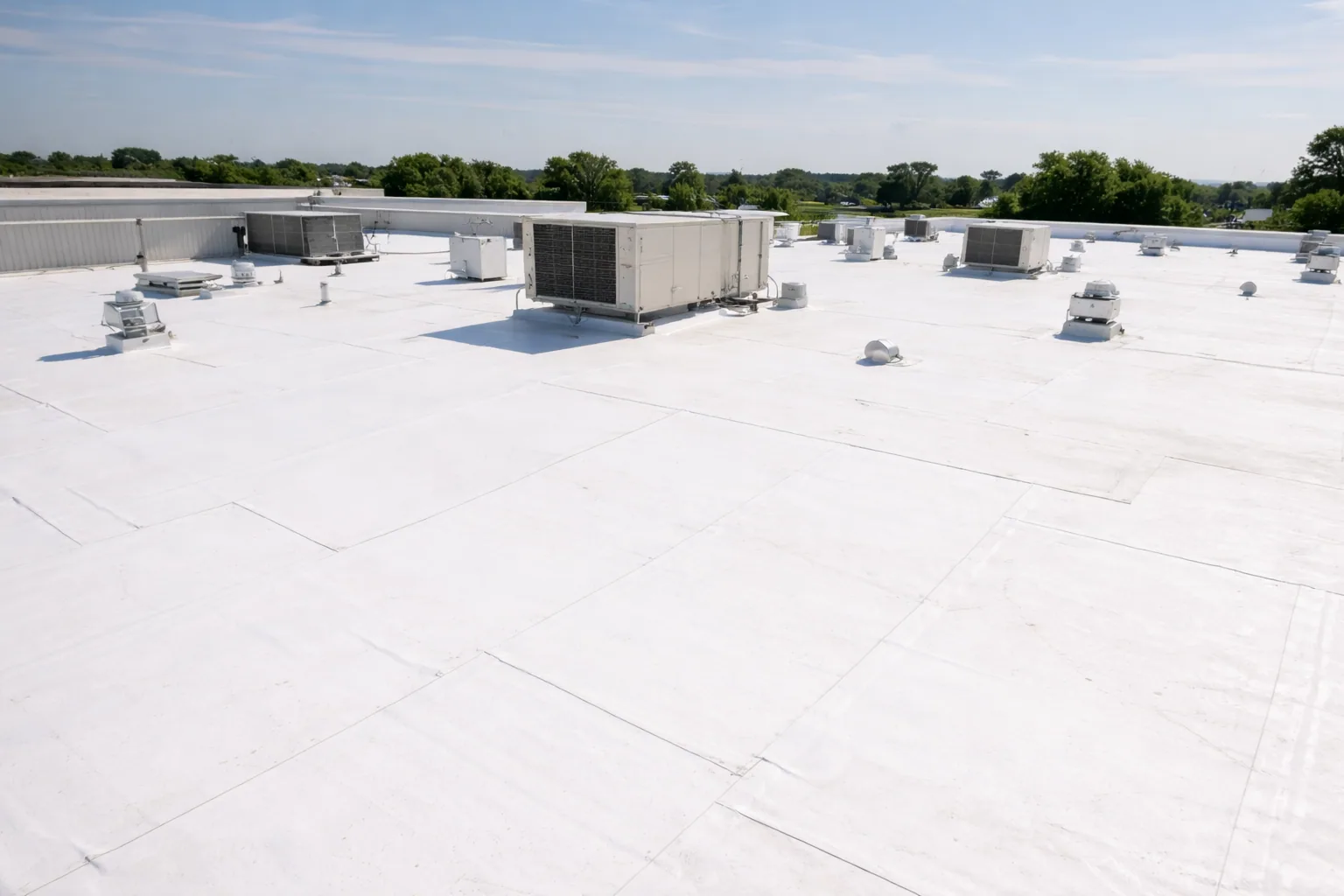
Fitness spaces may have exhaust fans, make-up air equipment, skylights, and plumbing penetrations. Confirm which units need to keep running during business hours. The facility’s mechanical contractor should handle shutdowns and reconnection unless the contract assigns another party. A curb and support review can clarify roof-side responsibilities around equipment. Where specified, a TPO system must follow approved assembly details and project requirements.
Santa Ana winds can bring dry, warm or hot conditions through Southern California from September into May. After a reported wind event, we record the actual condition of edges, terminations, and exposed flashings. The seasonal pattern does not forecast damage at a particular gym. Follow current site direction and secure loose rooftop material as required.
Locker rooms and interior protection
Locker rooms, showers, and indoor pools if present can create moisture conditions that differ from the main training floor. The operator should point out ceiling spaces, finishes, electronics, storage, and rooms needing protection. Do not assume condensation is a roof leak or dismiss a leak as humidity without inspection. Record the location, timing, ventilation status, and roof conditions above.
Set interior covers, water collection, staff access, and cleanup responsibility before opening the roof. For a multi-zone facility, keep work limits small enough for daily dry-in. State how a hidden deck defect is documented and approved. A roof inspection can define repair areas, while a drainage review checks low points and overflow routes.
If water reaches electrical or mechanical equipment, the facility team controls the response and shutdown. Identify who receives immediate notice and what access route crews may use. The contractor should not enter a restricted room or move equipment without approval. Locker-room exhaust and outside-air intakes may sit near roof penetrations. Identify those openings, airflow direction, and any room that cannot tolerate adhesive odor or dust. The operator should coordinate ventilation changes with its mechanical contractor, then verify normal operation before reopening an affected area.
Phased work and daily dry-in
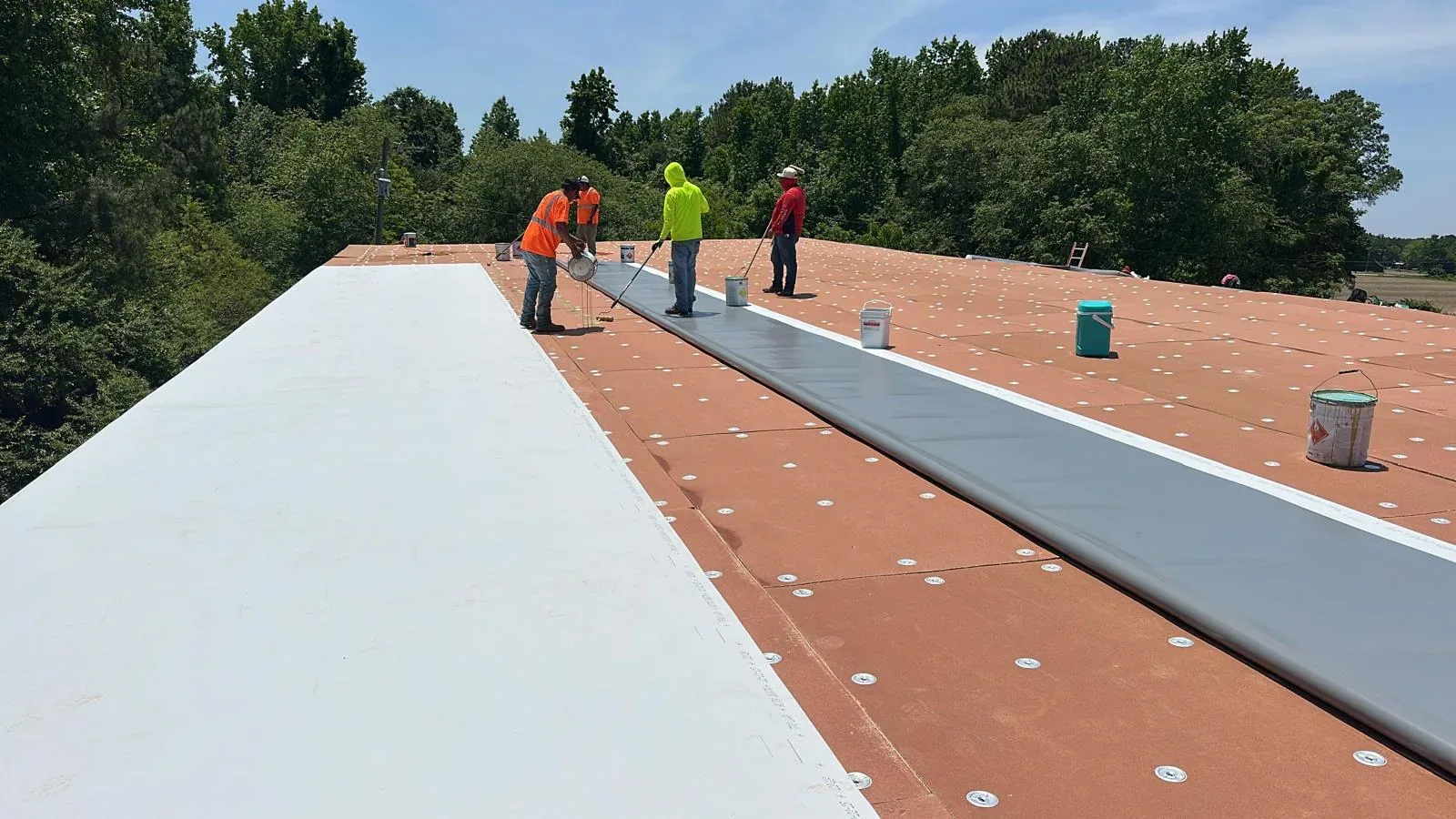
Each work phase needs a roof boundary, planned duration, access path, and end-of-shift inspection. List lift positions, delivery windows, debris handling, and areas kept open for members. If a roof section depends on fan shutdown, coordinate that window before work starts. A delay should trigger a revised zone plan rather than an oversized opening.
At a fitness property near Downtown Escondido, confirm delivery and staging with the facility manager. Public-street conditions can differ from the private loading route, so the roof plan must show the actual approach, lift position, and member entrances. A Downtown Escondido area review starts with location, then verifies access at the building.
Secure rolls, insulation, adhesives, and temporary coverings according to product instructions and site rules. Agree on weather triggers, opening limits, and who can pause work. Keep exits and fire lanes clear. A replacement proposal should include the dry-in approach and any deck allowance, not only the new roof membrane.
Operator notices and maintenance handoff
Before bidding, request roof drawings, leak history, equipment lists, class calendars, access rules, and the facility contact roster. Identify rooms that cannot be disturbed, any recurring shutdown window, and the location of staff communication boards. Ask who may release each room after protection comes down. That prevents a temporary barrier from remaining after the roof crew leaves. Separate base work, concealed repairs, mechanical coordination, drainage corrections, and optional upgrades. State how staff approve a changed sequence. The operator should identify who can notify members if work timing changes.
During installation, provide short look-ahead notices that name the roof zone, dates, noise, delivery, and member-access impact. Keep dated photos, marked plans, daily reports, inspections, and approved changes. Closeout should identify completed areas, system data, remaining observations, and roof-access instructions. A maintenance visit can monitor drains, seams, and equipment flashings after handoff. Keep that approval path with the roof-zone schedule and daily closeout record.
Arrange an inspection with the operator, roof plan, activity calendar, equipment details, and access requirements available. We will document the roof and identify which areas need repair, testing, or broader work. The general contractor can then schedule around actual classes instead of assuming a standard business day. Assign one staff contact to approve revised class notices if weather or a concealed repair extends the shift.
Frequently Asked Questions
Can roof repair happen during fitness classes?
It can when the operator approves work hours, noise limits, roof zones, and member routes. Some loud tasks may require a class pause or relocation. Include those windows in the schedule before crews mobilize.
How should a gym handle a drip over the fitness floor?
Staff should cover or close the affected floor area, alert the facility contact, and log when water appears. A roof inspection can trace the source and set the repair limit. Do not assume the visible stain marks the entry point.
Who handles rooftop fan shutdowns during reroofing?
Name the responsible mechanical trade and facility contact before work. Confirm shutdown duration, restart checks, and any room affected. The roofing scope should identify the flashing or curb work at each unit.
Could locker-room humidity be mistaken for a leak?
Locker-room moisture can be one possibility, but inspection should also test roof and interior evidence. Note ventilation, timing, weather, stains, and roof details above. Keep a condensation finding separate from a confirmed roof opening.
What should be included in a fitness center roof bid?
List roof areas, assembly, repair limits, dry-in, equipment interfaces, drainage, access, noise windows, exclusions, and concealed-condition approvals. Separate work that requires another trade so the owner can compare proposals accurately.
Schedule Around Members and Equipment
Arrange a review with roof plans, leak history, class hours, equipment details, and access rules available. We will document conditions and outline work zones for the facility team.
Call 555-555-5555 or email [email protected].