
GAF Commercial Roofing Systems in Escondido, CA
Roofing Manufacturers · Escondido, CA
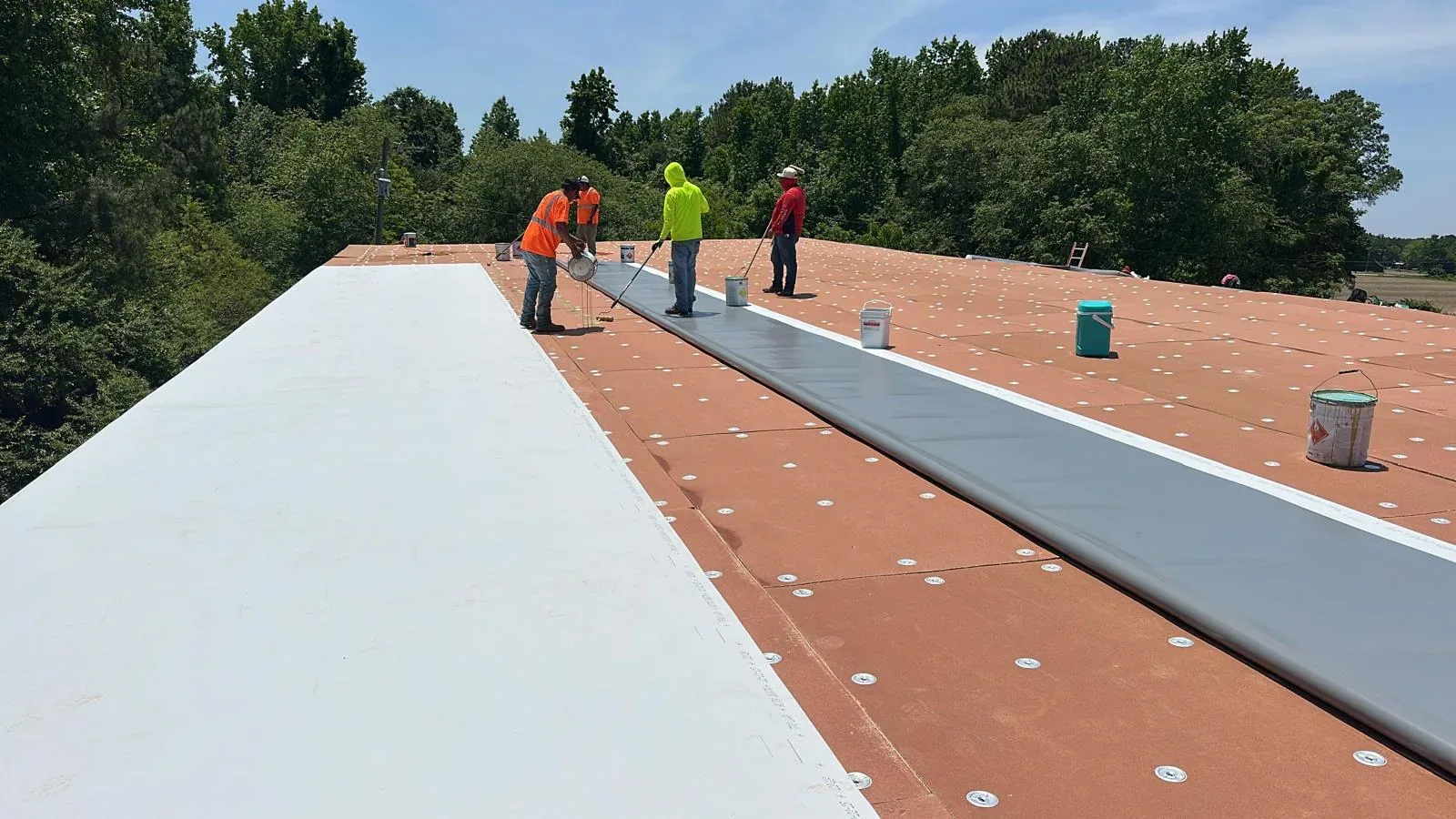
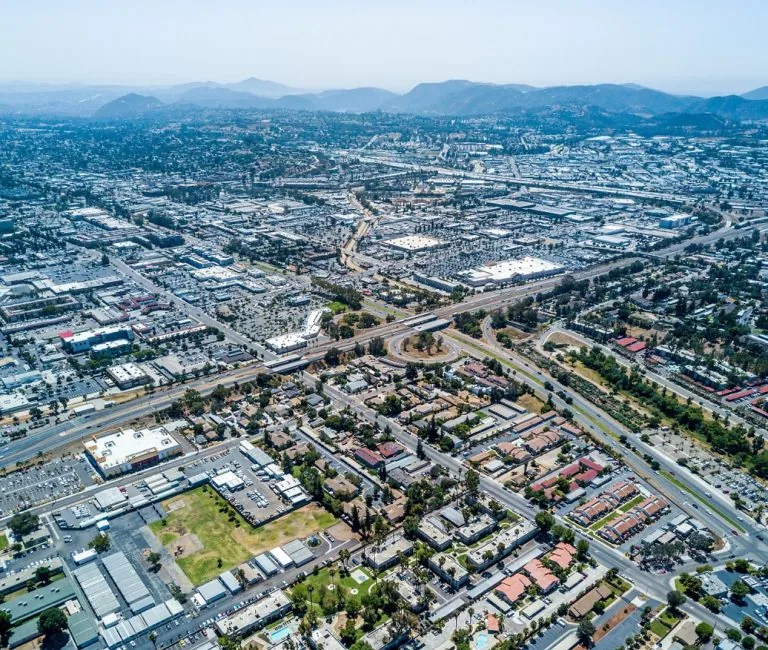
A GAF label narrows the product search, not the repair scope. We confirm membrane, attachment, seam condition, and roof layers before setting limits. Escondido's designated employment acreage supports research, production, offices, professional services, and shopping. A GAF reroof at a plant can face different equipment and access sequencing than one at a retail building. Those roofs can have different equipment, access, and interior schedules. We inspect the field sheet, perimeter, flashing, and drainage path before choosing repair, recover review, or replacement. Findings are mapped by zone, with testing needs marked separately.
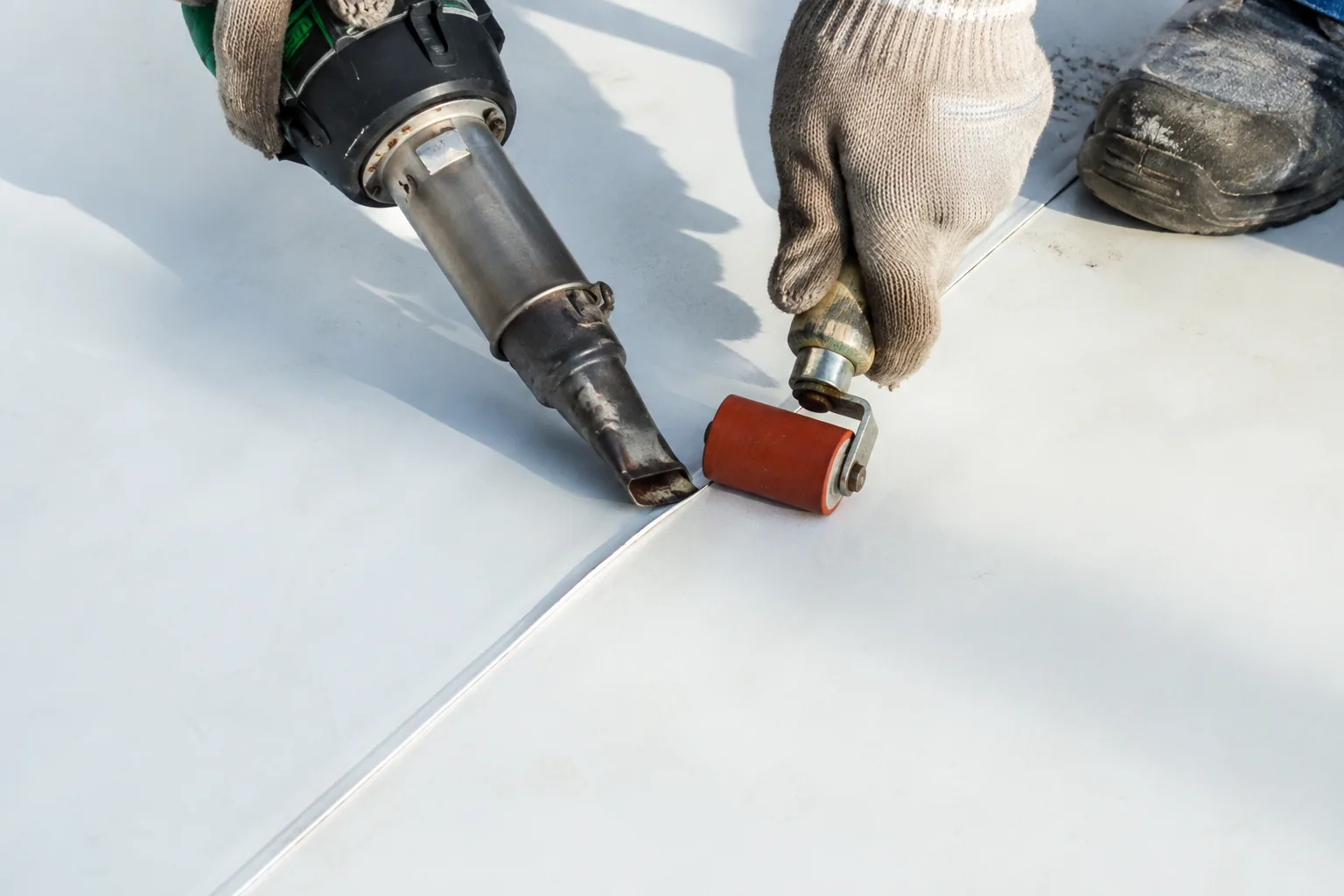
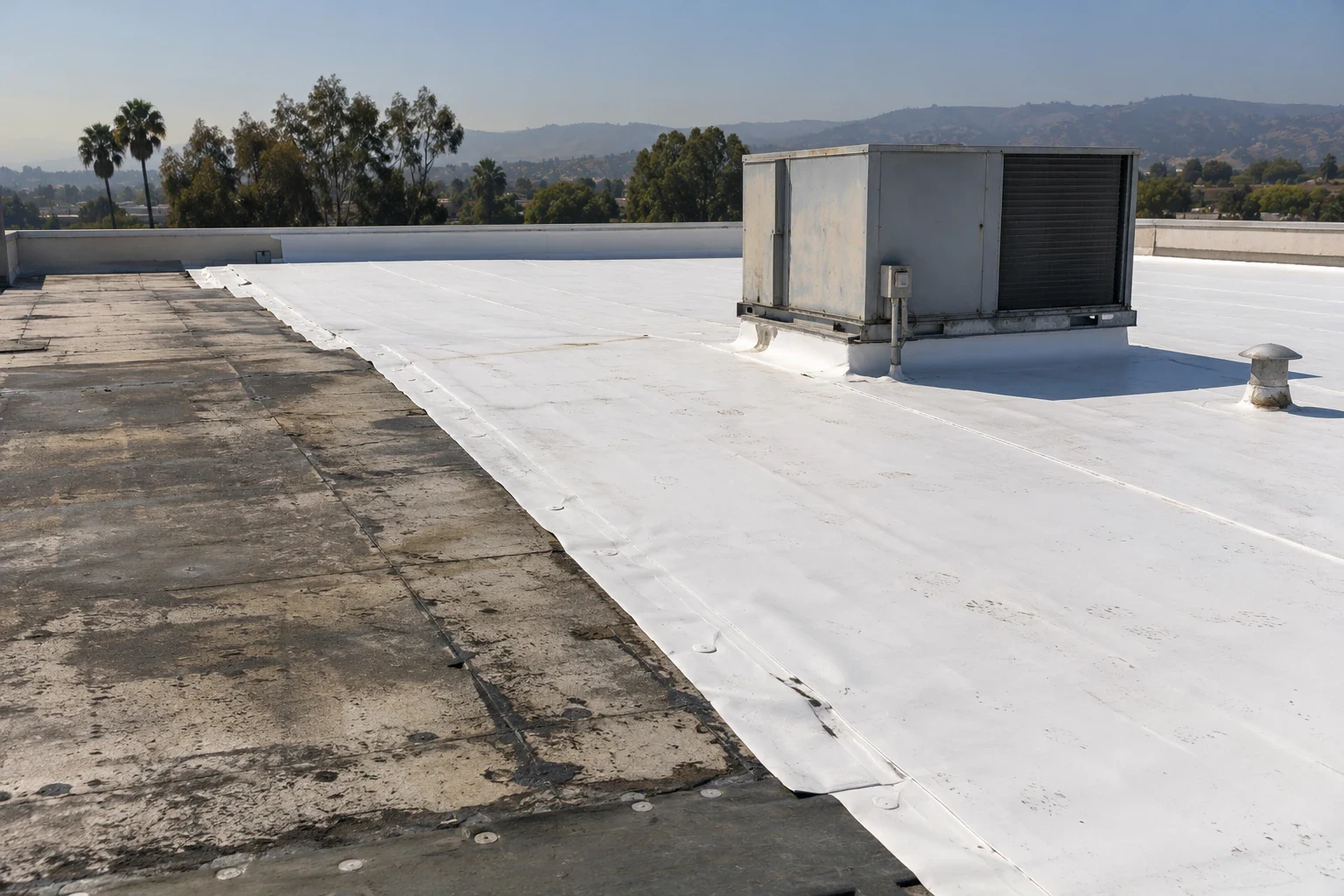
If the roof record identifies TPO, its heat-welded laps depend on clean surfaces, sound welds, and stable support below the overlap. Product names can differ across older installations. We check the label and assembly rather than assume a roof matches today's catalog. Material selection stays tied to what is installed.
Membrane and assembly
A roof record may name the membrane but omit its lower layers. We check edges, penetrations, drain bowls, and prior repairs for clues. Insulation, cover board, vapor control, and deck all affect a recover. Fastener plates or adhesive patterns can help identify attachment. Where records differ from field conditions, we note the gap before writing a specification.
TPO sheets may be smooth or fleece-backed, with attachment selected for the approved assembly. Design still depends on substrate, perimeter details, fire and wind requirements, and project specifications. The TPO membrane characteristics matter at seams and flashings; a PVC system uses its own material and welding details. Between September and May, Santa Ana winds often bring dry air west through the passes, sometimes warm or hot. Before heat welding a TPO sheet, we verify the day's surface and wind conditions, then secure sheet edges in the work zone.
Welds, curbs, and perimeters
Heat-welded seams need steady contact across their width. Dirt, wrinkles, incompatible patches, or a poor weld can interrupt that bond. We probe representative laps and compare them with the reported leak. The scope states how much sheet will be removed, where new material ties in, and how the finished weld will be checked.
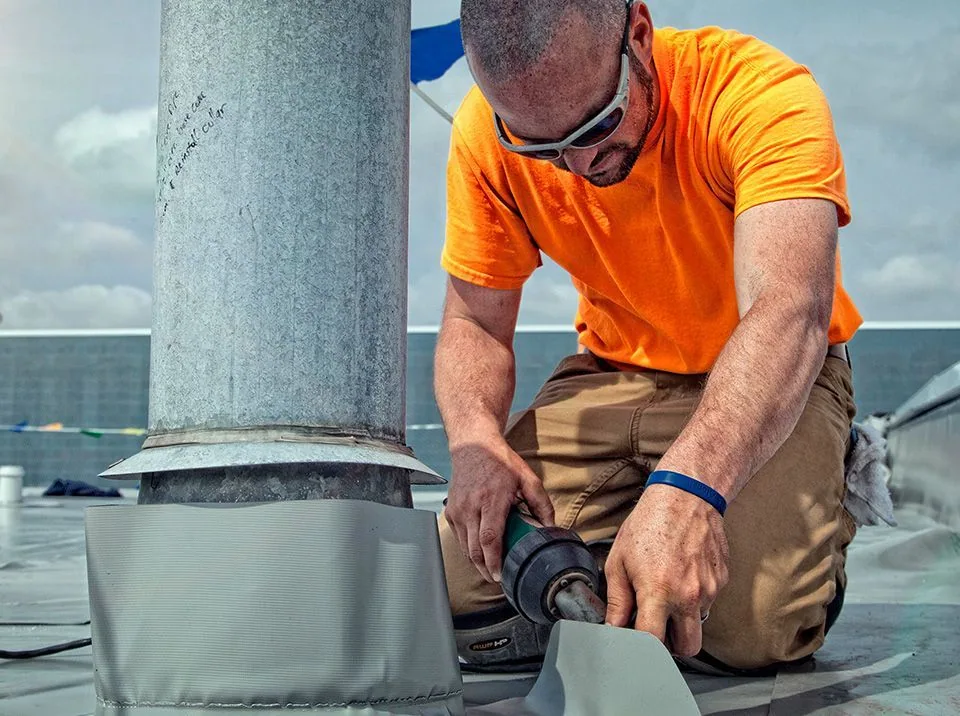
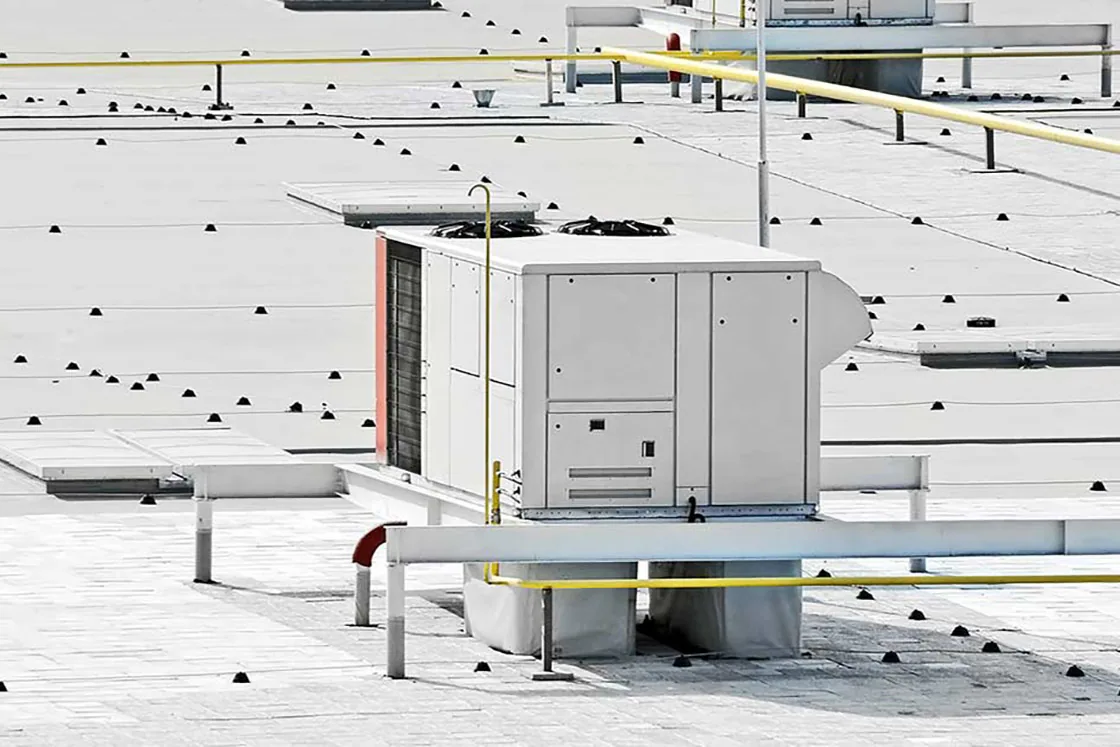
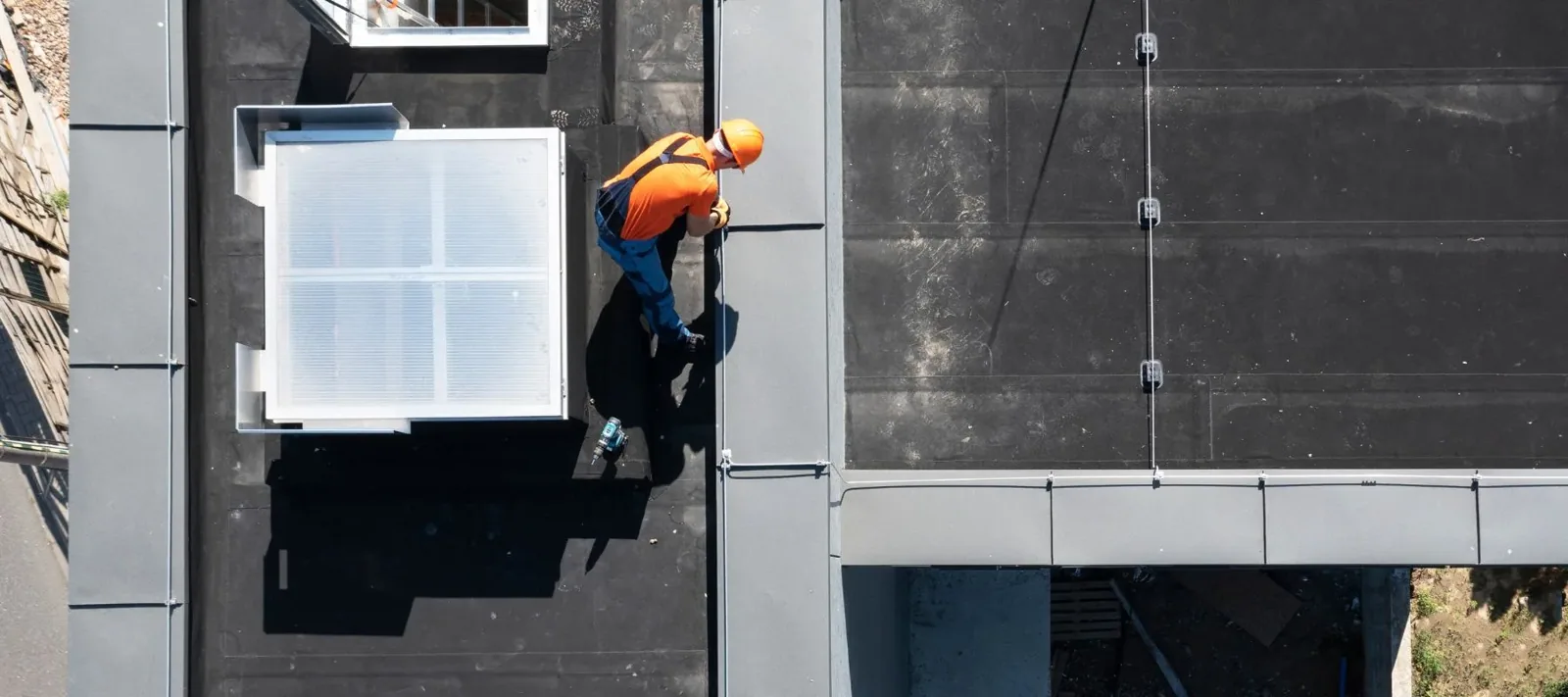
At curbs and pipes, we inspect corners, boots, sealant, and counterflashing. Equipment changes can leave unused supports or rough openings. The closure must suit the roof layer. Where equipment curb work involves other trades, the work sequence assigns disconnect, lift, flashing, and reset steps. Perimeter cleats, fasteners, splice plates, and the membrane transition need the same close review. Harmony Grove Industrial Park follows the Citracado Parkway stretch between Auto Park Way and Avenida del Diablo. A Harmony Grove access review still starts with the building's loading, staging, and roof-entry conditions.
Patch, recover, or replace
A seam opening can take a local repair when nearby sheet, attachment, and insulation remain suitable. We remove unsound material, prepare the surface, and restore a compatible weld. Repeated openings, broad moisture, loose attachment, or damaged deck can change the decision. We map each condition by zone, then separate confirmed work from testing or concealed risk.
A recover needs a stable, sufficiently dry base and workable drainage. Added layers can affect edge height, drains, curbs, and wall transitions. If removal is more appropriate, the scope identifies insulation, cover board, attachment, flashing, and perimeter securement. A recover review answers a different assembly question than replacement. The owner's budget window matters too. We state the documented finding and the trigger for the next phase. A photo condition record helps compare work limits by zone.
Work window and access plan
Weld work needs a dry surface and enough time to close the day's tie-in. We confirm roof entry, lift placement, staging, and material movement before scheduling. Interior use below may require protection or a brief restriction. The general contractor can share operating hours, equipment schedules, and nearby trade work. Those details shape the roof-zone sequence and access plan.
Along the Centre City Parkway Commercial Corridor, a GAF project may involve retail and office tenants sharing loading lanes. We ask the property contact to set delivery timing and roof-entry rules for the actual building. For a GAF project, the site contact sets a loading window that fits deliveries, tenant access, and the work area's separation from public entrances. For active water entry, report the roof zone, interior condition, and access limits so intake can confirm availability before a visit. Temporary protection gets a stated limit and return plan. Weather, supply, deck findings, and equipment coordination can also change timing, so the proposal names approval steps before concealed work expands.
Product records and project fit
Bring roof plans, repair invoices, product labels, closeout details, and warranty documents. Records may identify an earlier recover or edge detail. We compare them with accessible conditions and verify each addition separately. The specification should name the actual work area and assembly instead of repeating a product name across roofs with different layers.
Escondido's fire-hazard map classifies parcels in moderate, high, and very-high severity zones. New construction in high and very-high zones must meet ignition-resistant standards. A reroof still needs a project-specific check of requirements and details. A Carlisle system comparison and Sarnafil membrane review can help separate product families when records are incomplete. We still verify the actual sheet and its attachment before pricing a repair.
Frequently Asked Questions
Does a GAF label tell us which membrane is on the roof?
It helps identify the manufacturer and sometimes the product family, but labels can be missing or tied to an earlier installation. We check accessible sheet markings, seams, and repair records. If zones differ, we document each assembly separately before choosing material.
How do you determine whether a TPO seam can be repaired?
The existing sheet, weld condition, nearby repairs, and substrate set the repair boundary. We probe the lap and prepare a test area when appropriate. A stable surrounding membrane can support a localized weld. Repeated openings or moisture may require broader testing.
Can a new GAF membrane go over our current roof?
A recover needs a suitable base, dry layers, stable attachment, acceptable layer count, and workable drainage. We review those conditions and project requirements first. The proposal will state which materials remain and identify any test opening needed before work.
What information changes the roof replacement estimate?
Roof height, access equipment, removal depth, wet insulation, deck condition, edge details, and occupied hours affect timing and cost. We set an approval step for concealed conditions. That keeps added work tied to a documented finding instead of an open scope.
Can urgent GAF roof leaks be addressed outside regular hours?
Yes. Contact intake with the building, roof zone, and active water conditions to confirm current availability and safe access. After an inspection, temporary protection and permanent repair follow separate scopes for the membrane, weather, and area below the leak.
Review the Existing GAF Assembly
Arrange a roof inspection with product labels, repair records, leak locations, and access rules available. We will document the assembly and define the repair or replacement decision. Call to schedule a site review.
Call 555-555-5555 or email [email protected].