
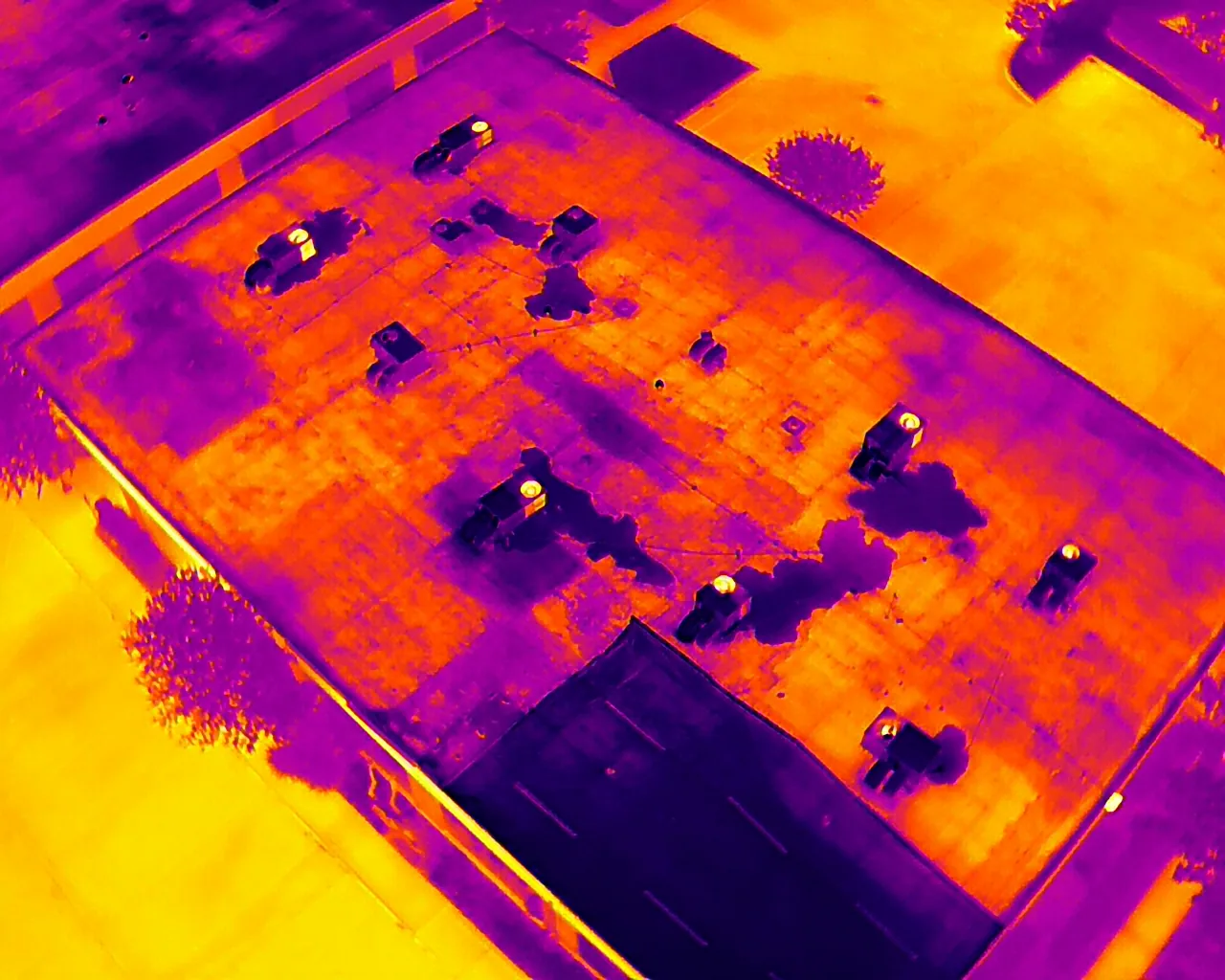
KEE Roofing in Escondido, CA
Roof Systems · Escondido, CA
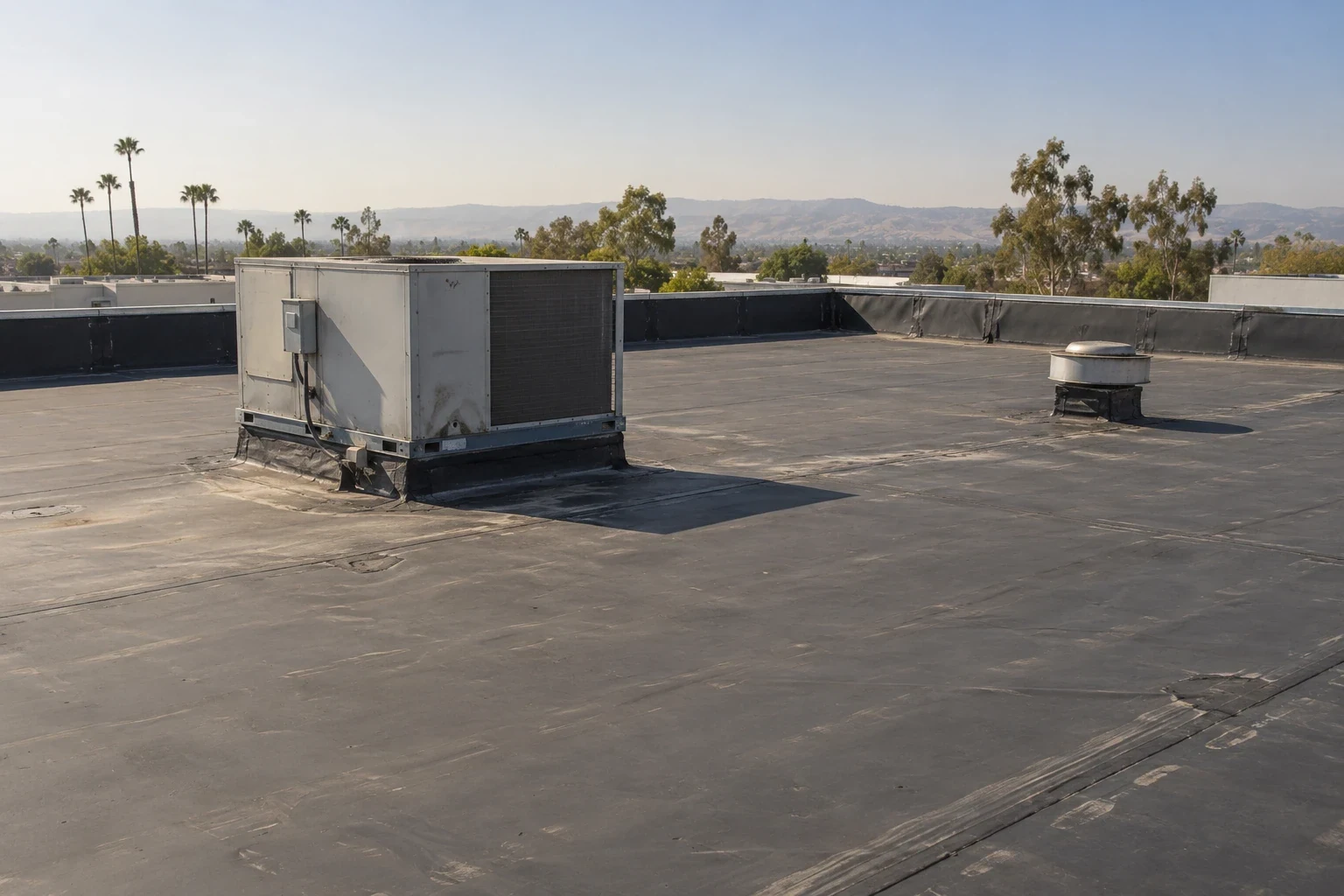
A KEE membrane with a split at a curb needs a scoped repair, not a product guess. We identify the sheet, reinforcement, weld condition, and adjoining flashing before setting quantities. In Escondido, warm, dry Santa Ana winds can put roof edges and exposed transitions on the inspection list. City planning also identifies commercial activity along Centre City Parkway and East Valley Parkway. Those corridors frame the market, but the roof assembly comes from the building itself. The project team gets a marked repair boundary, open questions, and a work sequence to price.
KEE is a solid, flexible polymer used in some PVC formulations in place of part of the liquid plasticizer. Carlisle distinguishes KEE HP-modified PVC from KEE and places KEE HP PVC under ASTM D4434, not the KEE roofing specification. That difference matters when selecting repair materials, accessories, and specification language. A label does not confirm the existing sheet or establish compatibility with old patches. We review available records, then compare them with field conditions. That check changes whether a repair, recover, or removal belongs in the bid.
Membrane Identity and Welds
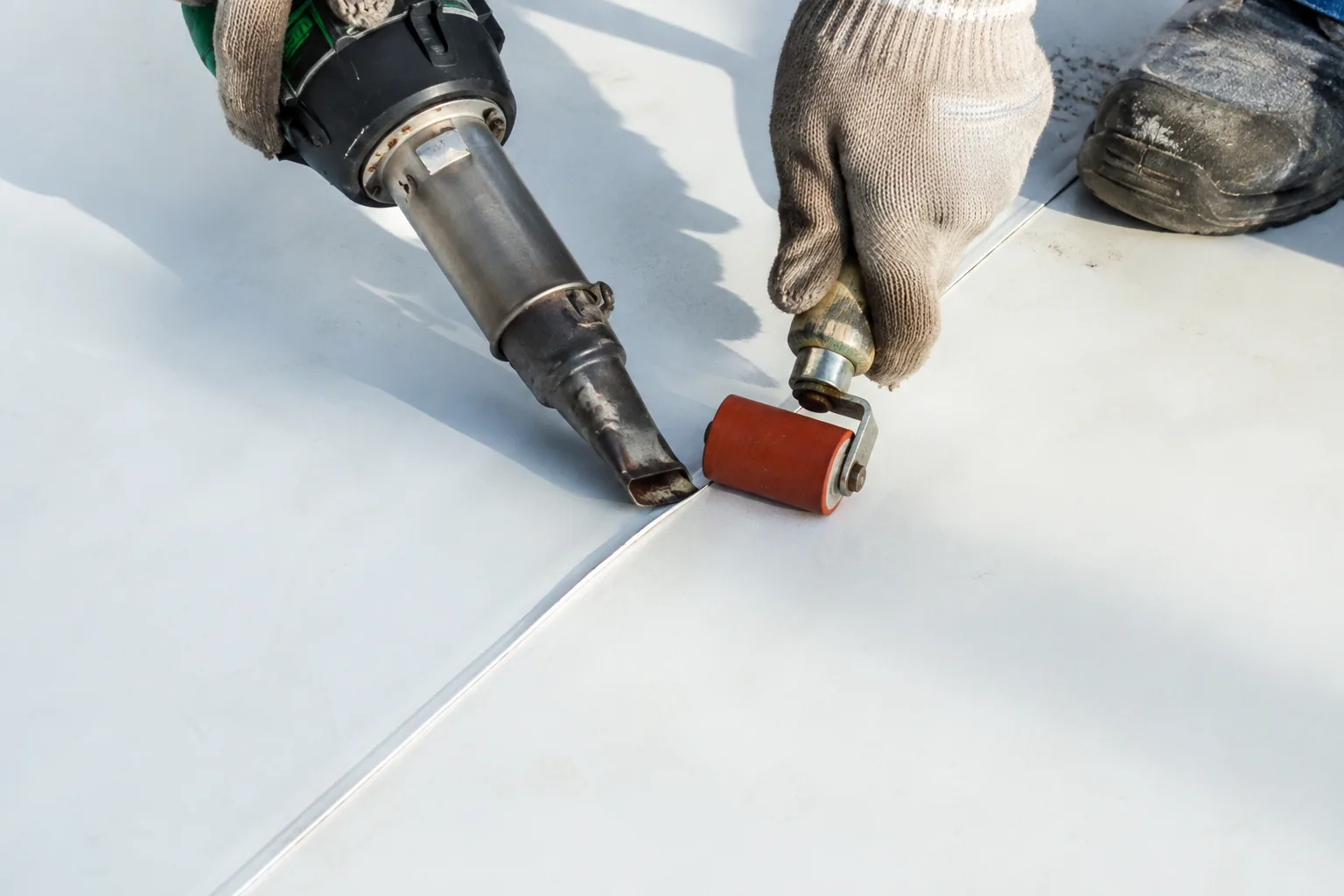
A weld probe can find a discontinuity, but the surrounding sheet matters too. We inspect the lap width, seam ends, field membrane, and nearby repairs. A patch over residue or a brittle surface can fail to bond as intended. We note the preparation needed and identify the material used for the tie-in. At corners and penetrations, the detail may need formed flashing rather than a flat patch. The closeout record should show the finished weld and its roof-zone reference.
Old documents may call the membrane PVC without identifying the formulation. We compare labels, repair history, and visible construction before writing the specification. When moisture is suspected, a targeted moisture survey can help select a test location. We keep tested and untested areas distinct so a finding at one core does not set the condition for an entire roof.
Curbs, Drains, and Perimeter Metal
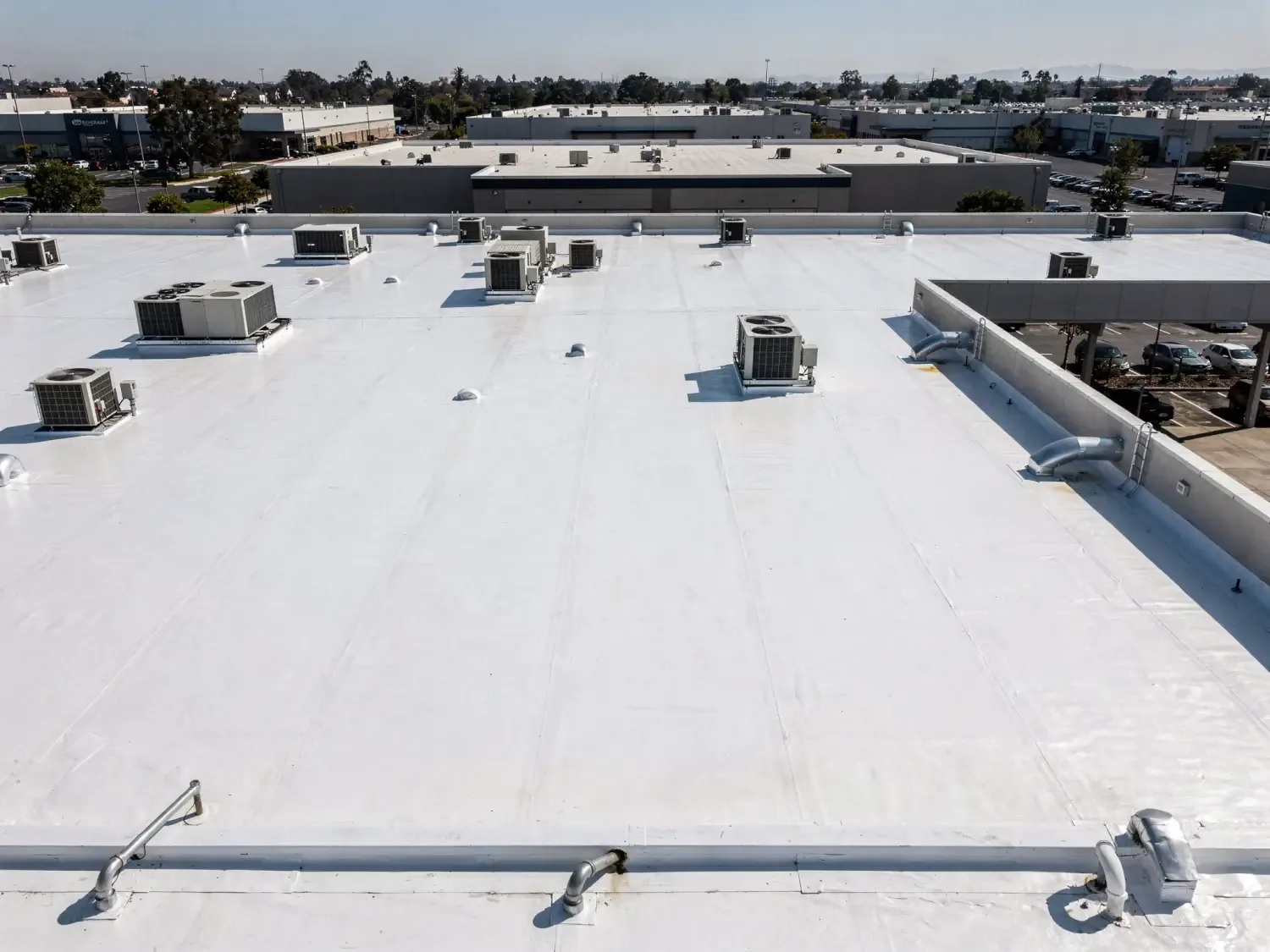
Movement often shows first where one material meets another. We check curb corners, pipe boots, wall terminations, drain bowls, and edge metal for splits, openings, or stress. Equipment changes can leave abandoned supports or altered clearances. The roof work must identify which trade disconnects or resets that equipment. A written sequence prevents membrane crews from closing details before the supporting work is ready.
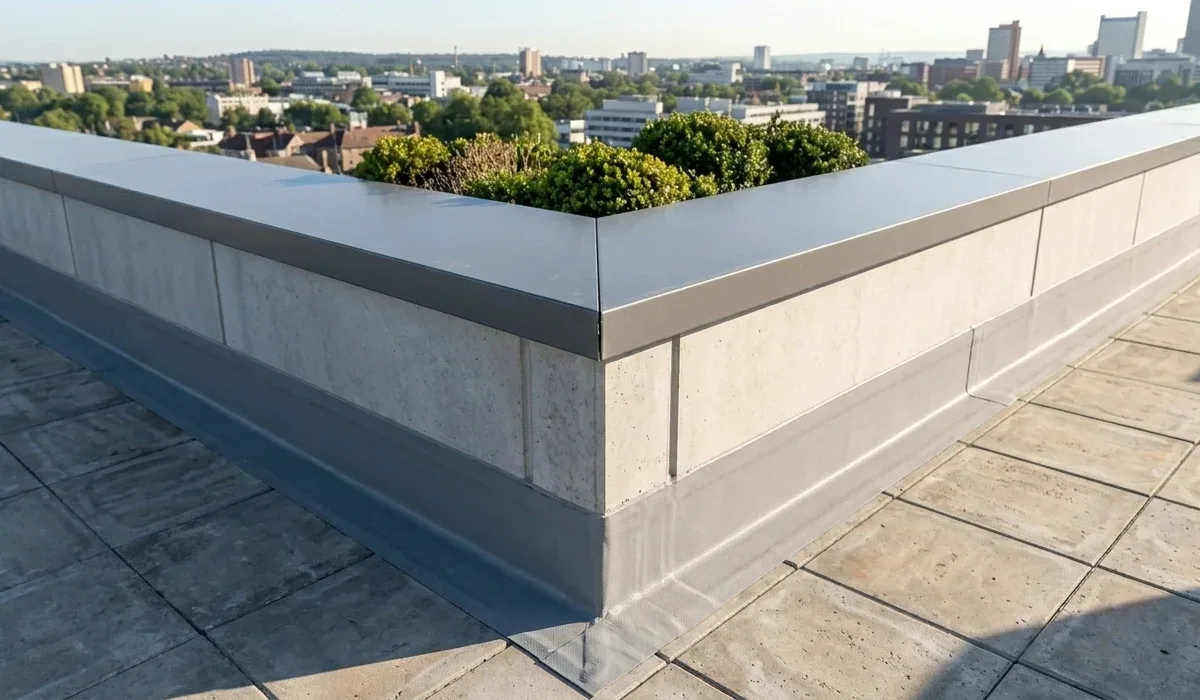
Runoff needs a continuous path into the drain. Debris, a raised patch, or a low area can hold water against a seam. We record the drainage condition separately from the membrane defect. Escondido's commercial planning includes Downtown as well as the Escondido Boulevard corridor, where access and tenant activity need a property-specific plan. For perimeter quantities, a coping and edge-metal review can distinguish sheet work from metal replacement. Curb coordination can set responsibilities before the roof is opened.
Repair Limits Before Replacement
One failed lap with firm, dry material around it may support a localized repair. Repeated openings, widespread embrittlement, wet insulation, or weak attachment changes the comparison. We map the affected zones and identify what additional testing could settle. A recover adds height and load. It can also alter drain bowls, wall transitions, perimeter securement, and equipment clearances. Those conditions belong in the same price comparison as membrane quantities.
KEE and standard PVC share some installation features, but formulations and accessories require manufacturer-specific compatibility checks. PVC membrane work and TPO roofing should be evaluated as complete assemblies, not as color or label substitutions. A coating may not solve a failed weld or trapped moisture. If layers must be removed, a replacement scope should identify disposal, substrate repair, new insulation, flashing, and perimeter details.
Access, Heat, and the Work Window
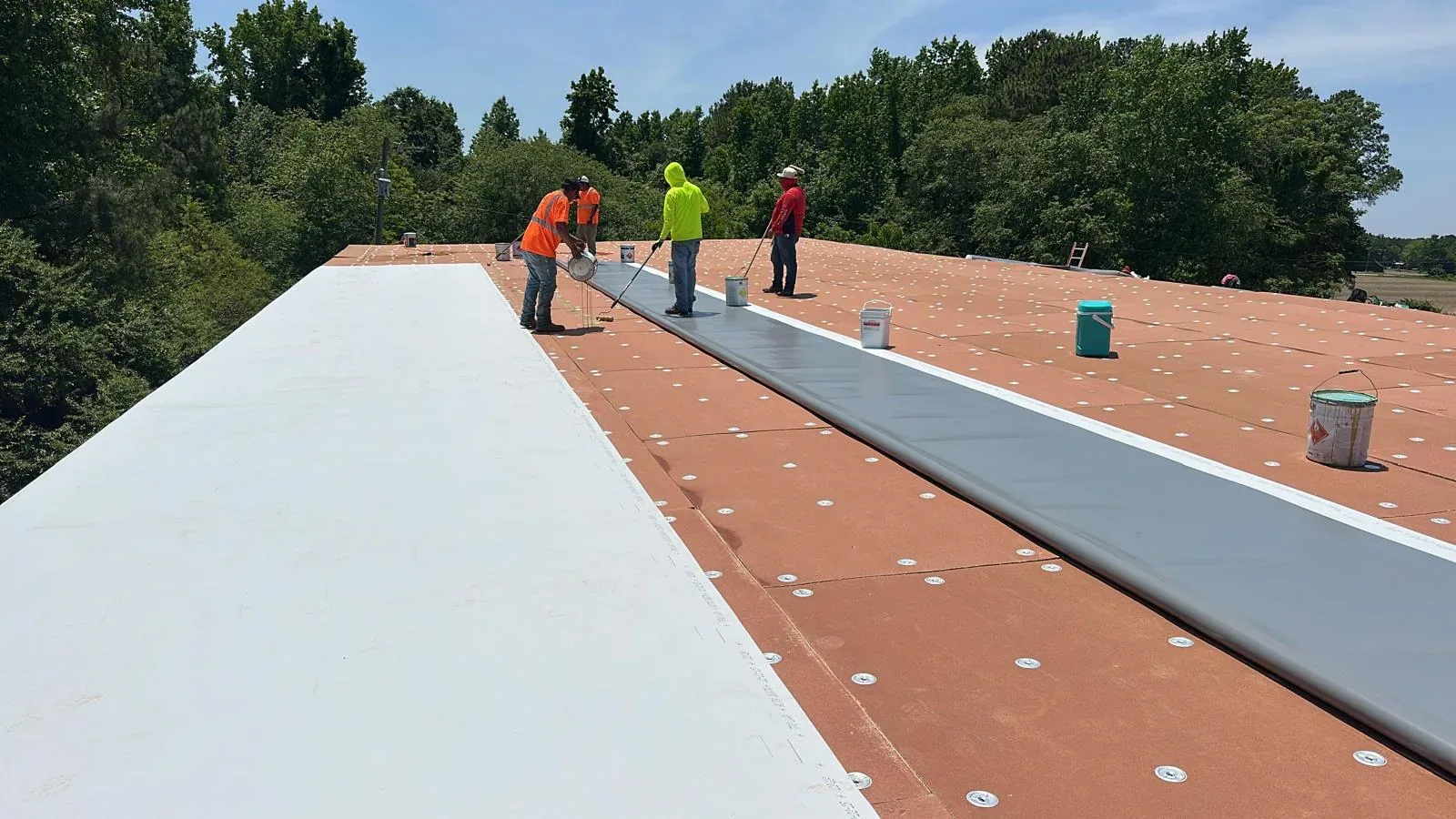
Weld work needs a clean, dry surface and a crew route that does not cross unfinished seams. We divide the roof into sections that can be prepared, welded, probed, and secured before the work window closes. The access plan covers staging, lifts, roof hatches, occupied rooms, and protection below. If deliveries or production continue, the superintendent can reserve a route before materials arrive. Temporary protection gets a location, inspection interval, and removal trigger.
Santa Ana episodes often arrive between early fall and late spring with dry air and heat. That seasonal pattern informs scheduling, while the actual day's conditions govern the weld plan. The fire department also describes local red-flag periods tied to dry weather and strong Santa Ana or east winds. We check current conditions before exposing a seam or staging materials. Downtown Escondido access and work hours still need confirmation from each property contact before deliveries are booked.
A KEE Scope the Team Can Price
List each roof zone, its observed membrane, seam condition, flashing quantities, and test locations. Separate confirmed work from allowances for concealed conditions. The proposal should state preparation, welding, patch boundaries, metal scope, equipment coordination, protection, access assumptions, and completion checks. If the existing material identity remains uncertain, show the verification step before ordering. That lets the owner compare bids without hiding a compatibility question inside a lump sum.
Escondido's fire-severity mapping divides portions of the city among moderate, high, and very-high classifications. New construction in higher mapped zones carries ignition-resistant requirements. A repair still needs a parcel and permit review before the scope is set. A photo-based roof record preserves the observed basis. We can also compare removal with a recover feasibility review. Arrange a site visit with plans, leak logs, repair records, and the person who controls roof access. We will return a defined scope and a workable budget window.
Separate owner decisions from field contingencies. A unit price needs an identified quantity, a measurement method, and a written approval trigger. Temporary protection should not quietly become permanent scope. Mark the seam zones that can proceed, then hold areas where moisture or material identity remains open. That arrangement preserves a usable schedule while keeping disputed quantities visible. If operations permit only one access window, agree on the inspection and closeout steps before mobilization.
Frequently Asked Questions
How do we distinguish KEE from another PVC membrane?
We compare the product label, repair records, visible reinforcement, and construction details. Appearance alone is not enough to select a compatible patch. When records are incomplete, we identify a confirmation step before specifying the tie-in. The bid can separate that verification from permanent work.
What makes a KEE seam repair larger than the visible split?
A narrow opening can sit beside weak weld, residue, or damaged flashing. We probe the adjoining seam and inspect the field sheet before drawing the boundary. Moisture or repeated failures can extend the test area. The proposal names the observed limit and any concealed condition that needs approval.
Can a recover preserve the existing KEE roof?
Dry, stable layers and adequate deck capacity are starting conditions, not the full decision. We review attachment, moisture, drainage, height at curbs, and perimeter details. If those checks support retaining the assembly, the scope states which layers remain. Any unresolved area gets a separate test or approval step.
What records are useful for pricing KEE membrane work?
Roof plans, product labels, prior repair invoices, leak locations, and warranty documents narrow the questions. We compare them with the field sheet and flashing details. Equipment changes and access hours also affect sequence. A marked plan keeps confirmed quantities separate from uncertain conditions.
How should the contractor schedule welding during a windy period?
The surface and day's conditions set the work window. We divide the roof into areas that can be cleaned, welded, inspected, and closed before conditions change. Santa Ana patterns help with seasonal planning, but they do not replace a current site check. The access plan also accounts for occupied operations.
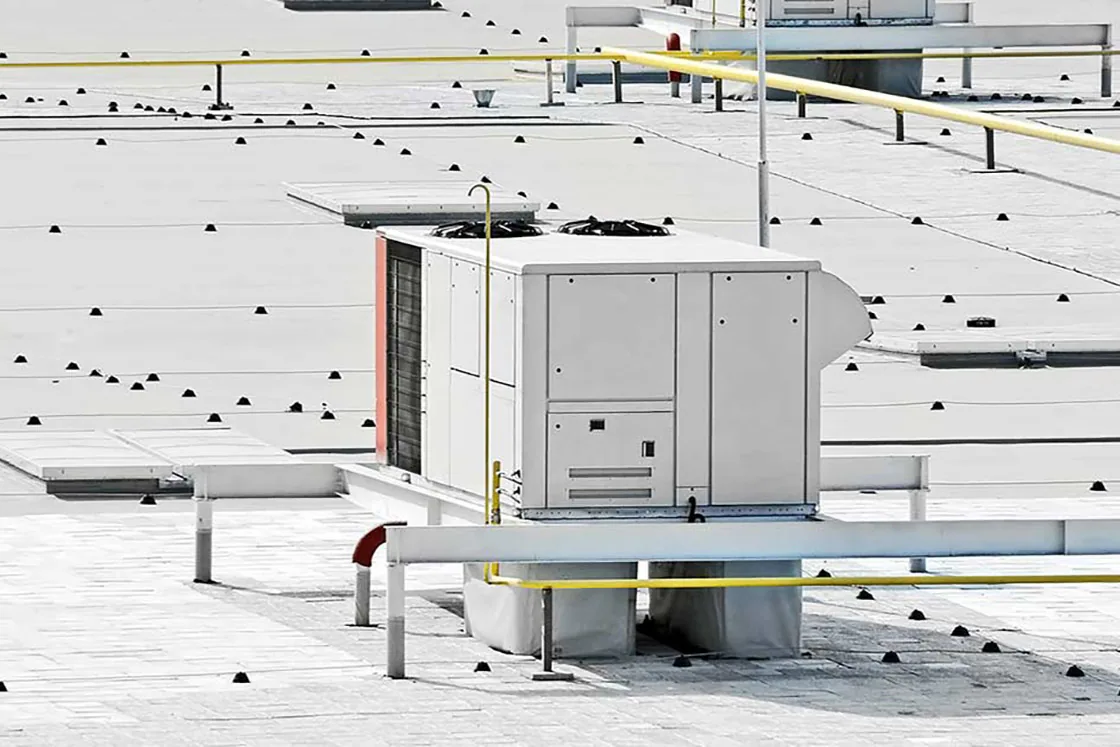
Define the KEE Repair Boundary
Send membrane records, roof plans, leak locations, and access rules before the visit. We will document the assembly and lay out repair, recover, or removal options. Call to set an inspection window.
Call 555-555-5555 or email [email protected].