Johns Manville Commercial Roofing in Escondido, CA
Roofing Manufacturers · Escondido, CA

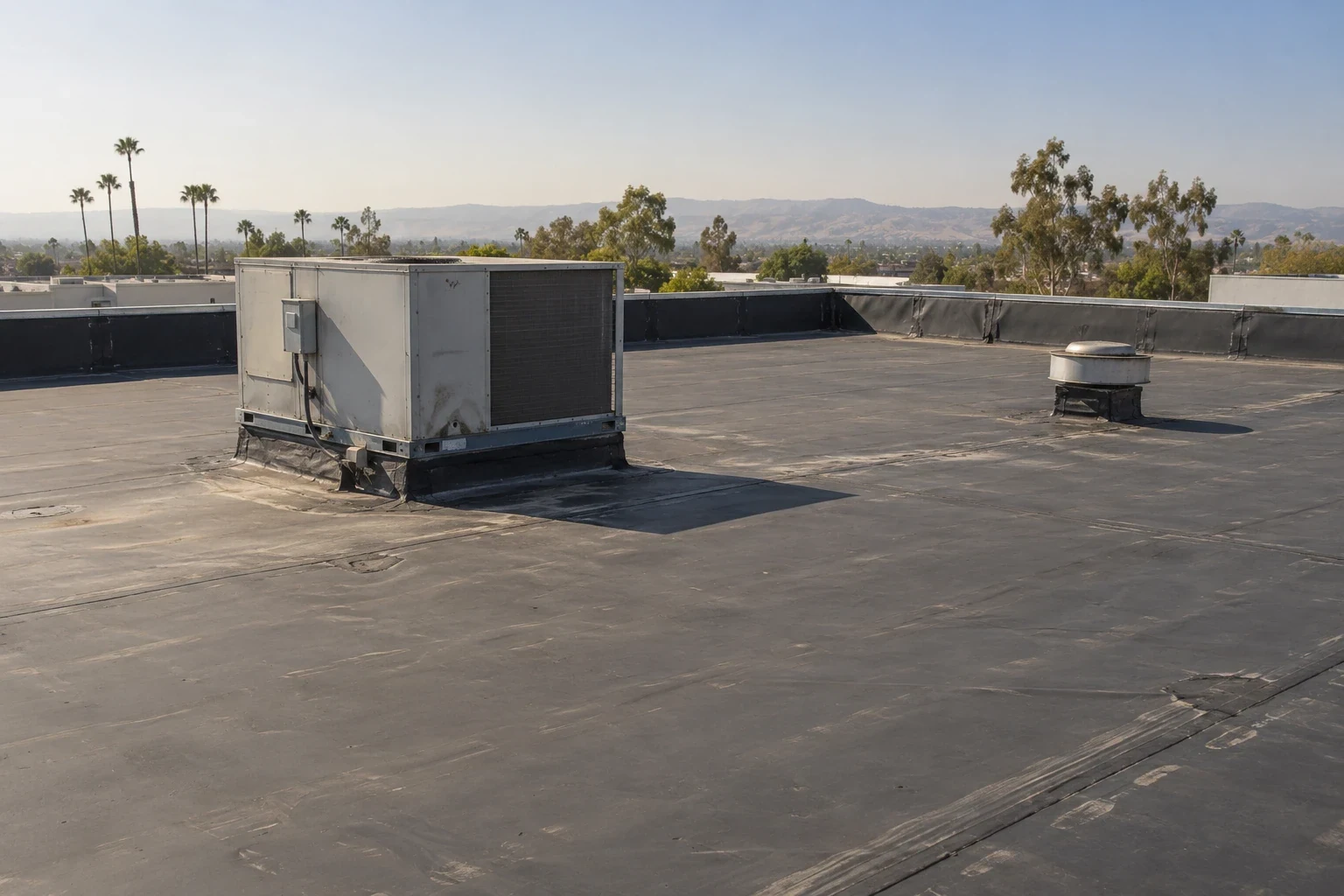
A loose lap over a service corridor can point to more than a membrane defect. We identify which Johns Manville system is installed, how it is attached, and what lies below before drawing the repair limit. JM makes single-ply TPO, PVC, and EPDM systems, along with bituminous assemblies such as APP, SBS, and built-up roofing. Those systems have different seams, flashing details, and compatible repair materials. Escondido's General Plan identifies technology, manufacturing, office, professional services, and shopping as employment uses. A Johns Manville repair sequence starts with the operating hours and roof build-up at the subject property. At the roof, the actual assembly and operating schedule decide the work sequence. The inspection records the observed layers and areas needing more evidence.
We review the label, plan set, prior repairs, and visible roof edges. A JM name on an old invoice may not describe every addition. We inspect each zone separately, including drains, curbs, penetrations, edge metal, and transitions. A repair proposal identifies confirmed conditions and unresolved questions. That gives an owner a budget window without assuming that all membrane is alike.
Single-ply and bituminous assemblies
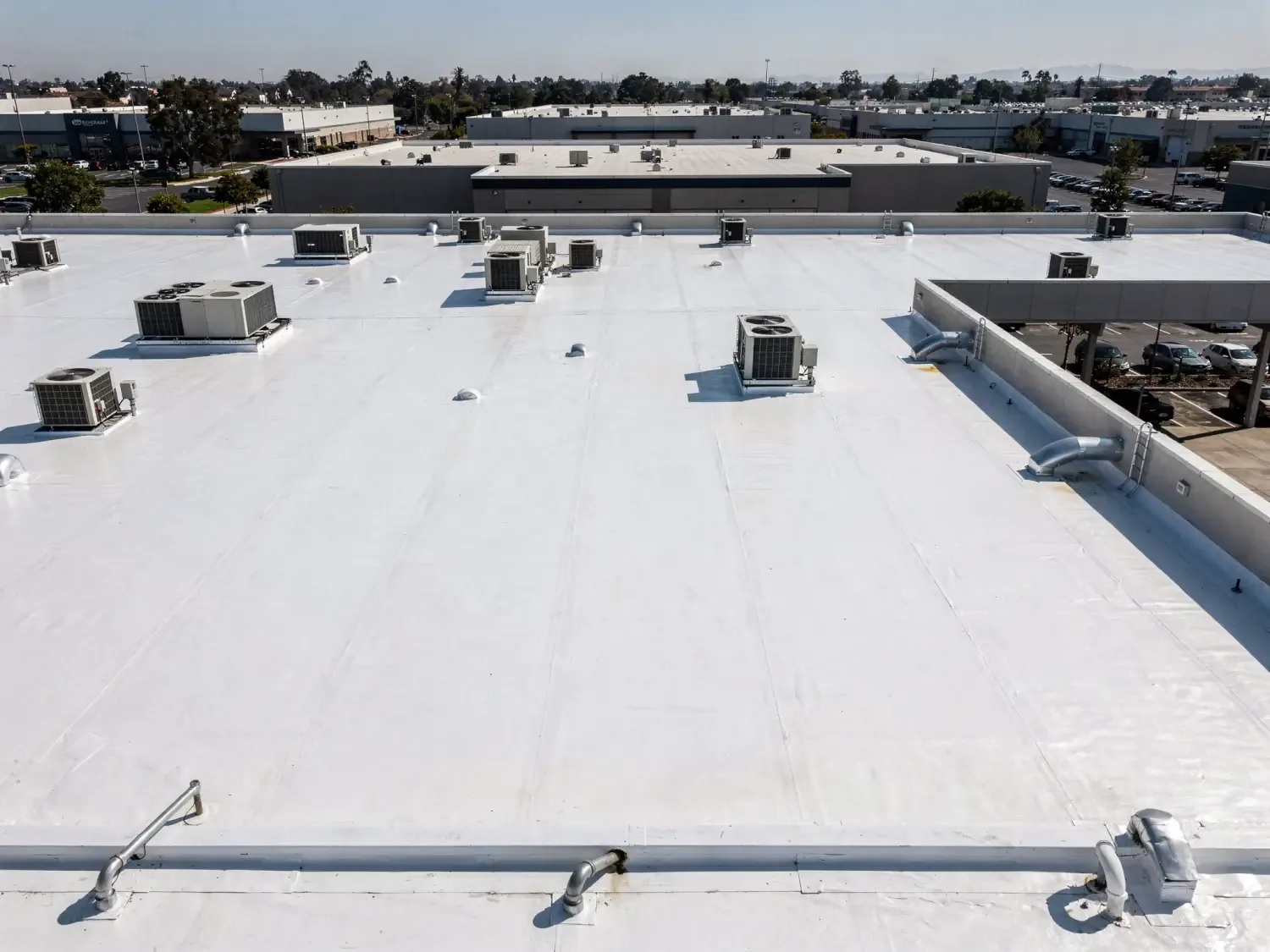
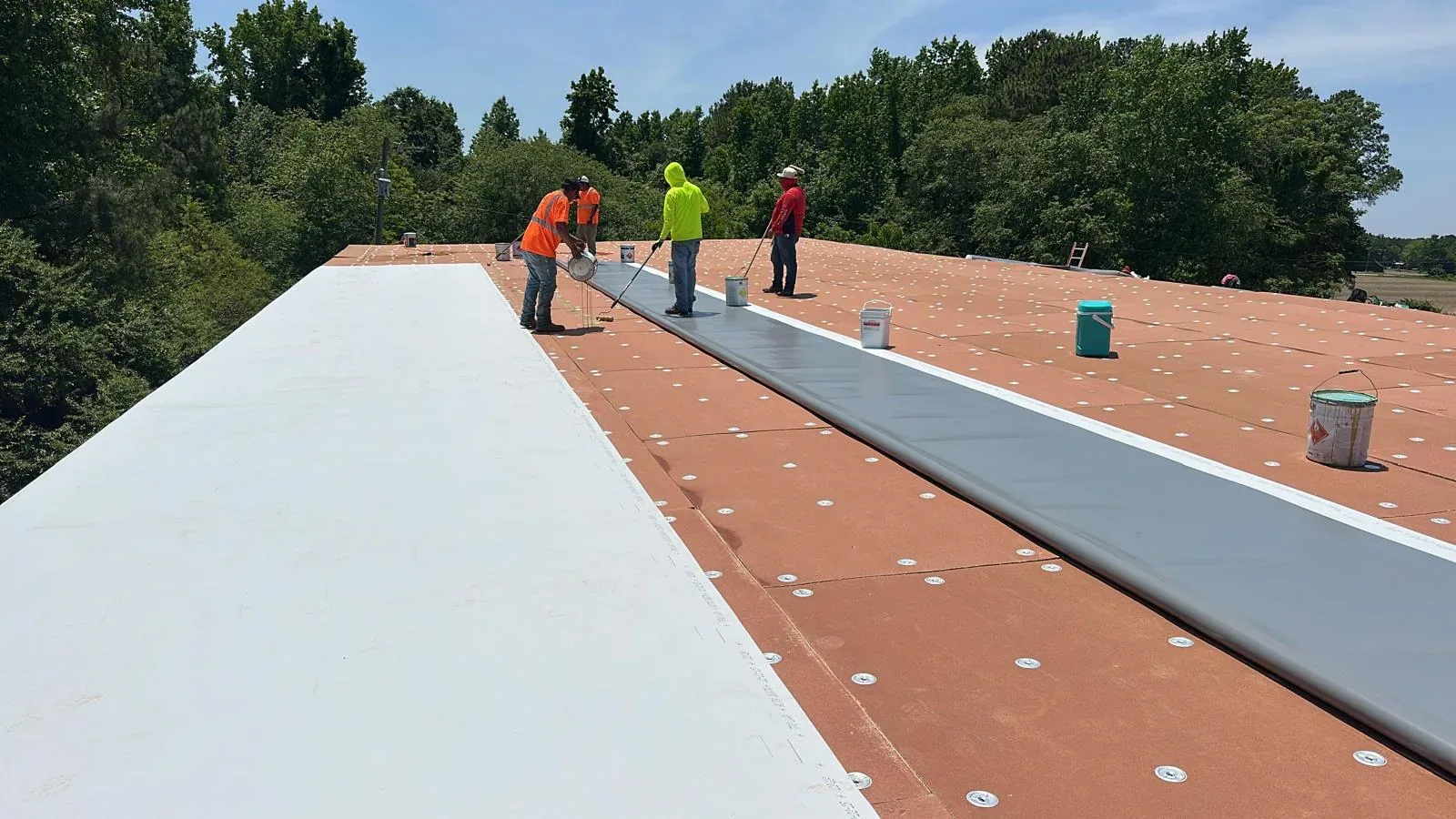
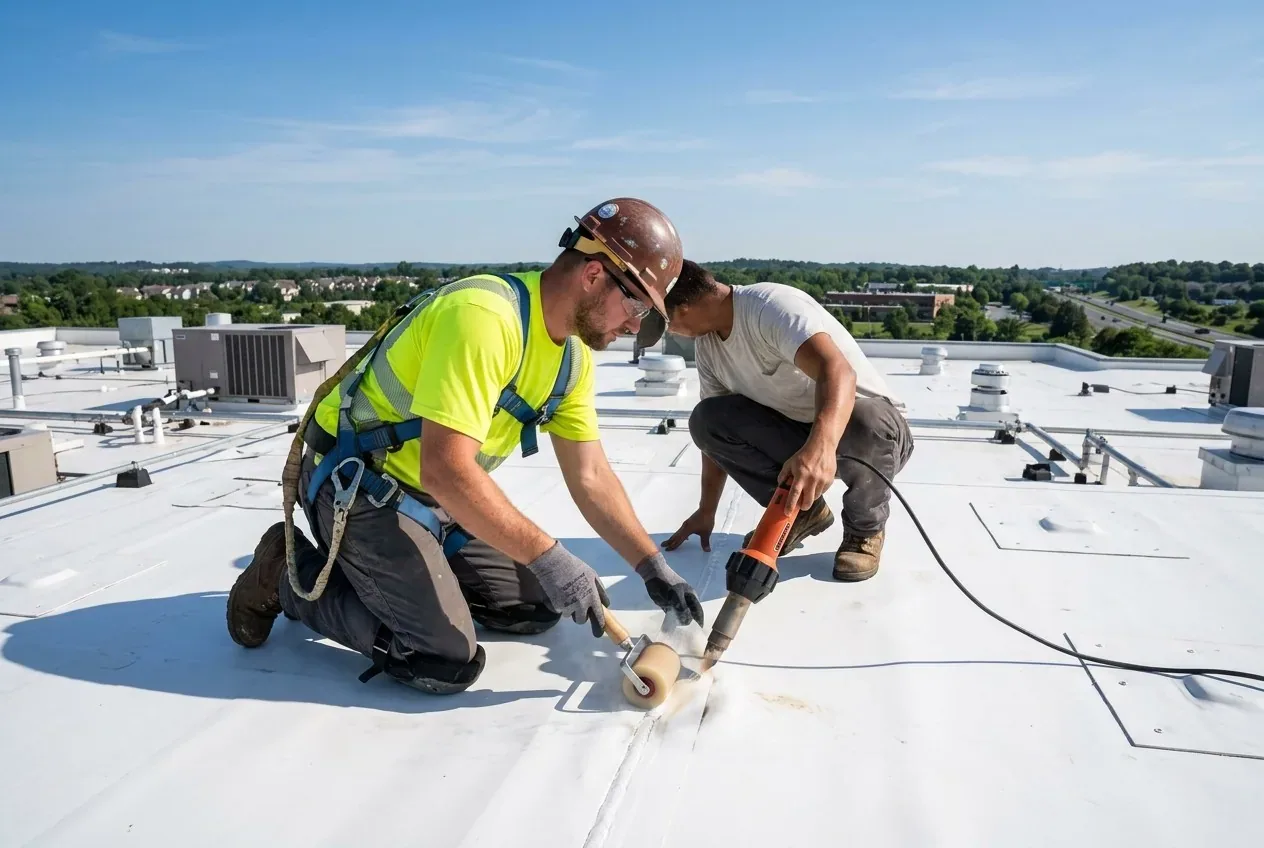
JM's portfolio spans thermoplastic sheets, EPDM, and multi-ply asphaltic systems. TPO and PVC have heat-welded seams. EPDM uses compatible adhesives or seam tape. APP and SBS modified bitumen, plus built-up roofing, use layered asphaltic construction. Their repair methods cannot be swapped because the roof carries the same manufacturer's name. We match preparation and materials to the exposed system, then check the substrate and attachment.
Insulation and cover board influence more than thermal performance. They affect fastening, compressive support, drainage transitions, and the surface receiving a membrane. A roof plan may show one assembly while field work has added another layer. We inspect penetrations and accessible cut edges before specifying replacement. The JM TPO system and EPDM option each need their own lap and flashing details. Carlisle assembly comparisons and GAF membrane ranges help frame choices after the existing build-up is understood.
Edges, transitions, and drainage
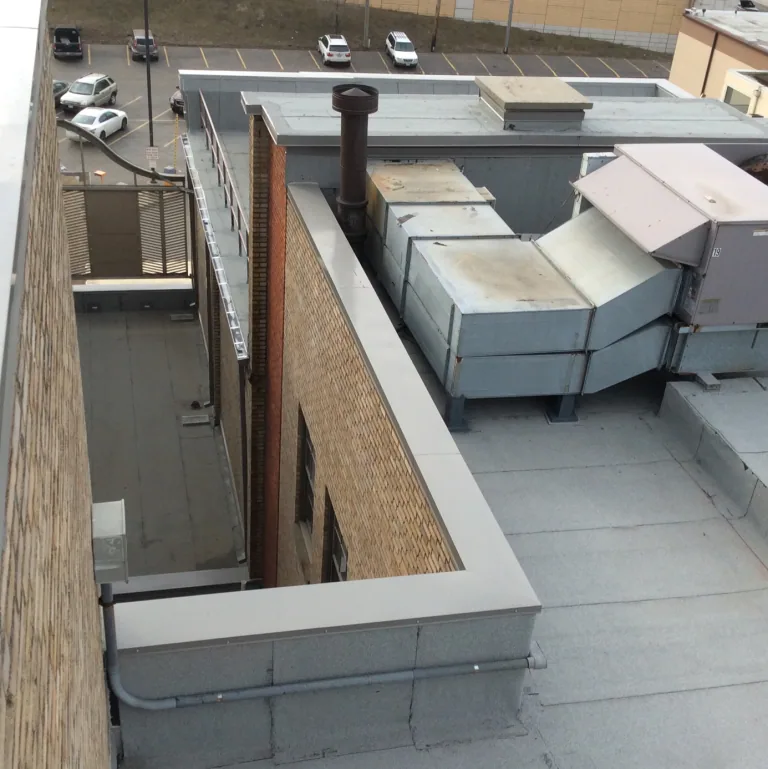
Water often enters where field sheet meets a wall, curb, drain, or roof edge. We inspect lap edges, inside and outside corners, pipe boots, termination bars, coping joints, and fasteners. A failed detail may be limited to one location, but repeated sealant or patches can hide a wider condition. We photograph the transition and note which membrane layers are visible. The repair scope states whether to reopen the detail, add flashing, or test the surrounding insulation.
A transition can involve edge metal, an expansion joint, a drain, or tie-in flashing. The material list does not identify which detail belongs on a particular roof. The deck, perimeter design, membrane family, and existing metal must line up. We check each interface and mark any area that requires design confirmation. The General Plan identifies the Research and Technology Center as a significant share of Escondido employment acreage available for development. That local context does not reveal any building's insulation or membrane layers. For those and other commercial buildings, we still confirm rooftop equipment, work hours, and entry at the property itself.
Scope by roof condition
A clean opening beside a sound sheet can support a bounded repair. Widespread wet insulation, loose attachment, brittle flashing, or failing deck can change that choice. We map the affected zones and compare the repair history with current findings. A coating can protect an eligible surface, but it cannot restore a saturated assembly or secure loose edges. If the base is not stable, the proposal needs a different correction.
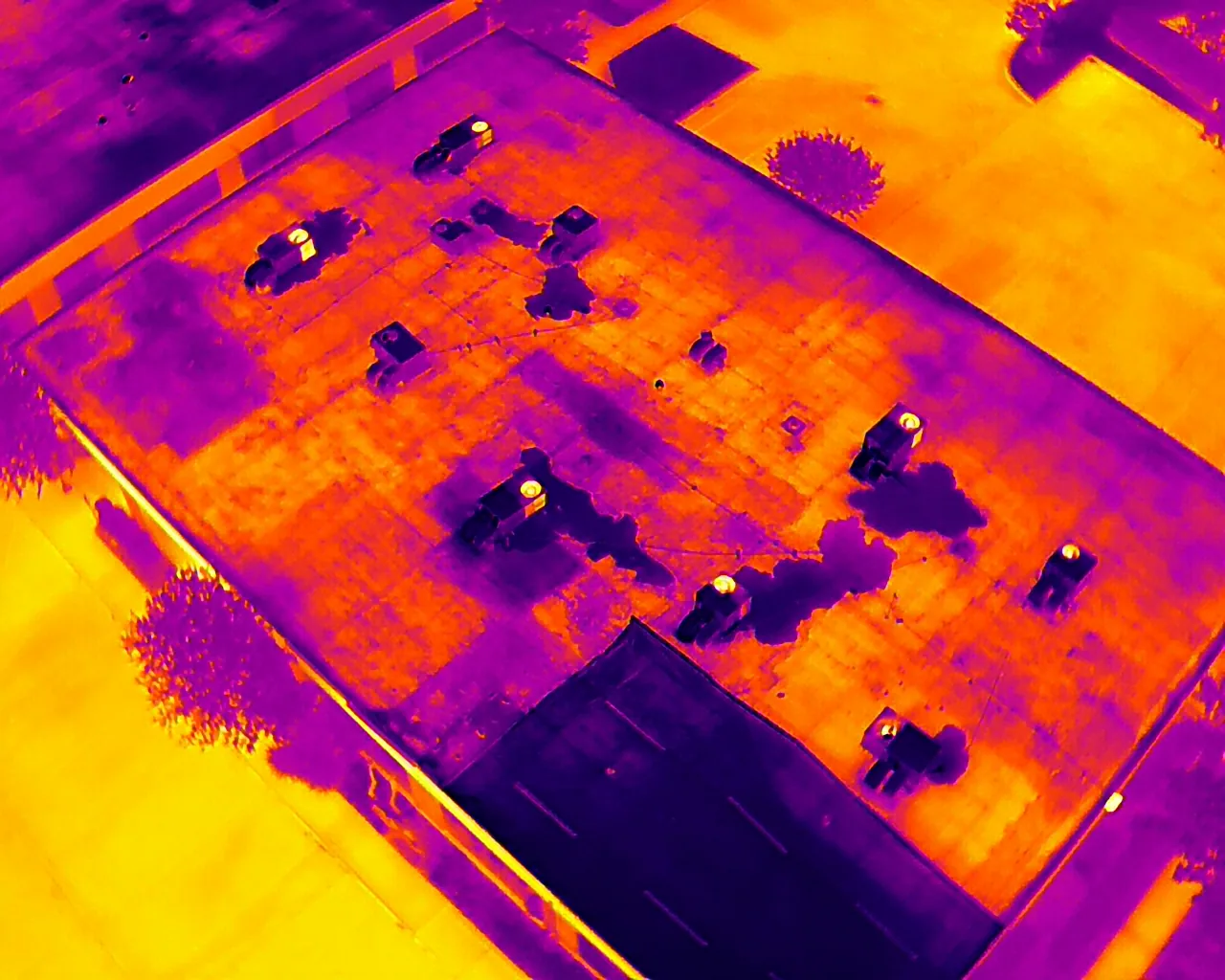
A recover may work when layers are dry, attached, compatible, and within project limits. Added roof height can affect drains, curbs, doors, and edge metal. Tear-off gives access to concealed materials but adds removal and interior protection needs. We compare a replacement scope with a recover using the same work area and assumptions. A moisture survey can help select test points, while the opening itself confirms only the assembly at that location.
Installation window and cost drivers
Work timing depends on access, surface preparation, roof height, membrane, and space to stage material. We set a daily close-in boundary where work opens the assembly. The owner or general contractor should identify active rooms, shift changes, rooftop equipment shutdowns, and delivery restrictions. Those facts affect labor and tenant coordination. A written plan names who can authorize added work if removal reveals wet insulation or deck damage.
Santa Ana flow most often crosses the mountains between September and May, carrying dry air that may run warm or hot. For a JM membrane repair, the crew checks gusts and surface conditions before opening a seam or setting a closure; local wind history alone does not set the repair limit. Grand Avenue's second streetscape phase finished in June 2025. For a Downtown Escondido job, we confirm the route for material and equipment with the building's access contact.
What the closeout should show
Provide roof plans, JM product records, prior repair invoices, leak logs, and warranty paperwork before the field visit. We compare documents with accessible details and record differences. If separate building sections have different systems, each gets its own label on the roof sketch. The report identifies areas viewed, tests completed, and items left concealed. A photo-based condition report can help the project team carry those distinctions into bids and capital planning.
A closeout package should show the repair boundary, material family, surface preparation, seam or flashing work, and final inspection. If another trade moved equipment, record the curb condition after reset. Edge transitions deserve their own photo, especially where old metal meets a new membrane. The perimeter metal scope should state fastening and tie-in work rather than leave it inside a general roofing line. Near Escondido's Research and Technology Center, or elsewhere in the city, access and staging still depend on the individual property's rules.
Frequently Asked Questions
How can we identify an existing Johns Manville membrane?
Product labels and repair records can help, but additions may use another sheet. We inspect accessible edges, seams, patches, and flashings by zone. The written record separates confirmed material from any area that needs a test cut before selecting a compatible repair.
Can JM TPO or PVC be patched with the same material?
Both are thermoplastic membranes, but the specific sheet, surface, weld condition, and detail matter. We identify the product and prepare a test area when needed. The proposal names the repair material and how the finished lap will be checked.
When is a recover unsuitable for a JM roof?
Wet layers, unstable attachment, poor drainage, incompatible materials, or project limits can rule it out. We review those factors before estimating an overlay. If concealed conditions remain, the scope identifies test locations and an approval step.
What should a JM roof repair closeout include?
It should identify the roof zone, assembly, repair material, prepared surface, seam or flashing work, and final check. Photos help tie the detail to the roof plan. We also mark unresolved moisture or deck conditions for follow-up.
Can your crew respond to a leak outside normal hours in Escondido?
Report active water entry through the property's established incident channel and identify the affected roof zone and interior area. Confirm current response availability before relying on a visit. Permanent work should be scoped separately after safe access, membrane condition, weather, and building operations are reviewed.
Set a Johns Manville Repair Boundary
Arrange an inspection with roof plans, JM product records, leak locations, and access rules ready. We will document the existing assembly and define the next repair or replacement step. Call to schedule a site review.
Call 555-555-5555 or email [email protected].