

Commercial Roof Leak Repair in Escondido, CA
Commercial Roofing Services · Escondido, CA
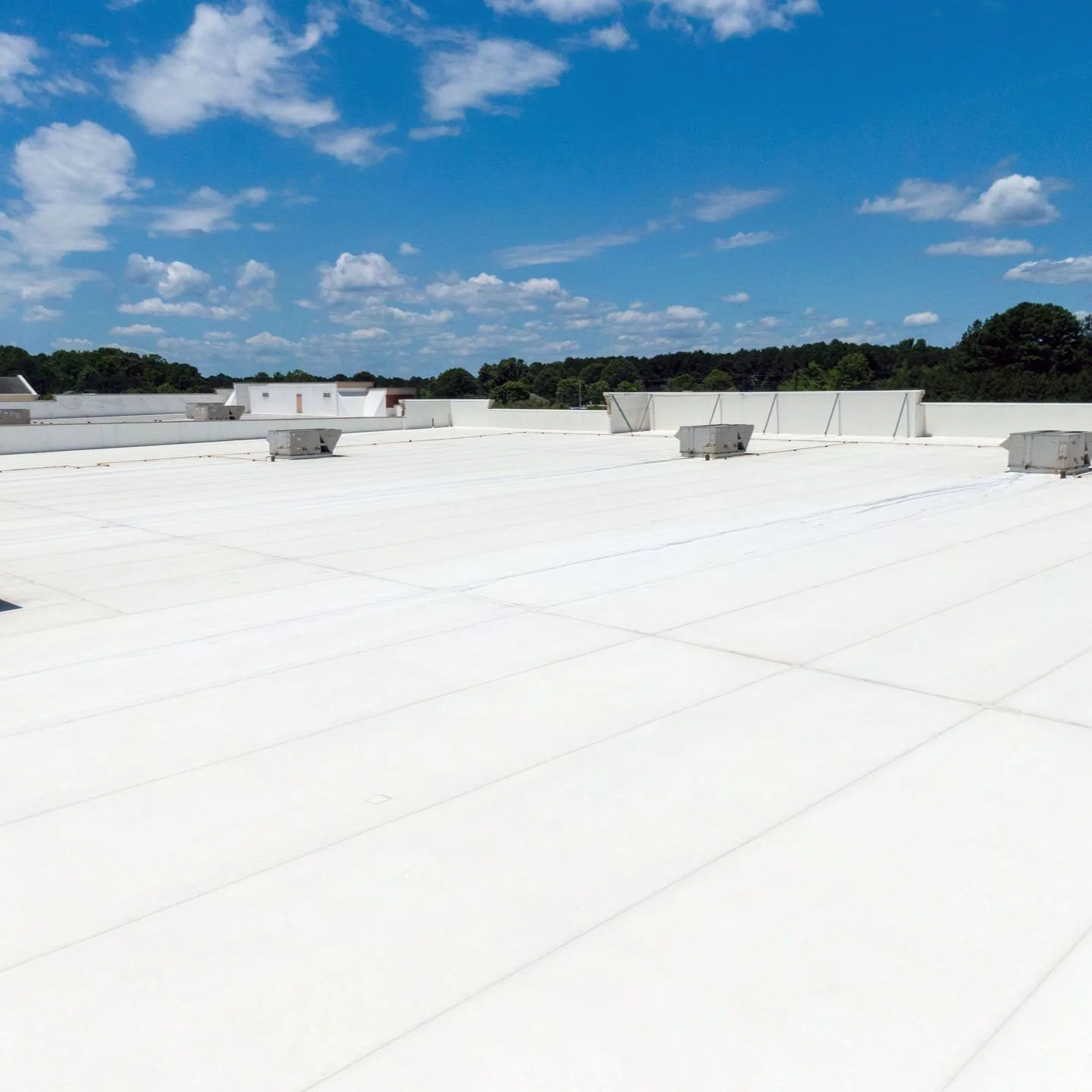
A leak over a production room calls for two decisions: control the water and locate its path. The ceiling mark is useful evidence, but it may sit away from the roof opening. Water can travel through insulation, along deck flutes, or around framing before reaching the interior. We compare the stain with seams, curbs, drains, penetrations, and wall transitions above. Escondido red-flag conditions are normally linked to dry northeast Santa Ana or east winds. After a wind event, we inspect exposed flashing and edges, then compare those findings with the reported leak path. We document the suspected entry, the affected roof areas, and any limits on access. The first work can protect the building. The permanent repair needs a field-confirmed detail and a scope the general contractor can schedule.
Trace Before Opening
Interior signs help narrow the search. We ask when water appeared, whether it followed rain or equipment work, and what has changed since the last dry period. Staining, wet insulation, blistering paint, and dripping around a pipe may point toward different paths.
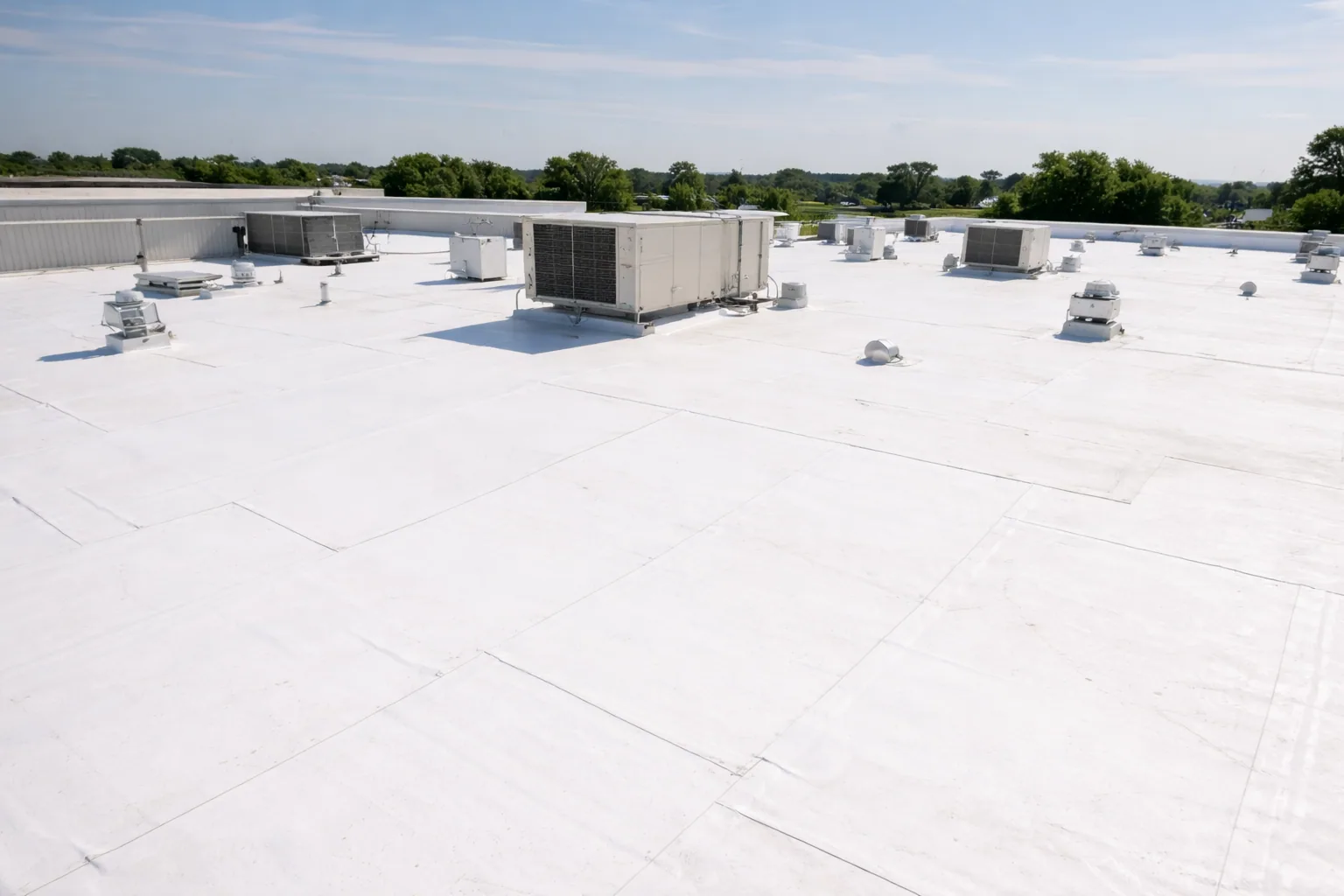
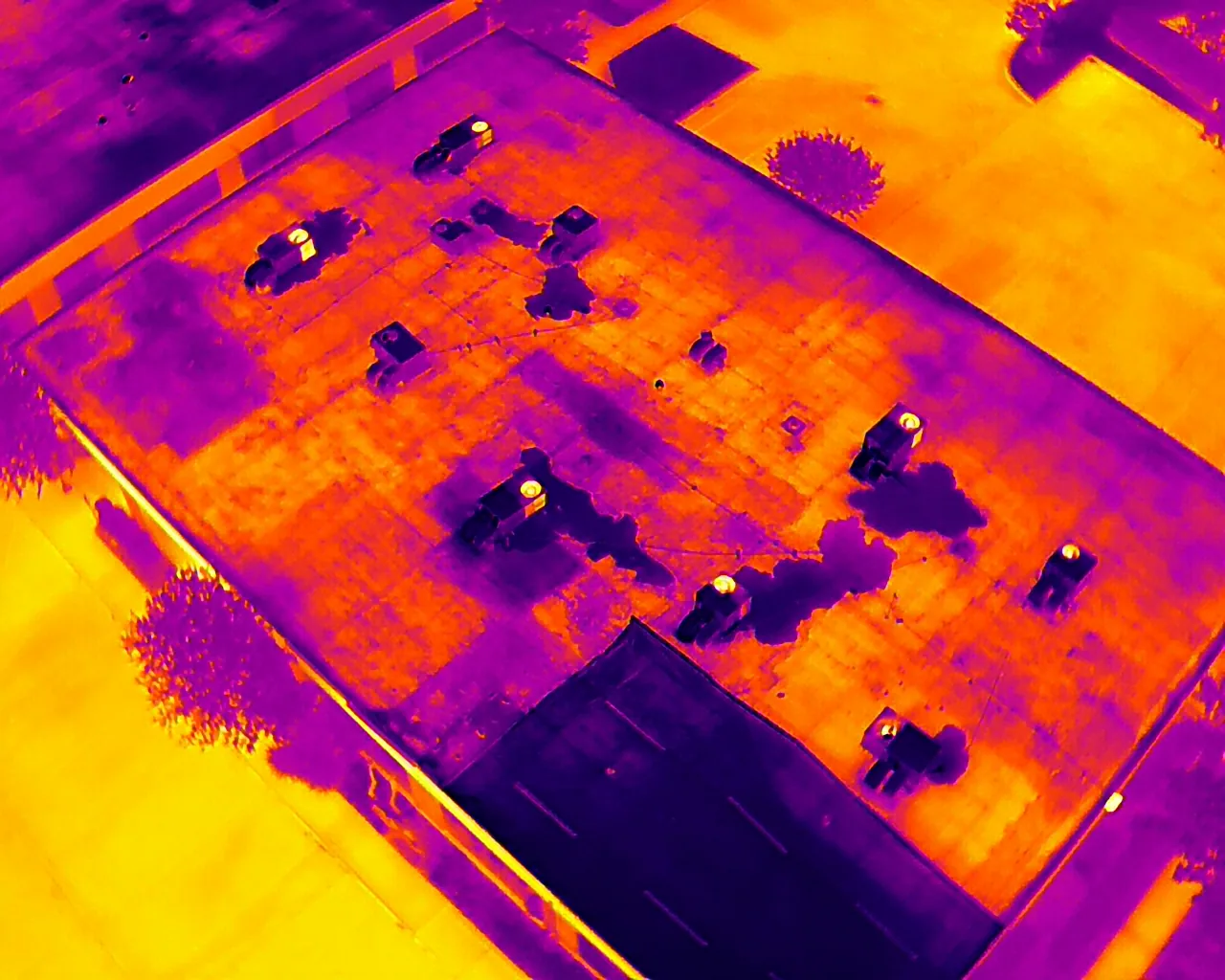
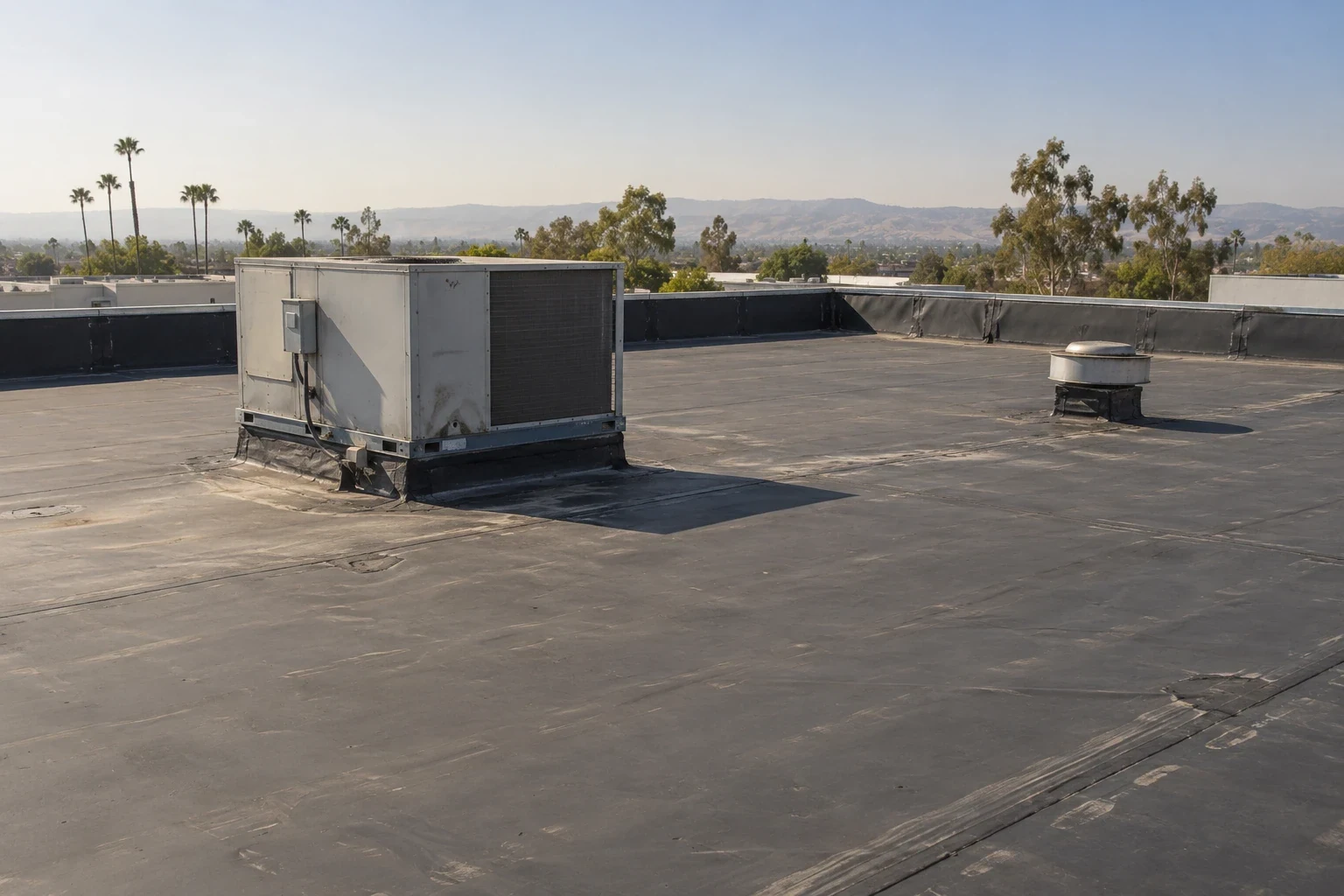
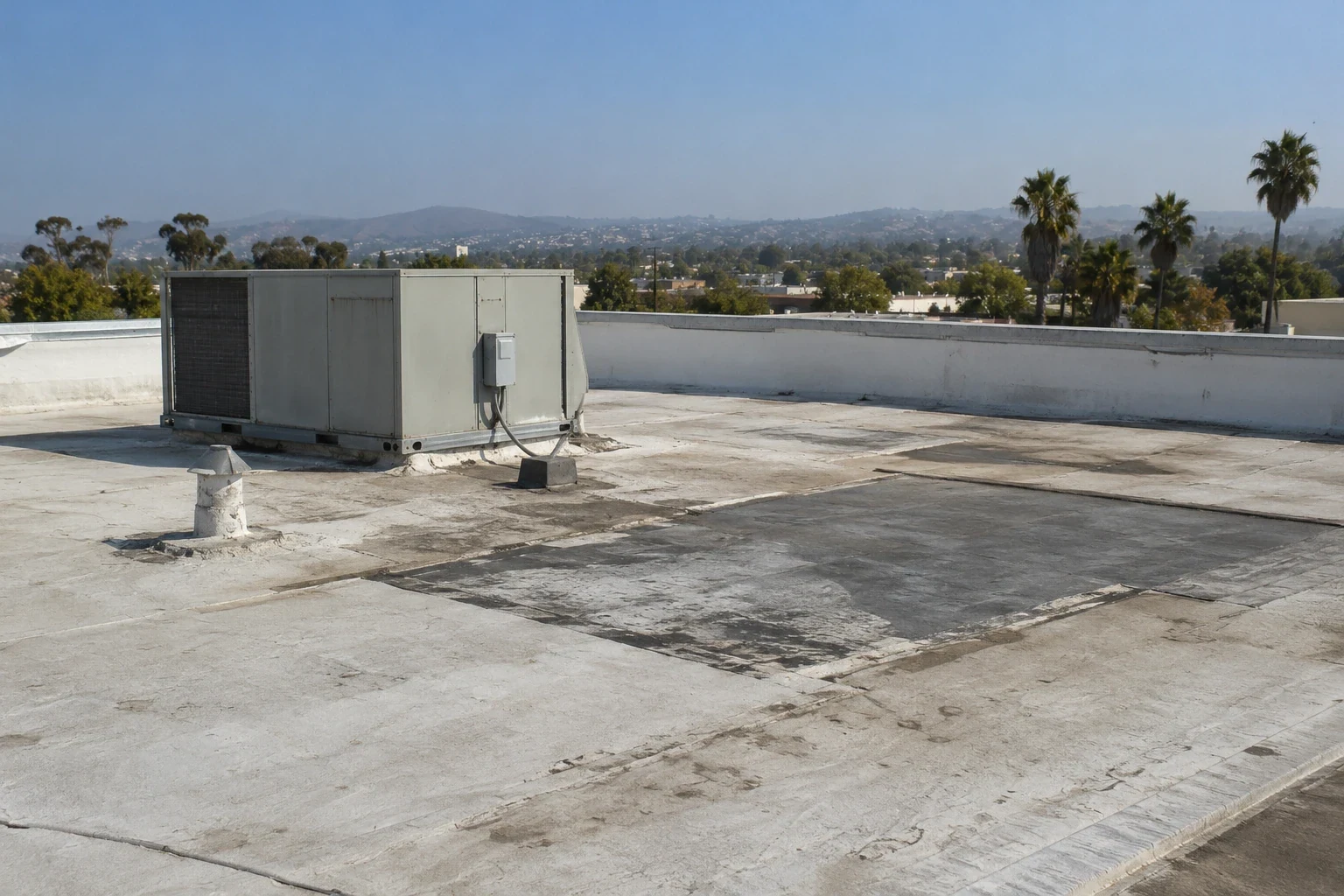
On the roof, we check membrane seams, flashing terminations, fasteners, penetrations, curb corners, drains, scuppers, and adjoining walls. A failed sealant bead may admit water, but the metal or membrane beneath it can also be moving. We look at nearby patches and determine whether they are bonded, compatible, and still secure. If evidence remains unclear, targeted moisture readings or a core cut can confirm whether insulation is wet below the surface.
The South Escondido Boulevard corridor extends about 2.25 miles from Fifth Avenue toward Centre City Parkway and Verda. For a nearby repair, we confirm the property entrance, delivery window, and roof access with its site contact. We confirm the actual access path and occupied schedule with the site contact. A commercial roof inspection can document the larger assembly, while an infrared moisture survey can help select openings for confirmation.
Stop Water, Then Restore the Detail
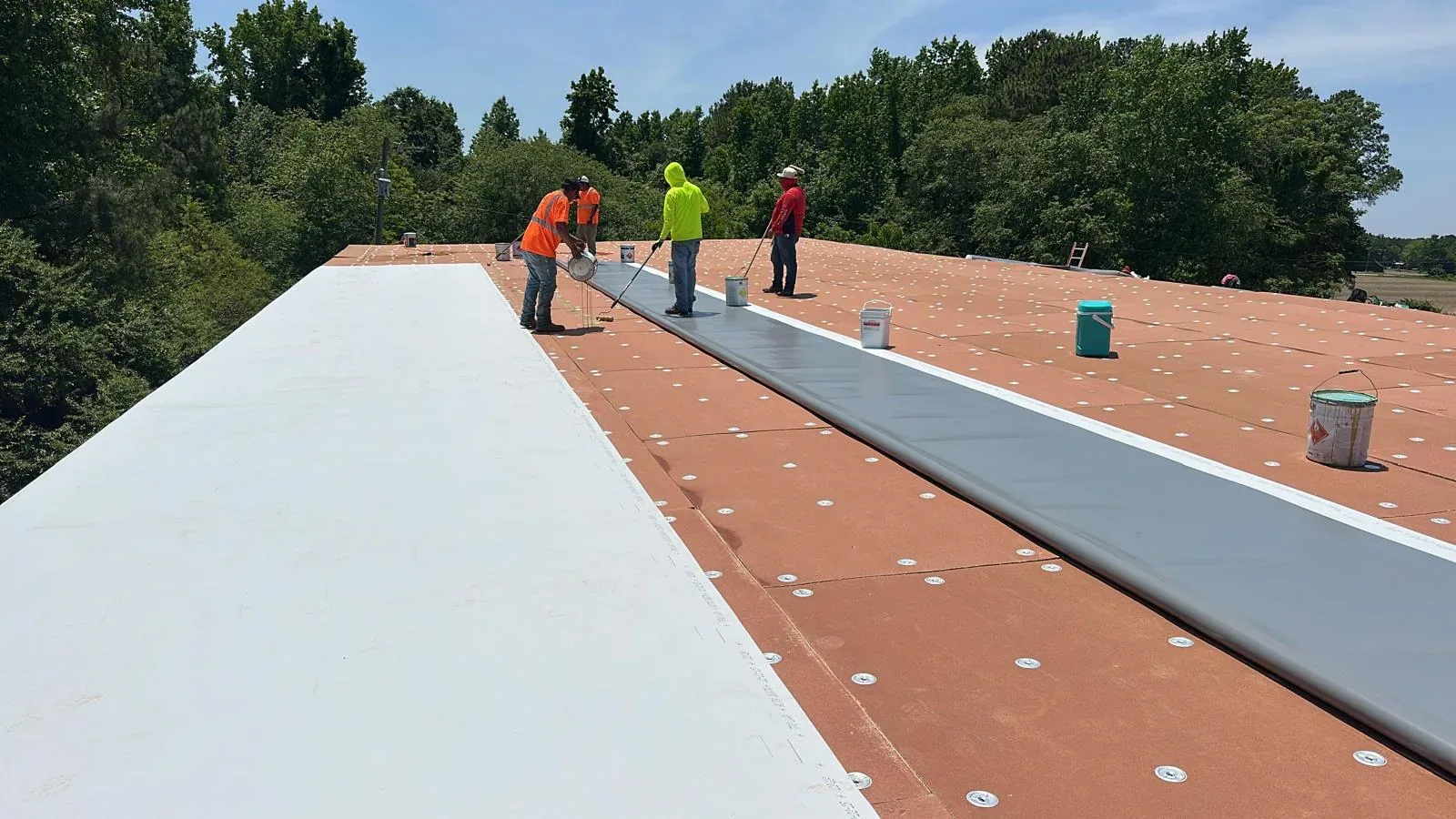
Temporary protection and permanent repair serve different purposes. A temporary tarp, seal, or controlled dry-in can limit interior damage while a surface dries or materials arrive. It must be secured for the roof conditions and checked after installation. A permanent repair follows only after the membrane, flashing, or roof layer can accept the selected material.
At a seam, we examine the lap and adjoining membrane before restoring the bond. At a pipe or equipment curb, the repair follows the actual connection and termination. A drain leak needs work around the bowl, clamping ring, membrane tie-in, and outlet path. A wall leak may require new flashing or a corrected termination rather than surface sealant. We identify the system first. A TPO seam needs a welded lap, while EPDM flashing depends on compatible bonding materials.
If moisture has spread, removing the visible drip source may not be enough. We mark the affected area and determine whether wet insulation, cover board, or deck needs attention. Concealed damage gets an approval step before the repair expands. The proposal should list materials, repair limits, temporary protection, interior access, and how completion will be checked. A permanent roof repair may include related flashing, while a drain and scupper correction can restore the outlet detail. The record needs to distinguish each scope.
Protecting the Interior Schedule
Water control can be urgent even when a permanent repair needs a safe dry surface. We discuss affected rooms, equipment, stored materials, ceiling access, and any operation that cannot pause. The site contact can help isolate the active area and protect contents. If water is near electrical equipment, the building team should follow its safety procedures while the roofing scope is arranged.
Escondido’s commercial areas include Centre City Parkway, East Valley Parkway, and Escondido Boulevard. Each building’s tenant schedule, delivery needs, and roof access set the work window. We plan staging, roof access, noise periods, and daily securement with the owner or general contractor. Where the roof includes rooftop HVAC or electrical lines, the relevant trade may need to isolate or move equipment before flashing can be restored.
After a wind event, we check edge metal and exposed flashing while tracing the reported water path. We record loose perimeter details, open seams, and new interior moisture separately. If temporary protection is needed, call to confirm safe access and the measures available before a visit.
One Leak or a Wider Roof Problem
A single entry point may need a localized repair. Multiple wet areas, recurring calls after each storm, widespread seam separation, or saturated insulation may change the decision. We compare the defect pattern with the roof's repair history and construction layers. The answer may be a repair, several section repairs, or a broader replacement plan. We do not use one stain to make a roof-wide recommendation.
If the membrane remains sound and the water path is isolated, a repair can preserve the roof while the owner tracks other details. If the roof is near its planned capital window, a condition report can help compare another repair with replacement. A property near Harmony Grove Industrial Park still needs its own leak path traced; surrounding employment uses do not establish the roof assembly or condition. We evaluate the actual roof assembly and its operating needs.
Cost and timing change with roof height, materials, access equipment, moisture extent, interior protection, and work hours. A small roof opening can uncover deck damage that changes the scope. We identify that possibility before work and set an approval method. The owner's budget decision should show temporary control, permanent restoration, and any concealed condition separately. If replacement is the better correction, a replacement review can define its limits.
Information That Speeds the Review
Before the visit, share the leak date, affected rooms, photos, past repairs, roof plans, and available system information. Tell us whether the condition worsened after wind, rain, equipment replacement, or a change in drainage. That information narrows the roof review without replacing it.
After tracing, the repair record should identify the likely entry detail, evidence collected, temporary protection, permanent materials, and any remaining uncertainty. If moisture readings led to a core cut, the result should state which section the sample represents. The general contractor can use that record to coordinate interior finish work and avoid closing a ceiling before the roof is dry.
Call to arrange a leak review or request urgent protection. We can inspect the roof, document the likely path, and set the next step with the owner. For an urgent condition, call to confirm safe access and temporary protection. Share the access contact, operating schedule, and recent leak notes so we can plan the visit.
Frequently Asked Questions
Why can a leak appear far from the roof opening?
Water may move through insulation, deck flutes, or framing before it reaches a ceiling. We compare interior signs with roof details above and use targeted openings if the path remains uncertain. The inspection should record each candidate area rather than assume the first visible defect explains every stain.
What can be done before the permanent repair?
Temporary dry-in can limit water entry while materials or safe work conditions are arranged. We identify where the temporary protection starts and ends, how it is secured, and what permanent repair remains. The building team should protect contents and follow its own safety steps around wet electrical areas.
Will one repair stop all the leaks?
Only when the evidence supports one shared entry path. Separate stains may reflect different defects or water routes. We map each area and distinguish confirmed findings from conditions that need follow-up. That keeps a local repair from being presented as a roof-wide correction.
What records should the general contractor provide?
Leak dates, interior photos, prior patch notes, roof plans, equipment work, and access requirements help set the review. We verify records on site because additions or previous overlays may be missing from drawings. The same information helps coordinate ceiling repairs after the roof work is complete.
When does repeated leakage point toward replacement?
A broader decision may follow recurring failures, moisture in several areas, deteriorated deck, or seams failing across the assembly. We compare those findings with repair history and remaining roof sections. The written recommendation should state the evidence and show any repair option that remains technically workable.
Trace the Entry and Define the Repair
Arrange a roof and interior review with leak dates, photos, site access, and affected operations ready. We will document the suspected path and the protection or repair work it calls for. Call for urgent help or a scheduled inspection.
Call 555-555-5555 or email [email protected].