
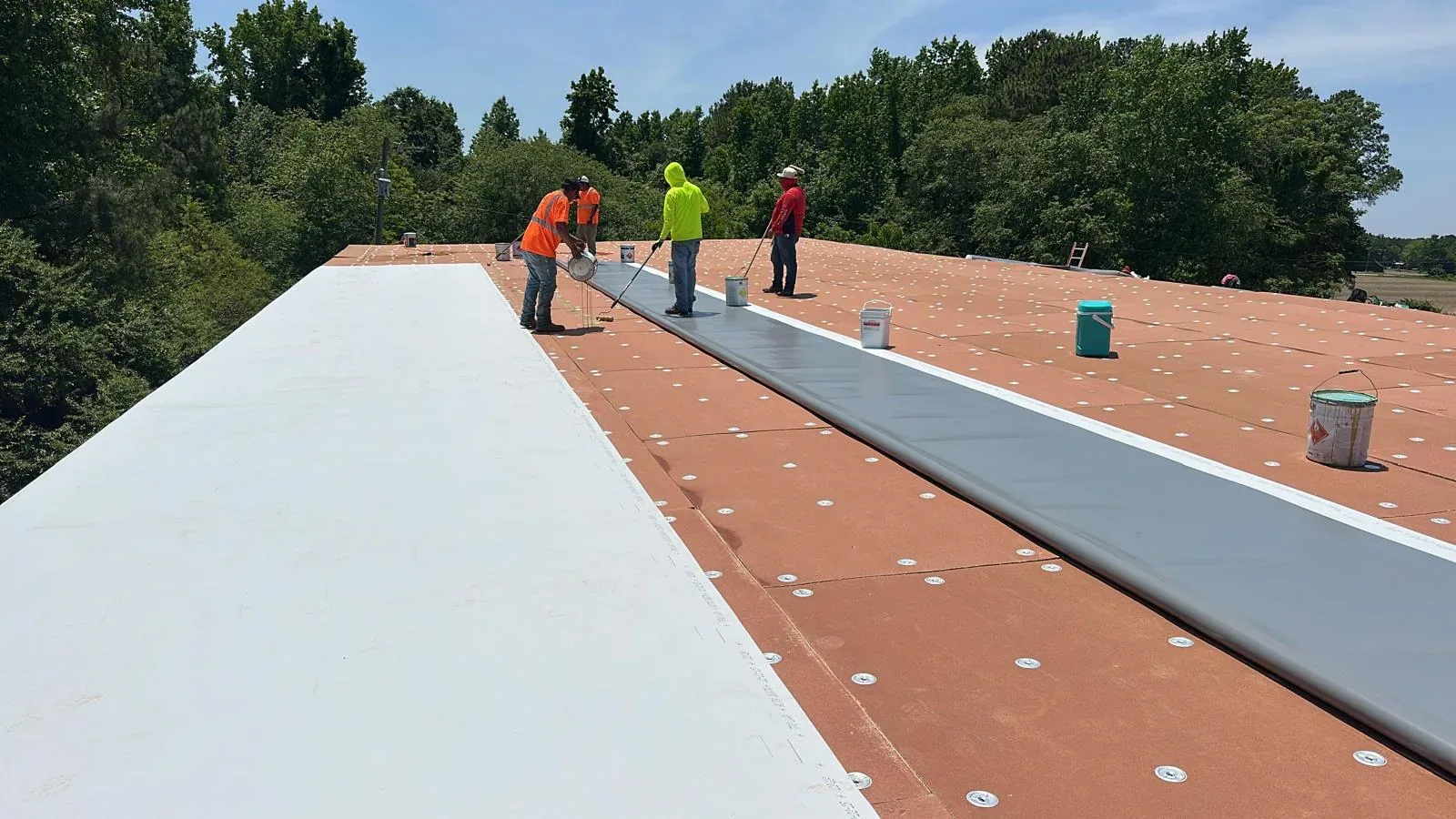
Holcim Elevate Roofing Systems in Escondido, CA
Roofing Manufacturers · Escondido, CA
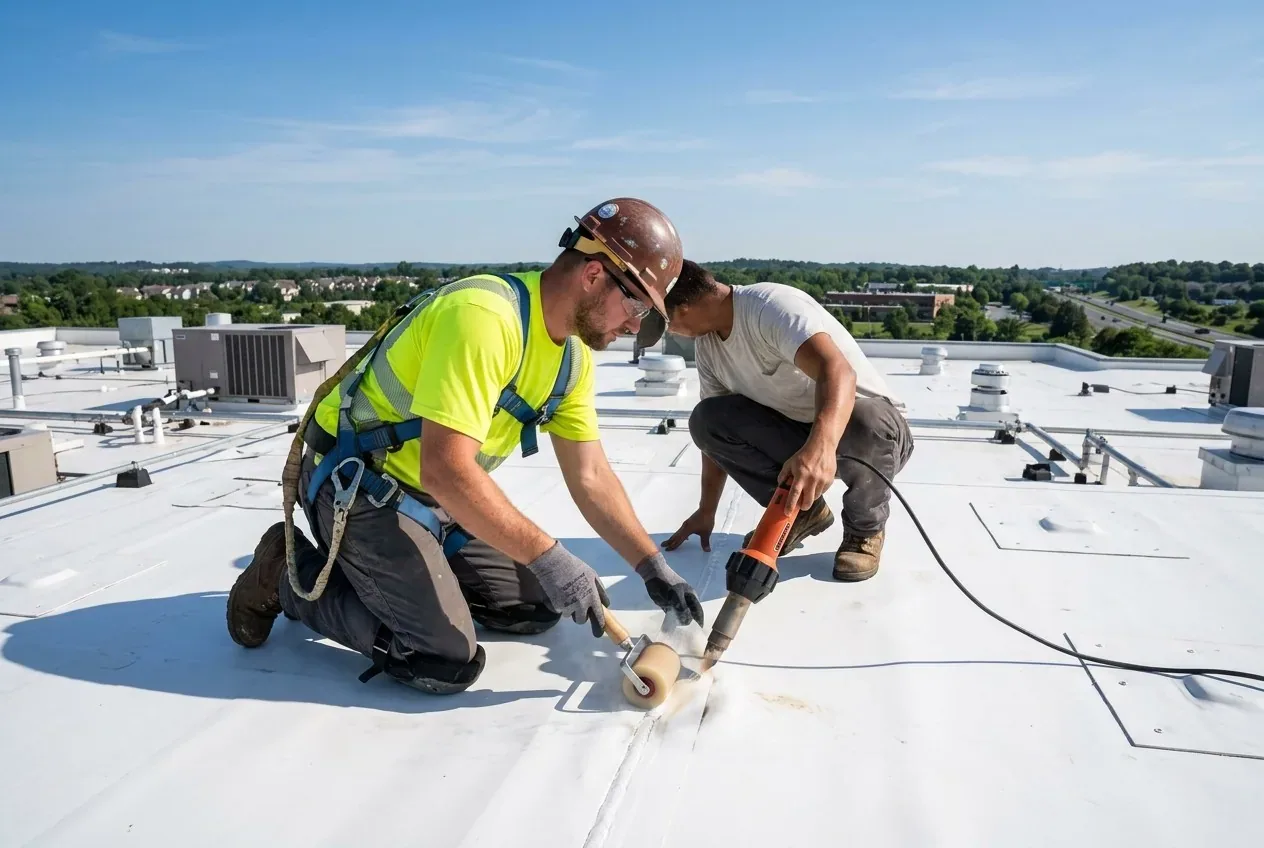
Before a reroof, confirm the membrane family and its condition rather than relying on a label alone. TPO and EPDM use different seam and repair methods. We inspect the sheet, attachment, insulation, and edge details before pricing either system. Retail, office, visitor-serving, and residential uses share stretches of Centre City Parkway. That land-use pattern changes neither the roof layers nor the attachment; we verify both at the property. We verify the property's access and roof assembly first. A site review records conditions by area so the general contractor can compare scope and schedule.
A manufacturer's label may refer to a product family, an earlier installation, or only one section of the roof. We compare product records with accessible seams, curbs, perimeter metal, drains, and previous repairs. A patch must suit the existing sheet and substrate. If the paperwork and exposed assembly disagree, we pause procurement and identify the exact seam, curb, or roof zone that needs field confirmation.
Membrane family and roof layers
A thermoplastic TPO membrane has heat-welded seams. An EPDM sheet uses compatible seam products. Naming a membrane family does not identify the insulation, cover board, vapor control, attachment, or deck below it. We inspect exposed transitions and confirm the assembly from records or test openings. Product selection depends on the complete roof, not a sample label alone.
Adhered and mechanically attached systems transmit loads differently. The deck, perimeter design, fire and wind criteria, and roof geometry all affect the assembly. At a recover, existing layers need to remain suitable and drainage must still work. On a confirmed TPO roof, the lap is heat-welded; an EPDM system uses compatible seam materials. Verify the installed sheet before setting repair preparation.
A field check starts at a lap or termination that can be reached safely. We record the membrane surface, seam method, patch history, and substrate condition, then compare those observations with the approved project documents. If the repair area crosses into another roof section, we mark the transition before ordering material. This keeps a specification decision attached to the actual assembly rather than a product name on an old invoice.
Laps, curbs, and edge metal
On TPO, we check the weld for full contact and look for wrinkles, contamination, or a patch that has lifted at its perimeter. On EPDM, we examine seam tape, primer, and the sheet beside the bond. The repair limit extends only as far as the membrane and substrate remain stable. Photographs should show a close view and the roof area around it. A written scope identifies preparation, compatible material, and the check used to confirm closure.
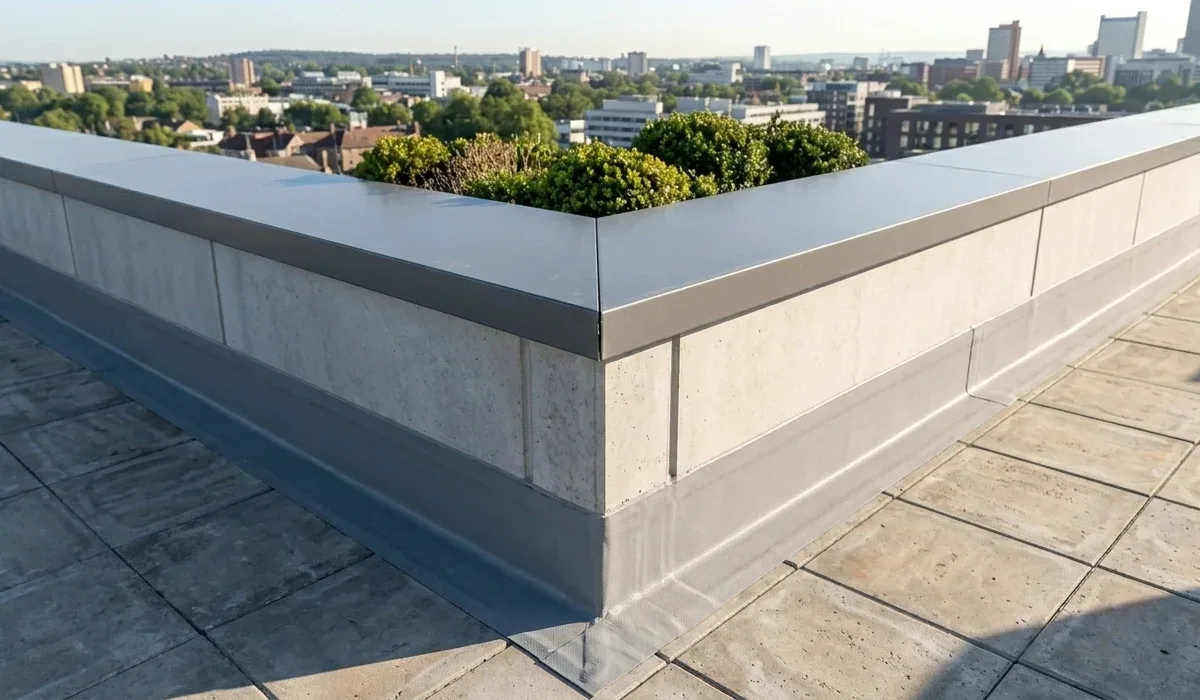
Roof edges, curbs, drains, and wall transitions need their own details. We inspect metal cleats, coping joints, counterflashing, pipe boots, drain bowls, and low points. Equipment swaps can leave old supports or openings that require reconstruction. A perimeter metal scope or curb coordination plan should identify other trades and access requirements. Citracado Parkway borders Harmony Grove Industrial Park between Auto Park Way and Avenida del Diablo. Material staging and roof entry still depend on the individual property's loading rules.
Local repair or broader work
A bounded seam opening can be repaired when nearby membrane, insulation, and attachment remain sound. Repeated failures or moisture beneath several seams may call for a wider review. We map active defects separately from areas that need testing. Wet insulation can reduce support and hold water against the deck. A coating does not correct that concealed condition. We state the evidence and the decision it supports, then set a limit for any additional opening.
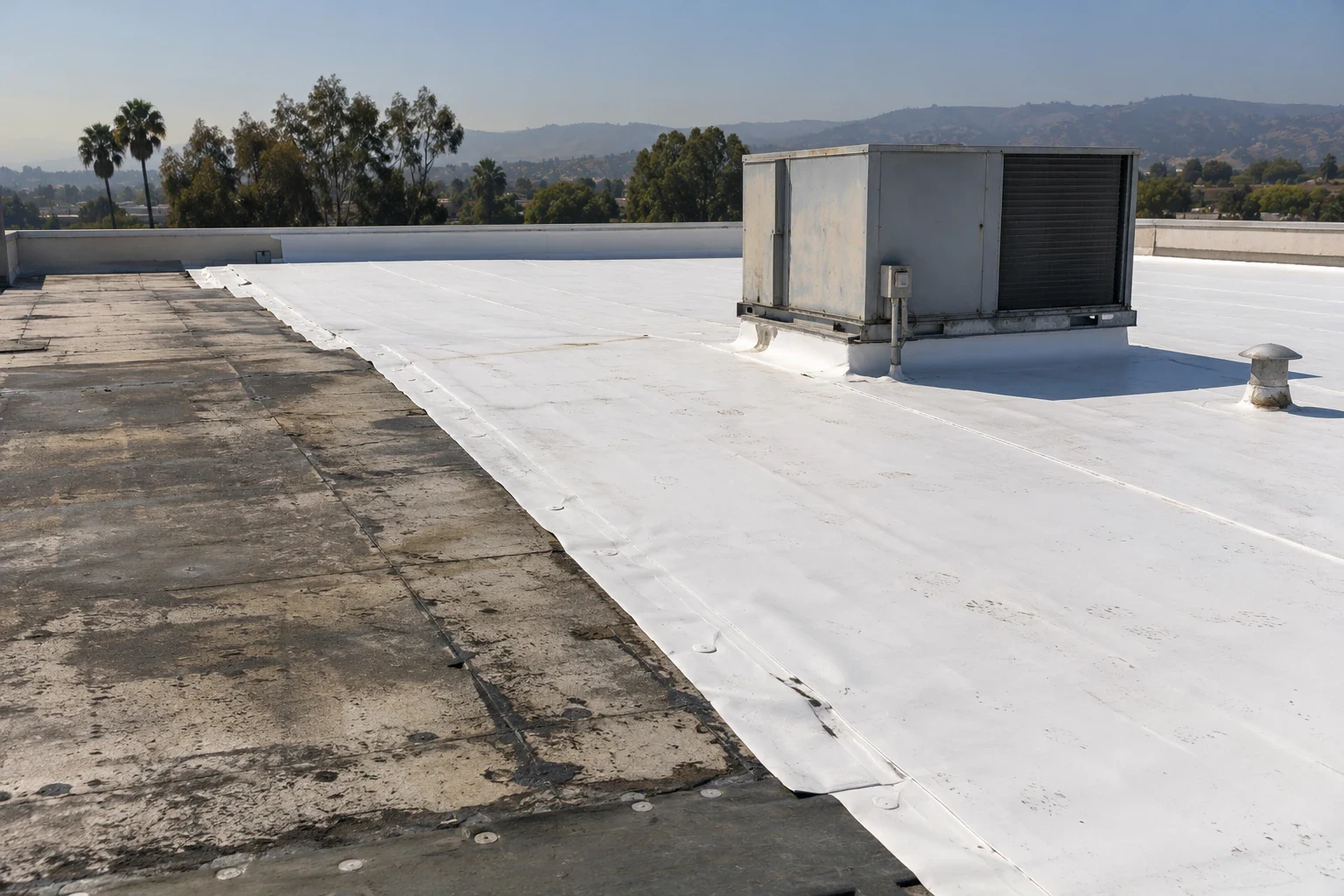
A recover may preserve the existing field if it is dry, stable, compatible, and allowed under the project requirements. New layers can alter drain height, curb transitions, and perimeter termination. Tear-off exposes concealed material but changes the schedule, debris plan, and interior protection. We compare the recover option with removal using matching areas and access assumptions. The owner can then see why each choice costs and schedules differently.
Site access and daily close-in
Installation timing depends on dry conditions, material preparation, safe roof access, and a secure end-of-day tie-in. We confirm hatches, ladders, lift placement, deliveries, and staging with the property contact. Interior work below may require dust or leak protection. An active warehouse, office, or retail area can need a phased sequence. The crew plan names the access window and the areas that must remain open.
Before applying bonding materials, we check wind and surface conditions; a seasonal pattern is not a roof inspection.
Existing labels and project documents
Gather product labels, roof plans, prior proposals, repair invoices, and warranty documents. We compare them with the visible system and mark any mismatch. If separate roof wings use different membrane families, we keep their areas and repair materials distinct. A test cut can confirm layers at a chosen point. The result does not describe every concealed zone. We note what remains untested so the proposal does not price an assumption as known work.
Manufacturer instructions and project specifications guide product use; the selected assembly still has to fit the deck and design conditions. The owner should receive a clear schedule, scope boundary, preparation requirements, and closeout record. A photo record can show the existing detail beside the finished repair. For an existing Sarnafil roof system or Johns Manville assembly, confirm the installed build-up before ordering material. The nearby Grand Avenue streetscape includes wider sidewalks, diagonal parking, and traffic-calming roundabouts, so confirm loading and pedestrian access before moving materials. For a roof visit nearby, we confirm the property’s membrane, equipment, access route, and work window with its contact. For a roof in the Centre City Parkway commercial area, confirm the property’s membrane, equipment, access route, and work window before pricing the repair. Grand Avenue's second streetscape phase finished in June 2025. Any Downtown Escondido delivery still needs loading and staging confirmed at the building.
Frequently Asked Questions
What can an old roof label tell us?
A label can help identify a membrane family or project record, but it does not show every roof area or concealed layer. We compare it with accessible seams and transitions. If the label and exposed sheet differ, the material choice stays open until that area is checked.
How do TPO and EPDM seam repairs differ?
TPO seams are heat-welded; EPDM uses compatible seam products. We identify the installed membrane, condition, and preparation before selecting materials. The repair scope names the tie-in and the check used to confirm closure.
Can another insulation board be added during a recover?
We inspect the deck, existing layers, attachment, drainage, added height, and project requirements first. A recover proceeds only when the assembly and details allow a compatible build-up. The proposal lists confirmed placement and any test openings needed before price.
What belongs in a proposal when project records name Holcim Elevate?
Include defined roof zones, membrane identification basis, insulation, attachment, flashing, edge conditions, removal limits, drainage, testing, and concealed conditions. Compare current product records against field observations before ordering material.
What should an owner do when a leak threatens an active space?
Call to confirm safe access and temporary protection before the roof is opened. We review the assembly, weather, and site operating constraints, then define the permanent work scope.
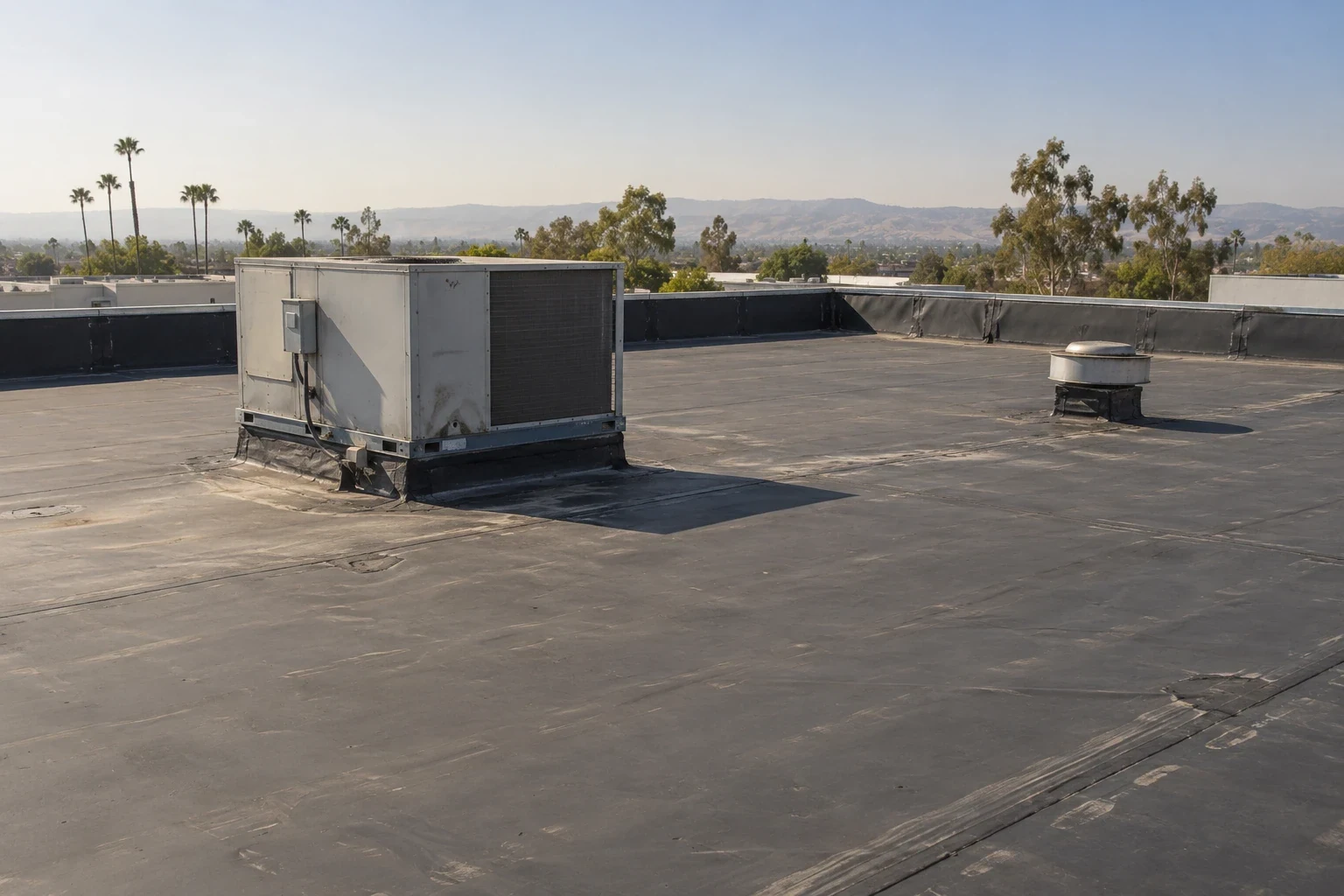
Review a Holcim Elevate Roof
Arrange an inspection with the product label, roof plans, leak records, and site access rules ready. We will document the assembly and define the repair, recover, or replacement scope. Call to set a visit.
Call 555-555-5555 or email [email protected].