
Commercial Flashing Repair in Escondido, CA
Roof Damage Repair · Escondido, CA
A split at a wall transition can move water behind a roof detail. In Escondido, dry Santa Ana winds can be warm or hot and pass through the region from fall into spring. Wind exposure puts attention on termination bars, counterflashing, and exposed laps. We inspect the roof side and the wall side before drawing a repair boundary. A general contractor needs a scope that states which layers will be removed and where the new detail will tie in. That affects façade work, lift access, and whether interior protection must remain in place. We photograph each transition, then separate open joints from loose sheet metal or a membrane defect. The Centre City Parkway commercial corridor is one local setting for coordinated retail and office activity. Each building still needs its own finding.
Follow the wall line
We trace water from the interior symptom toward the nearest roof-to-wall condition. A wet ceiling below a parapet does not prove the parapet is the entry point. The inspection checks the membrane turn-up, base flashing, counterflashing, termination, and coping joint. We look for open laps, cracked sealant, fastener movement, and damage from later trades. Each defect receives a location mark and a photograph. That gives the owner a clear choice between resealing a joint, rebuilding a transition, or expanding the inspection.
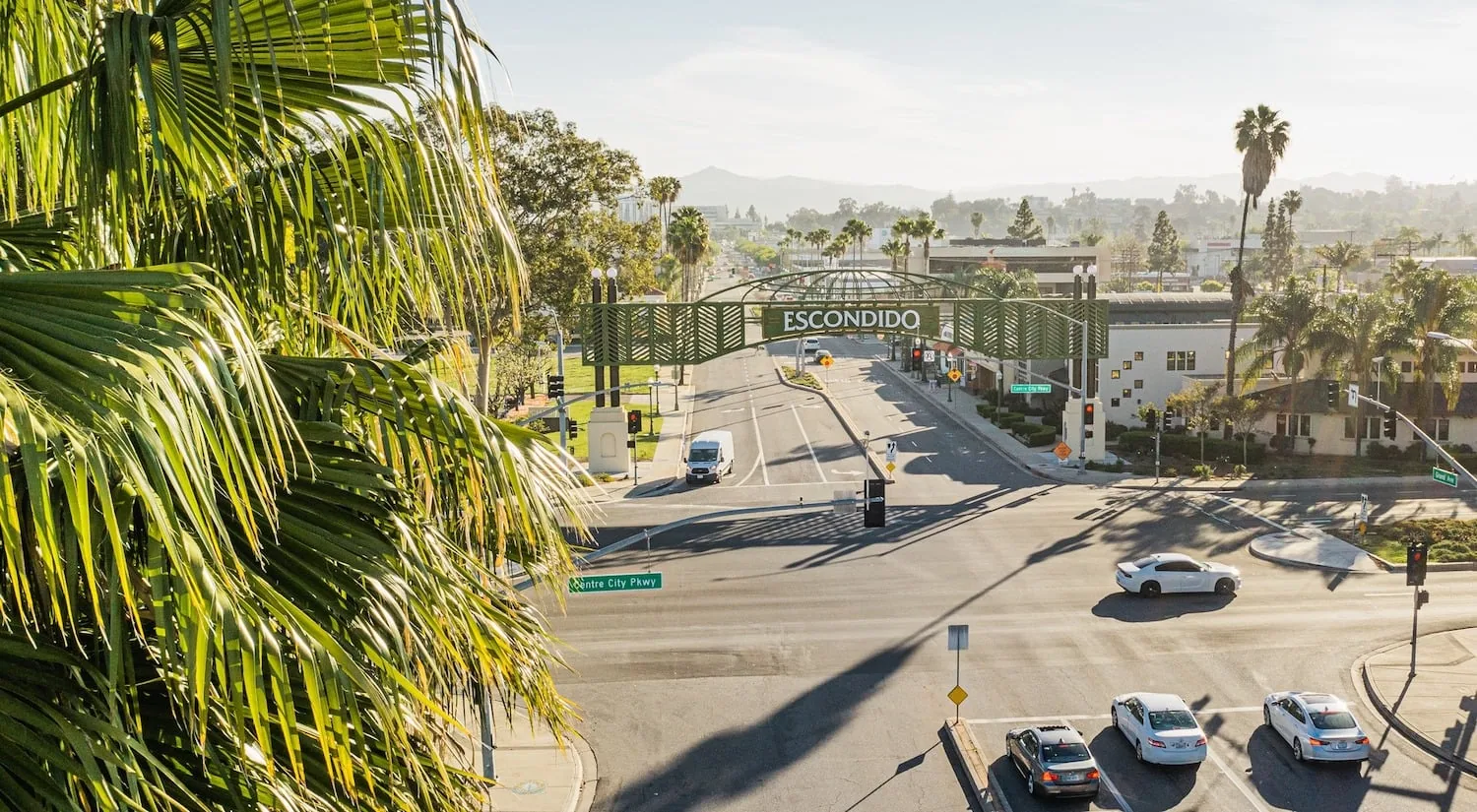
The downtown leg of Grand Avenue finished its second streetscape phase in June 2025. Sidewalks widened, parking turned diagonal, and roundabouts reshaped nearby traffic movement. These public changes help locate the district, but they tell us nothing about private façade details. We confirm how equipment and material will reach the work area. If the repair meets masonry, metal panel, or another wall finish, the scope notes the trade boundary. The penetration flashing service covers similar tie-in details around roof openings.
Inspect curbs and penetrations
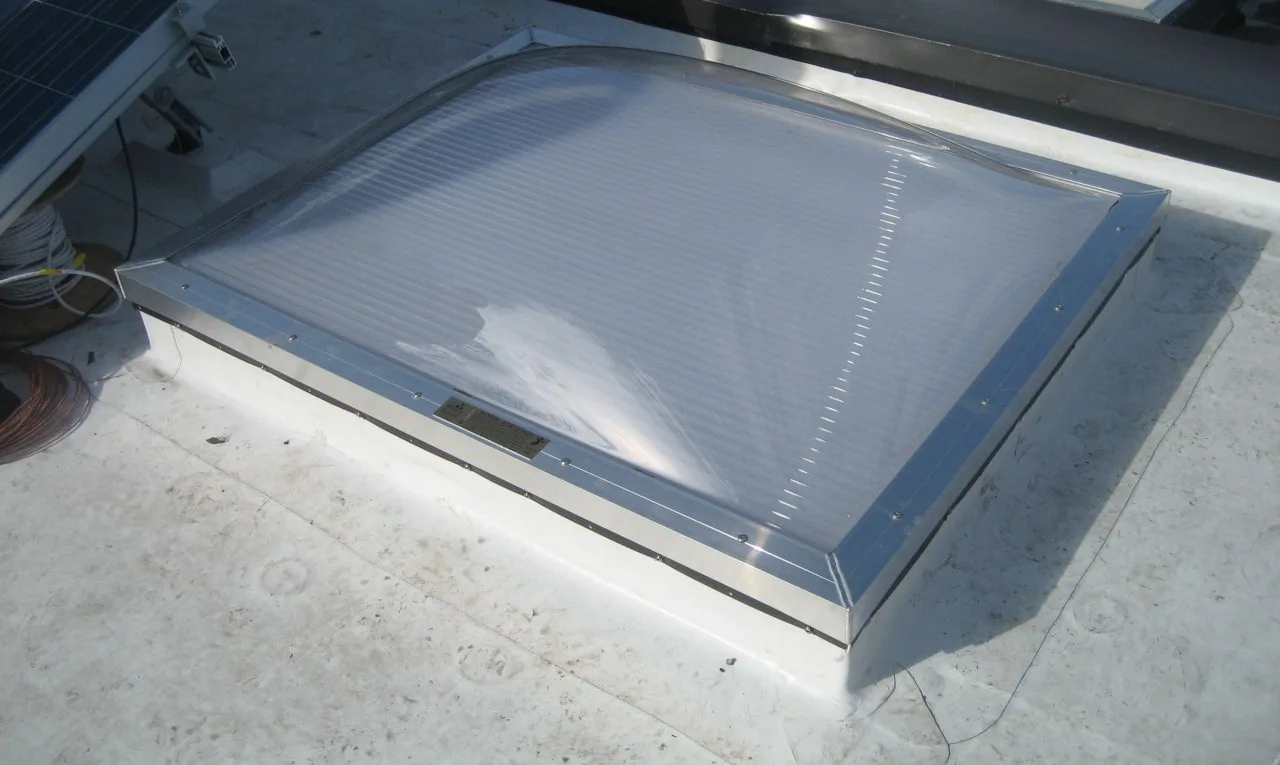
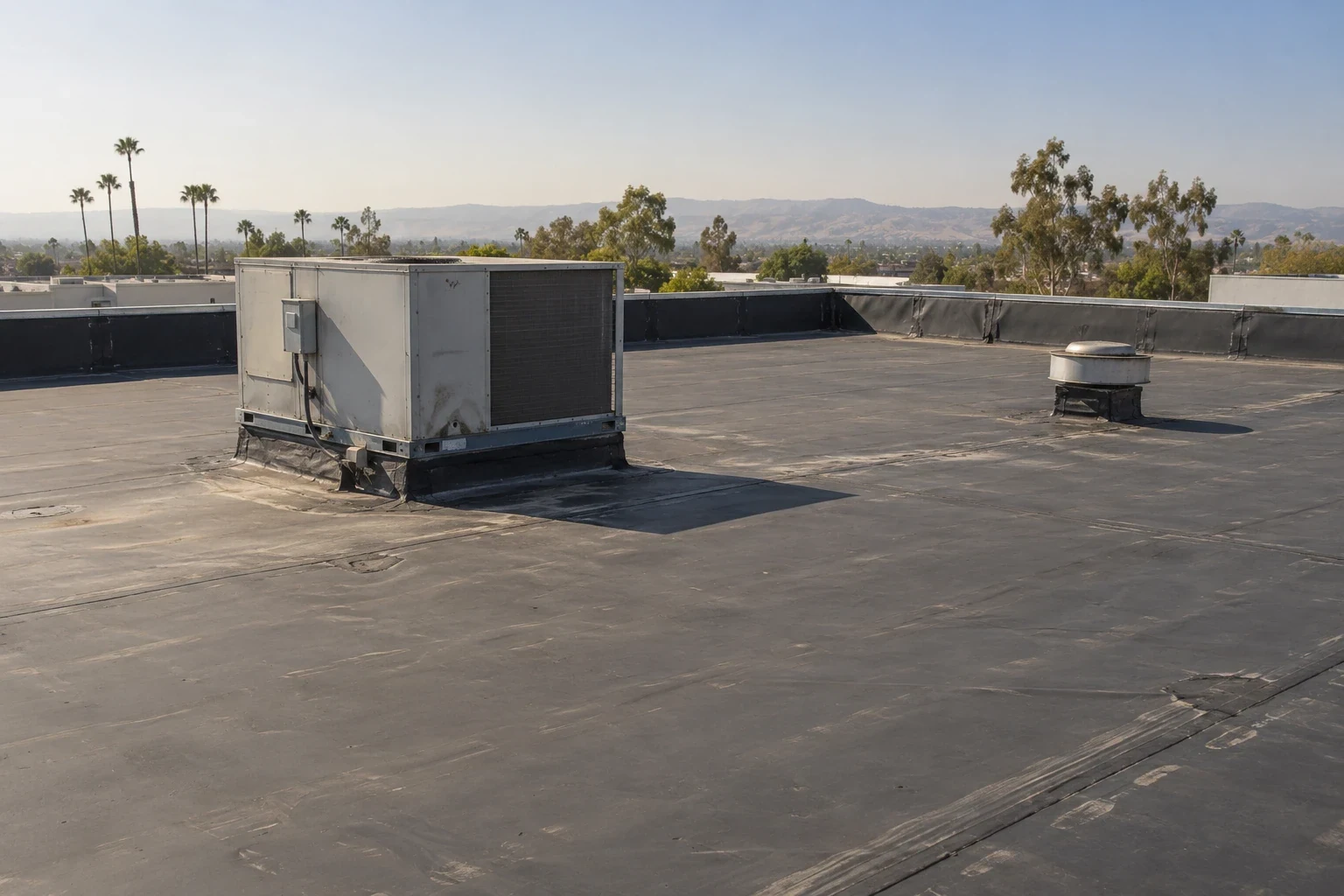
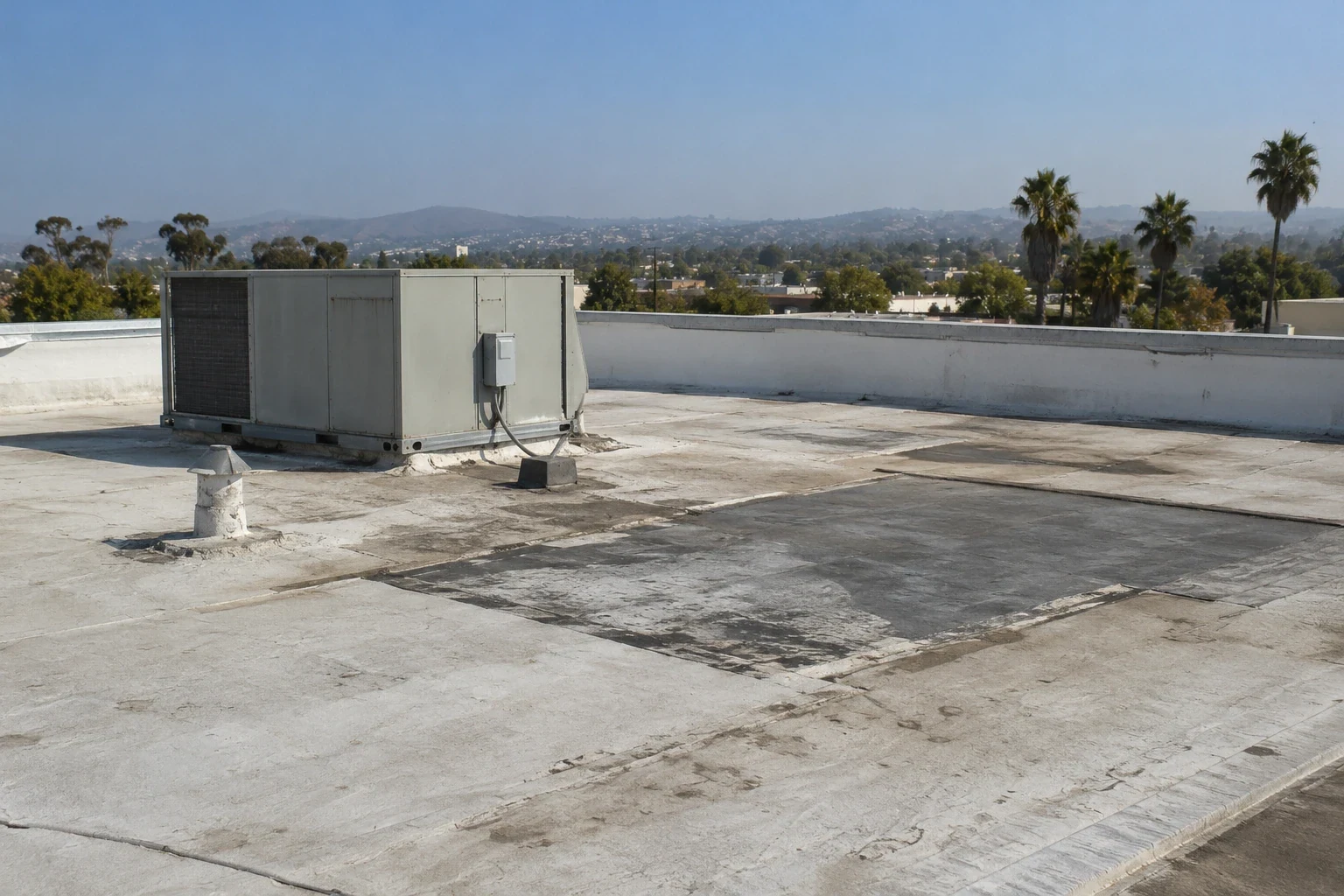
Mechanical curbs, pipes, skylights, and equipment supports interrupt the membrane plane. A repair must account for the curb height, flange, membrane type, and any clamp or counterflashing. We check for cracked corners, unsealed fasteners, loose pitch pockets, and membrane separation at the turn. The surrounding roof matters. A new flashing placed over wet or unstable material may only cover the symptom. We mark what must be removed and what can stay, then sequence the work so the building remains weather-tight.
Escondido’s employment targets include life sciences, software, telecommunications, and research alongside manufacturing and office work. A contractor working around active units should confirm service clearances and shutdown windows with the property lead. We record the equipment involved before staging the detail repair. If an older flashing has opened beside a field seam, the seam condition is checked independently. A compatible EPDM repair uses the right membrane and adhesive details for the existing system.
Match the repair to the assembly
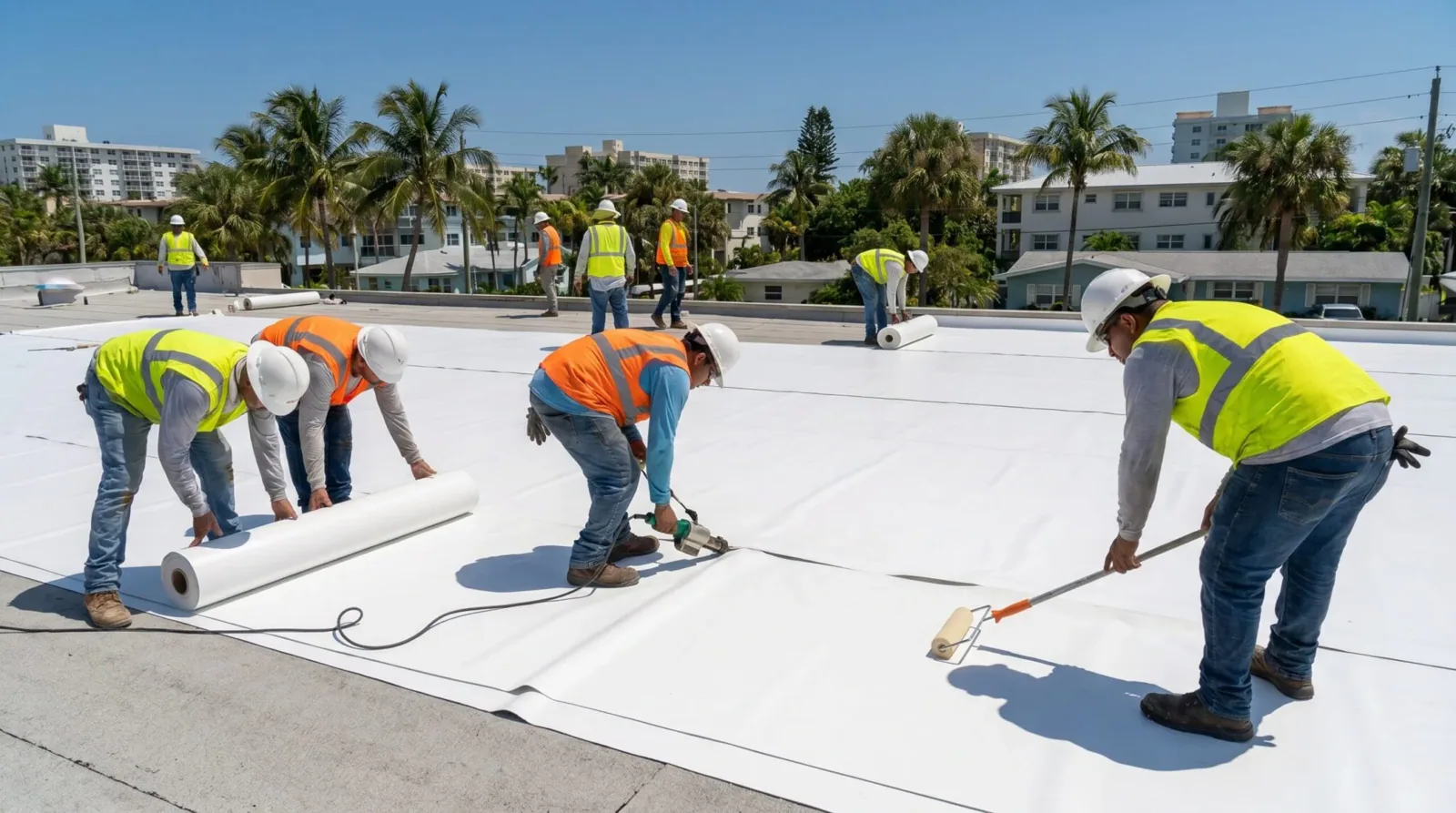
Flashing methods change with the roof system. Thermoplastic membranes may be welded at compatible seams. EPDM and modified bitumen use different preparation and lap methods. Liquid flashing products require a suitable substrate and enough curing time before exposure. We identify the existing material before selecting the repair. If the membrane cannot be confirmed from a label or field characteristic, we include that verification in the scope. The crew should not guess from color alone.
A proper repair includes the tie-in beyond the visibly split edge. We check whether insulation or cover board has softened and whether the substrate can hold fasteners. If water has traveled beneath the flashing, the opening may need to extend to dry material. The repair scope lists removal, surface preparation, compatible materials, and closeout photos. When multiple transitions fail across a broad area, compare localized corrections with the replacement option. That decision depends on documented conditions across the assembly.
Schedule around the site
The Research and Technology Center represents a significant share of Escondido employment acreage available for development. A roof near that district still needs its own access plan. We confirm lift placement, mechanical clearances, tenant hours, and the safe route to the flashing repair. The approved window determines whether we can open the detail, dry it, and close the assembly before the roof is exposed to weather.
For a property in the Downtown Escondido area, material staging may need to account for public frontage and nearby deliveries. On another site, a roof hatch or secured service yard may be the controlling constraint. We verify the actual condition during the walk. If the roof must remain in operation, we divide work into small sections and agree on daily dry-in boundaries. When tenants remain inside, the occupied-building sequence sets the protected work area and the paths that stay open.
Close the detail
After repair, we examine the completed lap, termination, corner, and adjoining membrane. The closeout includes dated photographs and the location of each repaired detail. It notes any area that could not be opened or tested. If the roof needs a water check, we plan it so the observation has a defined start and end. The record should say what passed and what remains for follow-up. That lets a general contractor close the work item with evidence rather than a verbal update.
A wall transition can also sit above a depressed field or a restricted outlet. We record those conditions separately, then decide whether the leak path could have reached both locations. A drainage issue deserves its own review and repair boundary. Our ponding-water evaluation traces the low area and drain before the crew changes the assembly. This avoids using new flashing to conceal a condition that needs different correction. It also helps the project team preserve a useful record for later roof work.
If a leak returns, the site team can compare the new symptom with the repair map. We look for a changed boundary, nearby penetration, or separate drainage issue. We can review the record and return to the marked zone before expanding the work. The repair should remain traceable to the identified assembly. Bring any roof plan, incident photos, and access constraints when you call. Commercial Roofers Escondido can arrange an inspection and define the next scope step.
Frequently Asked Questions
Does a leak below a wall prove the flashing failed?
It identifies an area to inspect, not a confirmed entry point. We trace the roof transition, nearby penetrations, seams, and drainage path. The finding records the observed defect and the limits of the inspection.
Can you repair flashing without disturbing the wall finish?
Sometimes. The answer depends on how the counterflashing terminates and whether the roof membrane can be tied in from above. We document the layers and identify any wall-trade work before pricing the repair.
What if the existing membrane type is unknown?
We verify the assembly using available labels, exposed edges, and field characteristics. If identification remains uncertain, material confirmation becomes a scope step. That protects compatibility at the new lap.
How much detail should the repair record include?
It should locate each transition, show the original defect, list the repair materials, and photograph the completed tie-in. We also note any concealed area that could not be inspected. The project team can then close the item with a clear record.
What helps schedule a flashing repair around other trades?
Provide roof access rules, mechanical shutdown limits, active façade work, and tenant hours. We define staging and daily dry-in boundaries around those constraints. Call to arrange a walk and review a defined scope.
Define the flashing repair
Share the roof plan, leak location, membrane information, and site access rules. We will inspect the transition, identify trade boundaries, and document a repair scope. Call Commercial Roofers Escondido to arrange a roof review.
Call 555-555-5555 or email [email protected].