Data Center Roofing in Escondido, CA
Property Types We Roof · Escondido, CA

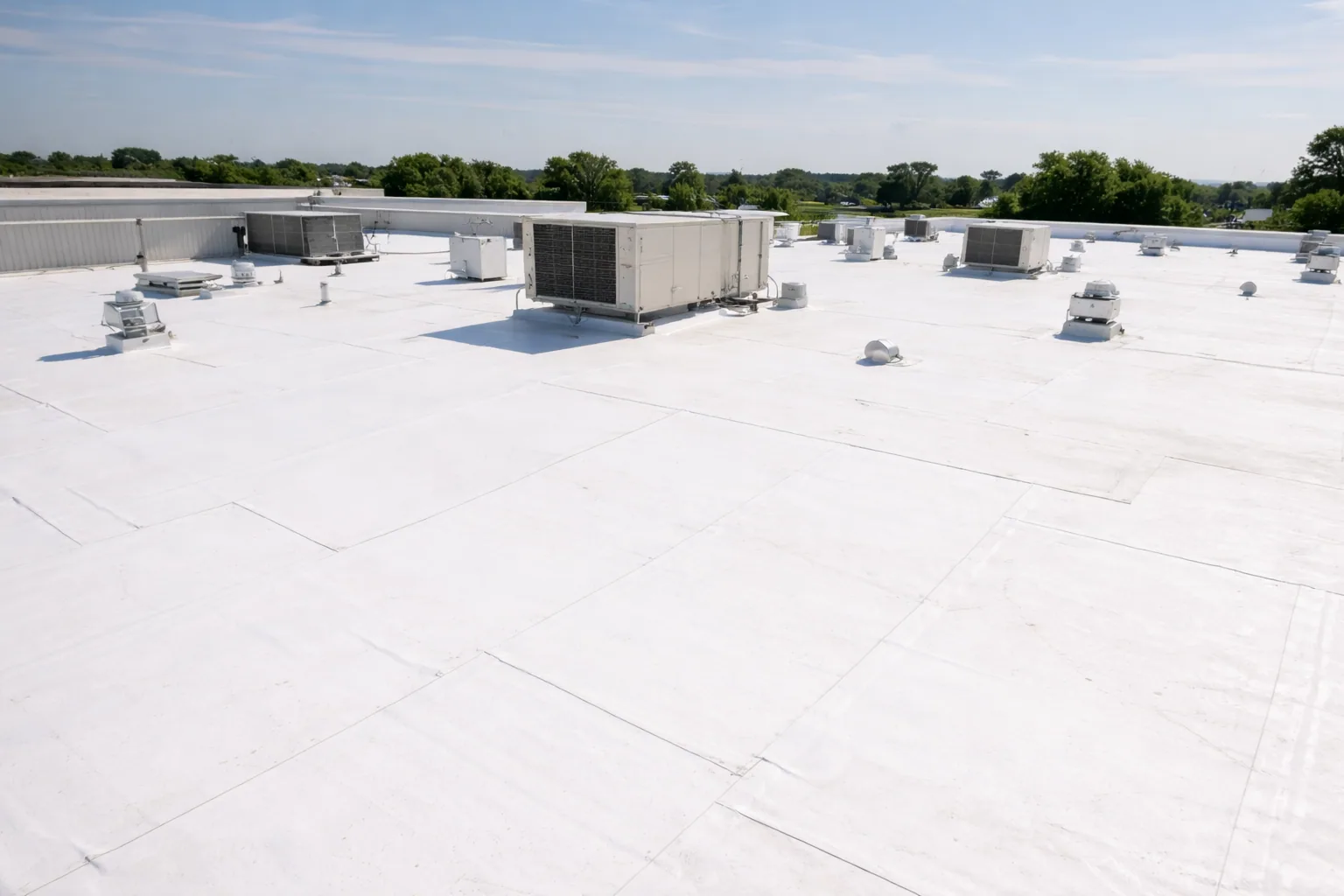
A roof opening beside cooling equipment needs a tighter plan than a routine patch. In Escondido, CA, we identify the affected zone, interior sensitivity, active equipment, and the access limits before work is priced. Data-center roof assemblies can include membranes, metal, insulation, curbs, conduits, and dense mechanical supports. A leak path may cross beneath the visible mark. We map seams, drains, and penetrations, then separate confirmed defects from areas that need testing. The general contractor gets a repair boundary, hold points, and a sequence for keeping the roof closed. When water threatens equipment or occupied space, call to confirm safe access and temporary protection before a visit. Permanent work follows after site staff approve a safe window.
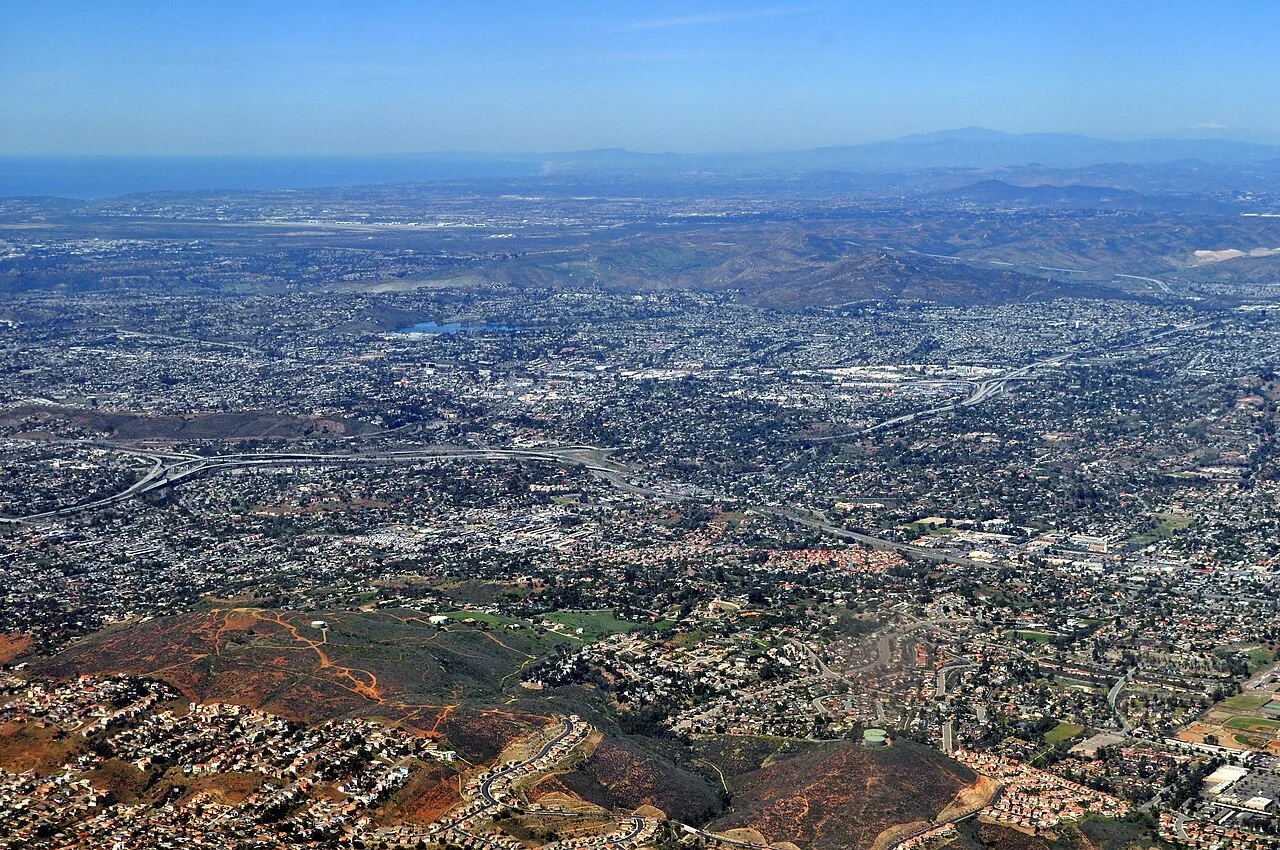
Escondido retains employment land for technology and manufacturing, including the Research and Technology Center. Its employment mix also includes software, telecommunications, and research and development. Harmony Grove Industrial Park extends along Citracado Parkway between Auto Park Way and Avenida del Diablo. For an operating technology property, coordinate roof access with security, cooling, power, and building operations before setting a work window. A commercial roof inspection records the assembly and roof details without treating equipment status as a roofing finding.
Cooling Plant Interfaces
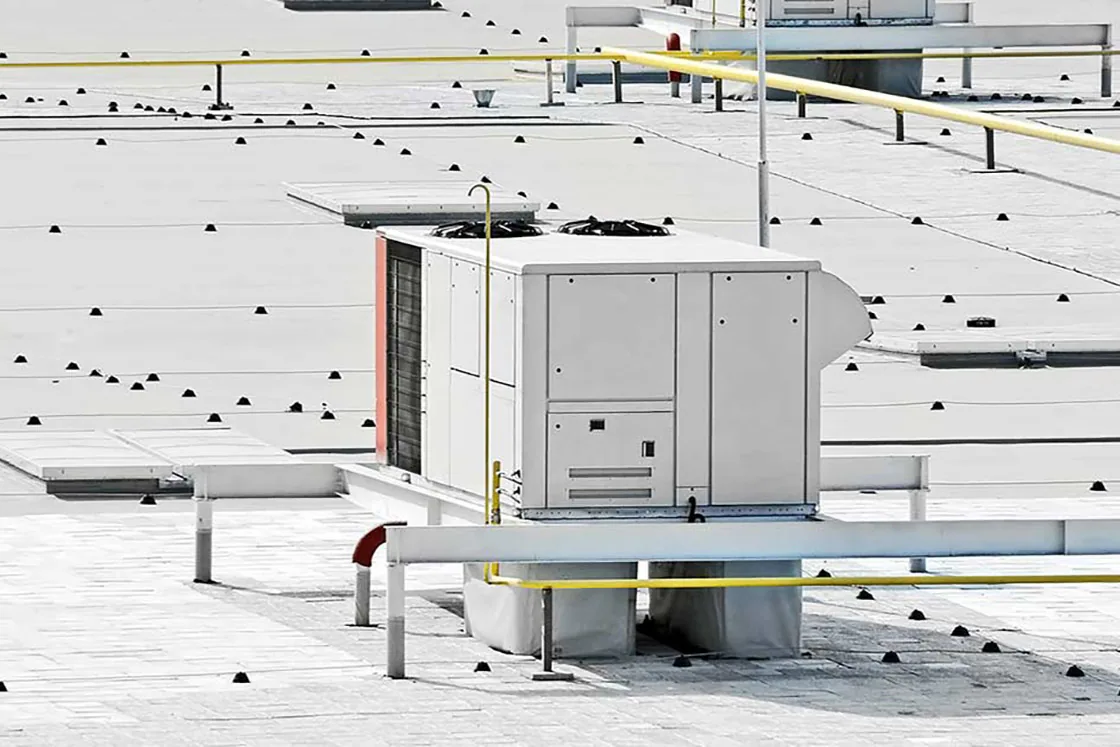
Curbs, pipe supports, cable entries, and equipment screens interrupt the roof plane. Each transition can fail differently. We check membrane turn-ups, metal counterflashing, fasteners, sealant joints, and nearby seams. We also look for movement where equipment service changes the support load. A roof repair must leave the curb stable and the drainage path open. We coordinate any lift, disconnect, or protective cover with the mechanical and electrical leads. The scope names which party handles each component before a roof layer is opened.
A raised curb can hide moisture at its base even when the cap looks intact. We photograph the corners, perimeter, and adjacent field sheet. Where seams run close to the equipment, probe checks and a small test opening may answer whether damage is local. An equipment-curb repair scope should state the disconnect and reset boundary. If the roof is single-ply, the TPO seam and flashing approach depends on clean, compatible material. We note any area that remains outside the repair limit.
What Moisture Testing Shows
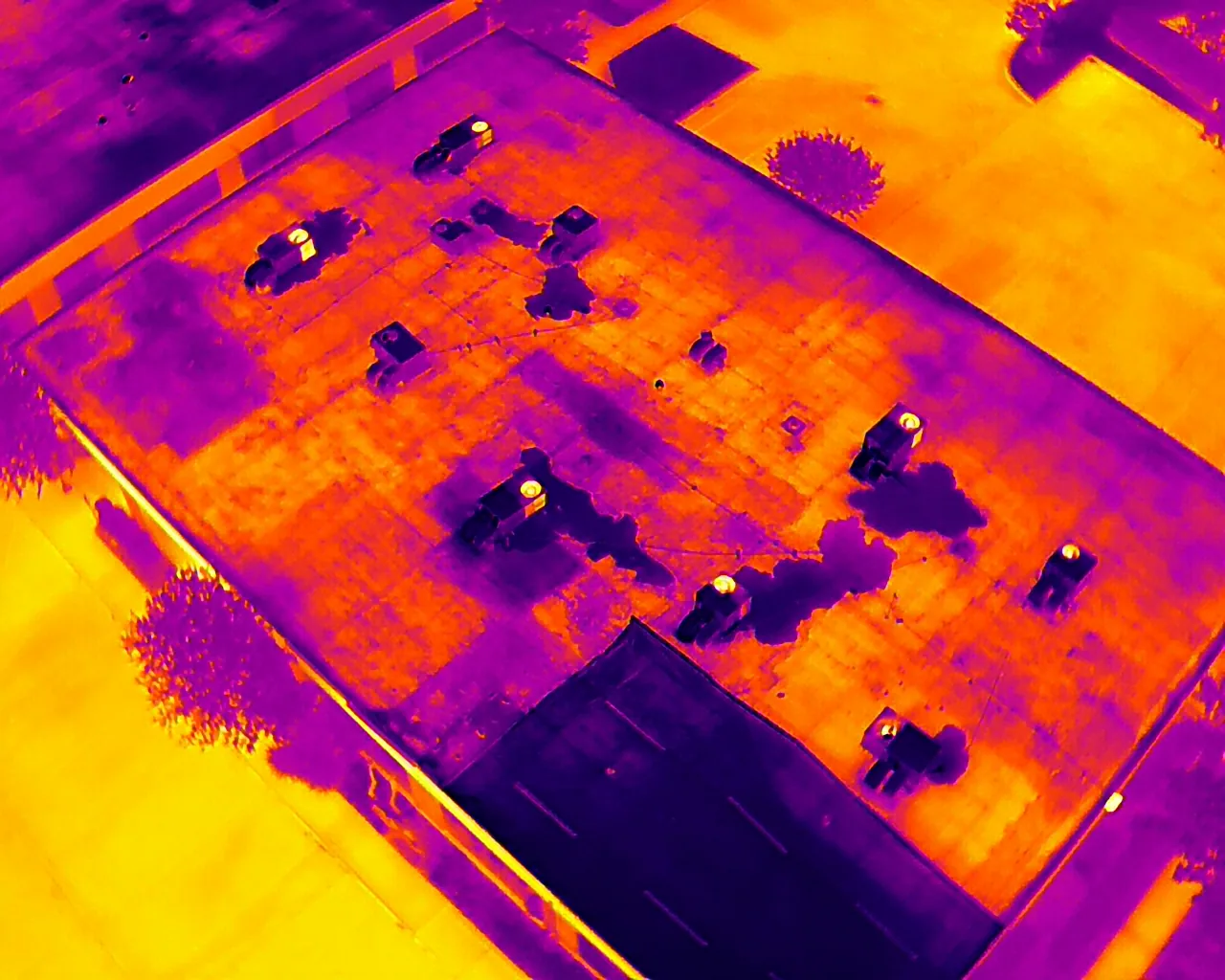
Visible water inside does not locate the roof defect by itself. Water can travel across the deck or insulation before reaching a ceiling, cable tray, or equipment room. We compare leak reports with roof seams, drains, walls, and penetrations above the affected area. Infrared patterns can help choose where to test, but a core or other approved opening confirms the layers at that point. We agree on locations and protection before drilling. The report identifies scan conditions, test points, and any area we could not inspect.
Technology, life sciences, software, telecommunications, and research and development are part of Escondido’s employment mix. For a data center, the roof review still begins with its cooling equipment, access rules, and owner-approved outage window. For a data center, we confirm the actual cooling equipment and roof assembly from its plans and field conditions. Roof plans, equipment drawings, leak history, and prior repairs are the better starting records. A targeted moisture survey can refine test placement when the surface and operating conditions allow. We connect each reading to a mapped roof section and state whether follow-up opening is recommended. That keeps a diagnostic signal from becoming an unsupported removal quantity.
Controlled Access and Uptime
Before a roof walk, the site contact sets escort rules, approved paths, equipment clearances, and any photography limits. We can document roof details without recording sensitive room layouts. Work staging should stay clear of intakes, exhausts, emergency routes, and cooling service areas. A lift plan may need a separate approval. If a repair requires opening the deck, the owner and facility operator determine the operational hold point. The roofing scope shows when the system is exposed, temporarily protected, and closed again.
Heat and regional Santa Ana winds can stress exposed edge details and sealants. Santa Ana winds are dry and sometimes warm or hot, most commonly from September through May. After reported exposure, inspect terminations and flashing at the facility, then coordinate any repair window with operations. The Research and Technology Center employment area is a broad local planning reference; an individual roof still needs its own access route and site rules. For ongoing operations, an occupied-building work sequence can define short work zones and closeout checks.
Repair and Replacement Triggers
A single failed boot or seam may support a local repair if adjacent layers remain dry and secure. Multiple wet areas, repeated flashing failure, loose attachment, or a deteriorated deck can require broader removal. A recover is not assumed from the facility type. We check the existing layer count, moisture, attachment, drainage, compatibility, and requirements before recommending it. If only one zone is compromised, keeping sound areas in service may reduce unnecessary disruption. The written scope should show the evidence behind the boundary.
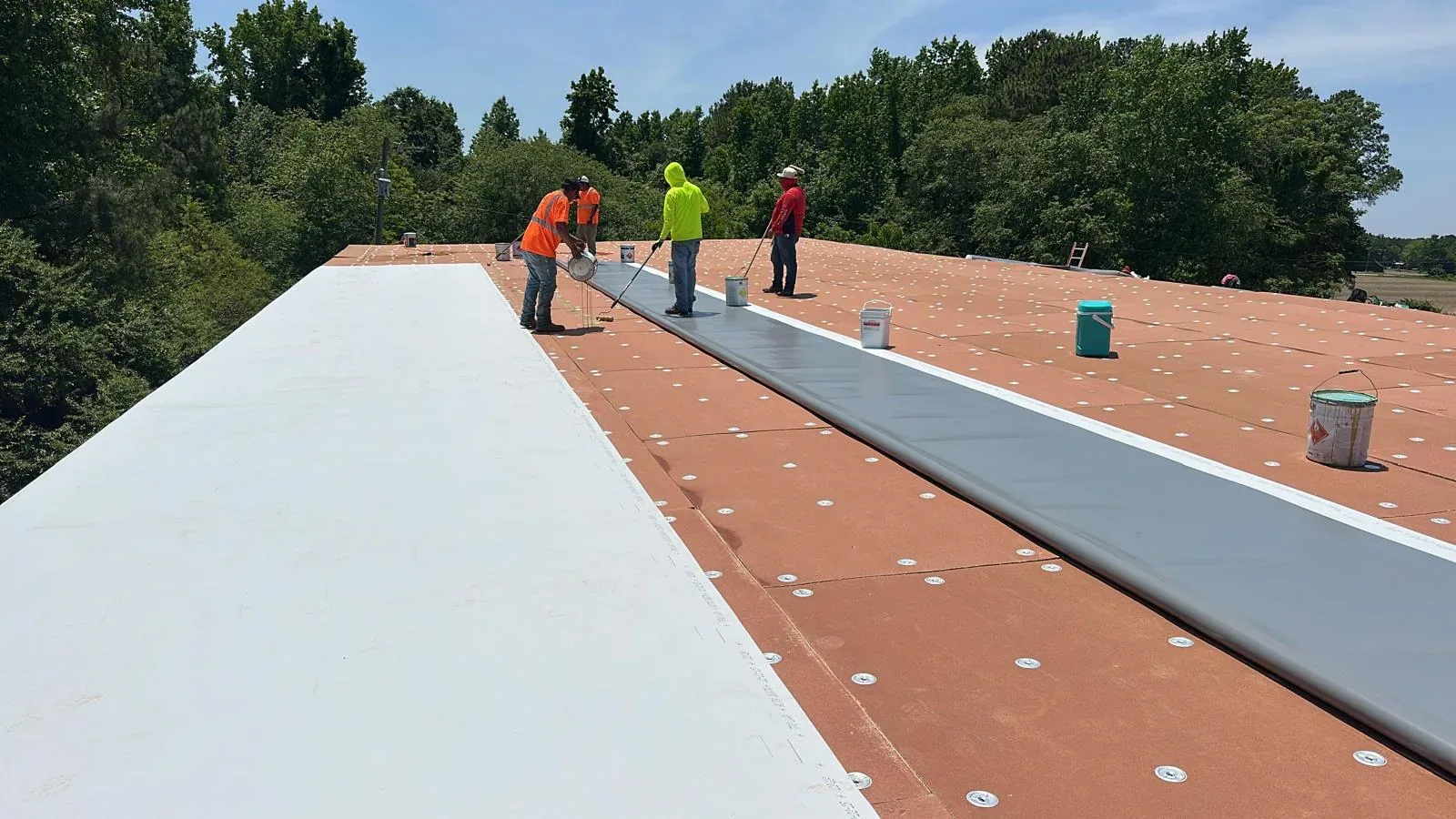
Replacement proposals should list insulation, cover board, attachment, membrane, flashing details, edge securement, and equipment transitions. We can sequence separate roof sections with documented temporary dry-in and inspection points. For a campus of offices, office roof scheduling may raise related occupied-area controls. Manufacturing and technology buildings also need separate equipment coordination, which a plant roof plan addresses from an operations angle. A new assembly must be reviewed for drainage, mechanical loads, and access. Coatings do not correct wet insulation or failed attachment.
Evidence for Capital Review
For a useful decision, collect roof plans, leak dates, maintenance logs, equipment layouts, previous repair scopes, and any known shutdown restrictions. We compare those records with the roof walk and mark observations by zone. The recommendation separates immediate water control from permanent work and optional testing. It identifies who approves openings, who protects equipment, and how the area will be checked after closure. This makes the estimate easier to compare with an uptime plan.
Closeout should include dated photos, the repaired detail, materials, roof-zone reference, and remaining observations. If mechanical staff restore a unit or support, state the handoff and inspection point. A roof condition report can carry those findings into capital planning. Before a roof walk at a technology property, confirm its approved access path, escort requirements, and equipment restrictions; those operating limits shape the inspection window. Arrange a visit with security rules, roof records, equipment contacts, and reported leak locations ready. We will document the work boundary and give the project team a repair or replacement sequence it can schedule.
Frequently Asked Questions
How can roofing work be planned around sensitive equipment?
We mark the roof zone, equipment below, access path, and required protection before setting the sequence. The facility operator identifies restricted areas and approval points. Any disconnect or restart stays with the responsible trade. The roofing scope states when the assembly is open and how closure is confirmed.
Does an infrared scan prove the insulation is wet?
No. A scan helps select locations for closer testing under suitable conditions. We compare its pattern with roof construction, leak records, and visible defects. An approved core or opening confirms the layers at that point. The report identifies what was scanned and what still needs confirmation.
Can a failed equipment curb be repaired without replacing the roof?
A local correction can work when the curb, adjacent sheet, attachment, and surrounding insulation remain sound. We inspect the full perimeter and nearby seams. If moisture or repeated movement extends beyond it, the work boundary needs to expand. We document why the repair stops where it does.
What records help define a data-center roof repair?
Roof plans, equipment layouts, leak reports, prior repair details, security rules, and approved access windows help set the scope. We verify records against present conditions. If a drawing does not show a later equipment change, the field observation controls the repair recommendation.
When should a roof recover be considered?
A recover needs dry, secure, compatible existing layers and acceptable drainage. We verify those conditions before pricing an overlay. Wet insulation, unstable attachment, or a weak deck can make removal the sounder option. The recommendation should explain the evidence and work limits.
Coordinate a Data-Center Roof Review
Arrange an inspection with roof plans, leak locations, security requirements, and equipment contacts ready. We will document the assembly and define approved test or repair limits. Call to set a controlled site window.
Call 555-555-5555 or email [email protected].