
Commercial Roof Recover and Overlay in Escondido, CA
Commercial Roofing Services · Escondido, CA
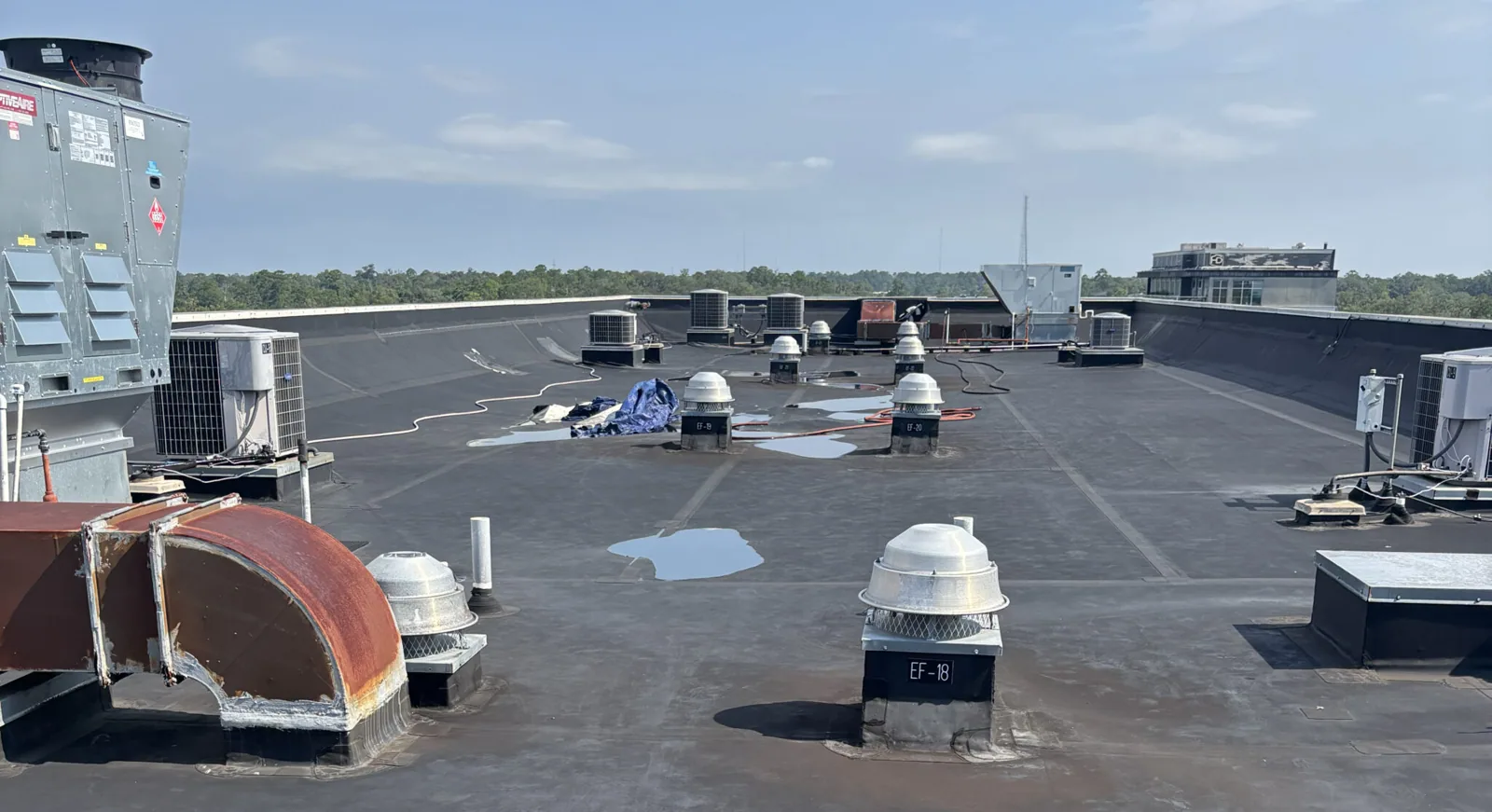
A recover adds a layer, so the old assembly has to earn it. The decision starts with moisture, attachment, drainage, and the condition of the deck. A dry surface does not prove dry insulation underneath. In Escondido, the work also needs an access plan that fits active office, retail, and technology operations. Escondido planning places retail, office, visitor-service, and residential activity along East Valley Parkway and Centre City Parkway. Overlay feasibility remains an assembly question: we inspect layers, moisture, drainage, and attachment at the actual roof. We review the roof sections, previous repairs, penetrations, and transitions. Then we determine whether an overlay can meet the project need or whether removal belongs in the scope. If the existing layers cannot support a sound new system, another membrane only delays the correction. A documented condition report lets the general contractor compare a recover with tear-off on materials, timing, and future service needs.
What Remains Under the Surface
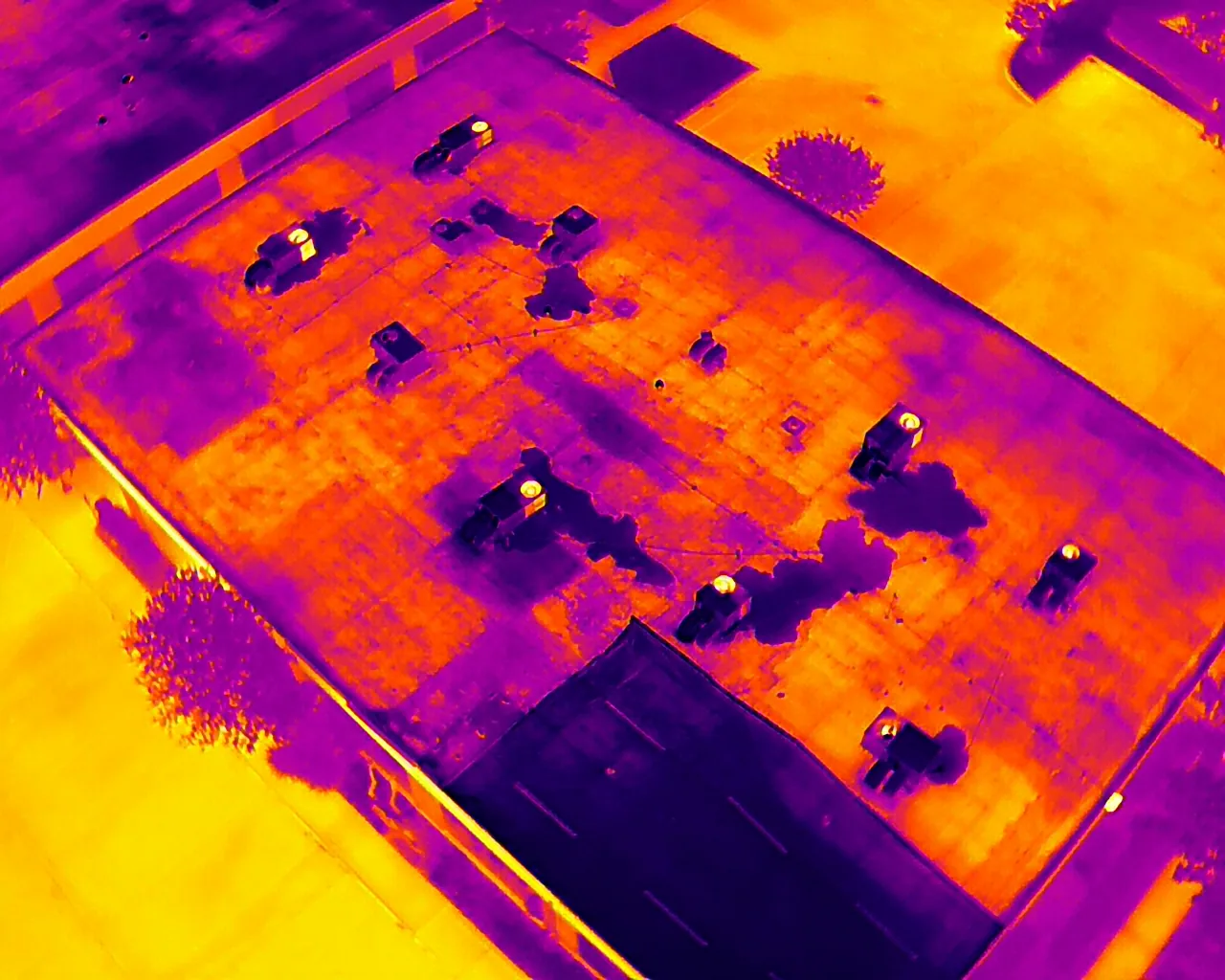
The existing membrane can hide conditions that control the entire recover decision. We check seams, flashing, blisters, patches, perimeter details, drains, and ponding. Infrared imaging can help identify temperature patterns that warrant follow-up, but it is not a substitute for a core cut. A targeted opening shows the membrane layers, insulation, cover board, and deck at that point. We map readings and openings to roof areas so the project team can see the inspected locations.
Water inside insulation can reduce its thermal performance and weaken the support below the new assembly. Wet sections may need removal even when the rest of the roof stays in place. The repair scope should distinguish localized replacement from broad tear-off.
Attachment needs equal attention. A recover may rely on mechanical fasteners, adhesive, or an approved cover board assembly. The existing deck must accept the chosen fastening method. Existing layers can also affect pull-out performance and wind resistance. We review the roof build-up and available records before recommending the new assembly. For moisture concerns, a roof moisture survey can help focus openings. For broader condition mapping, a hands-on inspection records the seams, flashing, drainage, and repair history together.
Recover Requirements
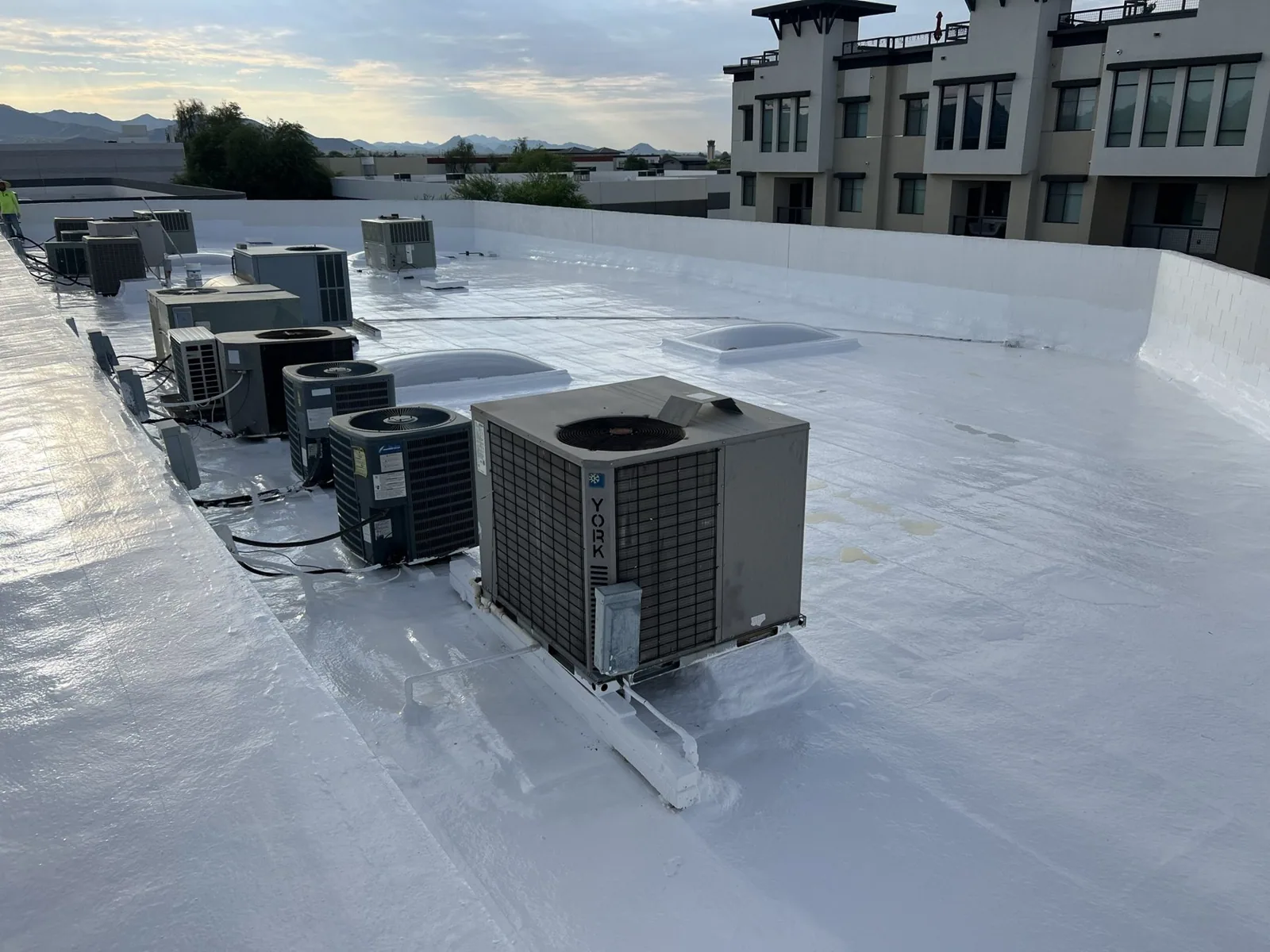
A recover scope should identify every retained layer and the material that will sit above it. It should state the new membrane or coating type, attachment, cover board, fastener pattern where specified, edge securement, flashing, and termination details. It should also identify incompatible surfaces or contaminants that need preparation.
Drainage cannot be ignored because a new layer raises the roof plane. Drain bowls and scuppers may need extension or replacement. Door thresholds, equipment supports, and wall terminations can lose clearance. We check high points and low spots, trace the route to each outlet, and note standing water.
Roof system choice depends on the existing assembly and project requirements. TPO, PVC, EPDM, modified bitumen, and liquid-applied systems have different seam, attachment, and detailing needs. A coating may preserve a sound substrate, but it cannot stabilize loose layers or remove trapped water. A new EPDM system or silicone restoration requires surface preparation and compatible details. We explain the selected assembly in the bid so the owner can compare it with a tear-off alternative. The material name alone does not define the work.
A Work Plan for Active Sites
Recovering can reduce tear-off debris, yet it still puts crews and materials on an operating building. We confirm roof access, staging, delivery paths, work hours, tenant activity, and protection for entries or loading areas. If rooftop equipment must be moved, the mechanical trade needs a defined sequence. Penetration flashing cannot be finished around equipment that remains unsupported or unstable.
The West Mission Avenue Specific Plan Area covers about 19 acres between State Route 78, Mission Avenue, Quince Street, and Rock Springs Road. Its commercial focus includes revitalization and adaptive reuse. For a property there, the recover proposal still depends on the existing roof layers and confirmed moisture, attachment, and drainage conditions.
Escondido includes moderate, high, and very-high wildfire hazard zones. Ignition-resistant standards apply to new construction in the high and very-high zones. If a recover is part of a broader permitted project, confirm parcel conditions and applicable requirements before setting the assembly and schedule. If the building sits near the Downtown Escondido district, staging and deliveries need site-specific confirmation.
Recover or Remove
Recover works best when the roof layers are dry, attached, compatible, and within code limits. The deck must be sound enough to support the new work. The existing membrane cannot be moving underfoot or separating at widespread seams. Drainage and perimeter details must be corrected before they disappear below the overlay. If those conditions fail, removal provides access to repair the substrate and rebuild the roof from a known base.
We compare the scope using the same roof areas and project assumptions. A recover line item should include preparation, repairs, new assembly, edge details, equipment transitions, and disposal. A tear-off alternate should state removal depth, deck repair allowance, and dry-in approach. The budget difference matters, but so does the amount of concealed material left in place.
Some buildings need a mixed approach. One section may be dry and sound, while another has saturated insulation or repeated leakage. We can define repair boundaries by roof area and explain the transition. A full replacement scope may be appropriate for the failed area while a sound addition remains on its current cycle.
Records for a Comparable Bid
Existing roof plans, prior core results, repair logs, warranty records, and leak locations help focus the review. We verify them against what is visible on site. A plan may omit an addition or past overlay. The general contractor can then price the proposed system with fewer open assumptions.
Include roof dimensions, access rules, equipment shutdown constraints, tenant schedules, and planned rooftop changes with the request. A clear scope sets out material, preparation, repair allowances, and acceptance checks. It also gives the owner a clean basis for comparing recover and replacement.
For a building near East Valley Parkway or Centre City Parkway, we ground timing in the property’s actual operations and access conditions. Call to arrange a roof review or to evaluate an existing recover proposal. The useful next step is a finding that states what stays, what changes, and why.
Frequently Asked Questions
What conditions make a recover unsuitable?
Moisture, weak attachment, deteriorated deck, incompatible materials, and unresolved drainage can disqualify an overlay. We check those points and document where a core cut or repair opening is needed. If retained layers cannot support the new assembly, removal belongs in the comparison. The proposal should identify that reason by roof section.
Will a recover fix ponding water?
A new membrane does not correct a low structural area by itself. We trace the drainage path and check drains, scuppers, insulation heights, and outlet capacity. If the roof plane needs slope work, the scope should state how the new assembly changes elevations and reaches each drain. Correcting the surface without the outlet can leave the same problem in place.
How do we confirm moisture below the membrane?
Infrared imaging can identify patterns for follow-up, while core cuts show the layers at selected points. We use each method for its proper role and map the findings. Sampling should answer a project question, such as whether one area can remain or where removal should stop. Interpret a single reading alongside nearby conditions and the sample location before applying it to a larger roof area.
Can the building remain occupied during the work?
The access plan sets the answer. We coordinate staging, delivery routes, work hours, equipment interruptions, and daily dry-in with the owner and contractor. A recover avoids some tear-off activity, but it still creates noise, rooftop traffic, and temporary work zones. Identify sensitive operations before setting the work sequence.
What should the alternate proposal include?
It should state retained layers, surface preparation, attachment, cover board, edge and flashing work, drain changes, and repair allowances. A tear-off comparison should identify removal depth and deck assumptions. Separate the options using the same roof areas and schedule limits. That gives the project team a meaningful comparison rather than two different scopes.

Check the Assembly Before Adding a Layer
Arrange a roof review with prior reports, leak locations, access conditions, and the proposed work window. We will document recover eligibility and identify the next scope decision. Call to discuss the roof or an existing proposal.
Call 555-555-5555 or email [email protected].