
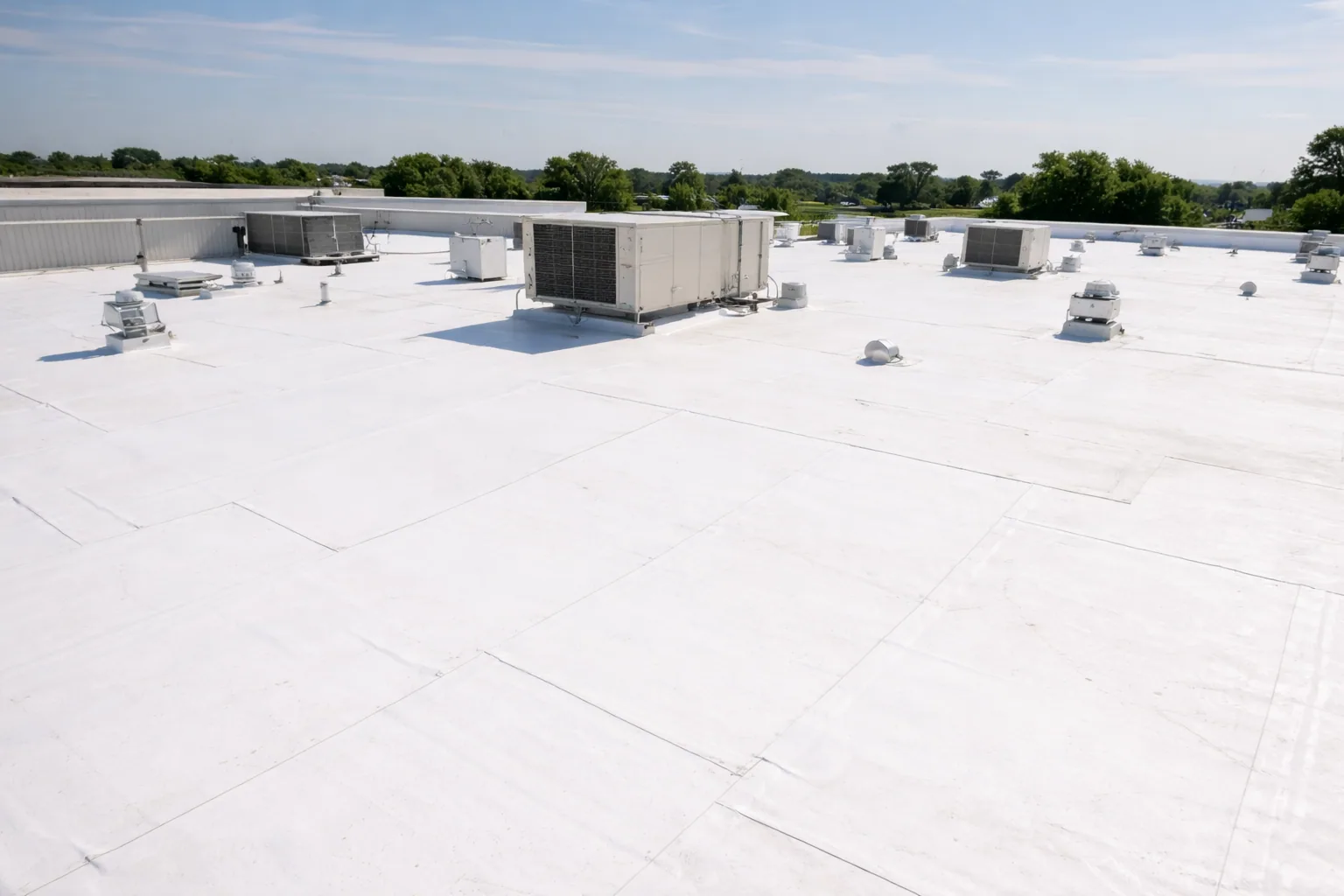
Modified Bitumen Roofing in Escondido, CA
Roof Systems · Escondido, CA
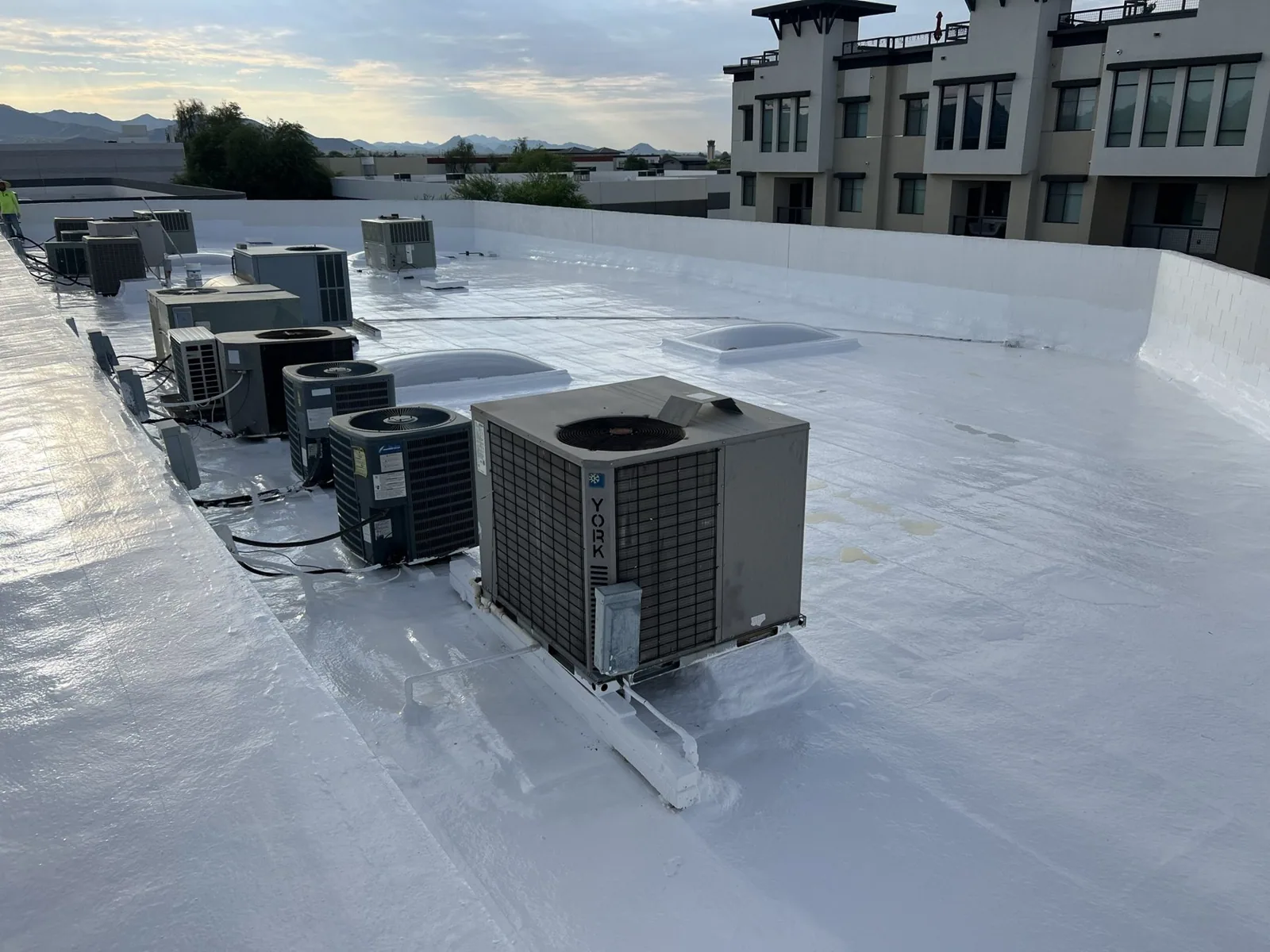
A split at a modified-bitumen lap can expose more than the cap sheet. We check the ply edge, surfacing, substrate, and nearby drainage before choosing a repair boundary. Escondido's warm, dry Santa Ana winds make perimeter transitions worth reviewing alongside field seams. Escondido's employment uses include manufacturing, technology, office, and shopping. Those uses bring different access needs, but they do not identify a roof assembly. We verify what is installed and give the general contractor a scope that separates visible work from concealed conditions.
Modified bitumen combines asphalt with polymer modifiers and reinforcing plies. SBS and APP systems have different material behavior and installation details. Surfacing may include granules, coating, or a separate cap sheet. We identify the layer sequence before calling for a patch, torch work, or cold-applied detail. The bid should state how the opening closes and who owns any hot-work controls.
Ply Edges and Surface Wear
We look for open laps, exposed reinforcement, blisters, ridges, splits, and areas where surfacing has separated. A surface crack calls for a seam and substrate check before we set the repair boundary. We probe the seam and inspect the adjoining sheet before setting a repair quantity. Granule loss, coating wear, and old mastic can change preparation. The scope should name the materials to remove, the surface to receive the repair, and the finished detail the inspector will check.
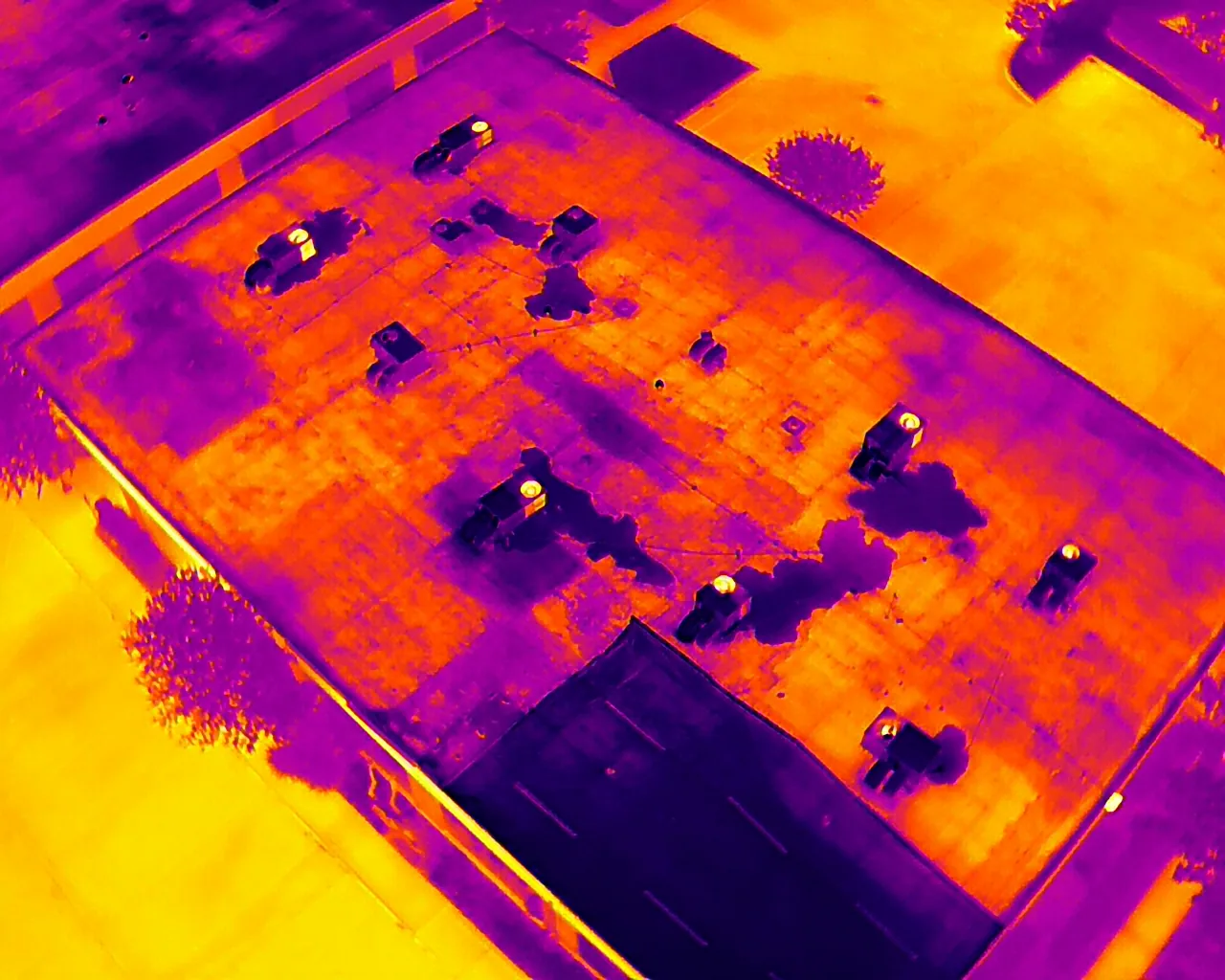
Multiple roof additions can leave different assemblies under one parapet. We compare records and visible transitions at each tie-in. If the property manager reports a leak, we match its interior location with drains, penetrations, and slopes. Water can travel within the roof build-up before appearing below. A roof inspection records those differences. Where moisture is uncertain, a targeted survey can help choose a core location. We state what the selected test can and cannot establish for that zone.
Seams, Flashings, and Hot Work
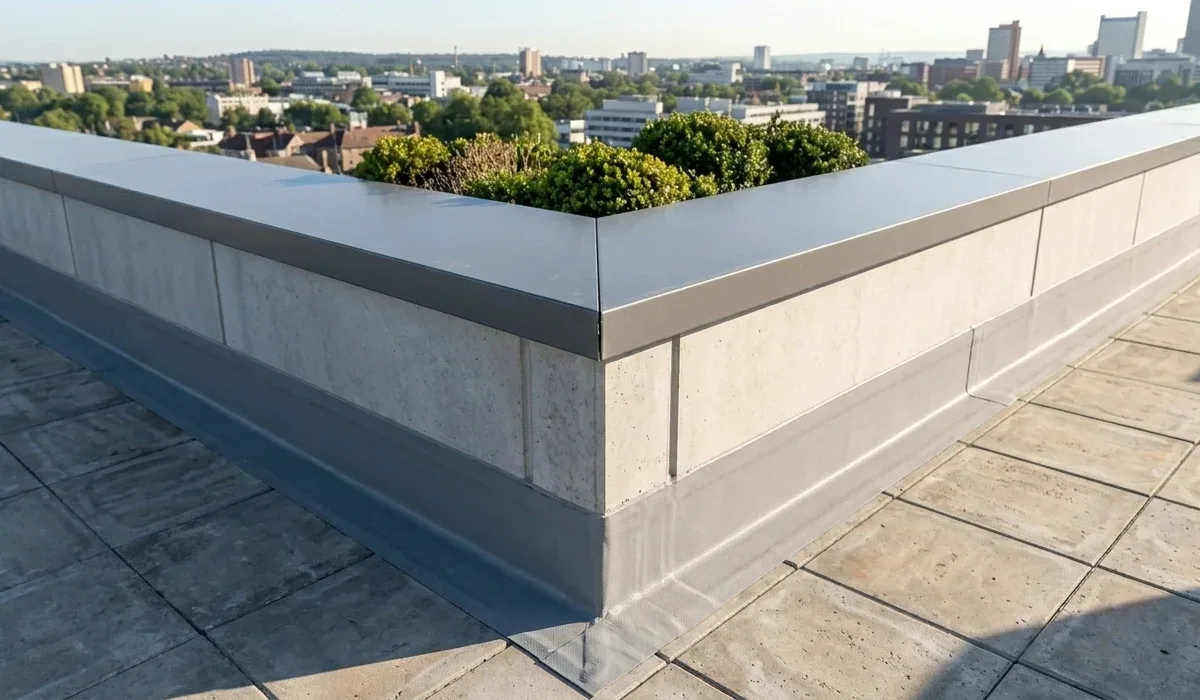
A repair must reconnect the existing plies and close the water path. We identify whether a compatible self-adhered, cold-applied, or heat-applied detail suits the assembly. The proposal sets the lap dimensions, surface preparation, reinforcement, and cap layer. Around drains, curbs, and walls, turn-ups and corners often need separate pieces. A broad coating over a loose lap does not restore a sound bond. We price the detail that fixes the defect, then list adjacent work separately.
Hot work requires a site-specific access and fire-watch plan. We coordinate with the superintendent on permits, combustibles, occupied areas, and the route to the work zone. Santa Ana winds are dry, often warm or hot, and most common from September through May. Current conditions determine the day's controls. For a curb or vent tie-in, penetration flashing work should identify substrate and trade responsibilities. Perimeter metal repairs may need their own length, fasteners, and access quantity.
Repair, Overlay, or Tear-Off
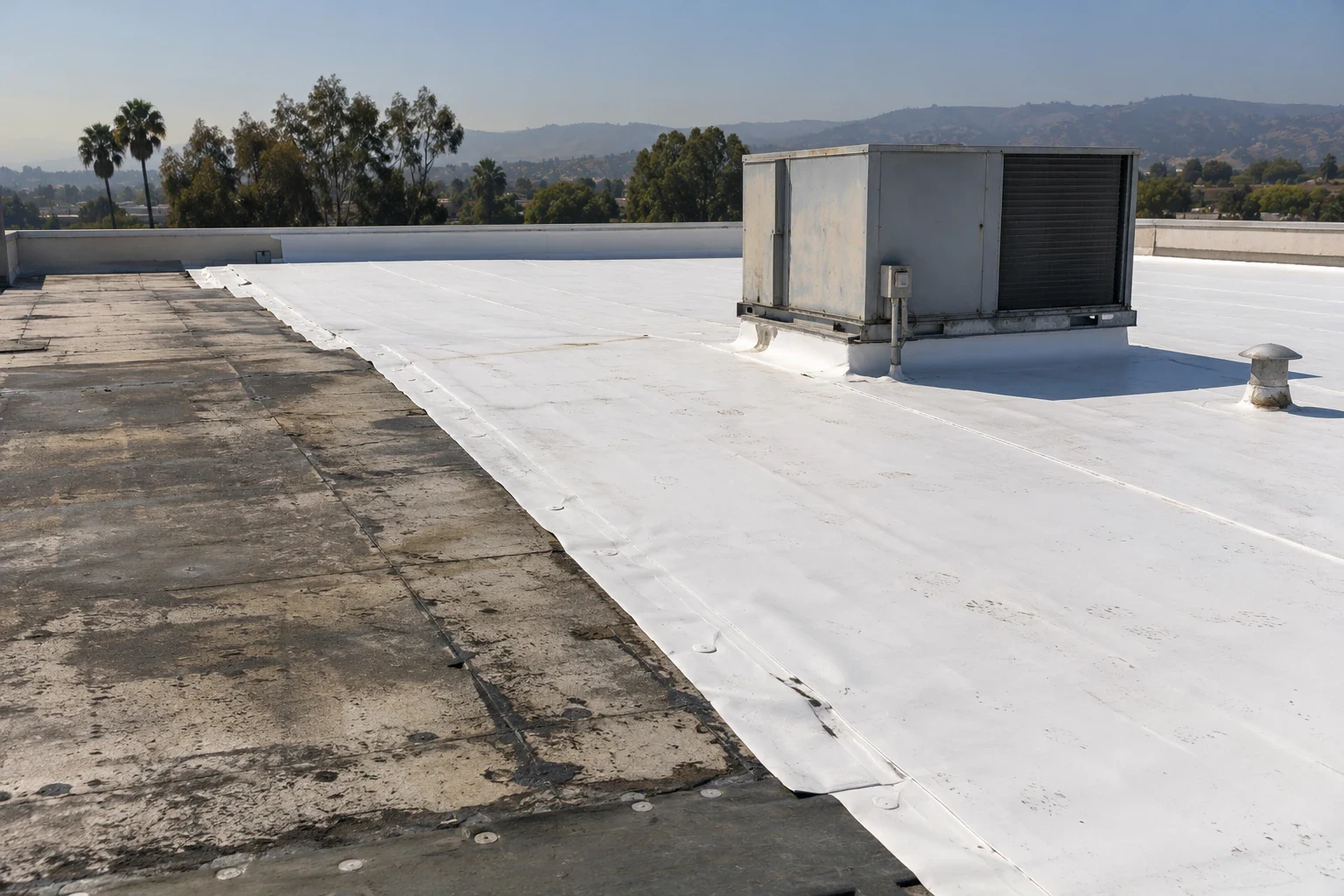
Localized splits with stable surrounding plies may support repair. Repeated open laps, broad blistering, wet insulation, or weak deck conditions can change the economics. We map the affected area and compare repair quantities with replacement on the same basis. A recover is considered only after reviewing moisture, attachment, layer count, deck capacity, drainage, edge height, and applicable requirements. Added height can affect doors, curbs, drains, and perimeter metal. The scope should show those consequences before the owner selects an overlay.
SBS and APP are not interchangeable labels for bid purposes. We record the known system and specify the proposed layer sequence, reinforcement, surfacing, and attachment method. A recover feasibility review can identify the tests needed before retaining layers. For a new low-slope assembly, compare built-up roofing and TPO membrane systems by ply design and roof conditions, not by name alone.
Occupied Access and Weather
Layered work needs a start and stop line that crews can close each shift. We plan material staging, kettle or torch locations if applicable, lift access, protection below, and routes that keep tenants clear. The superintendent confirms shutdown periods and any equipment that must be reset. Temporary dry-in is not the same as the permanent detail, so we document its boundary and next inspection. A clear sequence keeps demolition from outrunning the crew's ability to close exposed plies.
Escondido red-flag conditions involve dry weather and strong northeast winds, often Santa Ana or east flow. Check current restrictions before setting the hot-work window and include any weather hold in the daily sequence. New construction in Escondido's high and very-high wildfire zones must meet ignition-resistant standards. Confirm project requirements for the parcel and work scope before mobilization. An active opening needs a temporary boundary and a return date for permanent closure.
Keep hot-work controls in the estimate, not in a verbal assumption. Confirm who supplies extinguishers, watches the area, and releases it after the crew leaves. The superintendent can also flag delivery times that conflict with tenants or other trades. That information changes the sequence before mobilization, when it is still possible to move a work zone without rehandling material.
Bid Quantities and Closeout
Give each roof area its own assembly, defect map, repair limits, and test results. State the removal depth, replacement plies, surfacing, flashings, protection, cleanup, and closeout checks. Separate confirmed quantities from an allowance for concealed deck or insulation damage. Tie any allowance to a measured trigger and written approval. Photos should connect the seam detail to a roof-zone location. A general contractor can then compare labor windows and operations impacts without merging unknowns into one total.
Downtown Escondido and the Escondido Boulevard Commercial Corridor include retail, office, visitor-serving, and residential uses. At a modified-bitumen roof nearby, confirm roof access and hot-work rules with the property lead before setting a work window. We ask for roof plans, repair history, leak reports, hot-work rules, and the person who controls the schedule. A photo-based condition record preserves the decision basis. Arrange a site review and name the budget date. We will define the next work window and unresolved quantities.
Frequently Asked Questions
How do we tell whether modified-bitumen damage reaches more than one ply?
We inspect the exposed edge, lap, reinforcement, and nearby surface before setting the boundary. A test opening can reveal the layer sequence at a selected point. We map that result to its roof zone and keep untested areas separate. The repair quantity follows the observed assembly.
Can the existing surface accept a new modified-bitumen patch?
Preparation depends on surfacing, contamination, prior mastic, and the specified application method. We identify what must be removed and how the receiving surface will be prepared. If a reliable bond cannot be established, the scope needs a different detail. The bid states its material compatibility assumptions.
What changes the cost of a modified-bitumen repair?
Ply count, surfacing removal, access, hot-work controls, flashing geometry, moisture, and protection below affect the quantity. We show those drivers by zone. Concealed deck repairs should have a written approval trigger. That keeps a field discovery from silently expanding the base scope.
When is an overlay a reasonable option for this roof?
Dry, stable layers and sound attachment matter, along with deck capacity, drainage, height, and applicable limits. We review each condition before pricing retained layers. If moisture or assembly identity remains uncertain, testing comes first. The proposal names what stays and what must be removed.
What should the site team decide before hot work starts?
Confirm the work area, access route, combustibles, permit controls, fire watch, and occupied operations. We coordinate the weather window and a method for closing each day's work. The superintendent should identify equipment or trades that could interrupt the sequence. Those decisions belong in the mobilization plan.
Set the Modified-Bitumen Scope
Bring roof plans, repair logs, leak locations, and site hot-work rules to the review. We will map the assembly and compare repair, recover, and removal quantities. Call to reserve an inspection window.
Call 555-555-5555 or email [email protected].