
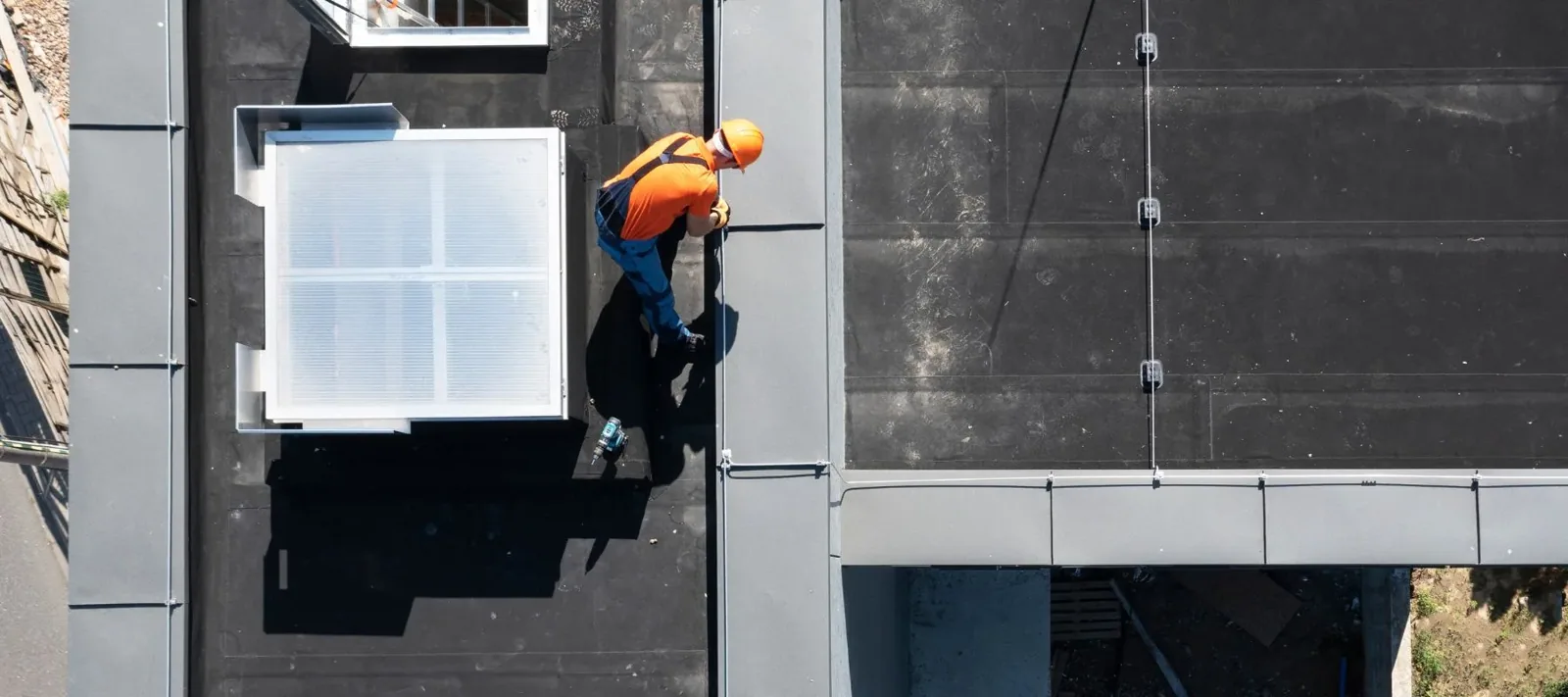
Commercial Roof Capital Planning in Escondido, CA
Roofing Capabilities · Escondido, CA
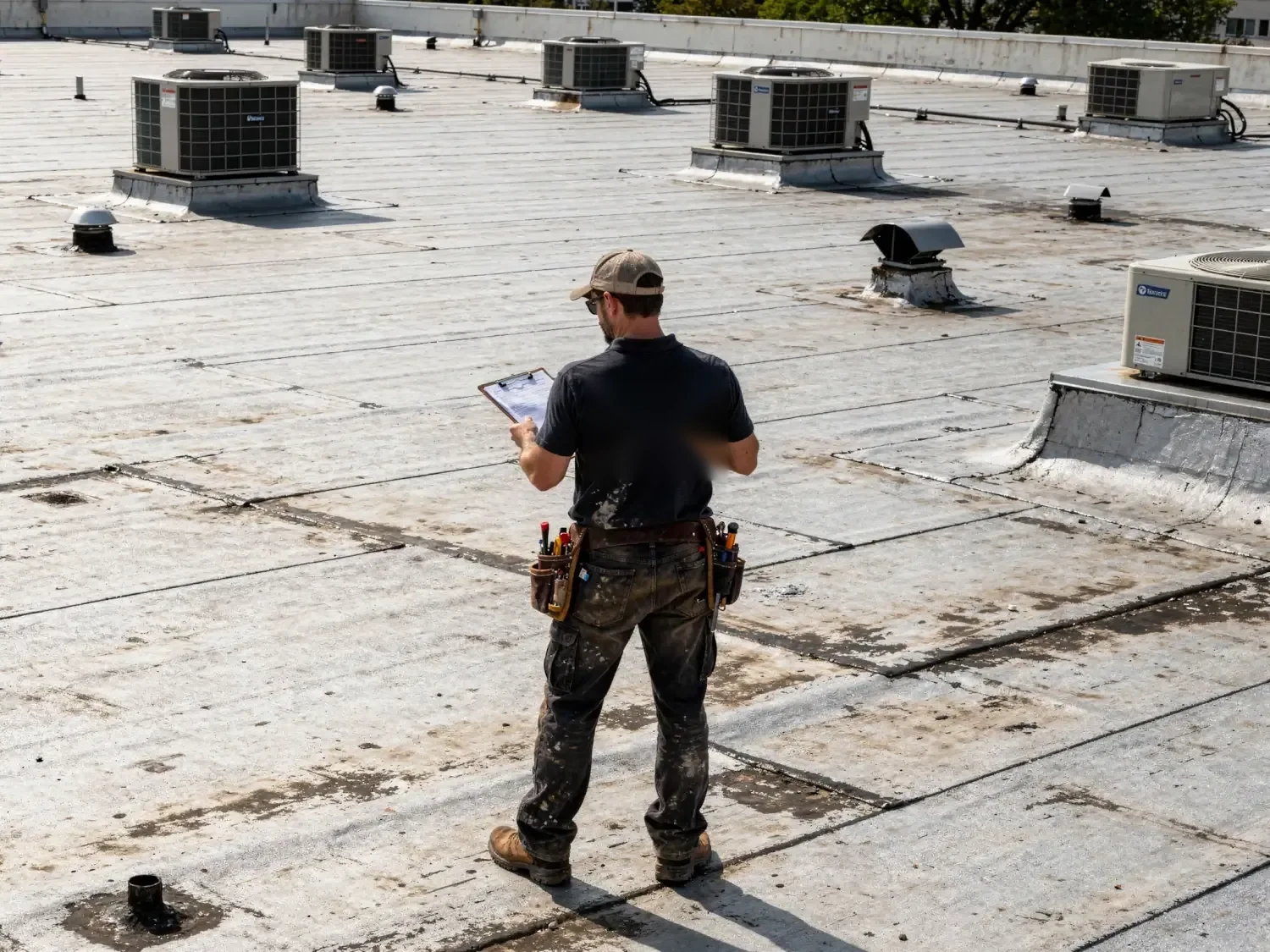
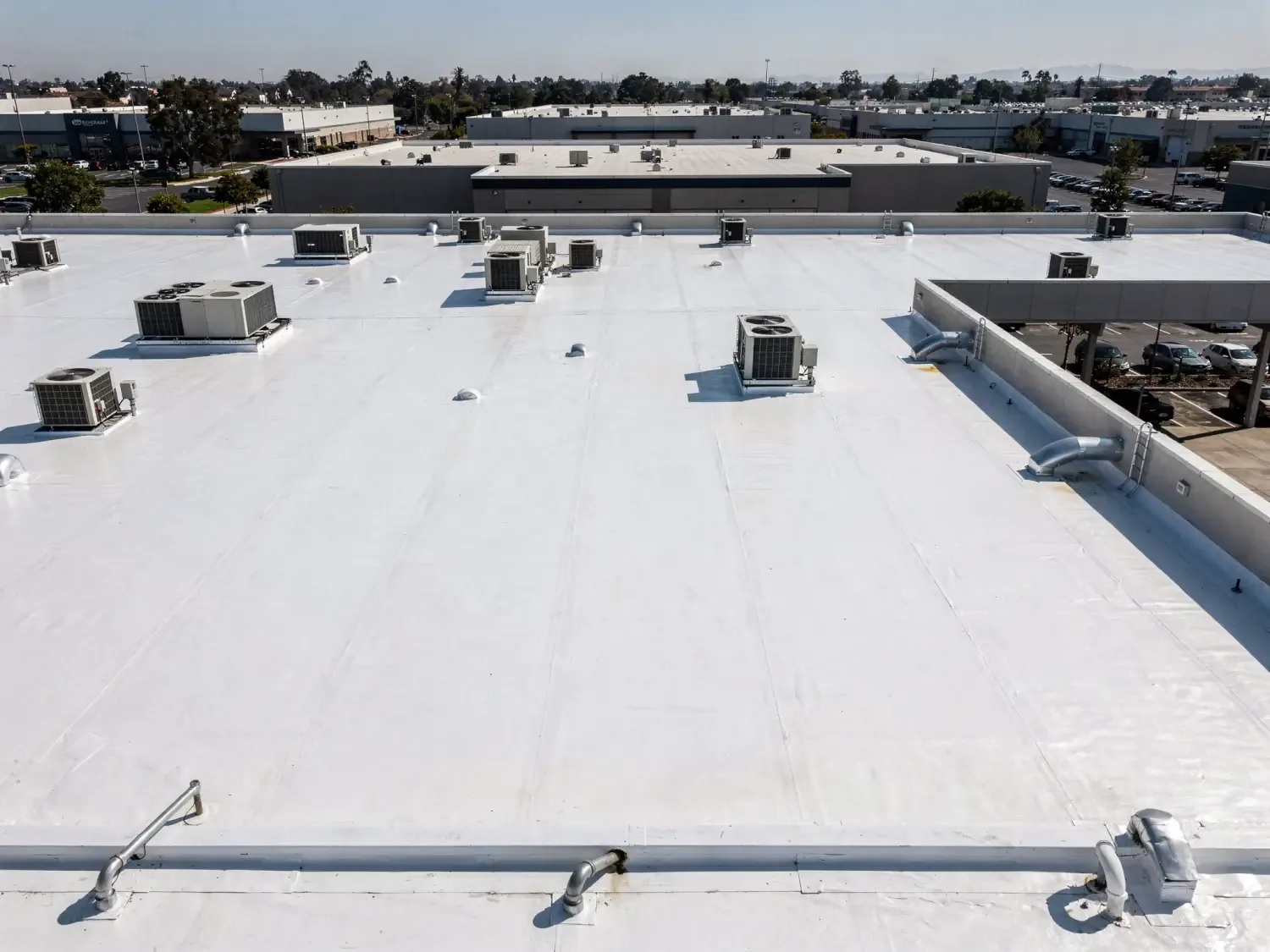
A capital request needs a roof zone, a condition, and a decision date. A single building can have an older membrane, a newer addition, and separate drainage paths. We inspect each assembly and separate immediate repair from longer-range replacement planning. In Escondido, technology, manufacturing, offices, and shopping are among the employment uses identified by the City. Those properties do not share one roof profile. A written condition report connects visible findings to the next budget window. It should state what was observed, what remains concealed, and what approval would move the project forward.
Regional Santa Ana winds can bring dry air and warm or hot conditions. That context makes exposed perimeter details worth reviewing, but it does not establish a defect on a particular roof. We document seams, edge metal, flashings, drainage, and interior leak reports by location. Then ownership can compare a defined repair, additional testing, recover, or replacement scope using the same evidence. Timing follows the roof and the operating calendar, not a generic age threshold.
Build the request from observed conditions
Begin with the roof zones and dates behind the request. Record the system when known, repair history, active water entry, visible seam or flashing defects, and areas that could not be reached. Photos should pair a close detail with a wider view. Interior notes can help trace a leak, but a ceiling stain does not locate the roof entry by itself. A commercial roof inspection gives the owner a current field record to compare with earlier proposals.
Separate confirmed work from planning allowances. A split lap may have a bounded repair price. Concealed wet insulation may require a test opening before quantities can be set. State the approval point for each unknown. That keeps an estimate from treating an unconfirmed condition as a measured quantity. For a broader building file, roof asset management can keep dated observations and completed scopes tied to their roof areas.
Compare the work paths
A repair can fit a localized defect when surrounding membrane, attachment, and substrate remain serviceable. A recover may be possible when the existing layers are dry, secure, compatible, and within applicable limits. Replacement becomes a stronger planning candidate when moisture is broad, attachment is failing, the deck needs work, or repairs recur across separate roof zones. We show the evidence supporting each path. The owner can then compare scope, access, disruption, and the next review requirement.
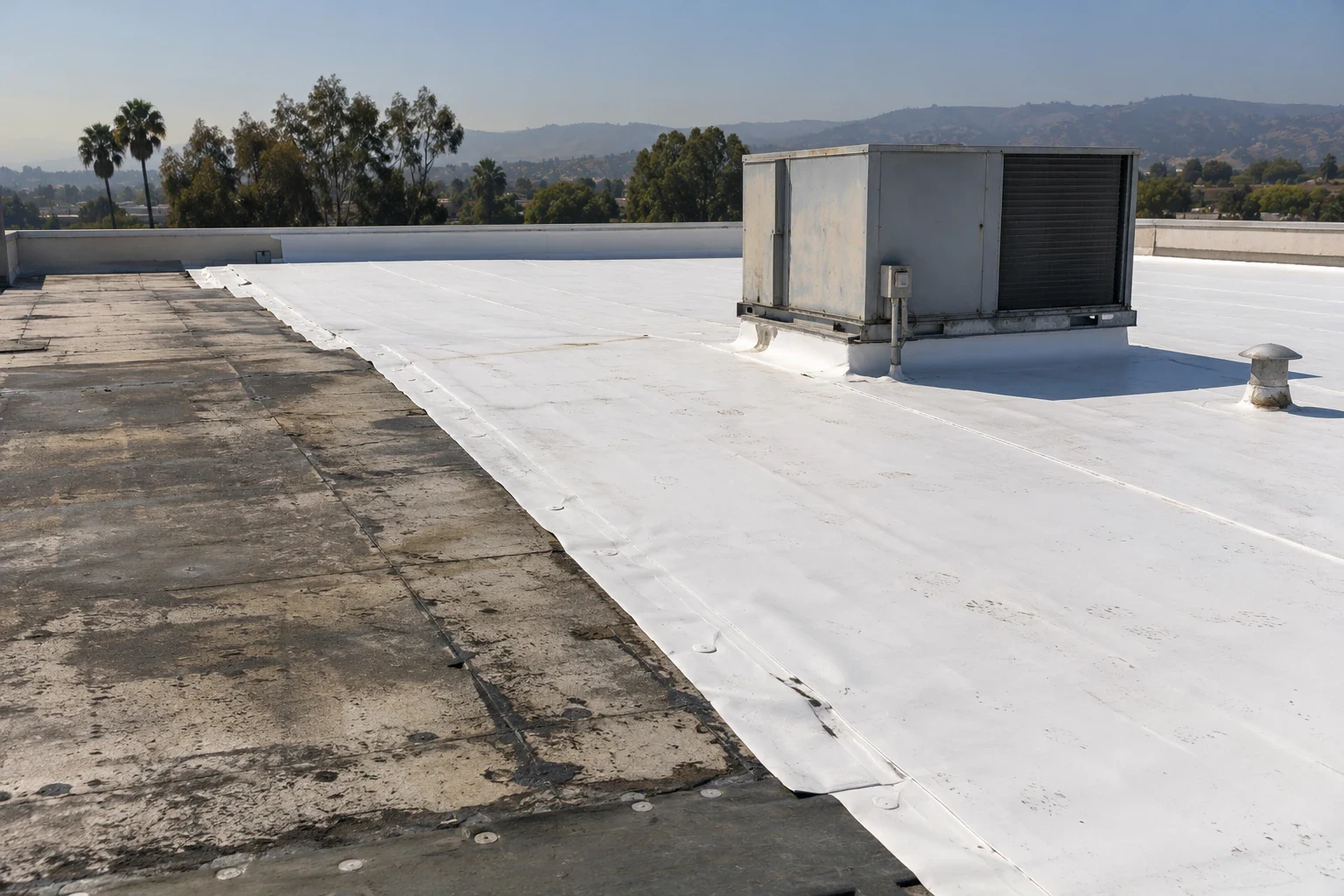
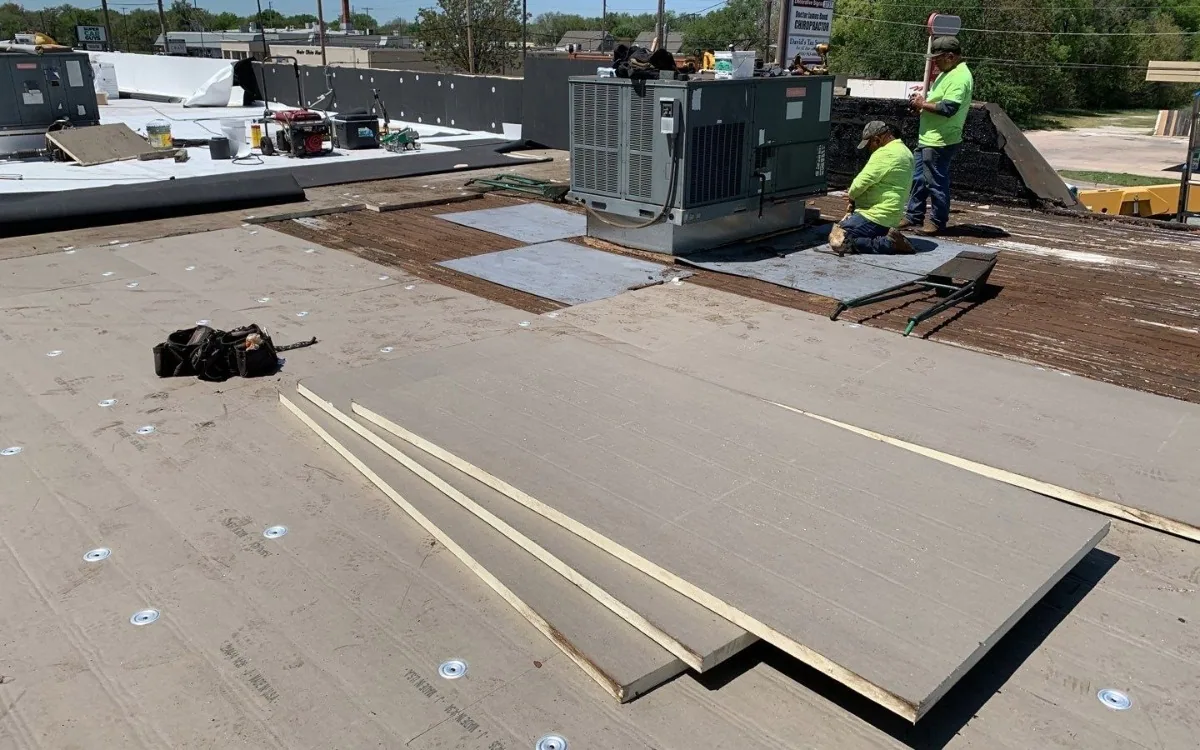
For a recover, the proposal should identify what remains in place, what gets removed, and how drains, curbs, edges, and transitions will be rebuilt. The roof recover review should not assume that a coating or cover board resolves concealed moisture. A replacement plan can compare full roof replacement with defined repair work, while insulation and cover-board scope addresses assembly changes separately. Each option needs the same boundary and quantities to support a fair review.
Place the work in an operating calendar
Budget timing includes more than the roofing crew. Roof access, tenant activity, equipment lifts, interior protection, material staging, and trade shutdowns can change the work sequence. An occupied office may need phased work around rooms in use. A manufacturing property may need a defined lift path and coordination with rooftop equipment. We list those needs beside the roof scope instead of burying them in a general note.
Escondido's economic policies pair Downtown commerce with activity on East Valley Parkway, Centre City Parkway, and Escondido Boulevard. City reporting places completion of Grand Avenue's second streetscape phase in June 2025; the project expanded pedestrian space, changed curb parking, and installed roundabouts to temper traffic. Those facts can inform a visit or staging conversation near downtown, but the property contact must confirm current access and loading rules. A Downtown Escondido roof review still begins with the building's actual access plan and work hours.
Separate immediate work from later phases
Not every roof zone needs the same action at once. A documented leak path may need prompt repair, while a stable field area can remain under observation until the next planned project window. A phased proposal should map its limits, describe temporary protection if needed, and identify the consequence of deferring each item. We do not combine unrelated repairs simply to create one large capital request. The owner should see which approval addresses which roof condition.
Multi-property ownership can compare findings without copying one roof's scope to another. A multi-site roof program can sort buildings by condition, access readiness, and decision timing while retaining each site's separate evidence. For investors, a due-diligence roof survey may be needed before an acquisition or refinancing decision. These records help establish a planning basis; future inspections still determine whether conditions have changed.
Check what the capital scope includes
A roof budget should name the assembly, not just the membrane. List tear-off or recover assumptions, insulation and cover board, attachment, flashing, edge securement, penetrations, drainage adjustments, and closeout checks. If the system is unknown, mark that as an investigation item. Manufacturer warranty language should follow the actual system requirements and contract documents. A repair proposal should not imply that a patch changes broader warranty coverage.
A significant share of Escondido’s employment acreage is available for development in the Research and Technology Center area. That local context does not establish a property's building age or roof assembly. It does point to why capital comparisons should keep planned tenant use, rooftop equipment, and access details tied to each individual property. For a coating candidate, the proposal requires a clean, sound, compatible substrate and properly treated transitions. If those conditions are not confirmed, the budget should include testing before a coating scope is priced.
Frequently Asked Questions
What should a roof capital request include?
Start with the roof zones, dated photos, current findings, repair history, and the decision being requested. Separate defined work from testing allowances. Add access limits, proposed timing, exclusions, and the approval step for concealed conditions.
Can a roof age set the replacement year?
Age is one record, not a condition report. Assembly, moisture, attachment, repairs, drainage, and use affect the next decision. We inspect those items and show whether current evidence supports repair, further testing, recover, or replacement planning.
How do we compare repair and replacement budgets?
Use the same roof boundary, access assumptions, and known assembly for each option. A bounded repair should show its limits. A replacement scope should identify removal, new layers, flashing, drainage work, and closeout checks.
What information helps schedule a capital project?
Roof plans, tenant hours, lift and staging limits, equipment work, interior protection needs, and approval contacts help build a usable sequence. We confirm those details with the property team before assigning a work window.
Does a planned allowance mean hidden damage is present?
No. An allowance identifies a quantity or condition that cannot yet be confirmed. We explain what test or opening would resolve it and how ownership approves added work if the field evidence supports a change.
Set the next roof budget window
Share the current report, repair records, roof plans, and operating calendar. Call Commercial Roofers Escondido to arrange a field review and define the decision-ready scope.
Call 555-555-5555 or email [email protected].