
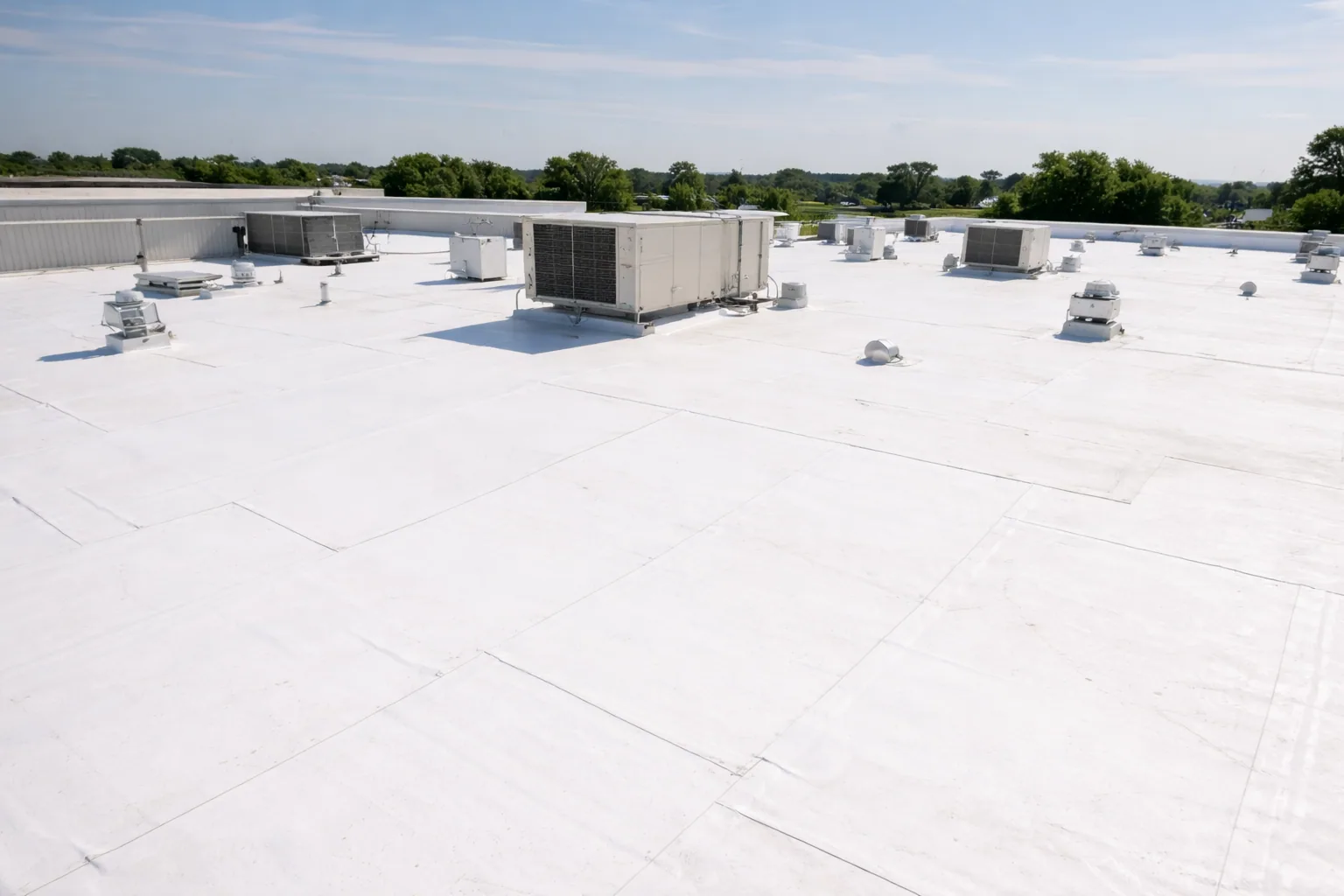
Infrared Moisture Survey in Escondido, CA
Commercial Roofing Services · Escondido, CA
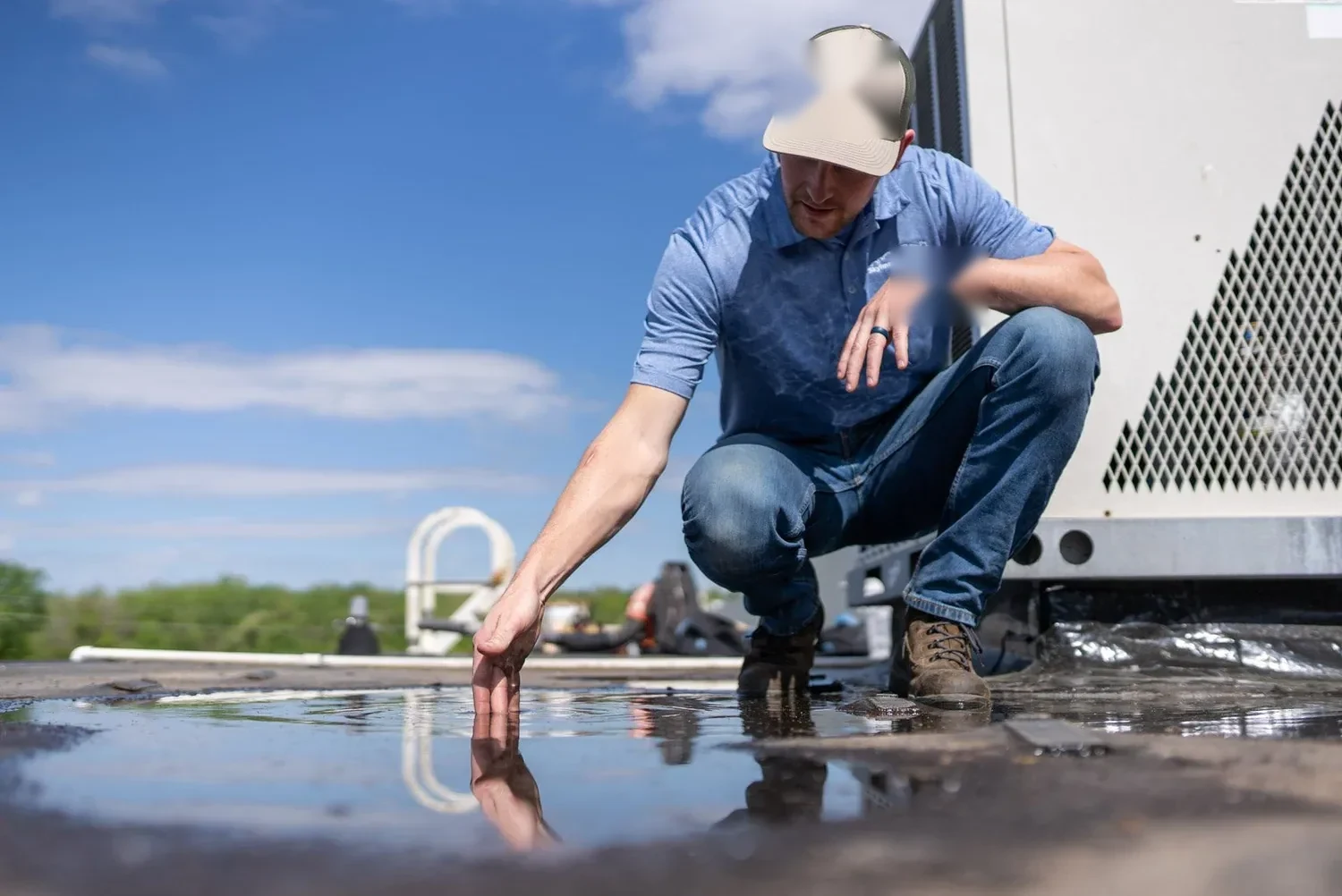
A moisture pattern can change how much roof needs repair. Infrared imaging helps locate temperature differences that may correspond to wet insulation. It does not see through the membrane or prove moisture by itself. We compare the image with the roof assembly, weather conditions, surface details, and reported leaks. Then we select openings where confirmation can change the scope. From September through May, Santa Ana winds most often travel west through Southern California mountain passes. The air is dry and may be warm or hot; the pattern can damage property. An infrared survey still needs usable roof conditions and a clear question. The map helps the contractor set repair limits, confirm moisture, or price removal. The report distinguishes a suspected pattern from confirmed wet material.
Reading the Pattern
Infrared equipment records surface temperature differences. A scan may show areas that retained heat differently from adjacent roof sections. Moisture is one possible reason, but not the only one. Insulation type, roof layers, shadows, equipment exhaust, surface color, recent sun, wind, and roof geometry can influence the pattern. We review the conditions and compare the scan with the assembly before marking any location for confirmation.
Timing affects interpretation. The roof needs a suitable thermal window, and recent rain or changing cloud cover can alter surface readings. Metal panels and reflective surfaces may behave differently from membrane roofs. A scan taken under poor conditions can produce little useful contrast. We discuss timing and access before mobilization and record relevant limits in the report. If conditions change, another method may be more reliable than forcing a scan.
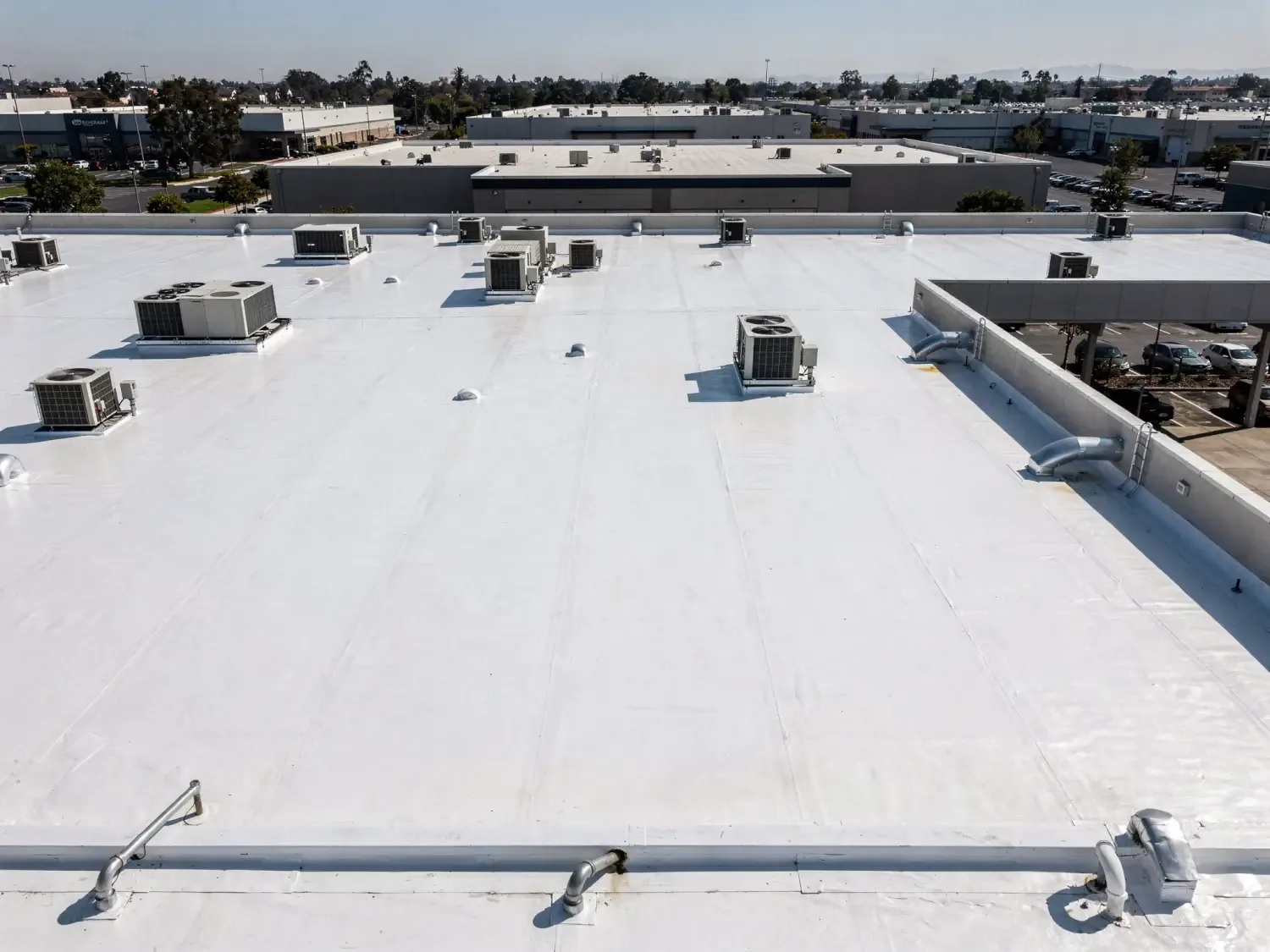
The Research and Technology Center forms a significant part of Escondido employment acreage available for development. In that working area, scan logistics depend on rooftop-equipment access and a sampling map keyed to the correct roof section. We map anomalies by roof area and mark each selected check. A hands-on roof inspection helps confirm visible details; drone imaging can add an overview where roof access is difficult.
Confirming Suspected Areas
A core cut exposes the layers at a selected point. It can show whether insulation is wet, whether the cover board has deteriorated, and what deck lies below. The opening should be placed where the scan and field evidence support a useful answer. A few samples cannot represent every roof area without adequate coverage. We identify the sample location, layers observed, and any section the result reasonably informs.
We use the findings to set repair boundaries. A limited wet area may need localized removal and a new membrane patch. Moisture across several roof sections can shift the plan toward wider tear-off. The deck condition may change attachment or material choices. The contractor needs quantities and transition details, not only a color image. The report connects suspect patterns to sample results and the next scope decision.
Where testing confirms wet insulation, we mark the area to remove and how the new assembly reconnects to retained roof. The repair scope should include membrane, cover board, insulation, flashing, fasteners, and perimeter details as applicable. If the results support a recover, attachment and drainage still need review. A repair scope can address localized findings; replacement planning can compare broad removal with targeted work. Any open cut receives a compatible temporary or permanent closure.
Survey Conditions and Access
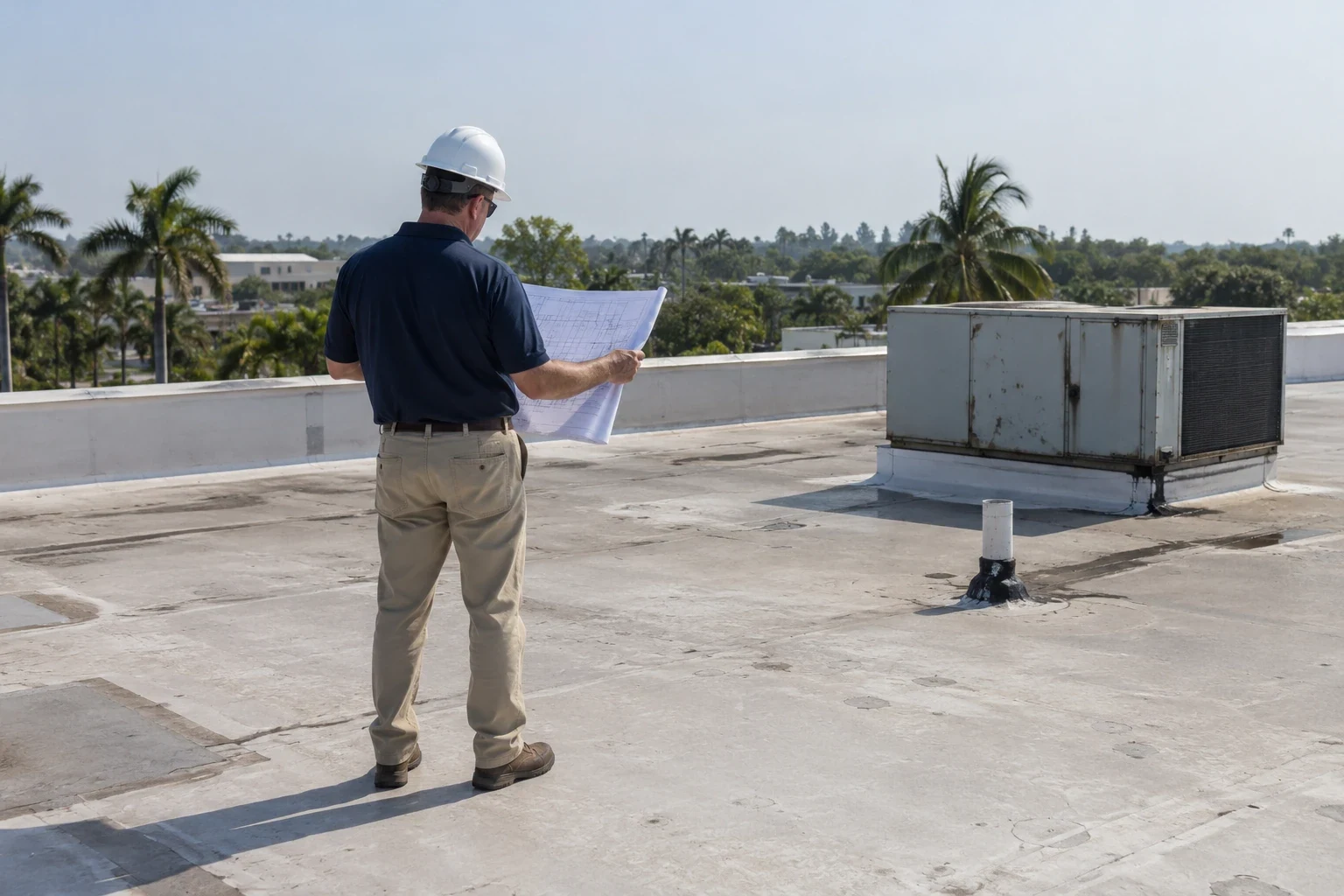
Before scheduling, we confirm roof access, scan area, equipment restrictions, safety requirements, and the decision deadline. The owner should share roof plans, leak history, previous moisture surveys, repairs, and the current assembly if known. Those details help distinguish new conditions from old repairs or an earlier overlay. We note rooftop equipment, shading, and areas where the scan may not provide useful evidence.
Escondido’s Downtown and Escondido Boulevard Commercial Corridor support a mix of retail, office, visitor services, and residential development. Before imaging, site staff confirms entry, staging, and tenant restrictions so the survey route fits the building’s actual operation. A commercial corridor survey still depends on site-level planning for the actual building.
Survey conditions also need a documented window. Escondido red-flag conditions normally involve dry, usually warm Santa Ana or east winds from the northeast. Dry weather and strong wind can increase wildfire spread risk. For imaging, we choose a safe window based on roof temperature, sun exposure, and wind at the property. If contrast is unreliable, we use another confirmation method rather than price an unclear pattern as removal.
Using Results in the Budget
The survey matters when it can resolve a scope question. The owner may need to know whether repair remains localized, whether an overlay is viable, or how much insulation should be removed during replacement. We agree on that question before capture. A scan without defined roof areas can produce images without a clear estimating use.
We provide roof-area references, visible observations, suspected moisture patterns, sample locations, and core-cut results. We separate temperature anomalies from confirmed wet insulation. If the scan points to a condition that has not been opened, the report says what would confirm it. That gives the general contractor a basis for pricing a known repair and an alternate for the unresolved area.
Escondido supports office and technology employment, and the Research and Technology Center accounts for significant employment acreage available for development. For a property team in that area, the survey log ties each anomaly and sample location to the correct roof section and equipment schedule. Sampling time still follows the building contact’s access rules. A capital plan can sort confirmed repairs from future work. A condition report can keep images and core results with the maintenance record.
What the Report Should Answer
A useful report tells the project team where the scan was performed, what conditions influenced the readings, which areas showed anomalies, and which samples were opened. It describes the layers found and the limits of each sample. If a survey area was shaded, obstructed, or inaccessible, that belongs in the record. The report should support a repair quantity or identify the next test required.
Share the roof plan, leak log, known system, access rules, and options under consideration. If the survey supports an upcoming replacement bid, identify the budget deadline and desired scope boundaries. We can plan imaging and core cuts around the decision rather than collect material that will not change the work. Any repair opening can be sealed as part of the agreed scope.
Call to schedule an infrared moisture survey or review existing scan results. If the scan cannot produce reliable contrast, we will explain the limit and recommend a practical confirmation method. The result should leave the owner with a clear distinction between suspected moisture, verified conditions, and work ready to price.
Frequently Asked Questions
Does infrared imaging prove the roof is wet?
No. It identifies surface temperature differences that may have several causes. We compare the pattern with roof construction and conditions, then use targeted openings when moisture confirmation affects the scope. The report distinguishes an anomaly from a verified wet layer.
How many core cuts are needed?
The number depends on roof area, assembly changes, scan patterns, and the decision being made. Samples should answer specific questions about repair limits or a recover. We record where each opening was taken and avoid treating a few points as proof about untested areas.
Can a survey determine the final replacement quantity?
It can help map suspected areas, but quantities depend on confirmed layers, roof geometry, and field conditions. Core results and roof plans refine the estimate. We identify areas that need follow-up so the contractor can carry a clear allowance rather than assume every anomaly requires removal.
What can make an infrared scan inconclusive?
Recent rain, changing sun, shade, reflective surfaces, equipment exhaust, and the roof assembly can affect temperature patterns. We review timing and access before capture. When the contrast is not useful, another inspection method or selected opening may answer the question better.
Can the survey be performed around operating tenants?
The access plan sets the sequence. We coordinate roof entry, interior sampling points, equipment restrictions, and sensitive work periods with the property team. Imaging may limit disruption, while core cuts need controlled access and a defined closure method.

Set the Moisture Question First
Share the roof plans, leak records, access conditions, and repair or replacement decision under review. We will define scan areas, confirmation points, and the information needed for pricing. Call to schedule an infrared survey or discuss an existing report.
Call 555-555-5555 or email [email protected].