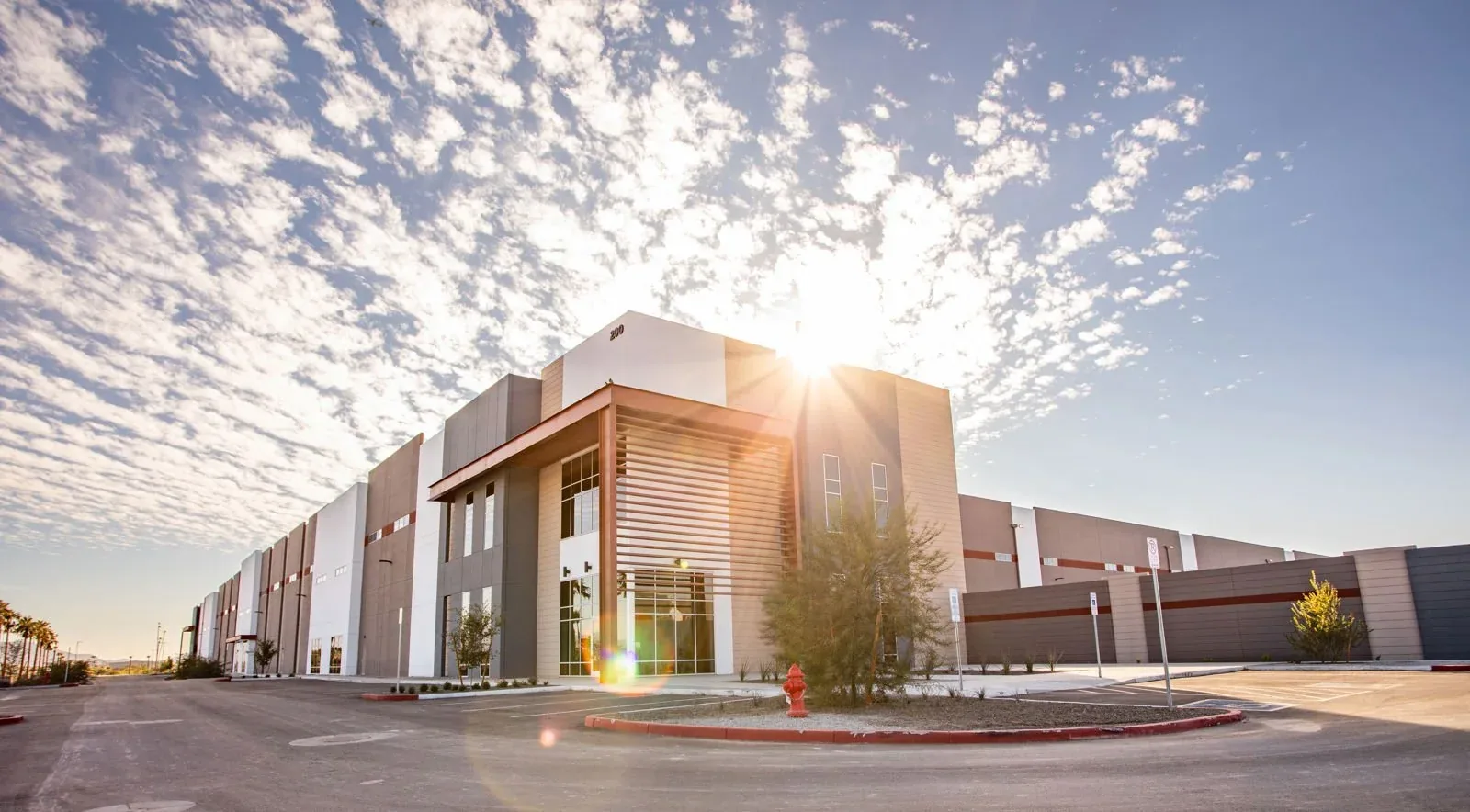
Cold Storage Roofing in Escondido, CA
Property Types We Roof · Escondido, CA

Condensation can hide a roof leak in a cold-storage building. Water may form where warm, moist air reaches a cold surface, while a separate roof defect admits rain. In Escondido, CA, we trace both possibilities before a repair boundary is set. The inspection checks membrane laps, vapor control, insulation, penetrations, equipment curbs, and drains. A refrigeration line or exhaust curb can create a difficult transition. The report names what we found and which opening or test would answer the next question. That helps the general contractor protect product and temperature control while budgeting permanent work. When water enters, follow the facility's incident process to protect product and temperature control. Permanent roof repair should be sequenced after access and assembly conditions are confirmed.
Manufacturing and shopping are among Escondido's employment uses, and Harmony Grove Industrial Park is a broad planned employment area along Citracado Parkway. Neither establishes a cold-storage tenant or a particular roof. They do make delivery, staging, and equipment access worth confirming at the actual site. We coordinate with refrigeration staff before approaching lines or controls. A commercial roof inspection can map the roof zones, interior observations, and operating limits before anyone prices a large opening.
Temperature and Moisture Boundaries
Cold rooms place the roof assembly beside a controlled interior environment. If insulation is wet, its thermal performance can decline and the affected area may be larger than the ceiling mark. We check seams, laps, penetrations, vapor-control transitions, and visible insulation edges. On some buildings, refrigeration piping or mechanical supports interrupt the membrane. Each detail needs a compatible flashing and a repair method that does not disturb equipment without approval. We mark the repair boundary, protection below, and any test opening before work begins.
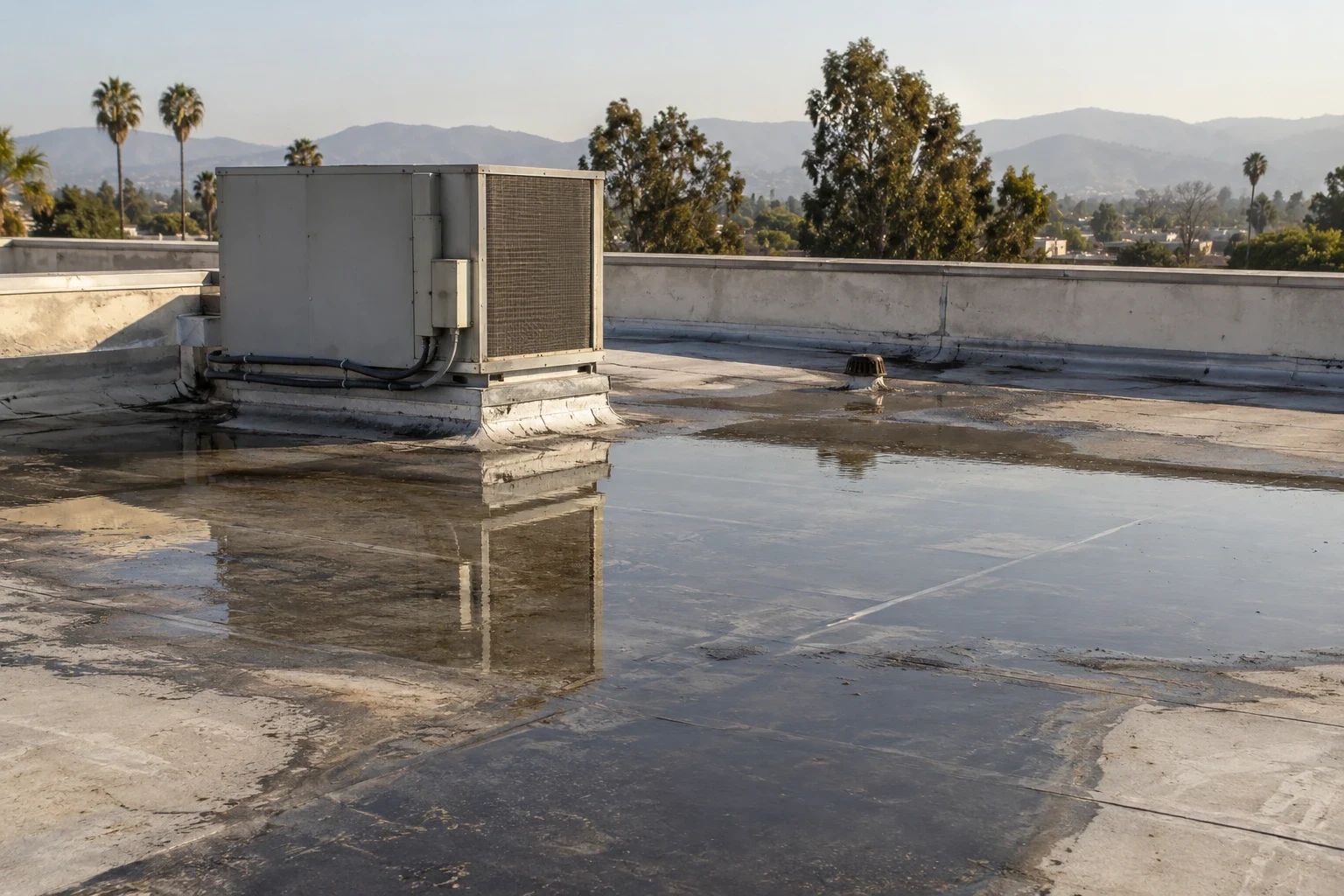
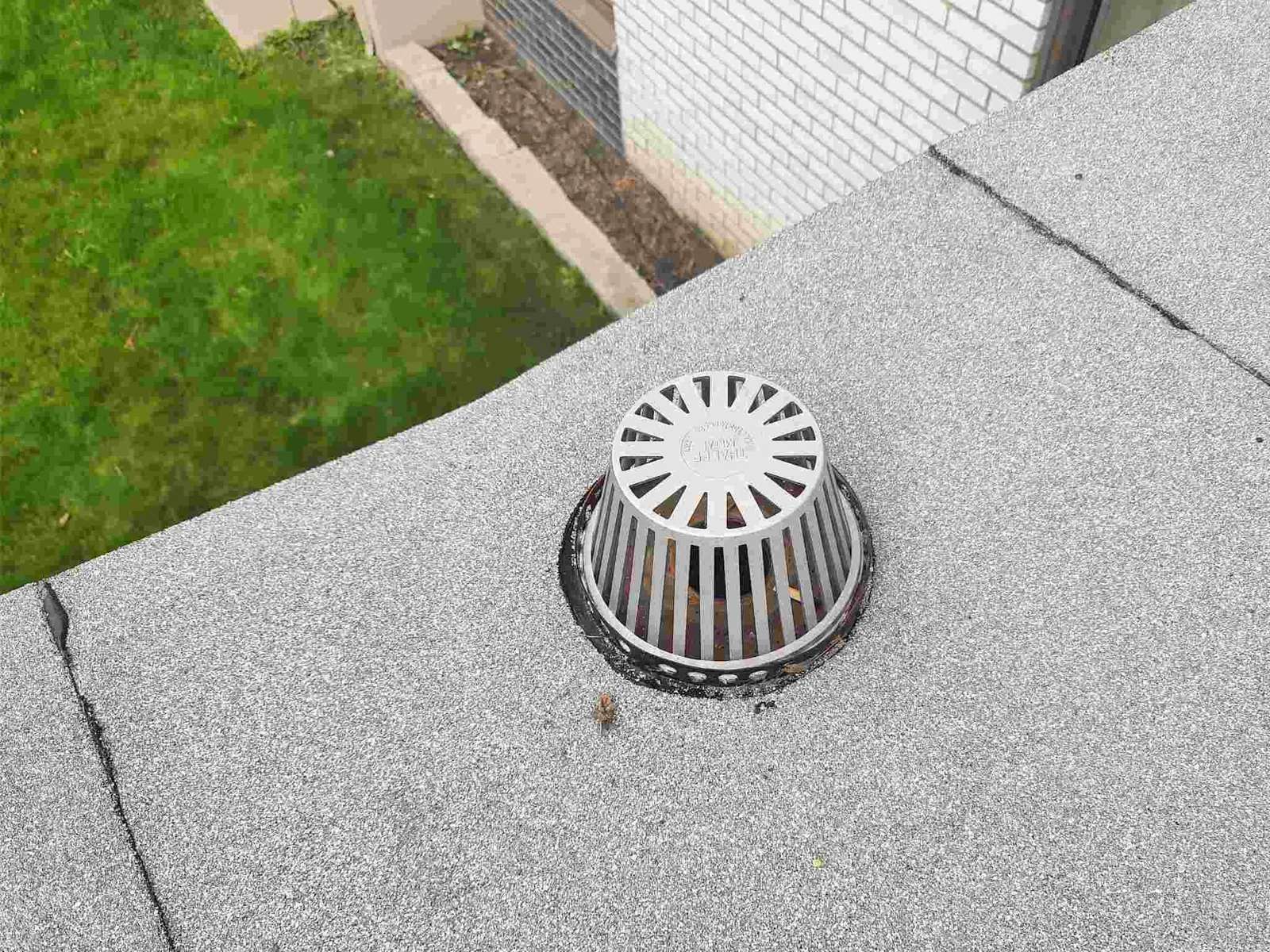
Roof drains deserve a separate check. A blocked inlet, low area, or damaged scupper can keep water at seams longer. The repair plan should distinguish drainage correction from membrane work. If a leak appears beside a freezer wall, we compare it with roof conditions and interior temperature changes. We do not assume every interior moisture mark came through the roof. A ponding-water review can identify whether standing water contributes to the observed condition, while a drain and scupper scope addresses the outlet itself.
Penetrations and Existing Layers
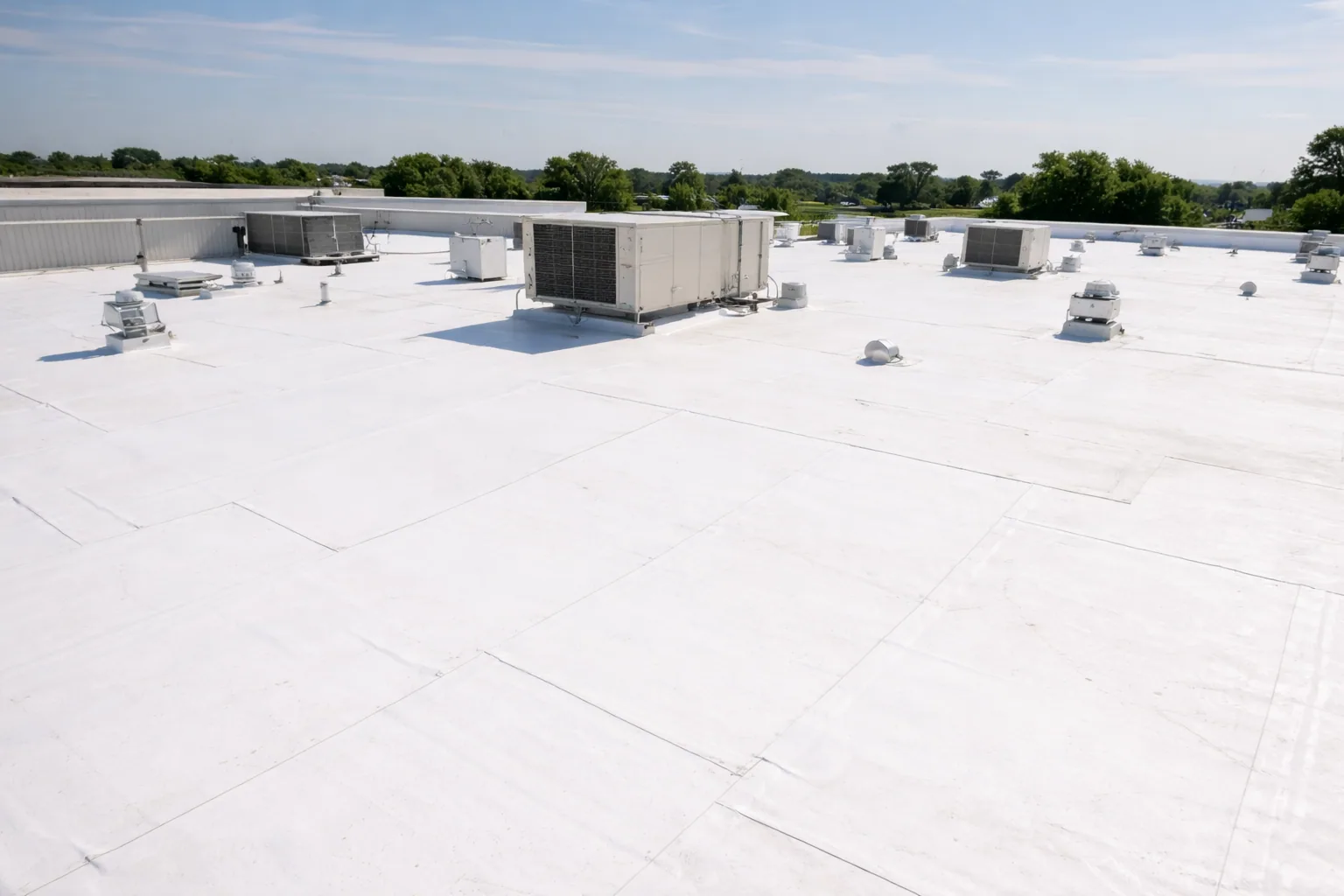
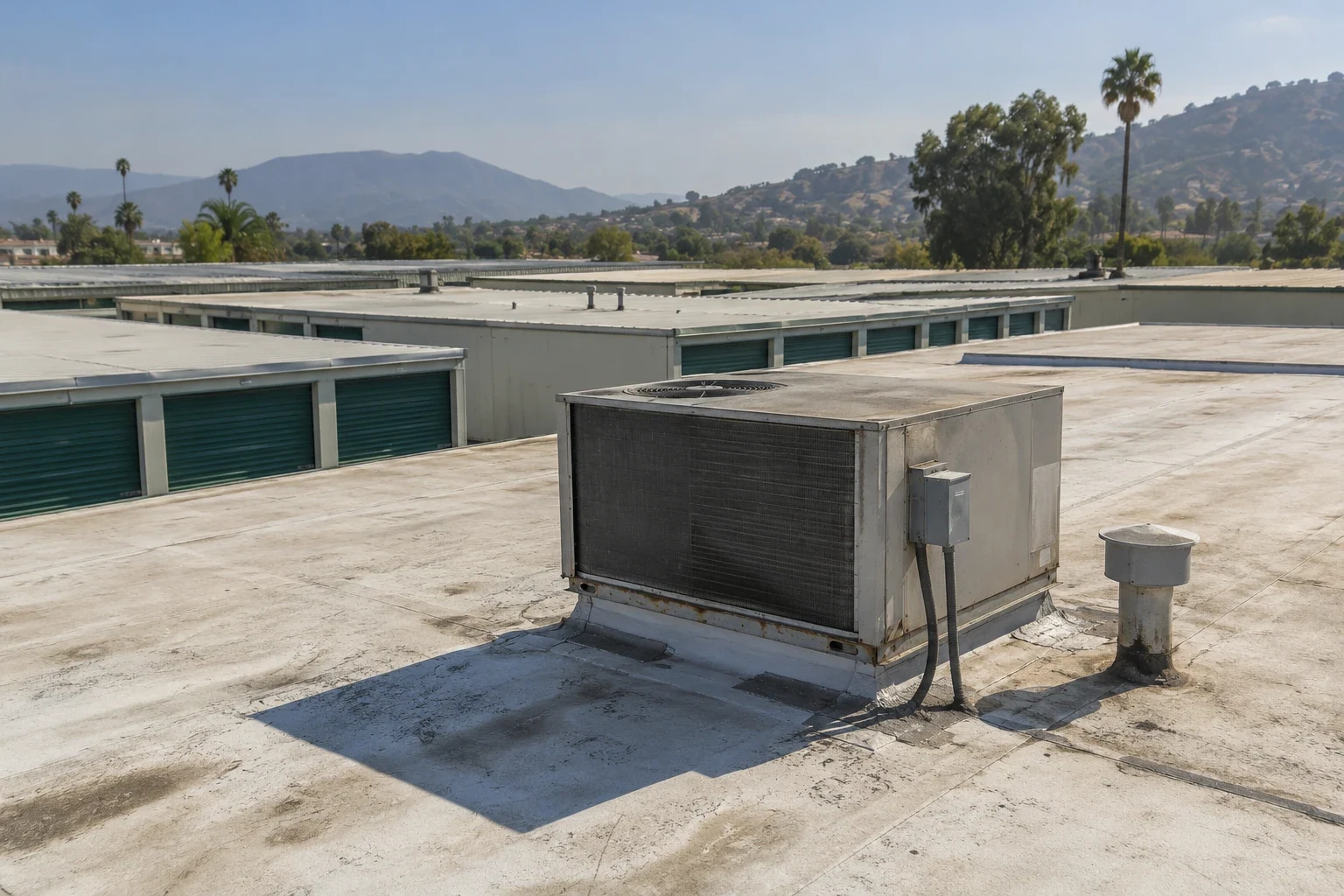
A refrigeration curb concentrates movement and flashing work in a small area. We inspect corners, seams, counterflashing, fasteners, and the membrane turn-up. On a metal roof, panel laps and closures need review with the support detail. On a single-ply assembly, a patch should bond or weld to clean, compatible material. We identify earlier repairs and coatings before selecting a tie-in. The photo set should show the detail and its roof-zone location, so facilities staff can connect it with temperature alarms or leak logs.
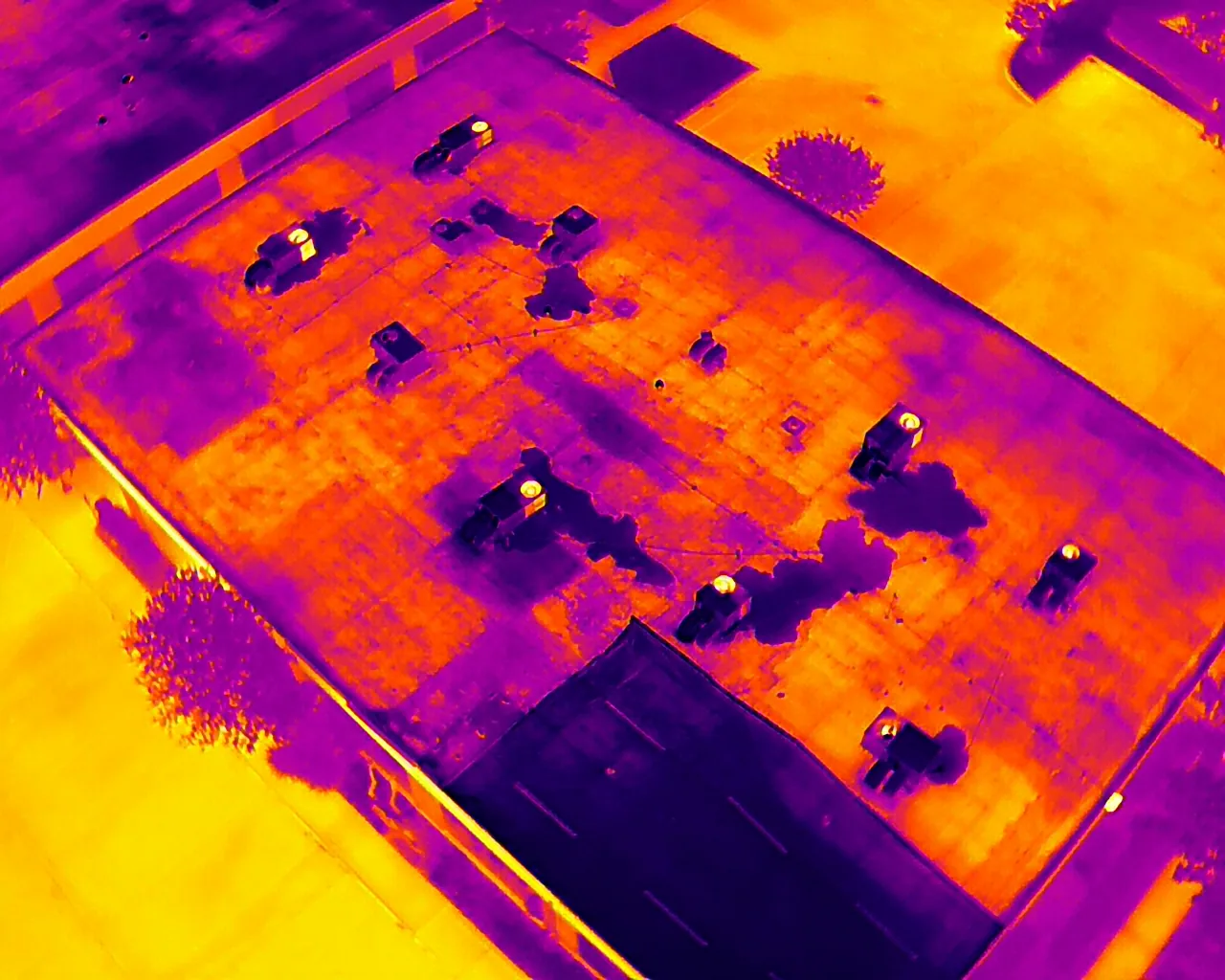
Escondido planning reserves employment acreage for future growth and includes manufacturing among its uses. That context does not establish a refrigeration operation at any parcel. It does support a practical access conversation for industrial roof work. We check if lift paths cross loading movements, if equipment can be isolated, and when a safe roof walk can occur. If moisture may extend below the top layer, an infrared moisture survey can guide selected test openings. We state the limits of the scan and any areas that need core confirmation.
Assembly Options by Finding
A bounded puncture or failed curb corner may take a local repair when nearby membrane and insulation remain sound. Repeated leaks, wet insulation, delamination, or a weak deck can call for removal across a defined zone. A recover is considered only after checking layer count, attachment, moisture, drainage, compatibility, and applicable requirements. For cold storage, the decision should also consider vapor movement and temperature performance. We describe those conditions without assuming the roof requires a full tear-off.
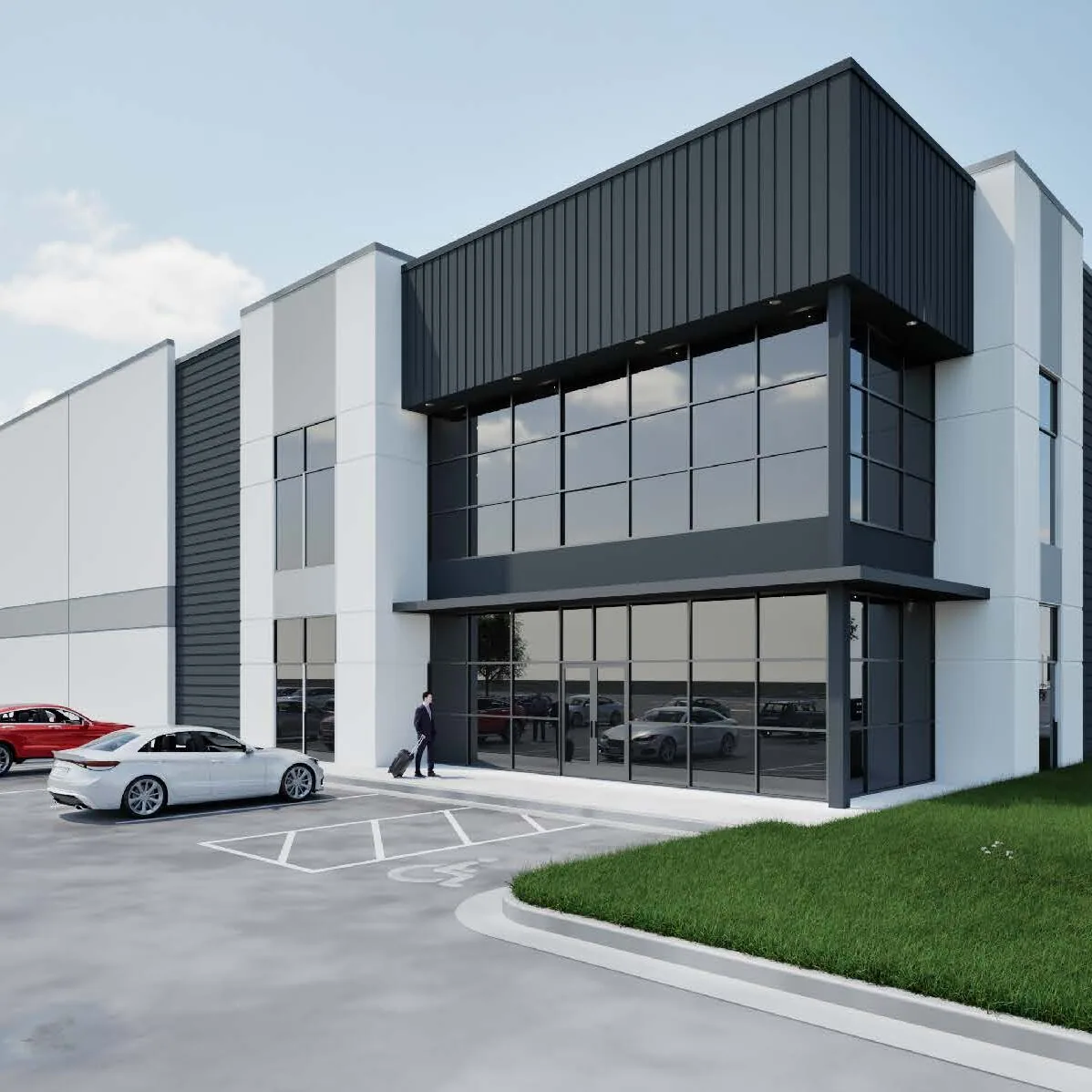
Replacement proposals should identify insulation type and thickness, cover board, attachment, membrane, vapor-control details, penetrations, and drainage. Work may need to proceed in small areas to limit exposure. Temporary dry-in and interior temperature controls belong in the sequence. If a roof includes a large loading zone, a distribution-building sequence raises related access questions, while warehouse roof planning helps separate storage and shipping operations. A new assembly still depends on the actual building, not its use label. Any coating option requires a compatible surface and dry substrate.
Loading, Deliveries, and Work Windows
Material staging cannot block a refrigeration service route or loading door. We map roof access, hoisting position, temporary barriers, pedestrian paths, and interior protection before setting dates. Some work can happen while the building operates; an opening above a controlled room may need a shutdown or temporary relocation. The owner or plant manager identifies who can authorize that interruption. If water needs immediate containment, we record the temporary measure and return date as separate items.
Southern California Santa Ana winds are dry and may be warm or hot. That regional condition can affect exposed roof edges and flashings, so we check their restraint during inspection. It does not diagnose a specific cold-storage roof. Downtown Escondido planning and the Centre City Parkway corridor describe commercial uses, but neither establishes an industrial site's loading rules. We confirm those directly with site staff. An occupied-building work plan can mark which roof areas open, when refrigeration staff attend, and what must be restored before the shift resumes.
A Refrigeration-Safe Roof Scope
Useful records include roof plans, prior leaks, repair invoices, refrigeration equipment layouts, temperature alarms, insulation information, and warranty paperwork. We compare the records with the assembly found on the roof. The written recommendation separates a confirmed opening from suspected concealed moisture. It lists the test needed to resolve uncertainty, who approves it, and how exposed rooms will be protected. This makes a budget request specific. It also keeps the roof repair from being priced as refrigeration work or the reverse.
After work, closeout should show the repaired detail, materials used, zone location, and any remaining observation. If a curb or pipe support belongs to a mechanical contractor, the handoff should say who reconnects and inspects it. A photo-based condition report supports later maintenance. Properties near Harmony Grove Industrial Park still need an access and delivery review for their own lot. Arrange a visit with leak dates, operating limits, and equipment contacts ready. We will document the assembly and define a repair, testing, or replacement decision tied to the building's use.
Frequently Asked Questions
How can we tell roof leakage from interior condensation?
The location, timing, surface temperature, and roof layers help separate the causes. We compare the interior mark with seams, penetrations, drains, and vapor-control details above it. A test opening may be needed. The finding records what was confirmed and what requires monitoring or further testing.
Can a roof opening be repaired without shutting down refrigeration?
That depends on the room below, exposure time, and protection method. We coordinate the opening size and dry-in with the site contact before cutting. Some small repairs can be contained. A larger removal area may need a scheduled interruption or temporary relocation of sensitive product.
What documents help price cold-storage roof work?
Roof plans, insulation details, leak records, refrigeration layouts, service routes, and operating windows help define access and scope. We verify them against visible conditions. The proposal should state which details are included and how concealed wet layers will be handled.
When does wet insulation require a broader correction?
Extent and continuity matter. We map the affected area, check adjacent layers, and assess deck condition before recommending removal or replacement. A small confirmed zone may be repaired locally. Moisture extending across seams or equipment bays can change the assembly decision.
What should the closeout record for a refrigeration facility include?
It should identify roof zones, repaired transitions, materials, photos, and any remaining test or observation. Equipment work needs a clear trade handoff. We also note access limitations or temporary measures, so the next maintenance review can distinguish completed roofing from open items.
Set the Cold-Storage Work Sequence
Arrange an inspection with roof records, leak timing, refrigeration access rules, and site contacts ready. We will document the assembly and define a repair or testing scope. Call to coordinate a work window.
Call 555-555-5555 or email [email protected].