
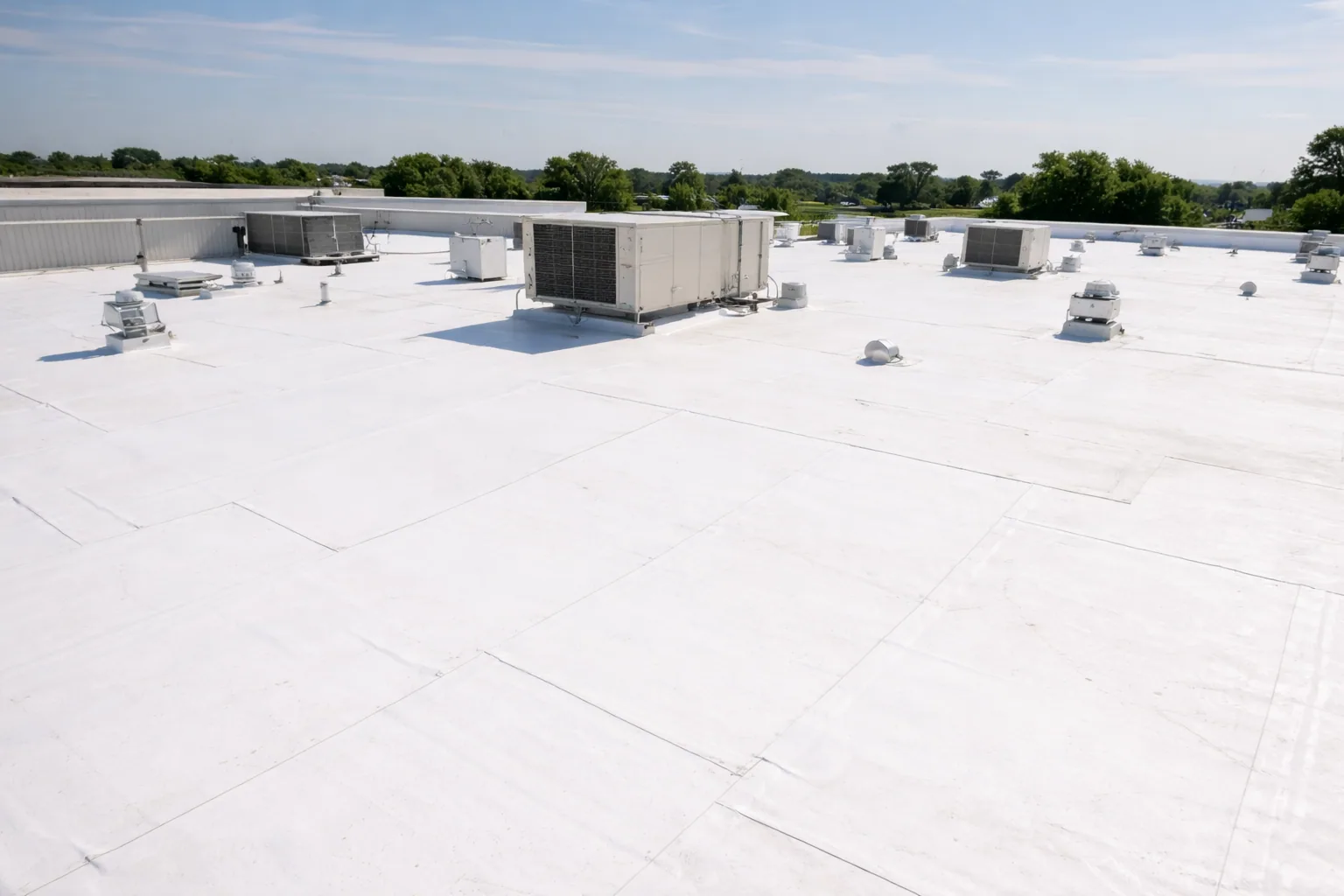
Emergency Commercial Roof Repair in Escondido, CA
Commercial Roofing Services · Escondido, CA
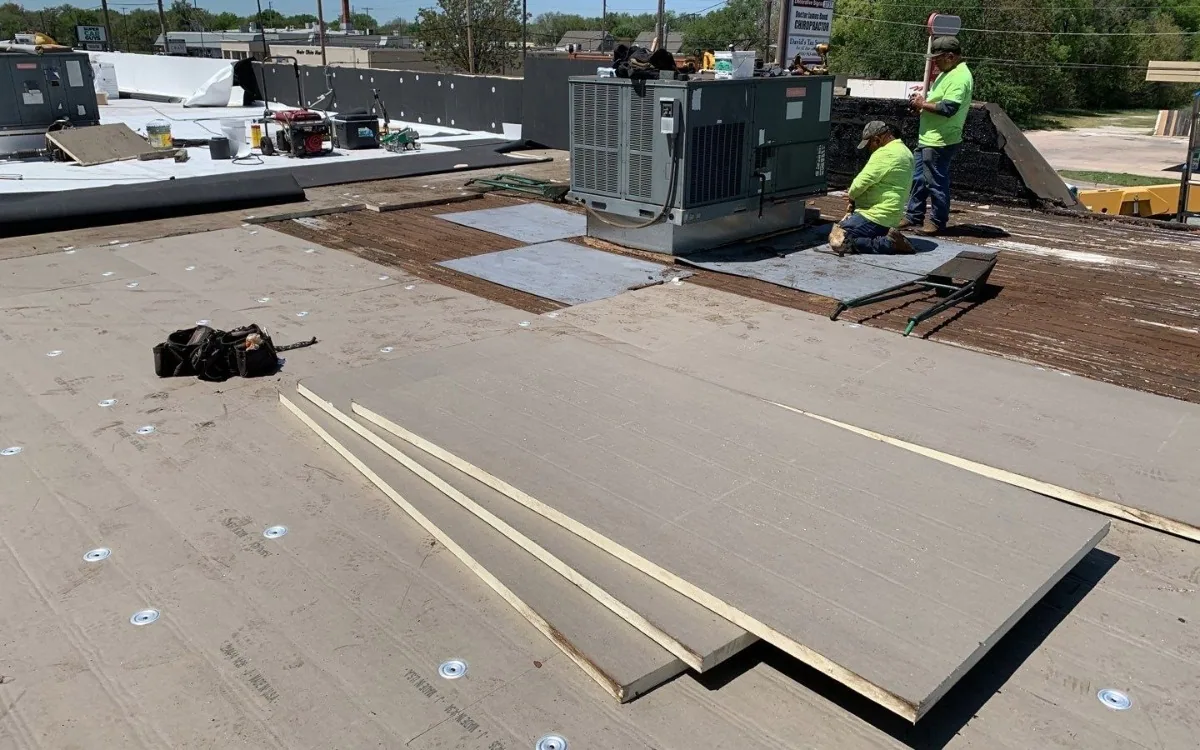
Water crossing a ceiling tile changes the order of work. First protect people, equipment, and materials. Then identify the roof area admitting water and set a safe temporary dry-in. Permanent repair follows after the assembly and conditions are understood. Call to confirm safe access and temporary protection before anyone opens the assembly. Dry Santa Ana or east winds from the northeast can create red-flag conditions around Escondido. That local context makes exposed edges and flashing worth reviewing after a wind event. We record what is active, what has been protected, and what still needs repair. That gives the building owner and general contractor a usable next step instead of an open-ended emergency call.
Immediate Conditions
Before roof work, we ask what is happening inside. Is water dripping near electrical equipment, stored goods, a work area, or a public path? Has the ceiling changed or begun to sag? The site contact can help isolate the affected space and protect contents. We then confirm roof access, safe routes, ladder points, and the location of mechanical equipment.
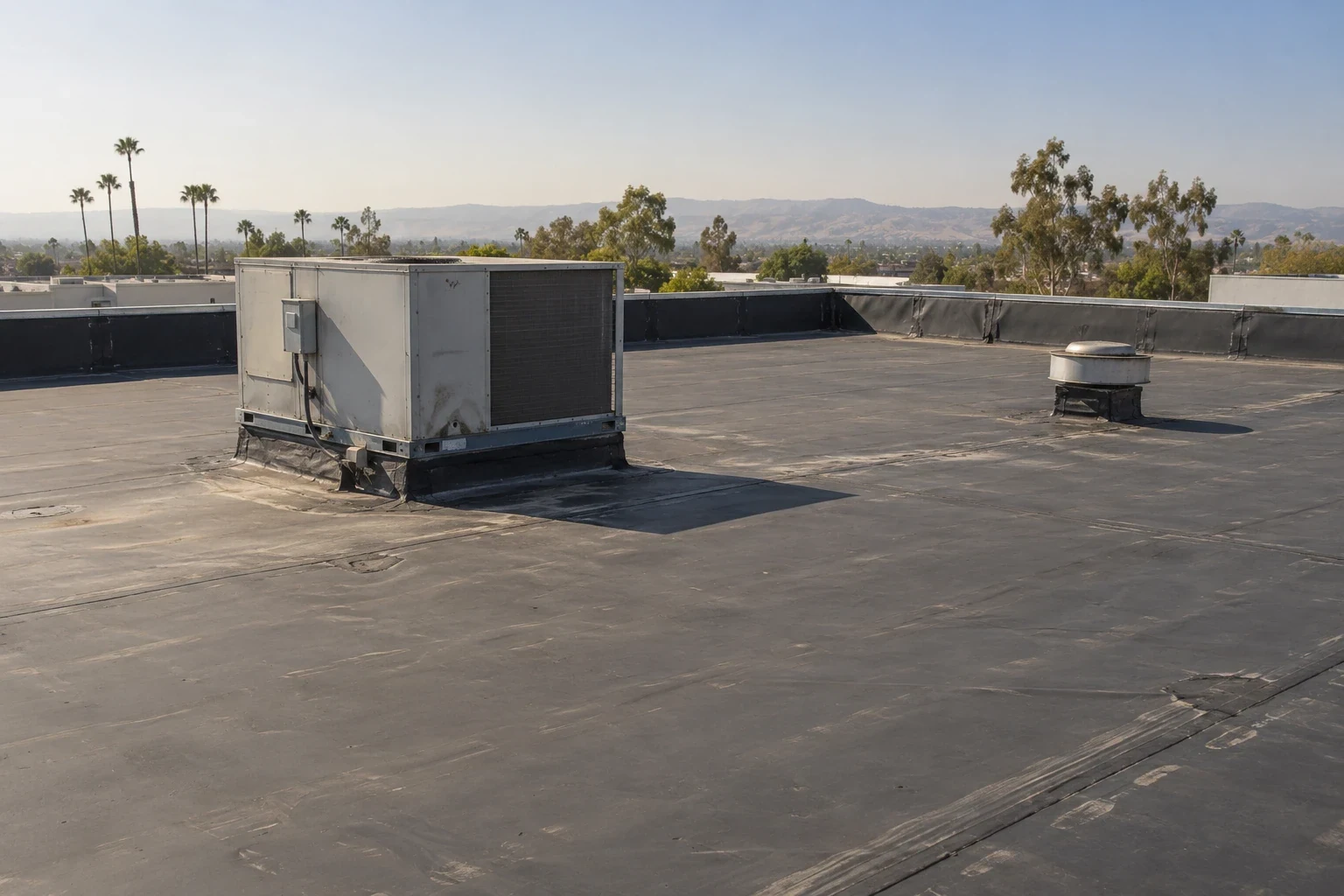
On the roof, we look for displaced edge metal, open flashing, split seams, punctures, damaged drain details, and loose material. A ceiling stain identifies an interior symptom; the entry path can run through insulation or along the deck before becoming visible. We trace the roof details above before setting a permanent repair. When several areas are active, we map them separately and prioritize conditions that are admitting water now.
During dry weather and strong winds, wildfire risk can rise during red-flag conditions. After a wind event, we inspect exposed edges, penetrations, and temporary covers at the property, documenting each visible condition before adding protection. A roof inspection can expand the review after immediate water entry is controlled.
Temporary Dry-In
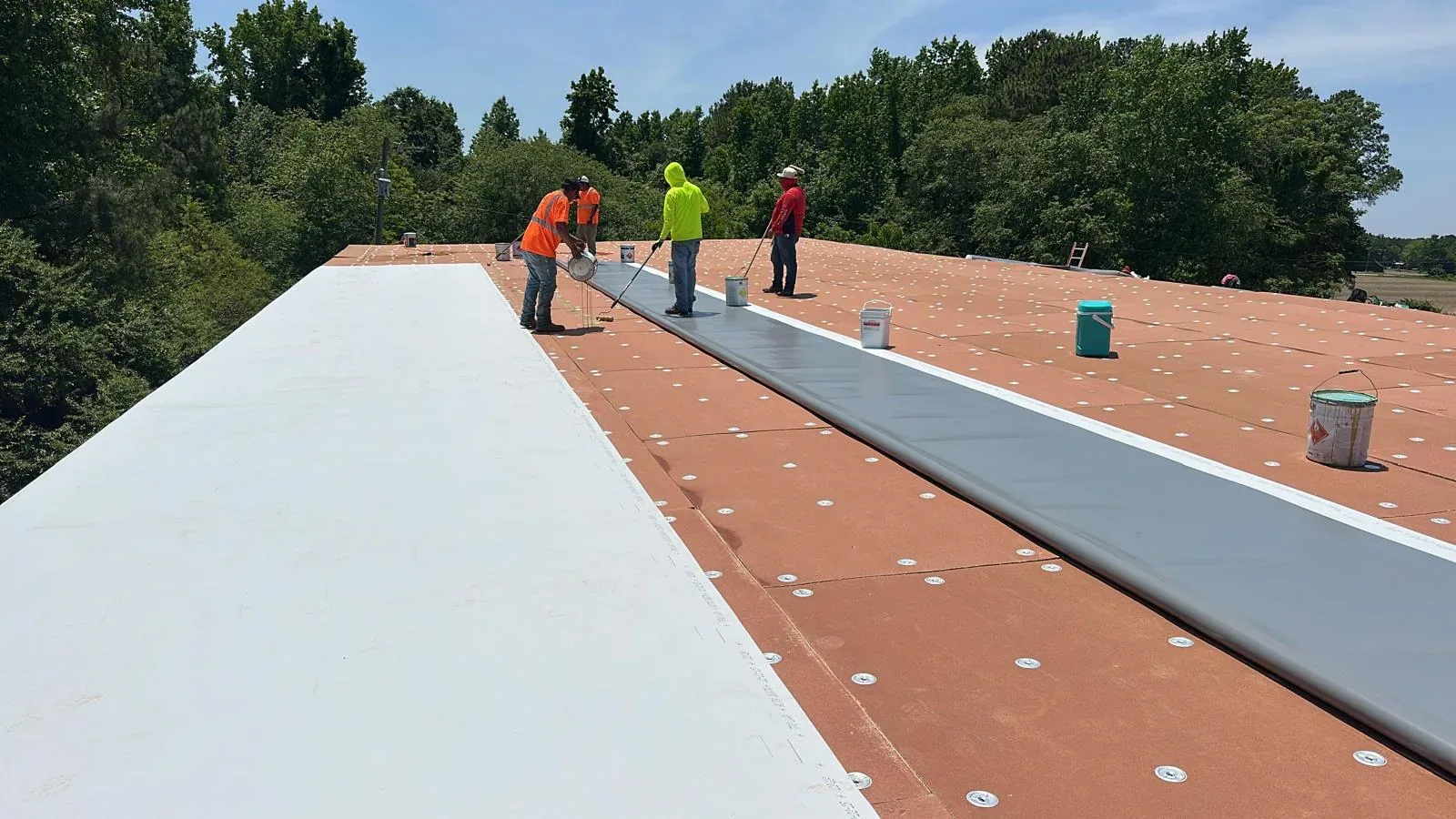
A temporary measure should reduce active exposure without concealing the work still required. We may use a secured tarp, temporary flashing, or another compatible dry-in method based on the roof surface and access. The crew records the area covered, the attachment method, and any limitations. We also state when follow-up is needed. A temporary measure is not a permanent roof repair and should not be priced or tracked as one.
Dry-in has to account for wind, drainage, and the shape of the roof. Loose plastic can become a hazard. A cover that blocks a drain may move water into another part of the building. We secure protection so it directs water away from the opening and does not obstruct roof outlets. If weather prevents a permanent repair, the owner receives the reason and next inspection step.
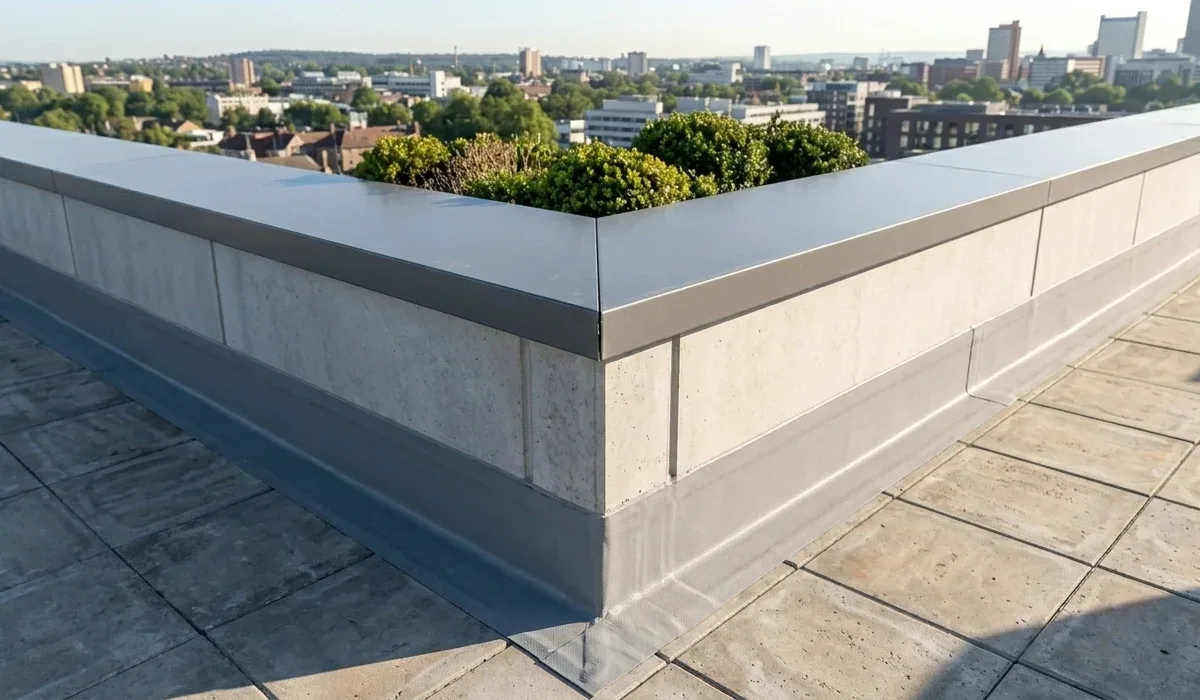
A puncture may need a compatible membrane patch. A failed curb may require new flashing and termination work. If wet insulation extends beyond the opening, removal limits need confirmation. We identify any concealed deck condition and obtain direction before added work. A leak repair scope can address the entry path, while edge metal repair may be needed where perimeter components moved. Different roof systems need different materials, including TPO and EPDM.
Site Coordination
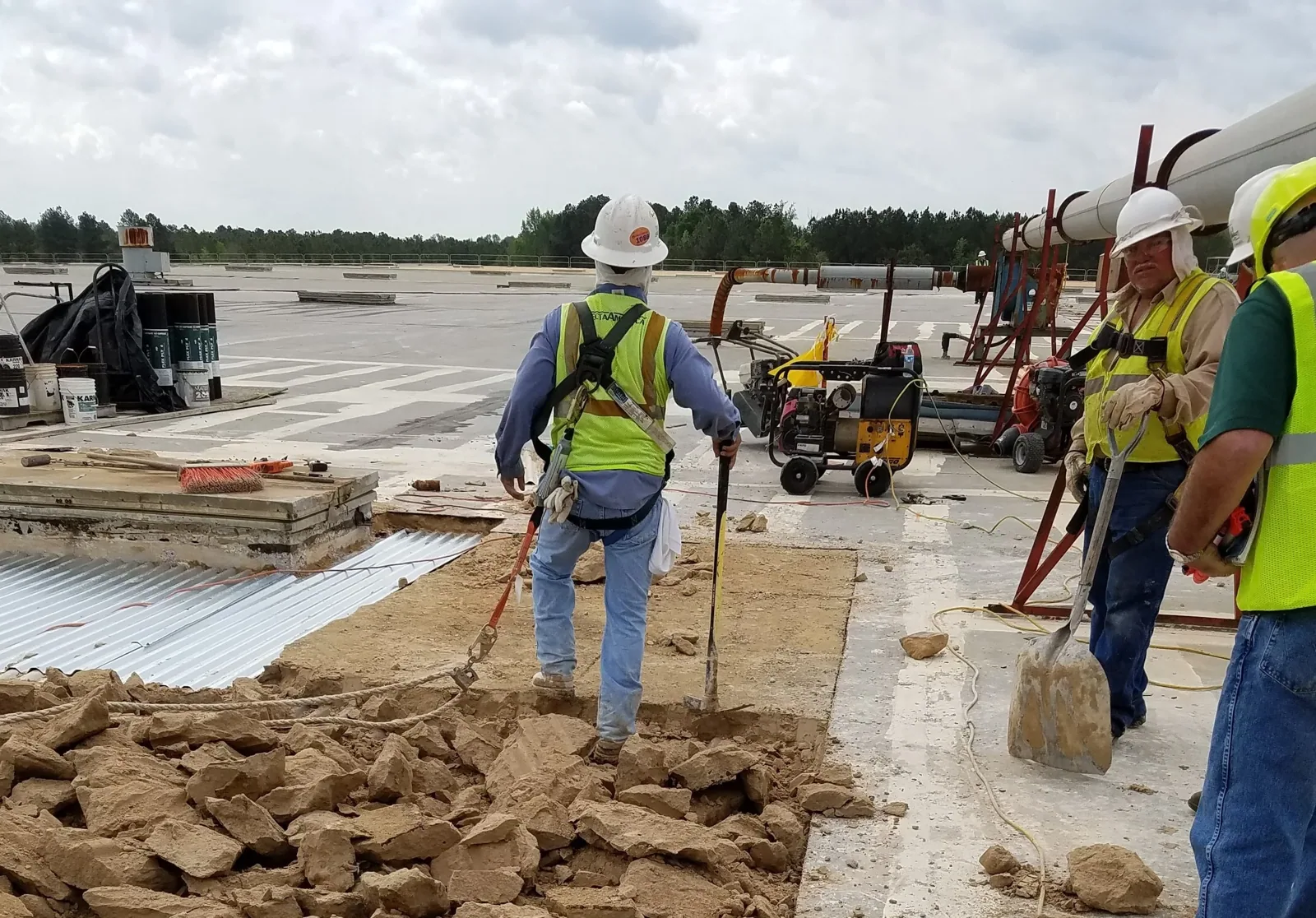
Emergency access still needs coordination. We confirm who can open roof hatches, direct the crew to active interior areas, and approve temporary protection. The general contractor or property contact should identify delivery gates, loading windows, occupied zones, and equipment that cannot be interrupted. If a lift or crane is needed, the site team can flag overhead utilities and access restrictions before mobilization.
Grand Avenue runs through Downtown Escondido, where streetscape work has changed sidewalk, parking, and traffic patterns. Phase II streetscape work was completed in June 2025 and added sidewalk, parking, and traffic-calming changes. For a Downtown Escondido building, we confirm current conditions and staging with the owner before arranging delivery.
For the initial visit, we separate emergency control from the permanent work schedule. Roof conditions, material availability, work hours, and drying time can change the follow-up. If mechanical equipment, fire alarm systems, or interior finishes need another trade, we identify the coordination point. Photos and written notes let the owner brief a project team without relying on a verbal handoff. A work plan for occupied buildings can define roof sections, temporary closures, and interior protection for the repair phase.
From Response to Permanent Work
Some emergencies end with one localized repair. Others reveal a broader roof issue that needs a planned scope. We compare the affected details, moisture extent, deck condition, repair history, and surrounding seams. A new leak does not automatically mean full replacement. Repeated failures in multiple sections or widespread wet insulation may change that decision.
If the roof can be repaired, we describe the opening, materials, flashing, and completion check. If the assembly has failed across a larger area, the owner may need a replacement estimate with removal limits and deck assumptions. A recover is considered only when the retained roof is dry, attached, and compatible with a new assembly. We explain why each option is suitable or not suitable for the inspected areas. No option should be based only on the visible ceiling damage.
Emergency work can expose added conditions after materials are removed. We photograph the opening and contact the authorized person before expanding the repair. The proposal identifies temporary work, permanent corrections, and allowances. Near the planned employment area at Harmony Grove Industrial Park, the building schedule may shape the work window. We confirm the actual roof and operating conditions on site.
The Handoff Record
A strong handoff says what happened, where, and what remains. It includes the reported interior area, roof detail inspected, temporary protection, photographs, permanent repair recommendation, and follow-up timing. If water may have affected insulation or deck, the note should identify the area that needs confirmation. That keeps the emergency visit connected to the capital and maintenance records.
Share roof plans, leak history, prior repair records, contact information for the site lead, and rules for access. Tell us which operations cannot stop and what interior areas need protection. We will use those details to plan the visit and separate immediate containment from the permanent repair.
For an active leak, include the affected room, approximate start time, visible roof access, and any immediate safety issue. For wind or fire-related damage, share photographs from a safe location. The next decision should be clear enough for the building team to act.
Frequently Asked Questions
Which information should the site lead have ready?
Move people away from active water and follow the site's safety procedures. Protect contents when it is safe to do so, and identify any electrical or equipment concerns. Share the access contact, affected rooms, and roof entry instructions. We will confirm the work area and the temporary protection needed after arrival.
Does a tarp count as a permanent repair?
No. Temporary dry-in limits exposure while conditions or materials are arranged. The permanent repair needs a compatible surface, confirmed entry detail, and a scope for any wet insulation or deck. We record the temporary measure separately and identify the follow-up work.
What should I do before a roof emergency visit?
Call to confirm safe access and temporary protection. We review site controls, weather, and working conditions before opening the assembly. The visit record separates what is contained from what remains, then identifies the conditions needed for permanent repair.
Will an emergency visit tell us whether the whole roof needs replacement?
The first visit focuses on active exposure and safe control. We can record visible roof conditions, but a full replacement decision may require broader inspection, moisture testing, or openings. The follow-up scope will identify what evidence is still needed.
What details help us prepare the next repair window?
Roof system, access hours, tenant requirements, dry-in condition, equipment restrictions, and material needs shape the plan. Prior repair history and roof drawings also help. We use the inspection notes to set a defined sequence rather than schedule a permanent repair from a ceiling stain alone.

Request Emergency Roof Response
Call with the affected interior area, access contact, operating schedule, and any immediate safety concern. Call to confirm safe access and temporary protection, then share the affected area and the contact who can authorize roof work.
Call 555-555-5555 or email [email protected].