

Commercial School Roofing in Escondido, CA
Property Types We Roof · Escondido, CA
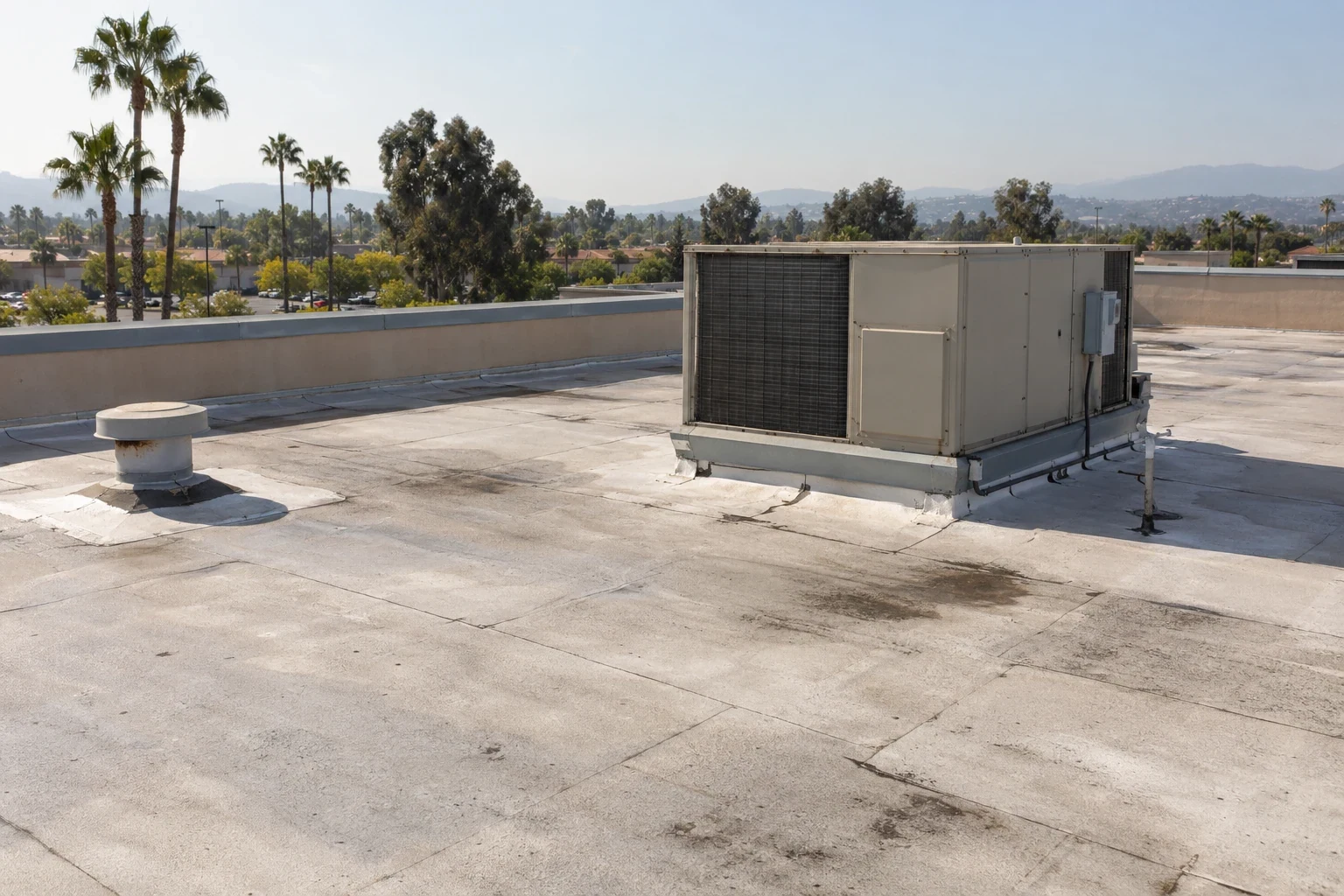
For a school facility, begin with the reported roof zone and note whether any perimeter detail has moved, separated, or remains secure. Santa Ana winds can be dry and warm or hot, and property damage is possible. After a reported event, we inspect exposed edges, seams, and flashings, then record the observed condition and keep drop-off, deliveries, and occupied areas outside the work boundary.
Protect rooms below the work
A roof opening over an active classroom changes the daily sequence. We mark the room beneath each work zone, then agree on ceiling protection, furniture movement, and any temporary closure with the school representative. The plan should identify where tools and materials enter, which corridors remain available, and who can approve changes. Those details let a general contractor coordinate roofing with alarm, electrical, or ceiling work. They also prevent a small repair from disrupting a wider campus area without warning.
When a campus is near Downtown Escondido or the Grand Avenue corridor, the facilities contact still needs to confirm whether construction access shares an approach with student arrival or meal deliveries. We mark the approved crew route separately from occupied campus circulation before materials are staged.
Trace the leak to its roof detail
We start above the stained ceiling, then inspect uphill and across the drainage route. Water may enter at a seam, curb, skylight, wall transition, drain, or edge. The visible interior point can sit away from the opening. We photograph each suspect detail and note whether the membrane is split, loose, punctured, or simply weathered. If several rooms report moisture, we compare their roof locations before expanding the work boundary. The resulting hands-on roof inspection gives the district a location-based record.
For each campus, we compare the roof plan with reported ceiling locations, room use, and drainage paths before setting the inspection boundary. A close review checks seams, flashings, curbs, and drains; photographs tie each finding to a roof zone. Drone imagery can show broad conditions, while infrared or a test opening may help define concealed moisture when visible evidence warrants it. We record what the inspection confirms and identify any area that needs more testing before the district chooses repair or replacement.
Match the work to the assembly
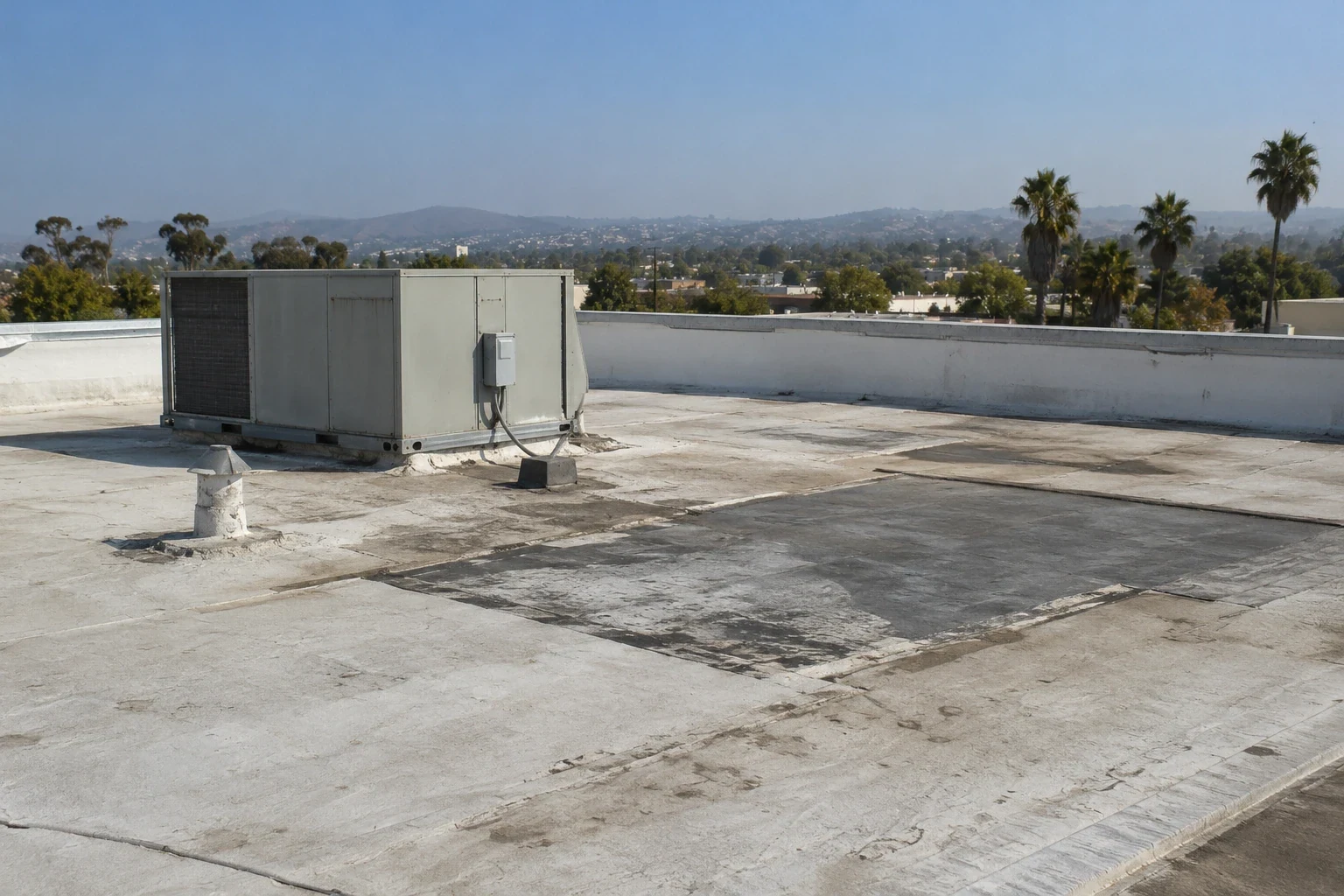
School roofs can include several sections installed at different times. We identify the membrane or metal type, transition details, insulation, cover board, and drainage before proposing work. A compatible patch may resolve a local defect when surrounding materials remain sound. Widespread wet insulation, failed attachment, repeated seam openings, or poor drainage can change that decision. We explain what is observable and what needs a test opening. The roof needs of college buildings often involve different occupancy and equipment patterns, so the scope for a K-12 campus stays specific to its rooms and operations.
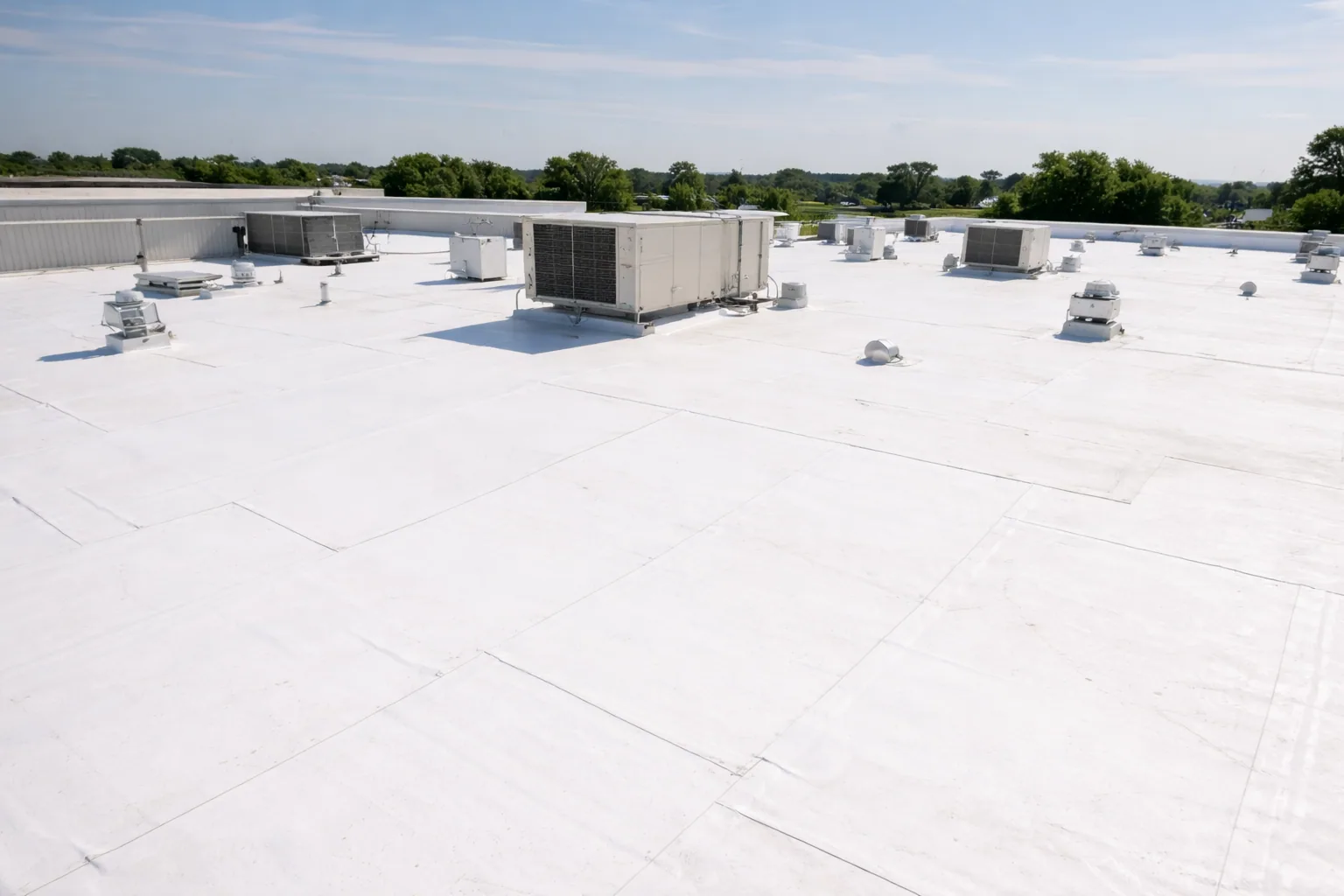
A coating does not correct a wet assembly or an unstable substrate. We check surface preparation, seam condition, drainage, and existing layers before discussing restoration. When removal is justified, the replacement scope states the tear-off limit, new insulation, cover board, membrane attachment, edge details, and drain work. The district can compare localized commercial roof repair with a larger replacement scope. If a standing-seam or retrofit metal area is present, we review panel laps, fasteners, closures, and movement separately from low-slope membrane details.
Set the school work window
The calendar affects access, but it does not set roof condition. Summer breaks may simplify room protection; maintenance periods during the school year can still suit a small, isolated repair. We identify noise limits, arrival and dismissal periods, meal-service deliveries, athletics, and building access before scheduling. Then we divide the roof into daily work areas and state how each section will be dried in. A defined occupied-building work sequence helps the school coordinate trades, custodial staff, and the general contractor.
The school's delivery gate, emergency lane, and lift position belong in the access plan before work starts. We confirm each route with the facilities contact and mark any time when arrivals, meals, or athletics limit movement. If construction access uses a street near the Research and Technology Center area, the school contact still sets circulation and staging rules for the approved work zone. A schedule should also identify weather-sensitive steps, material storage, debris removal, and any interior protection that must stay in place.
Give the district a usable comparison
A bid is easier to review when quantities and assumptions are visible. We separate membrane work, insulation replacement, edge metal, drains, curbs, and interior protection where each changes cost or timing. The scope names the areas included, excluded, and held for approval if concealed conditions appear. Photographs should match the roof plan and identify the room below each repair. A condition report with marked locations gives facilities staff a record for capital planning and future leak review.
For a replacement, the project team needs an approval point before deck repairs or additional tear-off expand the work. We document exposed conditions, protect the opening, and wait for direction under the agreed process. The closeout records materials installed, repaired details, dates, and any follow-up item. The owner can compare this scope with shopping center roof decisions without treating a forecast as a fixed outcome. Clear records support the next budget window and help staff locate the repair when another trade visits the roof.
Frequently Asked Questions
Can roof work continue while classes are in session?
The work area and school schedule determine the sequence. We can separate roof zones, set delivery windows, and identify rooms needing protection. The facilities contact confirms access, noise limits, and any periods when the crew must stop.
What does a stain in a classroom tell you?
It identifies an interior symptom, not the roof entry point. We trace the path above it and inspect nearby seams, curbs, walls, and drains. The report links each finding to a roof location and a repair option.
When should a school replace rather than patch?
Widespread moisture, failed attachment, recurring openings, or an unsound deck may support replacement. We inspect the assembly and compare those conditions with repair history. A localized defect can still call for a focused repair.
How do you protect classrooms during tear-off?
We limit the daily opening, define interior protection, and confirm which rooms sit below the work. The plan names the dry-in step and the person who approves concealed-condition changes before removal continues.
What should the district provide before inspection?
A roof plan, leak locations, prior reports, access rules, and the school calendar help focus the visit. We use those details to map the inspection and prepare a scope that fits the next budget window.

Set a school roof review
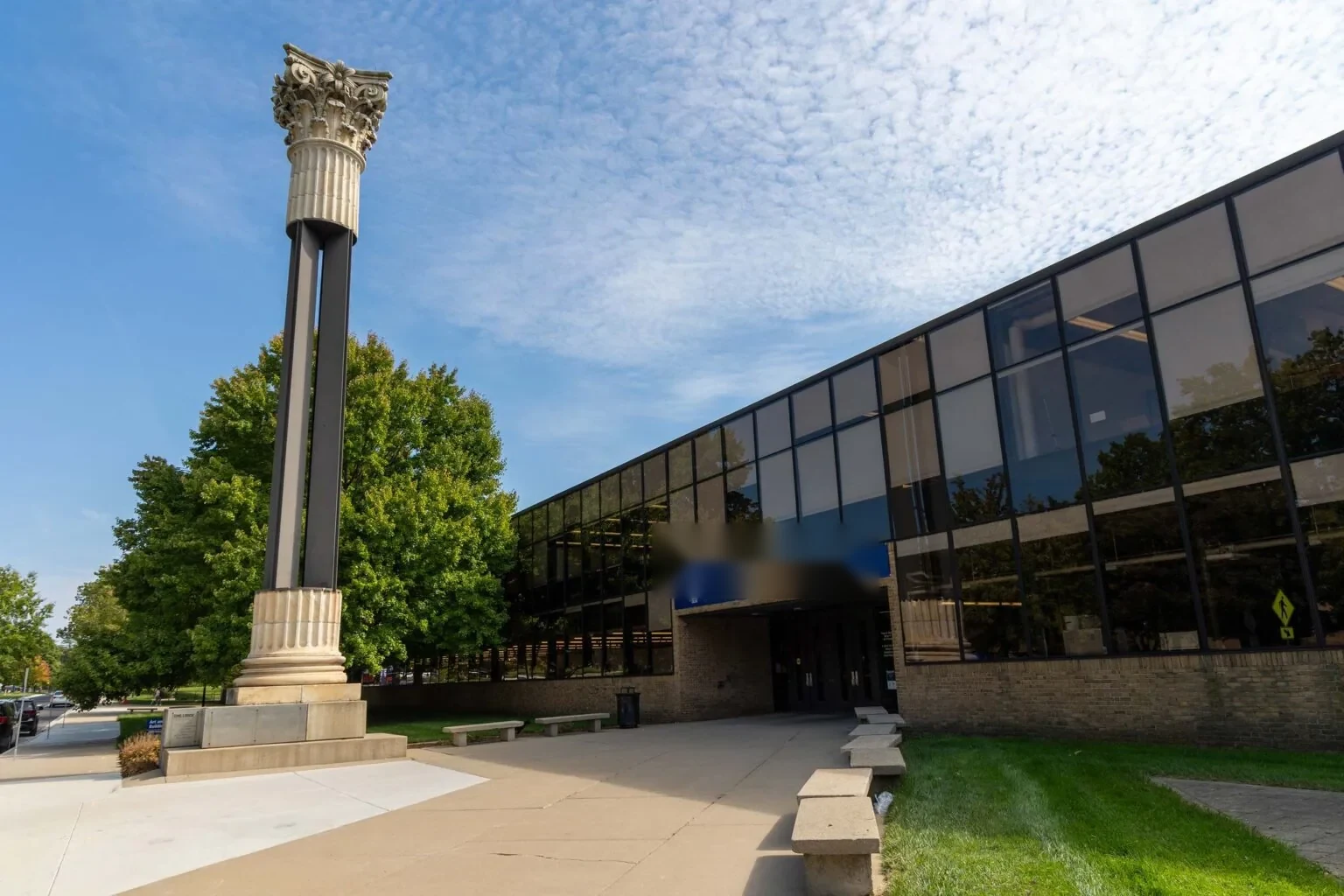
Share the roof plan, affected rooms, leak history, access rules, and available work dates. We will document the assembly and outline repair or replacement options for the district. Call Commercial Roofers Escondido to arrange an inspection.
Call 555-555-5555 or email [email protected].