
Cool Roof Installation in Escondido, CA
Commercial Roofing Services · Escondido, CA
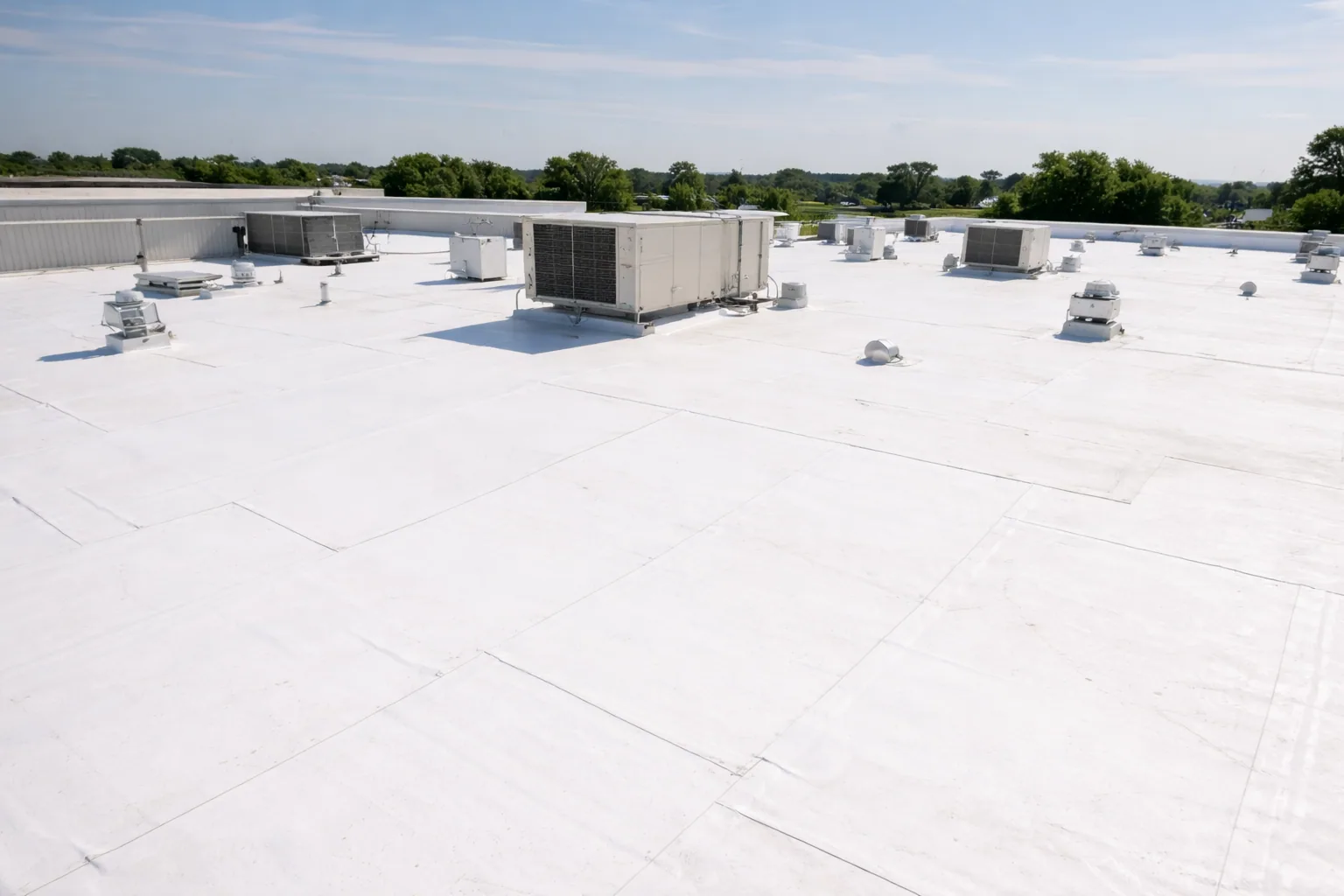
A dark, aging roof can hold heat long after the workday ends. The right response depends on the assembly below, not color alone. Commercial Roofers Escondido reviews the existing membrane, insulation, drainage, and rooftop equipment before recommending a reflective surface. In Escondido, dry and often warm or hot Santa Ana winds can also stress exposed roof edges. We look at perimeter details alongside the field. The city’s business areas include Grand Avenue downtown and the Escondido Research and Technology Center. Each roof still needs its own inspection. A cool-roof scope should identify the material, surface condition, water path, edge terminations, and access plan. That gives the general contractor a useful basis for comparing a coating, recover, or replacement. It also keeps an energy-focused request tied to roof condition and building use.
Roof surface and heat exposure
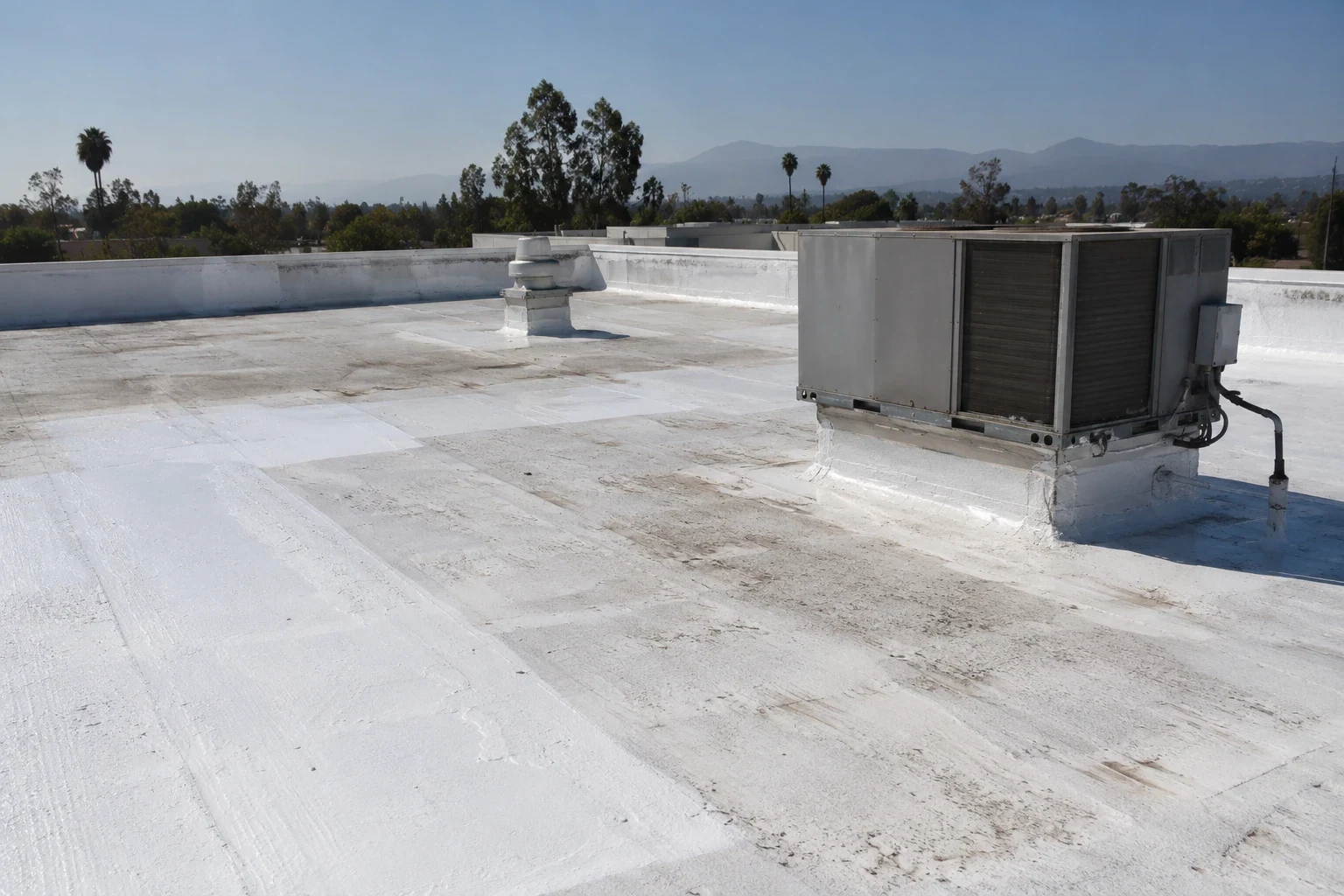
Reflective products return more sunlight from the roof surface than darker products. Their value depends on how much roof area receives sun, what insulation already exists, and how the building operates. We inspect the membrane for open seams, loose flashings, ponding, surface erosion, and previous coatings. A reflective finish cannot correct wet insulation or a weak substrate. Those conditions need a repair or replacement decision before a new finish covers them.
The field review also considers rooftop equipment, parapets, skylights, drains, and nearby surfaces. Shadows and equipment congestion may change how much roof is exposed. If an owner has energy bills or comfort complaints, those records can help frame the question. They do not replace an assembly review. The written findings separate visible roof defects from broader building-energy questions, so the project team can avoid assigning every indoor temperature issue to the roof.
For a first condition record, a commercial roof inspection can map the areas before an installation decision.
Existing assembly and material fit
Installation begins with the roof that is actually present. We identify the membrane or metal system, insulation, cover board, deck type where known, and prior repair layers. Core samples may be useful when concealed conditions affect the recommendation. The scope should state the sample locations and any limitations. It should also identify whether the roof can accept another layer, needs localized repairs, or calls for removal.
Reflective membranes, field-applied coatings, and reflective metal finishes serve different assemblies. A coating needs a compatible, prepared substrate and reliable adhesion. Seams, penetrations, drains, and terminations still require detail work. A new membrane can change attachment and flashing requirements. We explain these differences in the bid rather than treating “cool roof” as a single product specification. Review the TPO roof system or silicone coating system against the existing conditions.
Escondido’s planning documents identify technology, manufacturing, office, professional services, and shopping among employment uses. That range makes operating schedules and equipment layouts different from one property to another. The installation plan should reflect the actual tenant and rooftop needs. It should not assume every commercial roof has the same occupancy or heat profile.
Drainage, edges, and installation timing
A reflective surface must still shed water. We trace the roof’s drainage paths toward drains, scuppers, and outlets, then note low areas, clogged components, and transitions. A coating will follow the existing roof shape. It does not remove a structural depression or repair a blocked drain line. The proposal should identify drainage corrections separately, including any work that depends on another trade or concealed conditions.
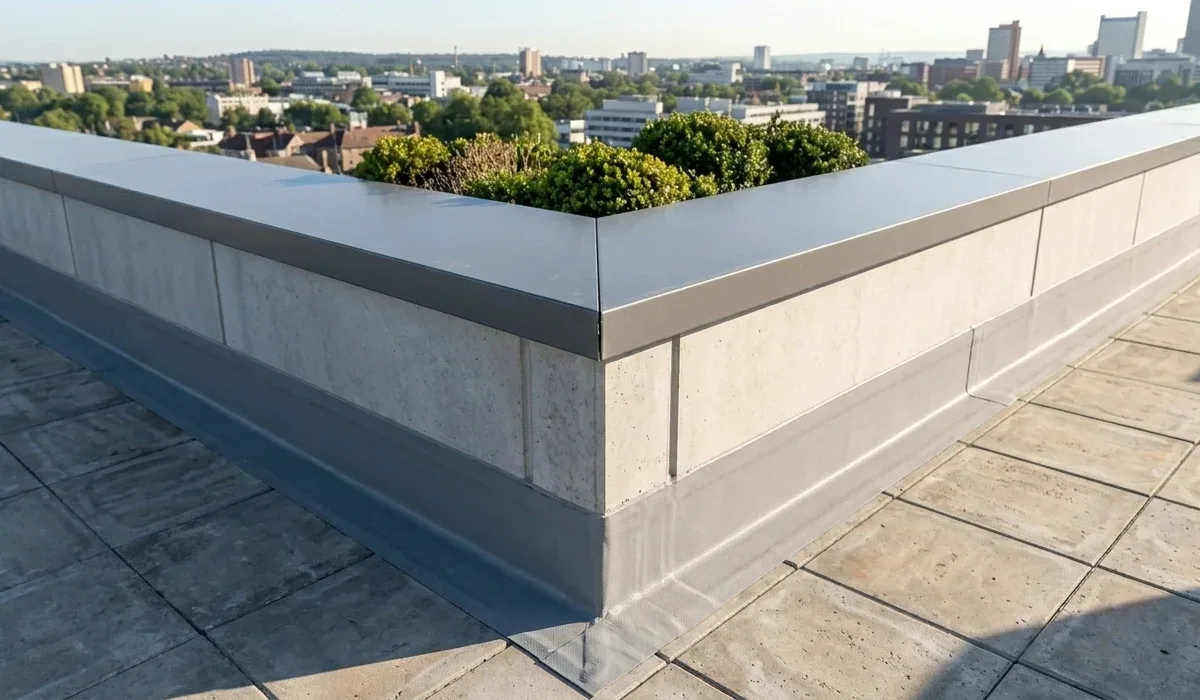
Santa Ana winds generally occur from September through May in Southern California and can damage property. For roof work, that regional pattern makes temporary protection and secure edge details part of ordinary planning. It does not predict a specific project-day condition. We set daily work limits, dry-in steps, staging, and material storage with the general contractor. A perimeter metal review can help define coping and edge transitions before crews begin.
On Grand Avenue, the city completed a second phase of streetscape improvements in June 2025, adding wider sidewalks and traffic-calming features. A project near downtown should confirm delivery and staging conditions with the property team. Do not assume a loading area or street setup from another address. The Downtown Escondido area can involve different access questions than an industrial property farther east.
Coating, recover, or replacement
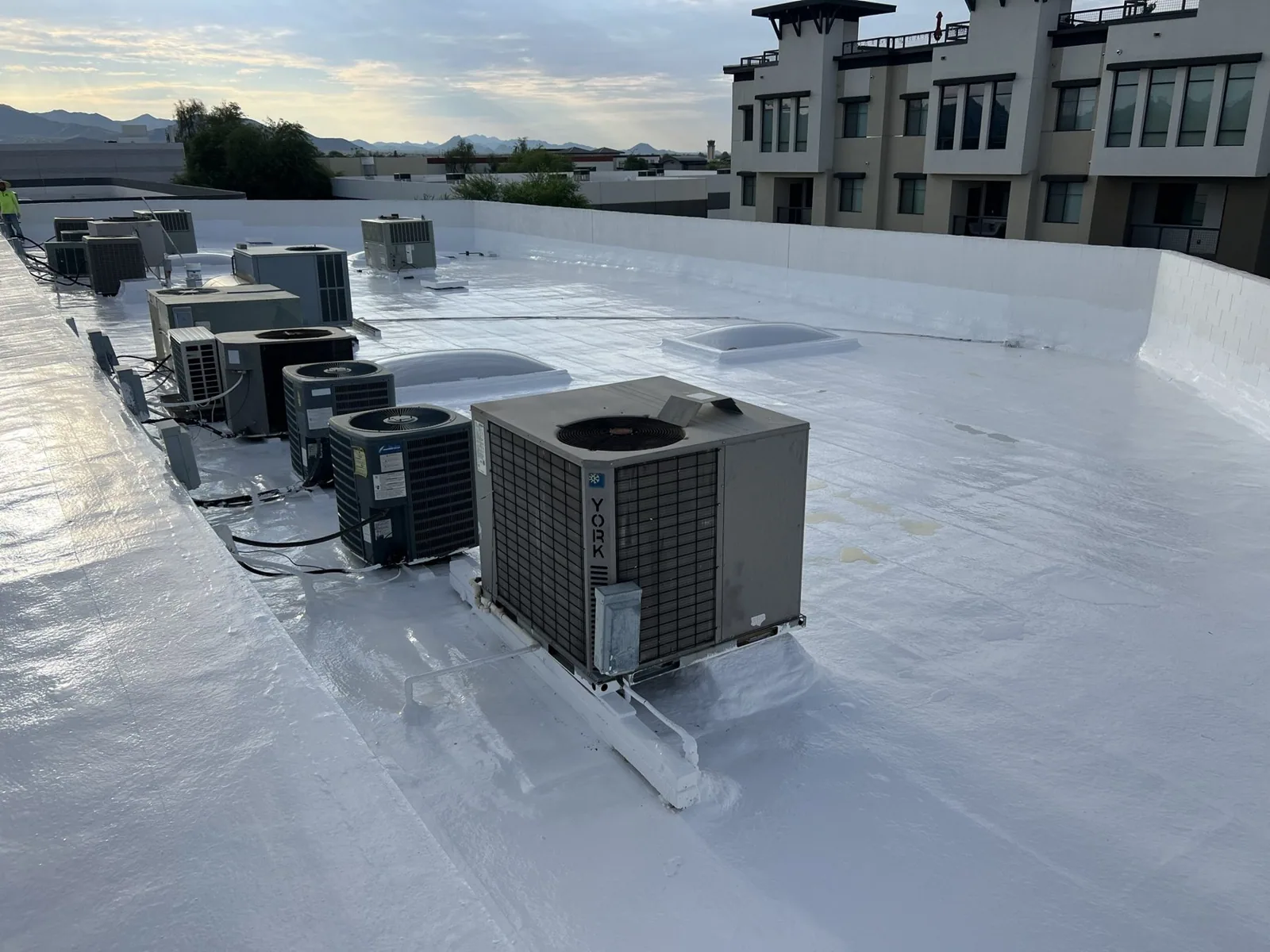
A coating may fit when the existing roof is stable, dry enough for the selected system, and suitable for preparation. The scope should state cleaning, repairs, reinforcement, primer, application method, and cure protection. We also identify areas that cannot be coated, such as incompatible repairs or details needing reconstruction. Manufacturer requirements and project specifications control material selection and installation. A coating is not a shortcut around a failed roof assembly.
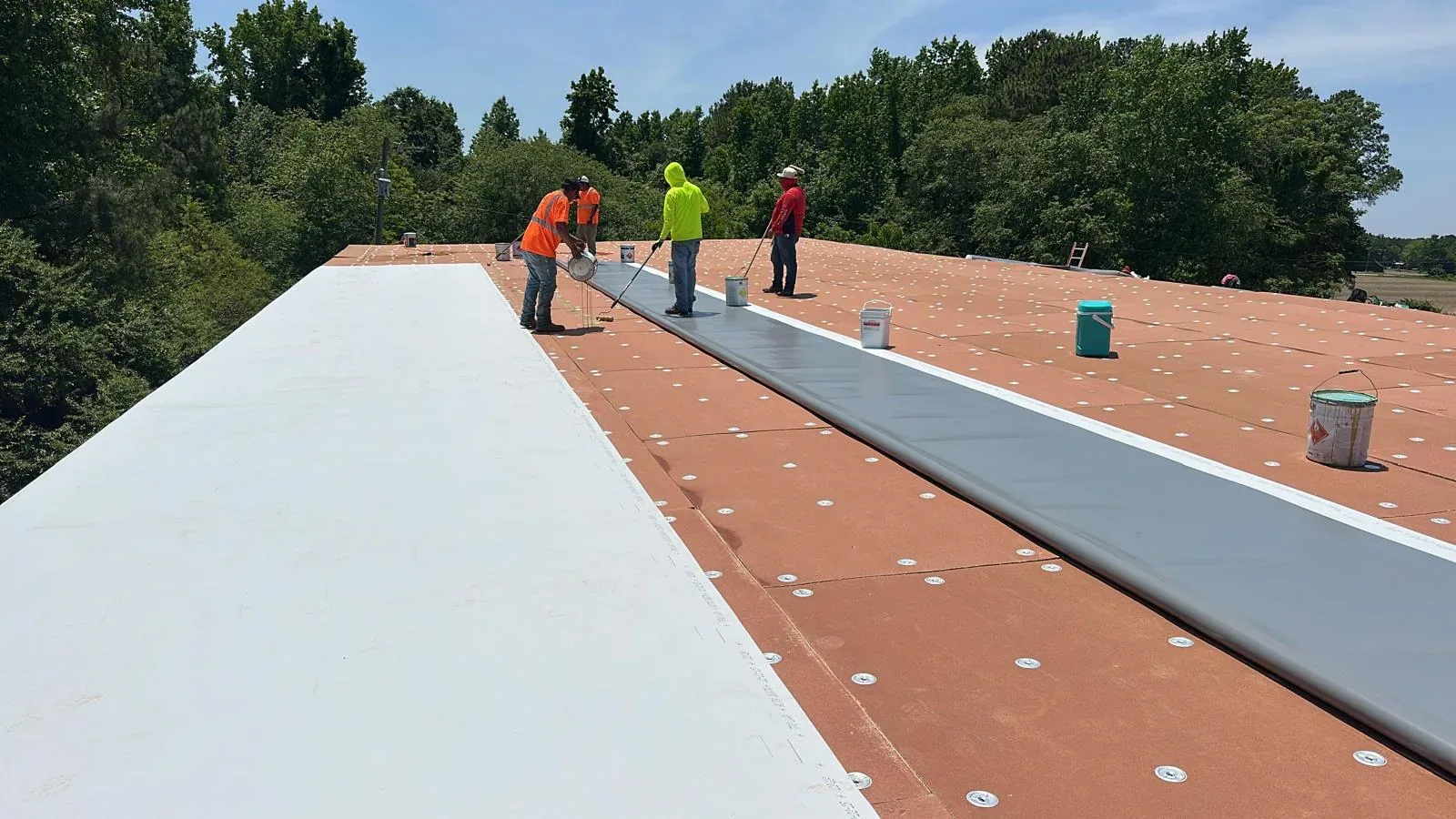
A recover can add a new roof layer when the substrate, moisture condition, existing layer count, attachment, and applicable requirements allow it. The bid should describe how the new assembly is supported and how edges, penetrations, and drains connect. If widespread moisture or deck failure appears, replacement may give a clearer long-term assembly. Compare the roof coating restoration scope with a roof recover option, and price a replacement scope when conditions warrant.
We document the reason for each option and the condition that would change its price. The owner can then compare access, disruption, removal, and future maintenance on consistent terms. This makes the energy discussion more practical. The chosen work still has to protect the building, handle water, and connect reliably at every transition.
Bid details for a reflective roof
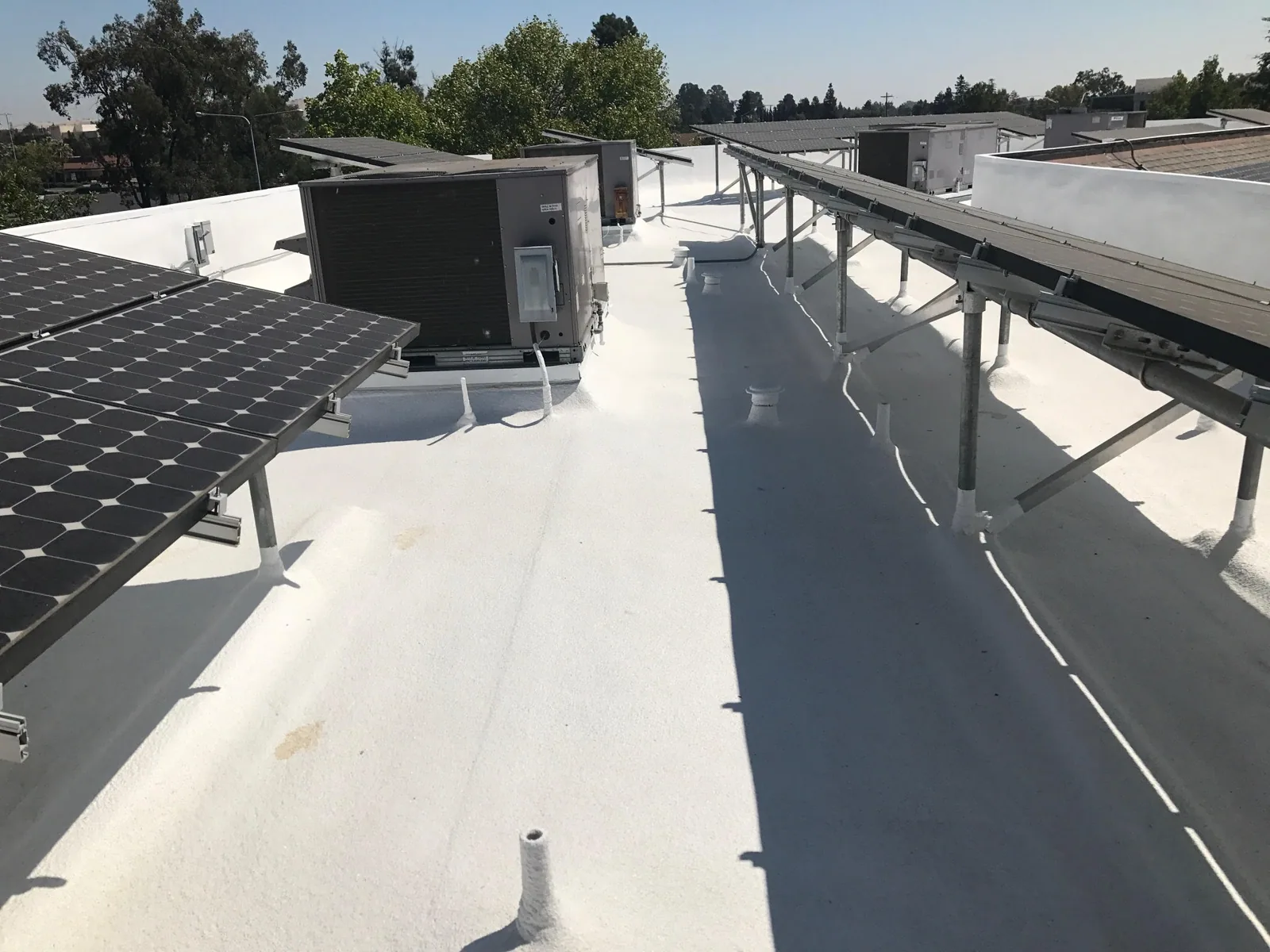
A useful bid identifies roof areas, measured quantities, existing materials, repairs, preparation, new system, edge details, drains, penetrations, and cleanup. List exclusions and concealed-condition allowances plainly. If the project includes solar equipment or mechanical changes, show who handles disconnection, supports, and flashing coordination. Separate those items from the reflective roof installation so the general contractor can coordinate trades and compare proposals.
Before a site visit, share prior reports, leak logs, repair history, roof plans, access rules, operating hours, and available energy records. Point out rooms or operations with temperature concerns. We will document roof conditions and compare coating, recover, or replacement against the existing assembly. A solar-ready roof review can be coordinated when future arrays are part of the building plan. Arrange an inspection to review the roof areas, records, access, and decision date.
Frequently Asked Questions
Does a reflective roof fix high indoor temperatures?
A reflective surface can reduce solar heat absorbed at the roof, but indoor comfort depends on insulation, ventilation, equipment, windows, and operations. We inspect the roof assembly and document its condition. A building-systems review may still be needed to identify the cause of a comfort problem.
Can a coating go over any existing commercial roof?
No. The substrate must be compatible, prepared, and sufficiently sound for the selected coating. Moisture, adhesion, prior repairs, seams, and drainage affect suitability. We identify required repairs and any limitations before pricing application. Manufacturer instructions and project specifications govern the final system.
How should the bid describe the cool-roof materials?
Name the system, preparation, primer if specified, application method, coverage areas, flashing work, and termination details. State repairs, exclusions, and concealed-condition allowances separately. Clear scope lets the owner compare proposals without treating coating, membrane, metal, and recover systems as interchangeable.
What should we provide before scheduling an inspection?
Share roof plans, prior reports, leak history, repair records, access instructions, and operating hours. Note equipment changes and areas with comfort concerns. Available energy records can help frame the discussion, while the roof inspection establishes the assembly and visible defects.
When is replacement preferable to a reflective coating?
Widespread moisture, recurring failures, weak attachment, or deteriorated decking may make coating unsuitable. We document the conditions and compare repair, recover, and replacement scopes where each is viable. The recommendation follows the roof’s condition and project requirements, not surface color alone.

Review the Roof Before Selecting a System
Arrange a site review with roof plans, repair records, access rules, and operating hours available. We will document the existing assembly and outline the next scope decision for your project team.
Call 555-555-5555 or email [email protected].