
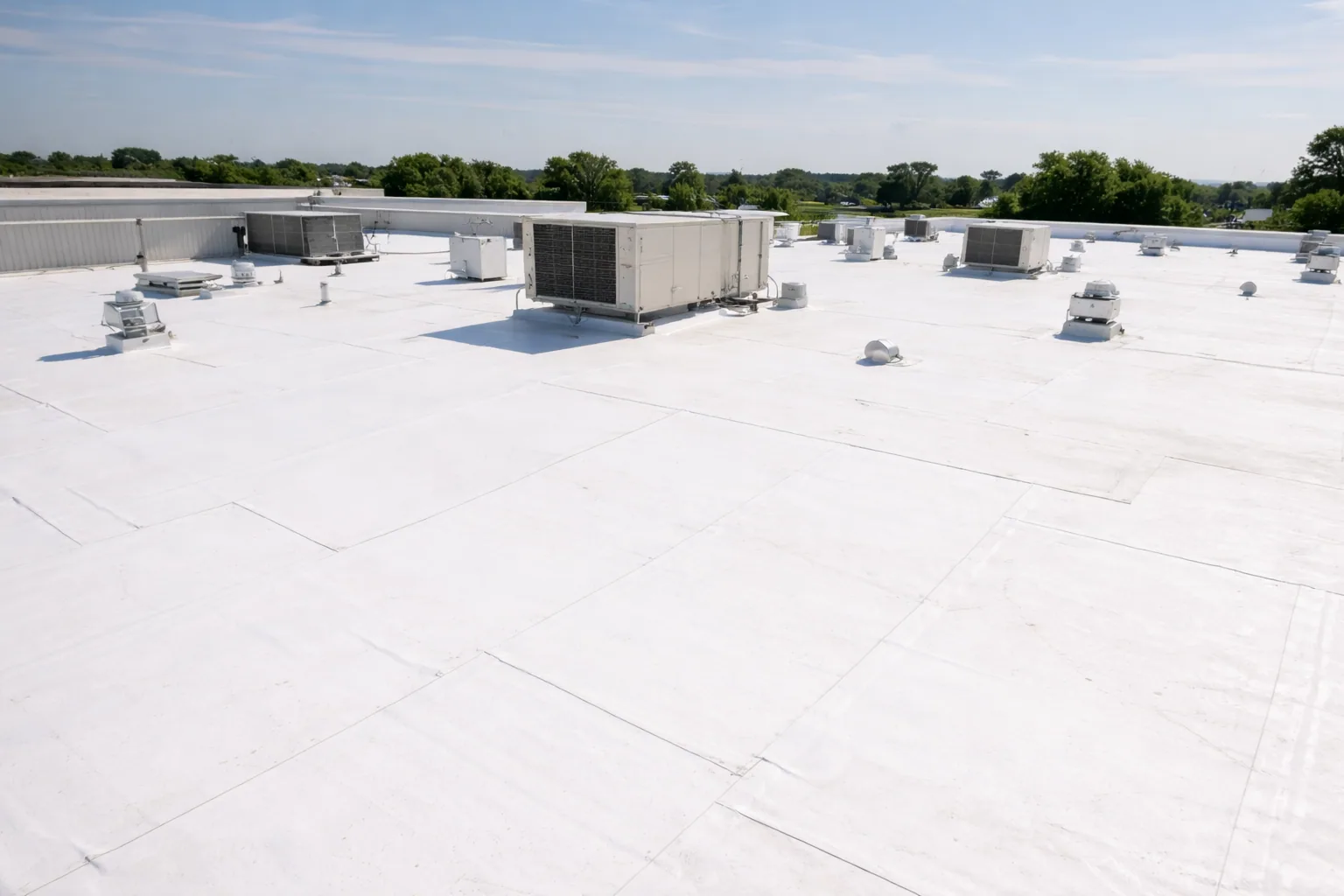
Commercial Roof Coating Restoration in Escondido, CA
Commercial Roofing Services · Escondido, CA
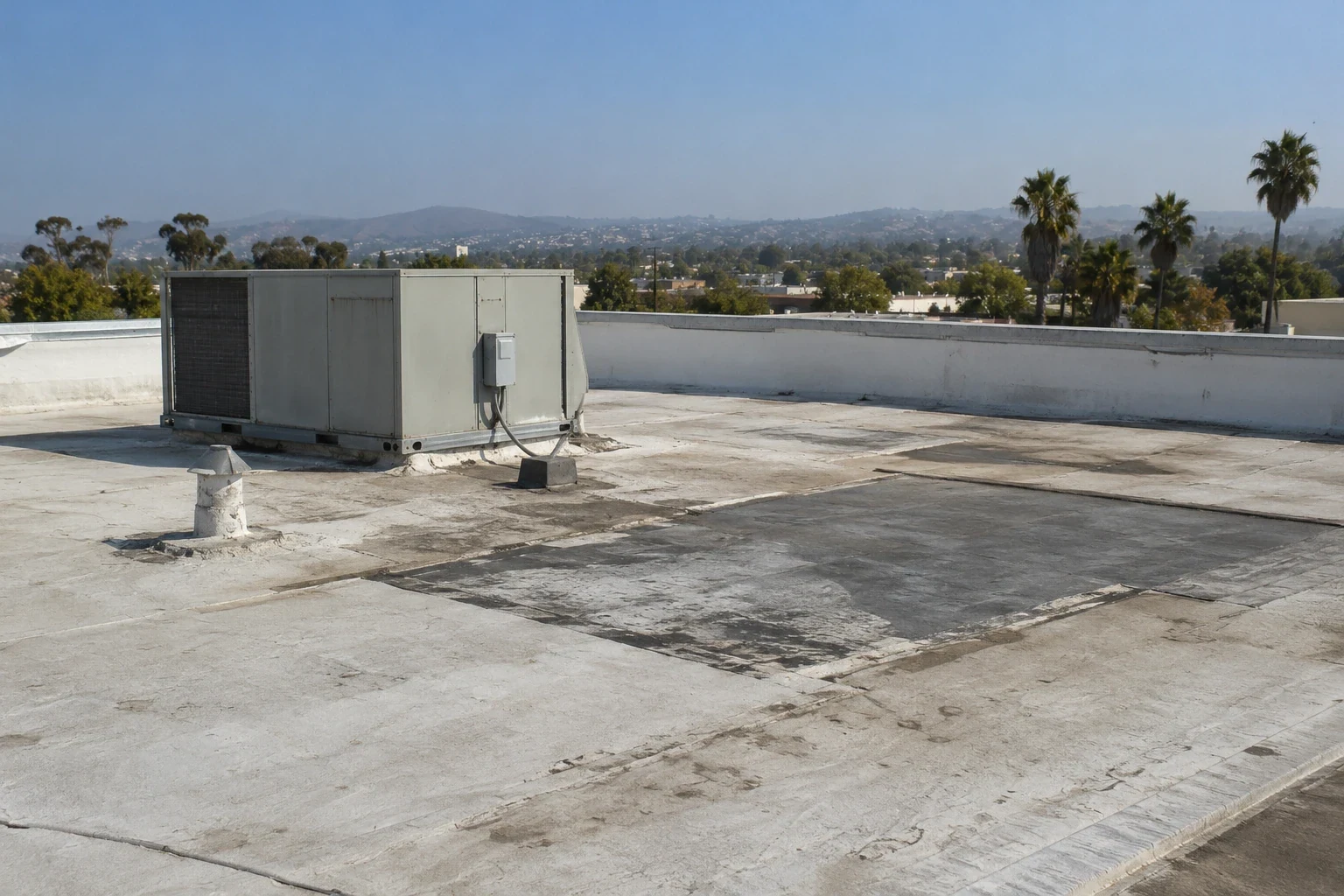
A coating only works when the roof beneath it can support the system. In Escondido, warm, dry Santa Ana winds can expose weak edges and flashing before a broad field problem is visible. We inspect the membrane, seams, drains, and prior patches first. The report marks areas that need repair or testing. Then the owner can compare restoration with a recover or replacement scope. This sequence affects price, timing, and how much material remains in place. A roof inspection establishes the condition before coating becomes an option.
Existing roof condition
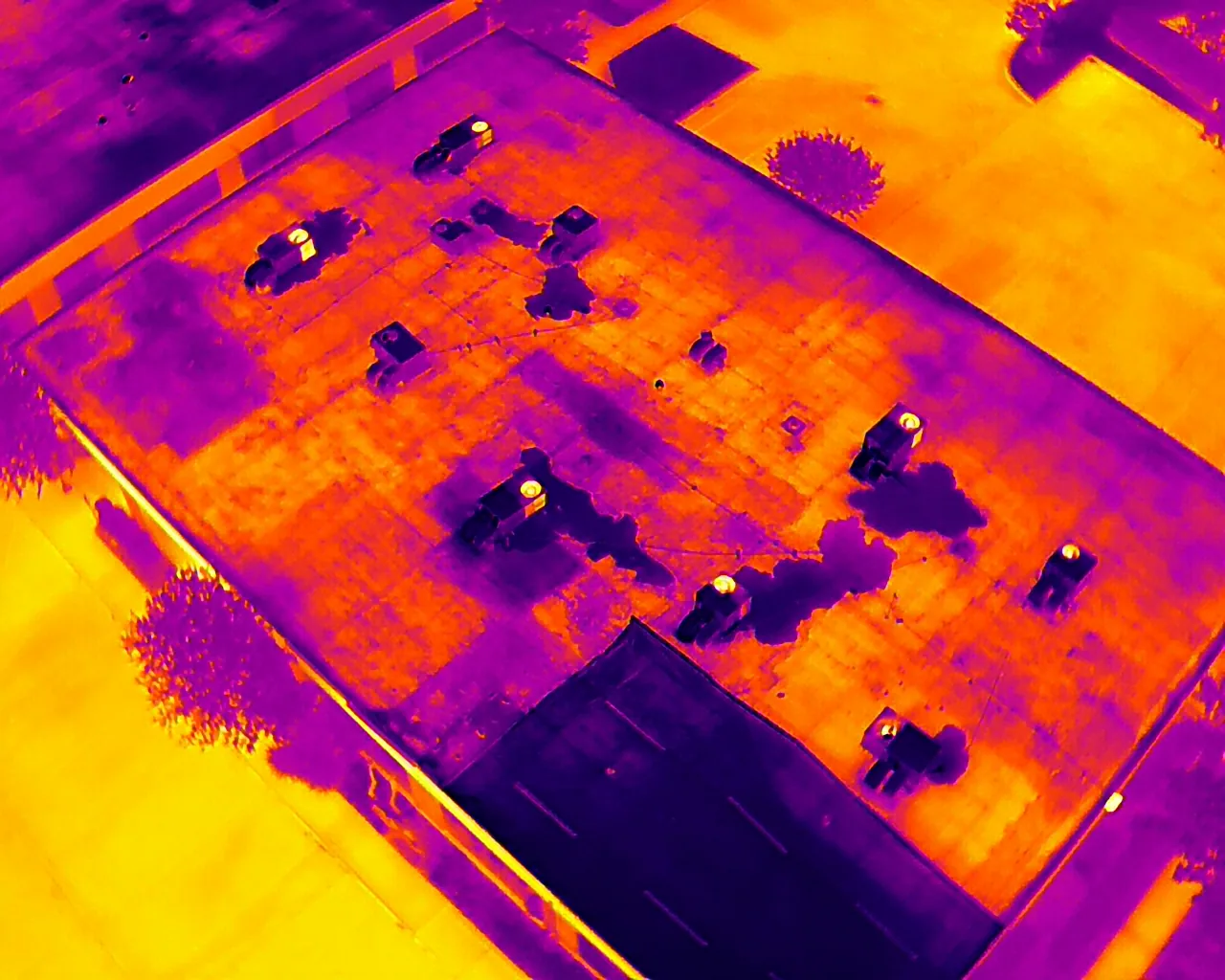
We check the roof surface for loose material, open seams, blisters, and prior coatings. A coating system cannot correct a wet substrate or a failed attachment by itself. If moisture readings differ across a field, we map the pattern and identify the test method. A selective opening may be needed before the owner approves restoration. The moisture survey can compare suspect areas, while a repair scope addresses defects that need correction first.
The roof plan should show drains, equipment, penetrations, and changes in elevation. We mark where water collects and whether the membrane has a clear path to an outlet. East Valley Parkway planning supports rehabilitation of commercial centers and office or professional uses. A district profile cannot establish the condition of an individual roof. At a property in the area, we confirm access and operating hours before setting up test locations. A coating proposal should state whether it includes cleaning, seam work, primer, reinforcement, and a measured application area.
Adhesion and compatibility
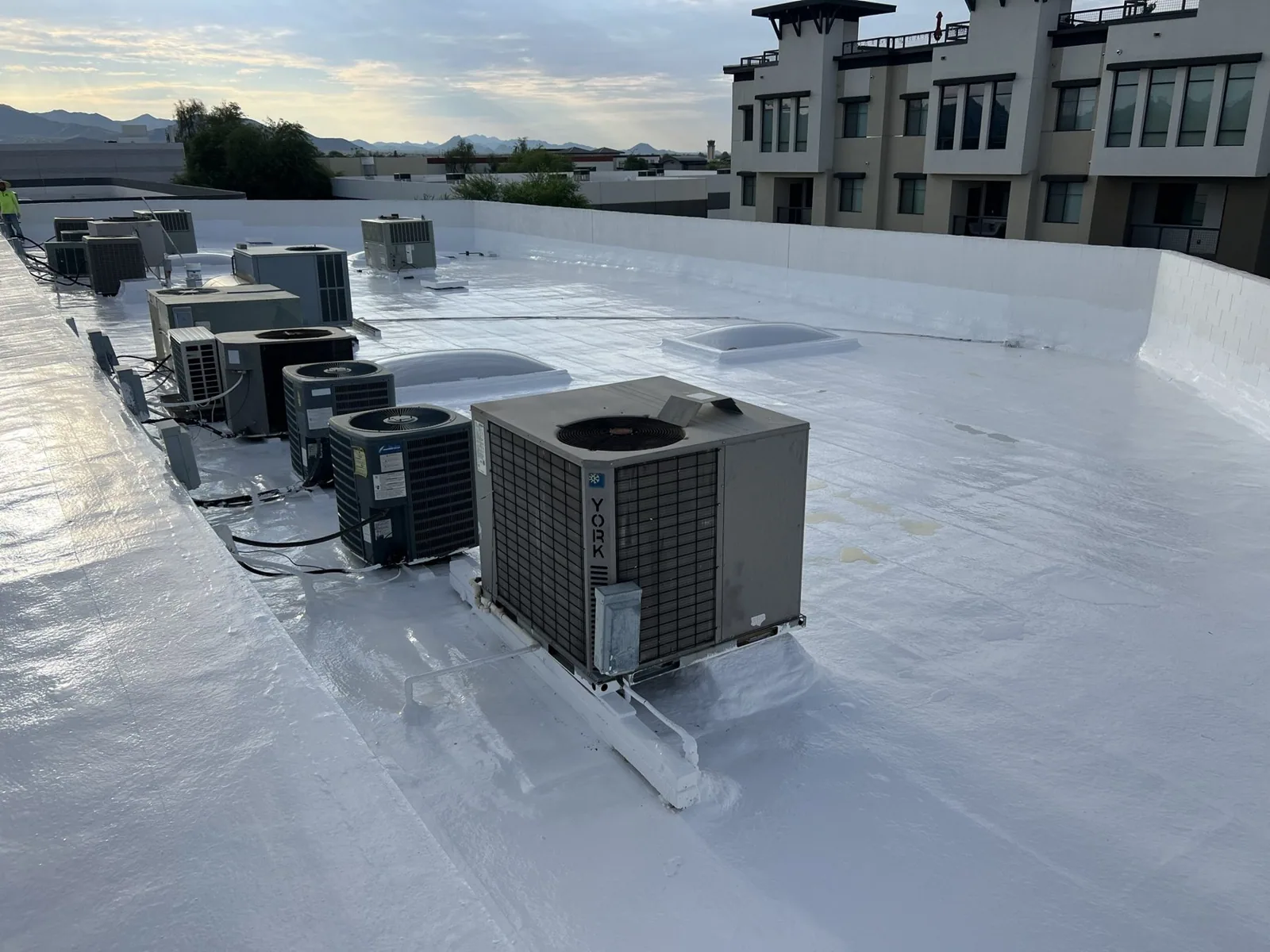
Coating adhesion depends on surface preparation and the material already installed. We identify the existing roof type from reliable records or field evidence. The selected coating must be compatible with that substrate and remain suitable for its exposure. A test patch can confirm adhesion before the larger application. We document its location, preparation, cure conditions, and result. Silicone and acrylic systems respond differently to water exposure and maintenance needs. Compare the silicone coating assembly with the acrylic coating assembly against the roof findings.
Near Felicita Road and Interstate 15, planned office employment is part of the area’s growth pattern. Confirm current tenant activity, roof type, and access during the property walk before pricing the coating scope. Facilities staff still need to confirm equipment schedules and access permissions. If a rooftop unit or solar contractor will work nearby, we agree on who protects the finished coating. Equipment-curb corrections can be coordinated when a separate roof detail needs attention. One trade should not damage a restored surface without a clear repair handoff.
Drainage and ponding
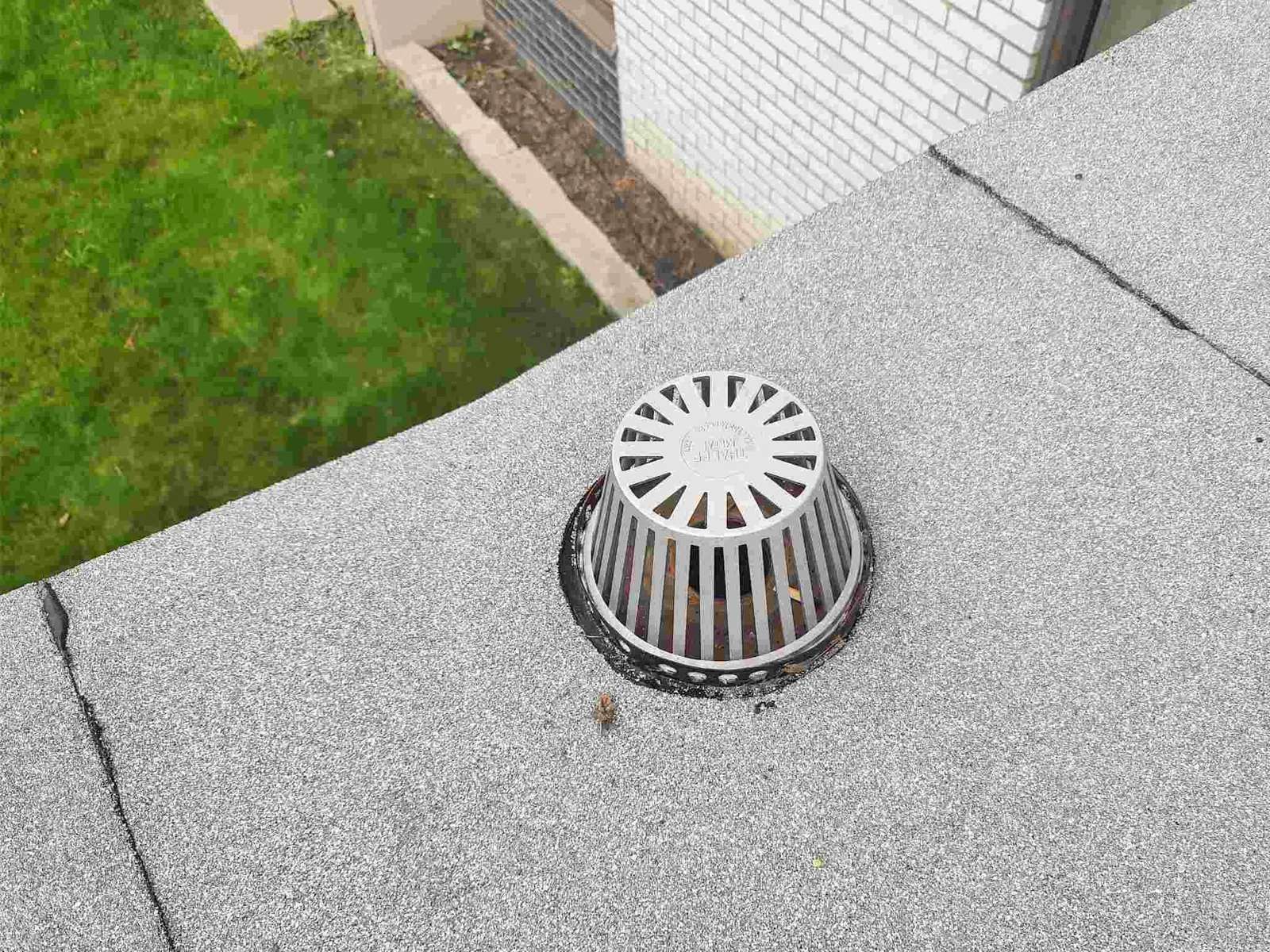
Standing water can leave dirt lines and expose low areas after a rain. We check drains, scuppers, seams, and perimeter transitions before selecting a coating. Persistent water can affect product choice and maintenance expectations. The work scope should identify any drainage correction separately from the coating application. A drainage review can test an outlet path. If the low area remains, a separate slope plan may be needed. Coating thickness alone does not create reliable drainage.
Downtown Escondido includes planned retail, office, visitor-serving, and residential uses. A restoration project there may need to preserve entry paths or schedule noisy preparation around operating hours. We confirm those conditions with the property contact. Confirm a building-specific staging location, lift position, and debris route with the property contact. The crew plan records roof access, lift placement, and how debris leaves the property. A Downtown Escondido roof review begins with those site facts, then maps the drainage and substrate conditions that affect coating performance.
Repairs before application
Open seams, loose flashing, damaged penetrations, and unsound edge details need a defined correction before coating. We identify which repairs are included and which require separate approval. The boundary should reach material that can accept a compatible tie-in. If a roof section has wet insulation or unstable cover board, removal may be more appropriate than a surface treatment. A recover evaluation compares leaving an existing assembly in place with a different overlay scope.
The owner also needs to understand how the coating affects future service. Equipment work, sign installation, and other penetrations can cut through the finished layer. We show access paths and repair responsibilities before mobilization. The occupied-building work sequence can help schedule sections around tenants. The Research and Technology Center accounts for a significant share of Escondido employment acreage available for development. For an active property in that employment area, decide who will coordinate roof access, equipment clearance, and work sequencing before setting the coating window.
Application timing
Preparation and cure windows affect when a coating can be applied. The surface needs suitable conditions and enough time before exposure. We check forecast and field temperature, moisture, and dew conditions against the product requirements. A schedule should include cleaning, repairs, testing, application, and a weather contingency. Santa Ana winds are dry and often warm or hot, but wind can still carry dust across prepared areas. We plan protection and decide whether the day supports application before material is opened.
A long-term maintenance record helps the owner track the coating’s condition. The first follow-up should focus on drains, seams, equipment interfaces, and areas repaired before application. We photograph changes and note any trade work that affected the system. A condition report records the inspection route and any limits. For a roof with widespread deterioration, compare coating with a replacement assessment rather than treating restoration as the default choice. The documented roof condition sets that comparison.
Where a roof includes several membranes from earlier work, the crew records transitions before priming. That prevents the application boundary from hiding an incompatible patch or an open joint. The owner sees which areas are included and which need a different repair detail.
Frequently Asked Questions
Can a coating go over a roof with active leaks?
We locate and repair active openings first, then verify that the surrounding substrate can accept the system. Wet or unstable material may require selective removal before coating.
How do you know the coating will adhere?
A test patch can check compatibility after the specified preparation. We record its location and result, then use that information when defining the application scope.
Will coating fix water that collects on the roof?
No surface treatment creates dependable slope on its own. We inspect the drains and low area, then show whether a separate drainage correction belongs in the project.
What if another trade needs to cross the restored roof?
We identify the route and protection method with the owner. Any cut or damage needs an agreed repair responsibility and a documented closeout.
When should replacement be priced instead?
If testing shows widespread moisture, poor attachment, or a substrate that cannot support restoration, we compare removal and replacement. The findings set the boundary.

Evaluate a coating system
Share roof plans, prior coating records, leak reports, and access needs. We will inspect compatibility, drainage, and repair limits before recommending an application. Call Commercial Roofers Escondido to set a review.
Call 555-555-5555 or email [email protected].