
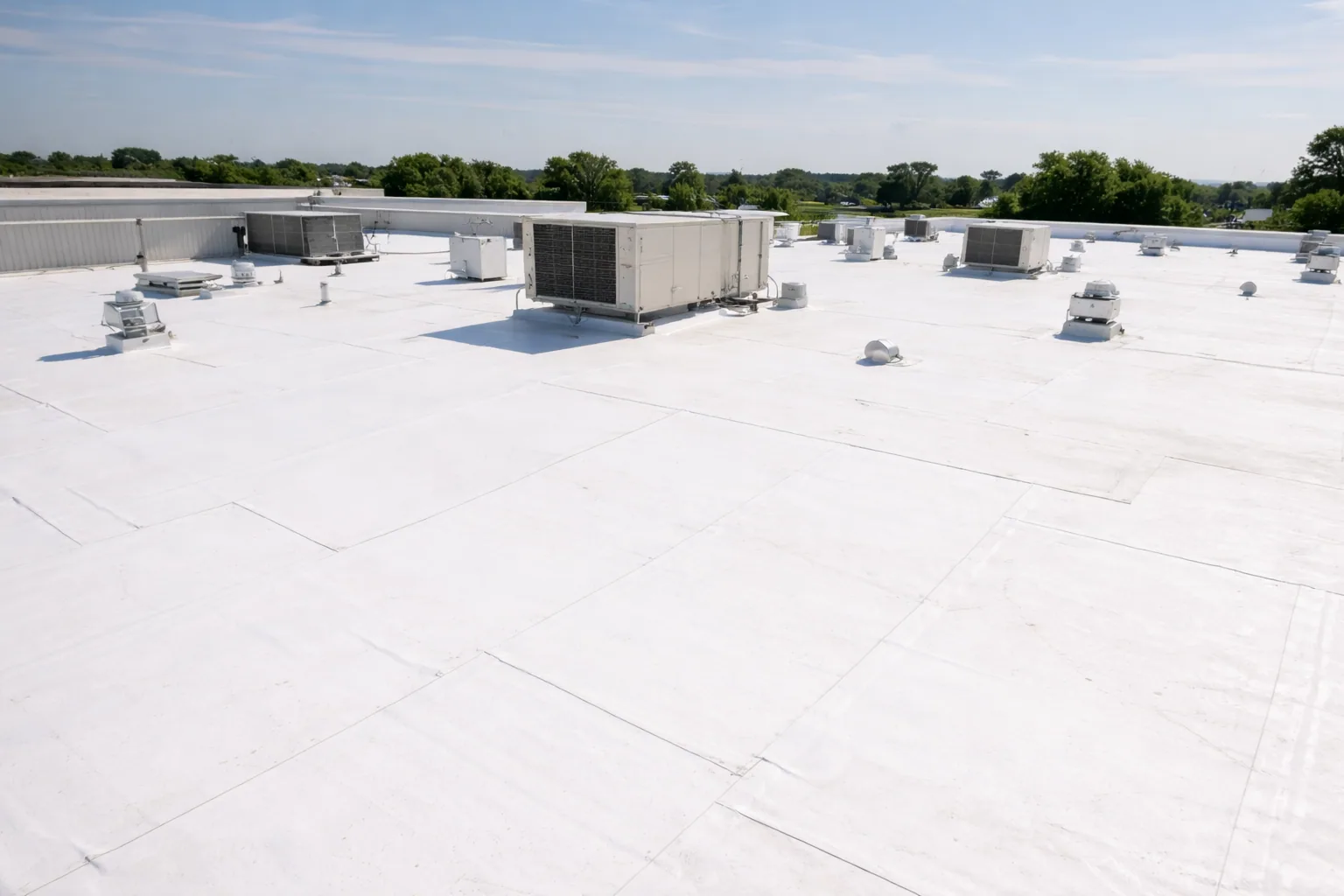
Commercial Roofing in the State Route 78 and Barham Drive Business Park Area, San Marcos, CA
Service Areas · Escondido, CA
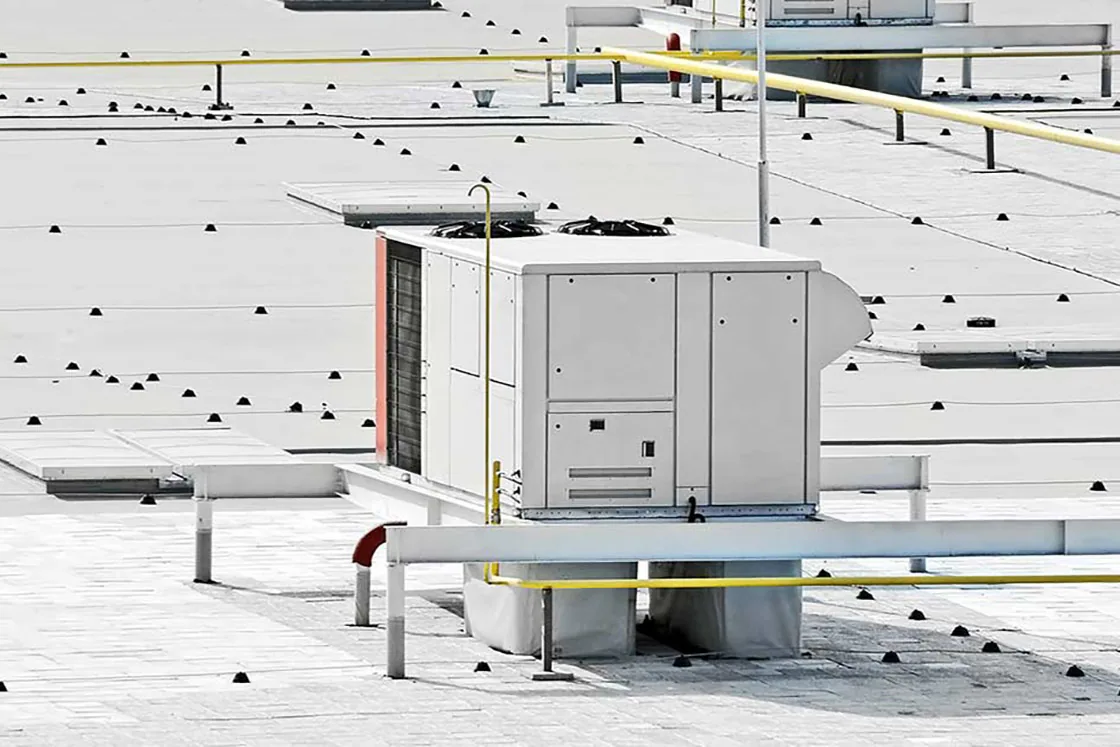
An equipment curb beside a roof seam can change where a repair stops. San Marcos’s Heart of the City area includes a business park along State Route 78 and Barham Drive, with space planned for technology, research, industrial, corporate, office, and support-commercial uses. The roof condition still depends on the actual building. Before setting a repair limit, we inspect the actual building, confirm access, and identify its roof assembly. A commercial roof inspection gives ownership a field record before pricing.
A business park across connected roads
State Route 78 and Barham Drive are major east-west routes; Twin Oaks Valley Road and La Moree Road provide north-south connections. Those corridors locate the business-park area. The property contact confirms truck access, roof entry, and property boundaries before we schedule. Roof plans and repair records then help us compare the expected assembly with the conditions on the roof.
Research, office, industrial, and support-commercial uses create different roof-access and equipment questions. Confirm what currently operates at the property. Each site’s operations determine access and work-hour constraints, so the property manager or general contractor confirms current activity before scheduling. A photo condition report can reconcile field observations with older records. It identifies the roof zone, visible condition, access limits, and next decision for each item.
Follow penetrations back to the membrane
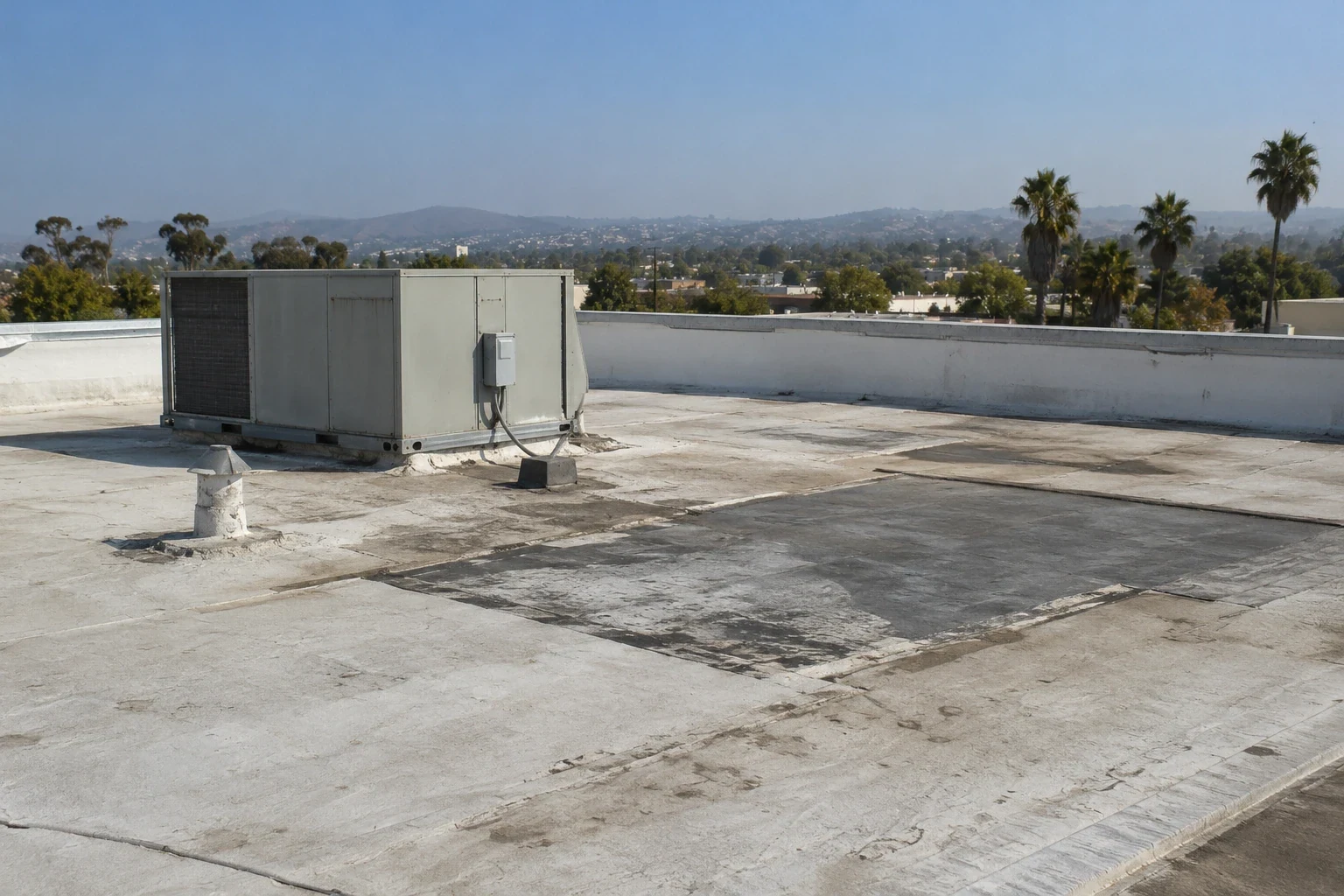
Equipment used in office or research operations can require roof penetrations, supports, and service clearances. We confirm what is present at the property. We check each curb, conduit, pipe, and support where it meets the roof membrane. The review looks for loose flashing, gaps, movement, and damage from prior access. A unit may also change drainage or limit room for a tie-in. We coordinate with the mechanical trade before promising a repair method around equipment that cannot be moved.
The water path matters as much as the visible opening. We inspect nearby laps, drains, scuppers, edge metal, and wall transitions, then compare the likely entry route with the interior report. A curb and support repair scope can define which trade moves equipment and who approves the final flashing. If moisture could extend beneath the membrane, infrared testing may help target a closer check. The report states what the test confirms and what remains open.
Edge metal and dry regional wind
From September through May, Santa Ana winds can bring dry, warm to hot conditions across Southern California. They can damage property. These seasonal conditions inform the work window, while current weather and the roof’s exposure set daily limits. For a roof with reported wind exposure, we inspect edge metal, coping, exposed laps, and flashing terminations. The field review notes movement, opened joints, and the length of any affected section before the scope is priced.
Dry wind can expose loose edge metal, open laps, or unstable temporary coverings. After a reported event, photographs help distinguish displaced details from sound adjacent areas. A wind-related roof assessment can identify immediate protection, permanent repair, or further testing. A forecast alone does not determine the repair or replacement scope. The proposal follows the actual assembly, moisture readings, and repair history.
Repair, restoration, and renewal choices
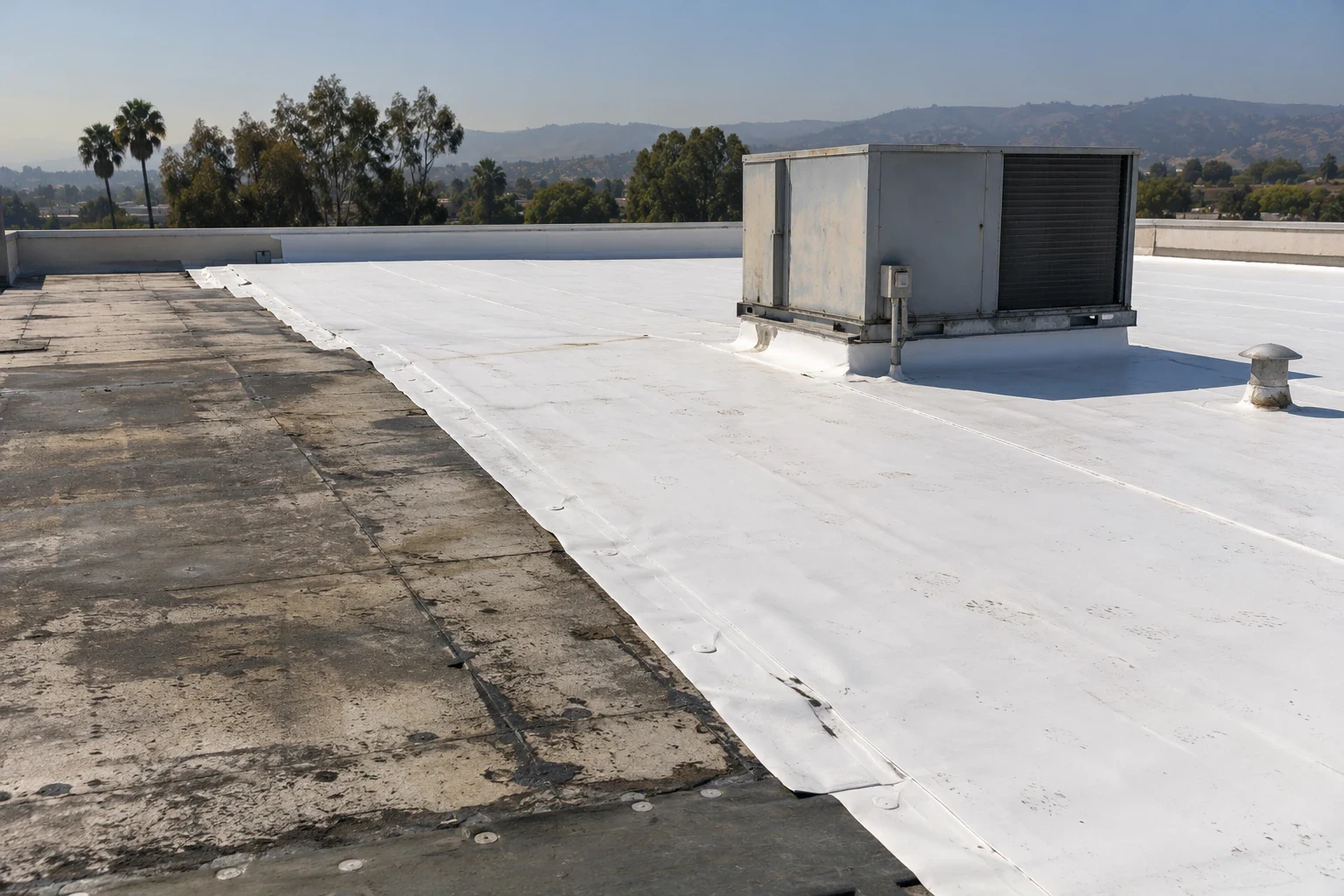
Repair can fit when the defect is isolated and the surrounding system accepts a compatible tie-in. Restoration may be appropriate when attachment, moisture, surface preparation, and drainage support the selected coating. Replacement needs review when wet insulation is widespread, seams repeatedly fail, or the assembly cannot be repaired with a durable boundary. We make those comparisons after inspection of the building’s actual roof system.
Cost and schedule reflect roof area, tear-off depth, insulation, edge conditions, equipment movement, disposal, staging, and hours available to work. A defined repair proposal lists those components with limits and closeout steps. If the roof may accept another layer, a recover review first checks attachment and retained moisture. A replacement decision should connect to findings across the roof, not one visible stain. We can document those findings for a budget meeting or project handoff. Replacement scheduling also needs a decision on phased tear-off, temporary dry-in, insulation selection, and separate pricing for deck repairs. We state which choice changes exposure or sequence before approval.
Access rules before the crew arrives
State Route 78 and Barham Drive run east-west; Twin Oaks Valley Road and La Moree Road provide north-south connections. The actual truck route still depends on the property. The actual route to a building may have separate gates, loading rules, escorts, or lift restrictions. We confirm staging and roof-entry points with the contact responsible for the property. Research or industrial operations may also require coordination around equipment service or secure rooms, when those restrictions are present. A written occupied-site sequence can align roof openings with approved access windows.
The business-park area lies within San Marcos’s broader Heart of the City planning area, where State Route 78 and Barham Drive help locate commercial and employment uses. A regional owner comparing another roof can also review the Woods Valley commercial area in Valley Center. Each location still needs its own roof map, access notes, and condition record. For this building, we identify who approves schedule changes, how other trades receive notice, and what protection covers open work at the end of each shift. That coordination helps keep the roofing repair in its own scope.
For a phased project, mark which entrances stay open, where materials may be staged, and how crews reach each roof zone. Confirm those points before equipment arrives, then note the approved route and any restricted hours in the work plan.
Frequently Asked Questions
Does the Heart of the City area identify current roof systems?
A district label cannot confirm a building’s installed roof system. We inspect records and field conditions before selecting materials or defining repair limits.
How does equipment affect a membrane repair?
Curb clearance, unit movement, and trade responsibility can change the tie-in. We inspect the detail and coordinate the equipment plan before finalizing the roofing work.
Can a wind event mean every roof edge needs replacement?
The repair limit follows observed attachment and membrane conditions. We inspect the reported area, photograph affected details, and keep unaffected sections outside the work unless inspection findings support more.
What records help prepare a roof budget?
Plans, repair history, leak reports, photographs, and access restrictions help define the review. We distinguish confirmed work from testing or opening that needs a separate decision.
How should work be coordinated with research or industrial operations?
We confirm the actual operating restrictions, access contact, equipment needs, and delivery windows with site management. The sequence then reflects approved hours and staging conditions.
Set a business-park roof inspection
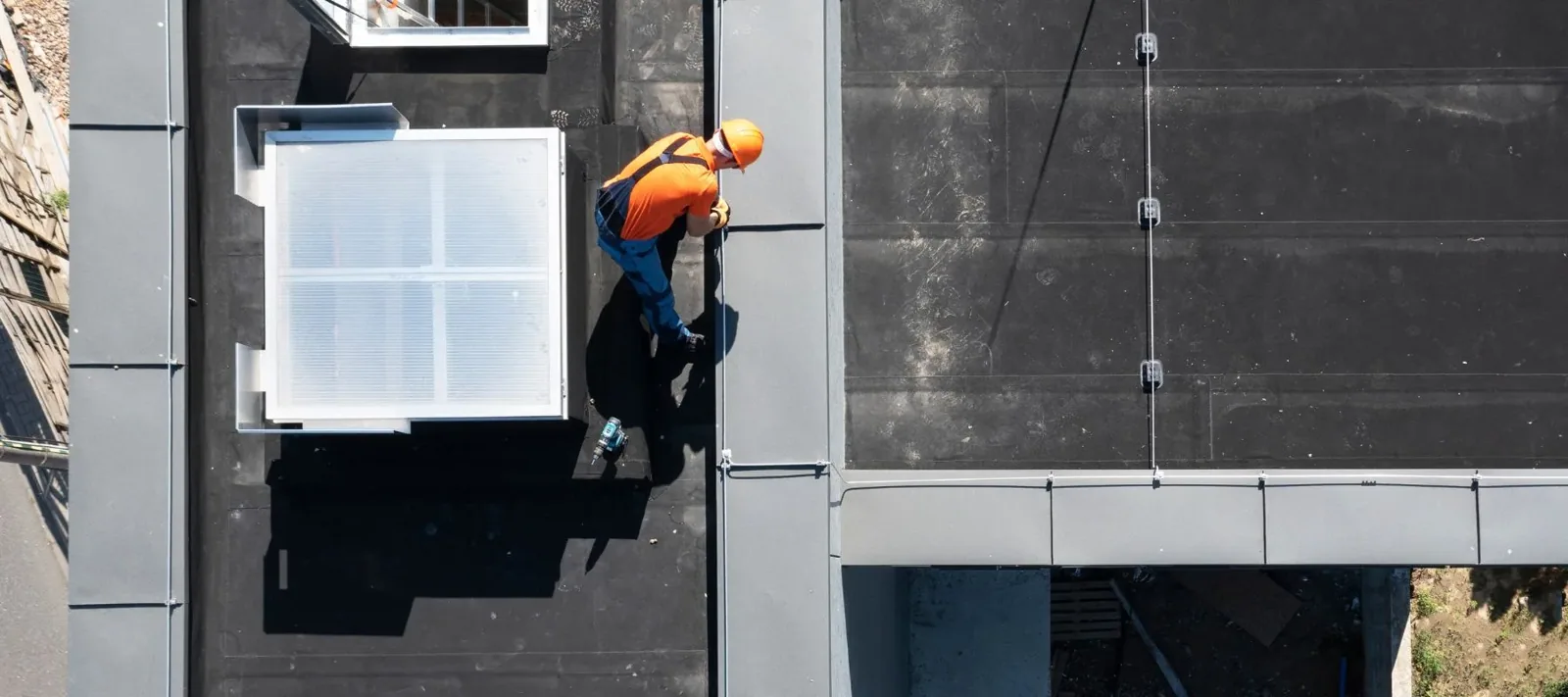
Arrange a roof inspection or scope review in the State Route 78 and Barham Drive area. Provide plans, leak history, access instructions, equipment restrictions, and preferred work windows.
Call 555-555-5555 or email [email protected].