
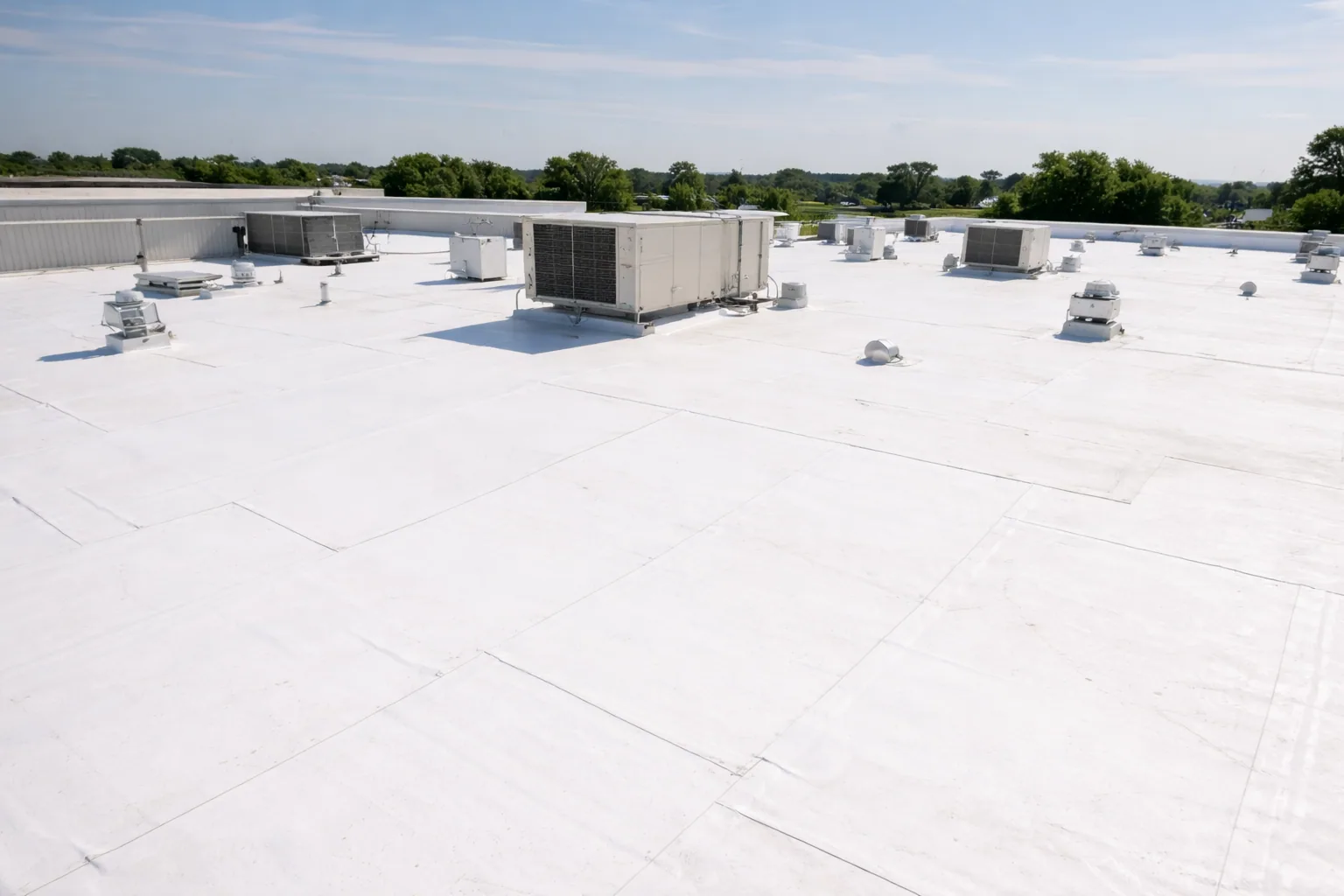
Commercial Roofing in the Woods Valley and Valley Center Road Commercial Area, Valley Center, CA
Service Areas · Escondido, CA
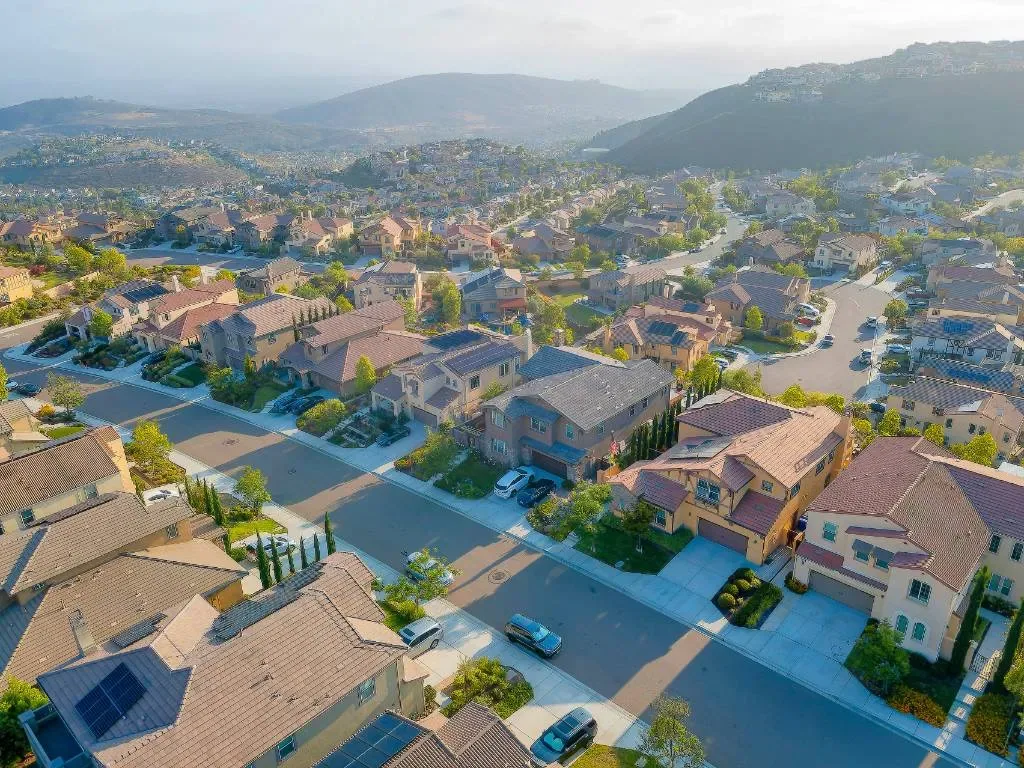
A roof repair near Woods Valley Road starts with the water path and the property's use. One of Valley Center’s two contained commercial villages sits near Woods Valley Road and Valley Center Road, serving local needs. The community concentrates commercial uses in the two village areas rather than continuous strip frontage along Valley Center Road. We inspect the roof in question, record accessible seams and transitions, then set a repair boundary the owner can price. A commercial roof inspection ties findings to the actual property.
The village boundary and the building
Contained village areas focus commercial activity around Woods Valley and Valley Center roads rather than a continuous strip along Valley Center Road. The roads define a broad district, while property boundaries and roof access determine the service visit. We confirm the address, access contact, roof area, and reported condition before setting the scope. The road names locate the planning area; an inspection identifies how a particular roof drains and which membrane is installed.
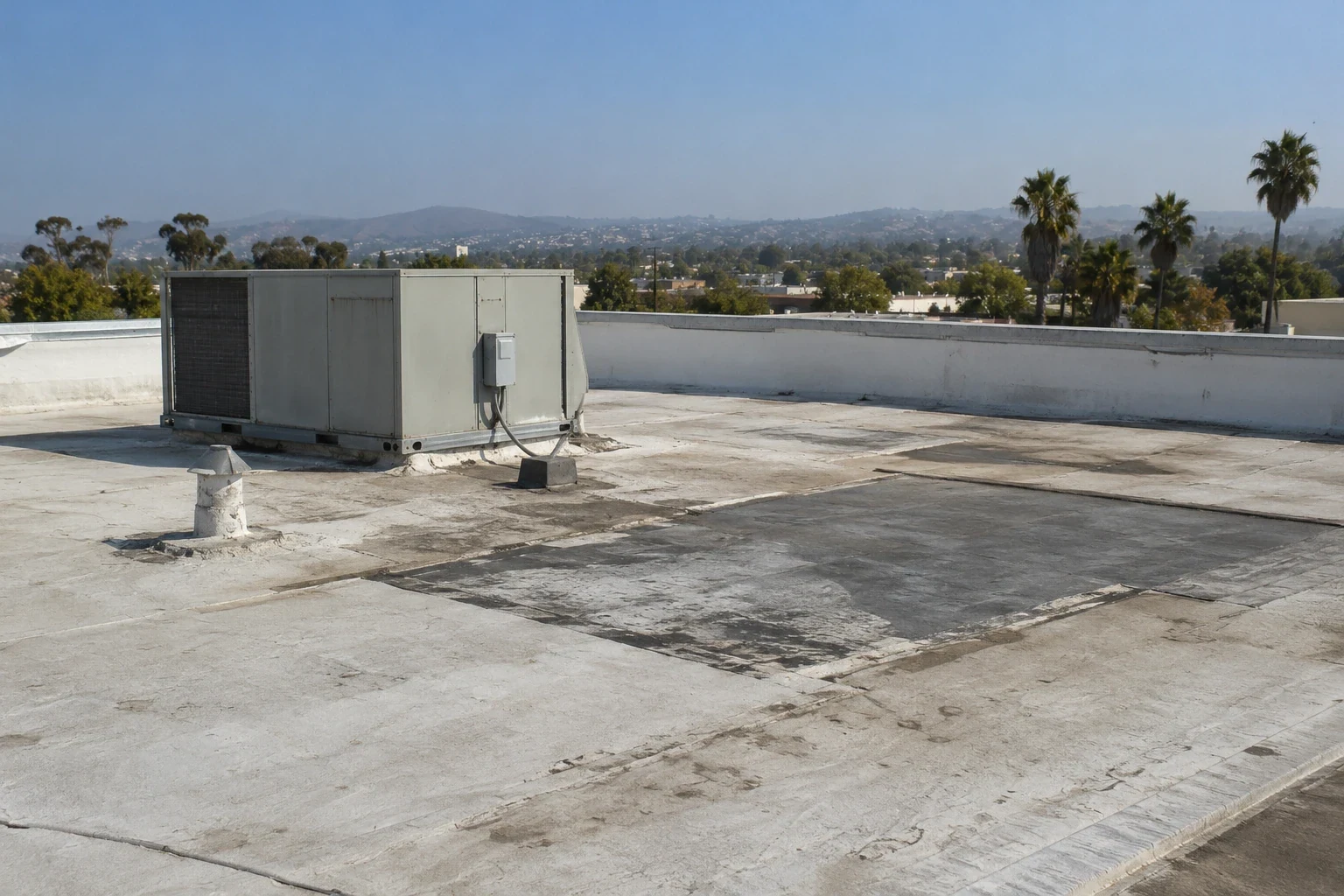
For a first visit, the useful records are roof plans, prior repairs, leak locations, and any restrictions on ladders or lifts. We compare them against field conditions. A photo report can identify a split seam, an open curb, or ponding beside a drain, and note which surfaces were inaccessible. That helps a general contractor price known work separately from any testing or opening. Our condition report with photos connects each observation to a roof zone and next decision.
The drainage path after a dry interval
Drainage problems can remain quiet until water reaches an interior finish. On a low-slope roof, we check the drain bowl, strainer, sump, surrounding membrane, and nearby laps. We also look for depressions, loose debris, blocked scuppers, and water crossing a seam. Clearing a drain may restore flow, but it does not repair a separated flange or wet insulation. We note the observed condition and separate maintenance from membrane repair. That gives ownership a clear next decision instead of a broad allowance.
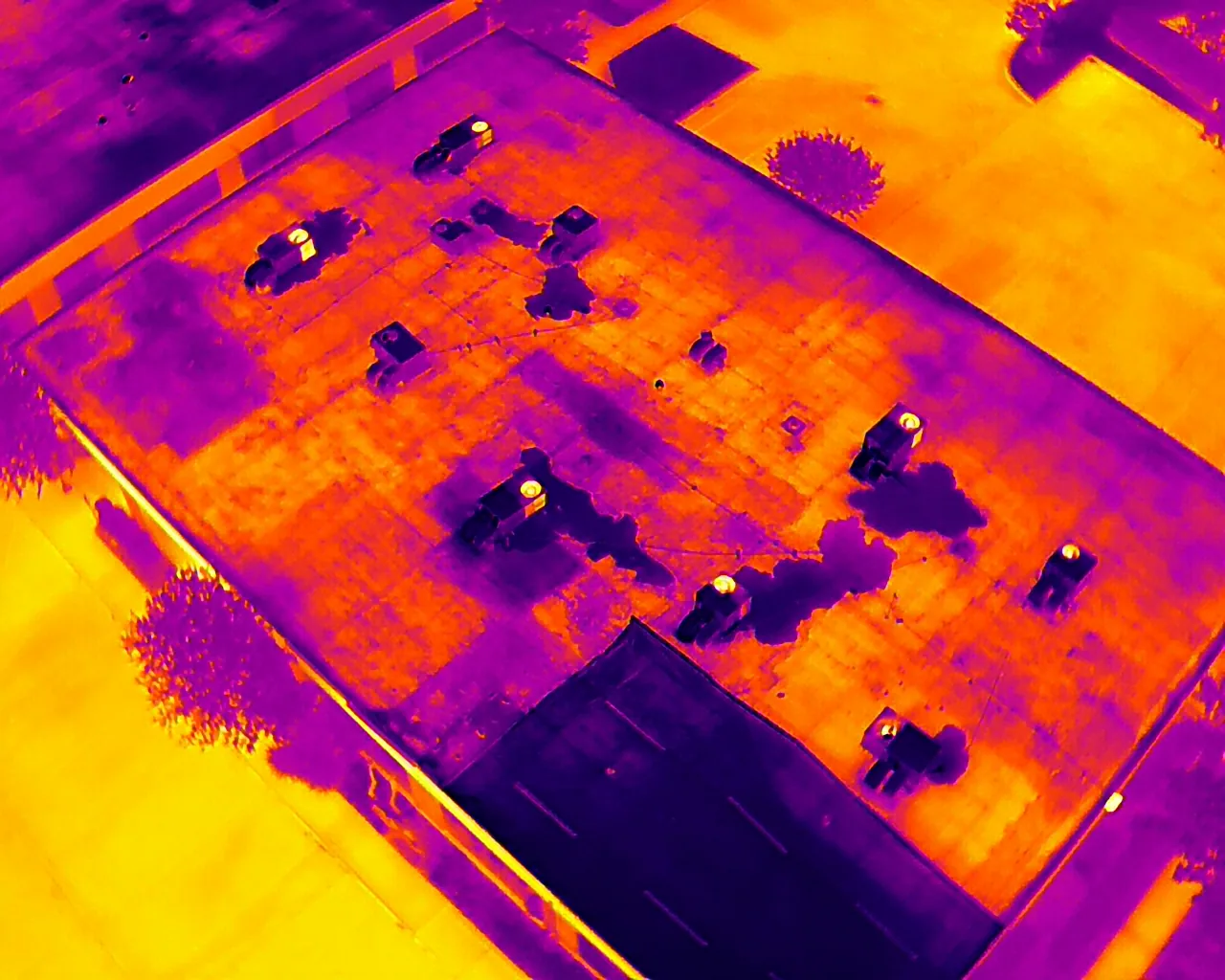
Where the entry point is not obvious, a moisture survey may help map retained water below the surface. Test results need interpretation with roof history and assembly details. One interior stain does not define the full repair boundary. We compare the location with penetrations, transitions, and drainage routes above. The report can then distinguish a visible defect from an area that needs another inspection method. This matters when repair and replacement options carry different disruption and timing.
Where a roof has more than one outlet, trace each section separately and note any overflow path. Confirm the outlet and adjacent seam before selecting a repair material, then include the final water-flow check in the closeout.
Dry northeast wind and exposed details
From fall into spring, Santa Ana conditions can bring dry, sometimes hot winds across exposed roof edges and terminations. After a reported issue near Woods Valley, inspect the perimeter, terminations, and penetrations in sequence. Note movement with photos and a roof-zone reference; expand the repair only where adjoining conditions warrant it.
After a regional wind alert, inspect the reported area and mark what needs immediate protection, permanent repair, or further review. A wind-related repair scope should identify the affected edge or seam and the tie-in needed. If nearby roof zones remain sound, they stay outside the repair limits unless new findings justify expanding them.
A repair that follows the assembly
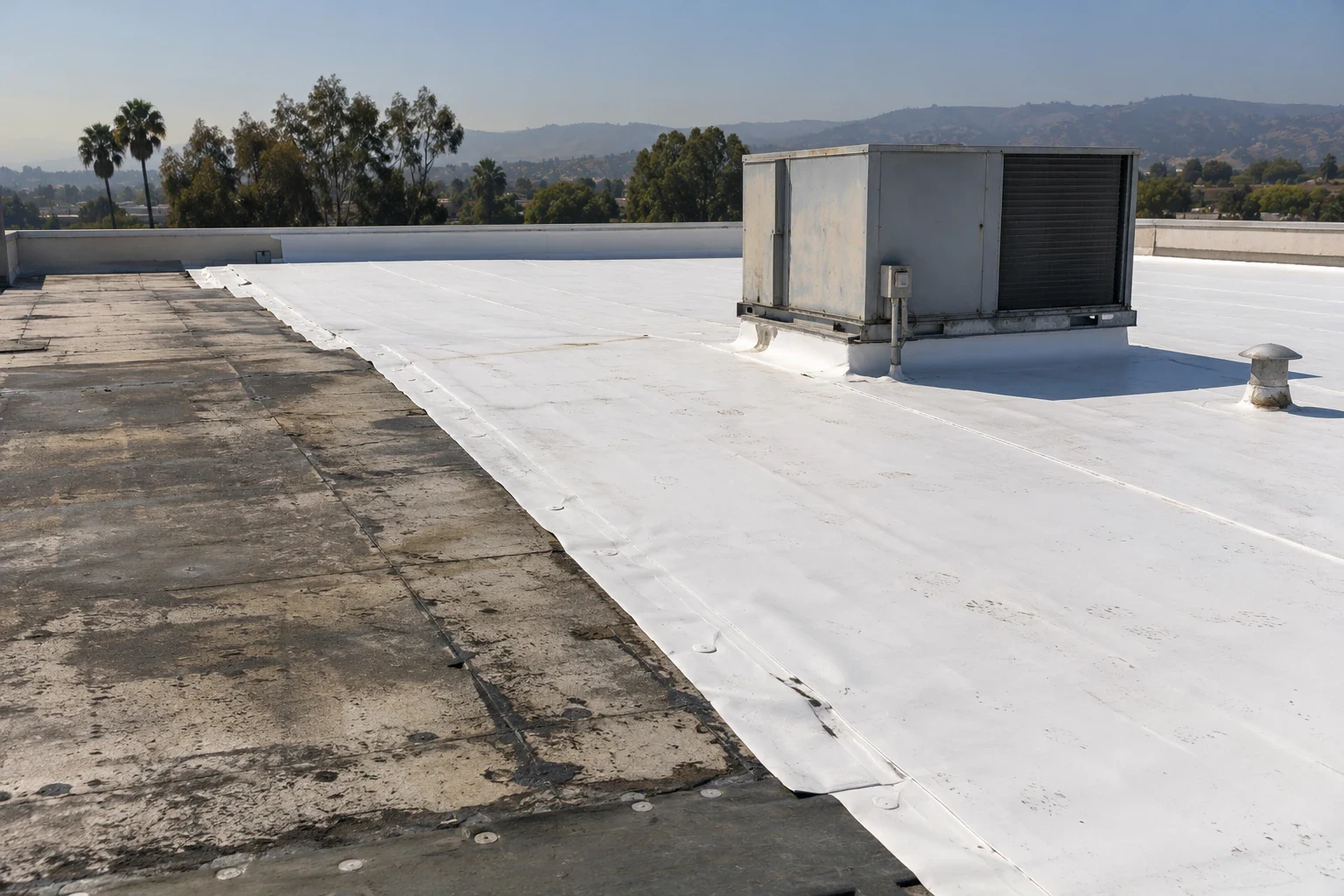
Membrane patching only works when the surrounding material can accept a compatible tie-in. We identify the existing assembly, surface condition, and any moisture before choosing a repair method. At a transition, the work may include removing failed sealant, preparing the substrate, replacing damaged flashing, and sealing the termination with compatible materials. If the membrane is brittle or detached beyond the visible opening, a small patch may not address the failure. We explain the proposed boundary and any condition that could change it.
A documented roof repair includes preparation, materials, tie-ins, protection, and a closeout check. Where the same detail has been repaired repeatedly, we compare the repair history with current field observations. Broader wet areas, failed attachment, or incompatible old repairs may point toward a larger scope. A recover or replacement review is separate from a leak call. We can compare a recover option only after confirming substrate condition, moisture, drainage, and applicable assembly limits.
Access and work sequence for local businesses
Valley Center Road and Woods Valley Road locate the contained commercial-village area; confirm each property’s access conditions separately. We ask who controls roof access, where materials may stage, whether a lift is allowed, and when deliveries or tenant activity limit work. These answers can change crew setup and the number of visits. If a business must remain open, a phased sequence can limit the area exposed at one time. A planned occupied-building sequence also clarifies who will receive notices and approve schedule changes.
Work around rooftop equipment needs trade coordination. We confirm whether units can be lifted, who disconnects services, and how equipment will be protected during membrane work. A roofer should not improvise a flashing detail around a unit another trade cannot move. We list that dependency in the scope before mobilization. For nearby Escondido work, the Cole Grade and Valley Center Road commercial area and Escondido's Research and Technology Center area are separate locations with separate property conditions.
Frequently Asked Questions
Does the Woods Valley area identify which roof system is installed?
No. A commercial location cannot confirm a building’s installed assembly or roof condition. We inspect the property and compare records before selecting a repair method.
Can a drain cleaning resolve water that remains after rain?
The drain bowl and surrounding membrane both need review. We check the flow path, flange, laps, and adjacent insulation, then separate maintenance from a repair or moisture test.
What changes the price of a membrane repair?
Repair length, preparation, compatible materials, edge access, equipment conflicts, and protection all affect the scope. We list those items and identify any hidden condition that may need approval.
Will a regional wind alert confirm roof damage in Valley Center?
A regional alert can prompt an inspection; the roof condition determines the repair scope. We inspect reported edges and transitions, photograph the finding, and define whether protection, permanent repair, or more testing is needed.
Which records help schedule a first site visit?
Roof plans, leak locations, repair history, access instructions, and business-hour restrictions help us set the walk. We compare those records with the actual roof before pricing work.
Set a roof inspection window
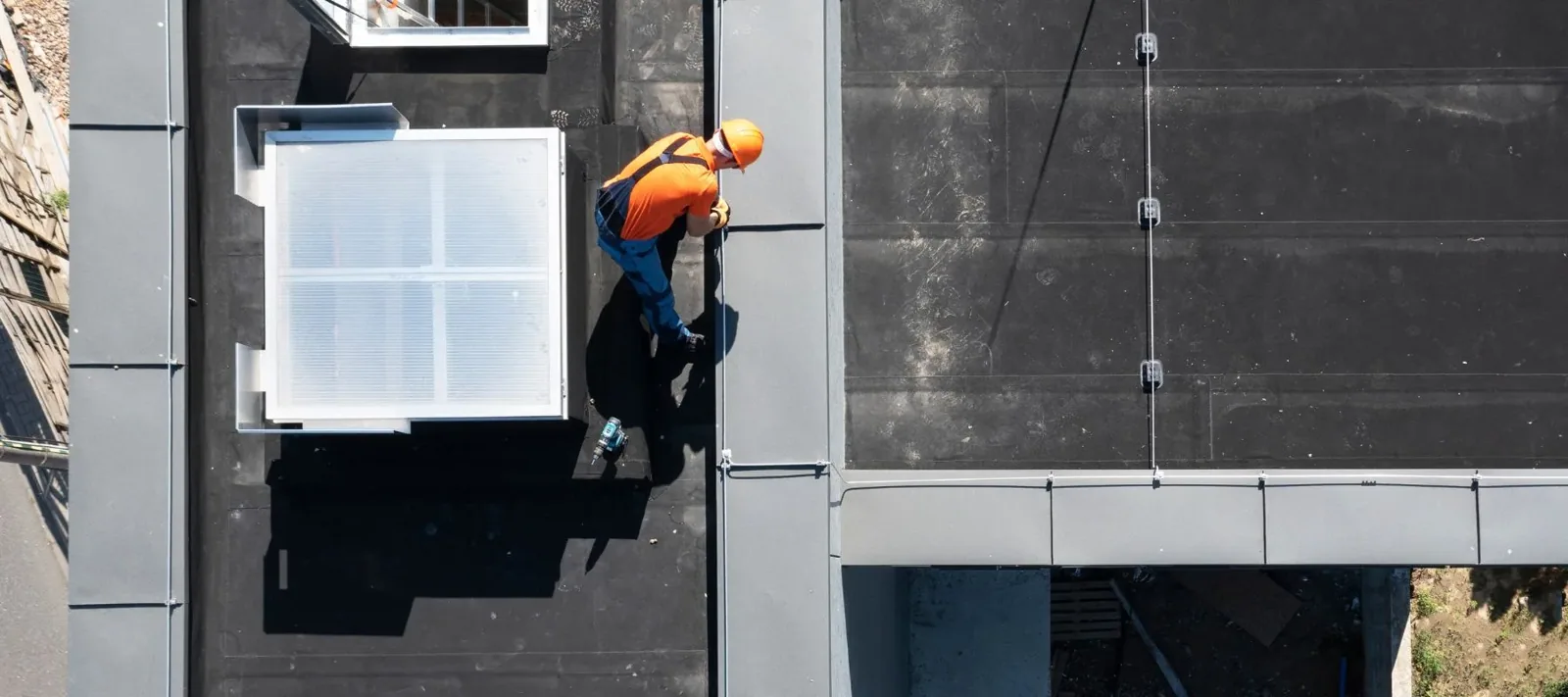
Arrange a roof review for the Woods Valley and Valley Center Road commercial area. Share available roof plans, leak notes, access rules, and operating hours so we can define the visit and next decision.
Call 555-555-5555 or email [email protected].