
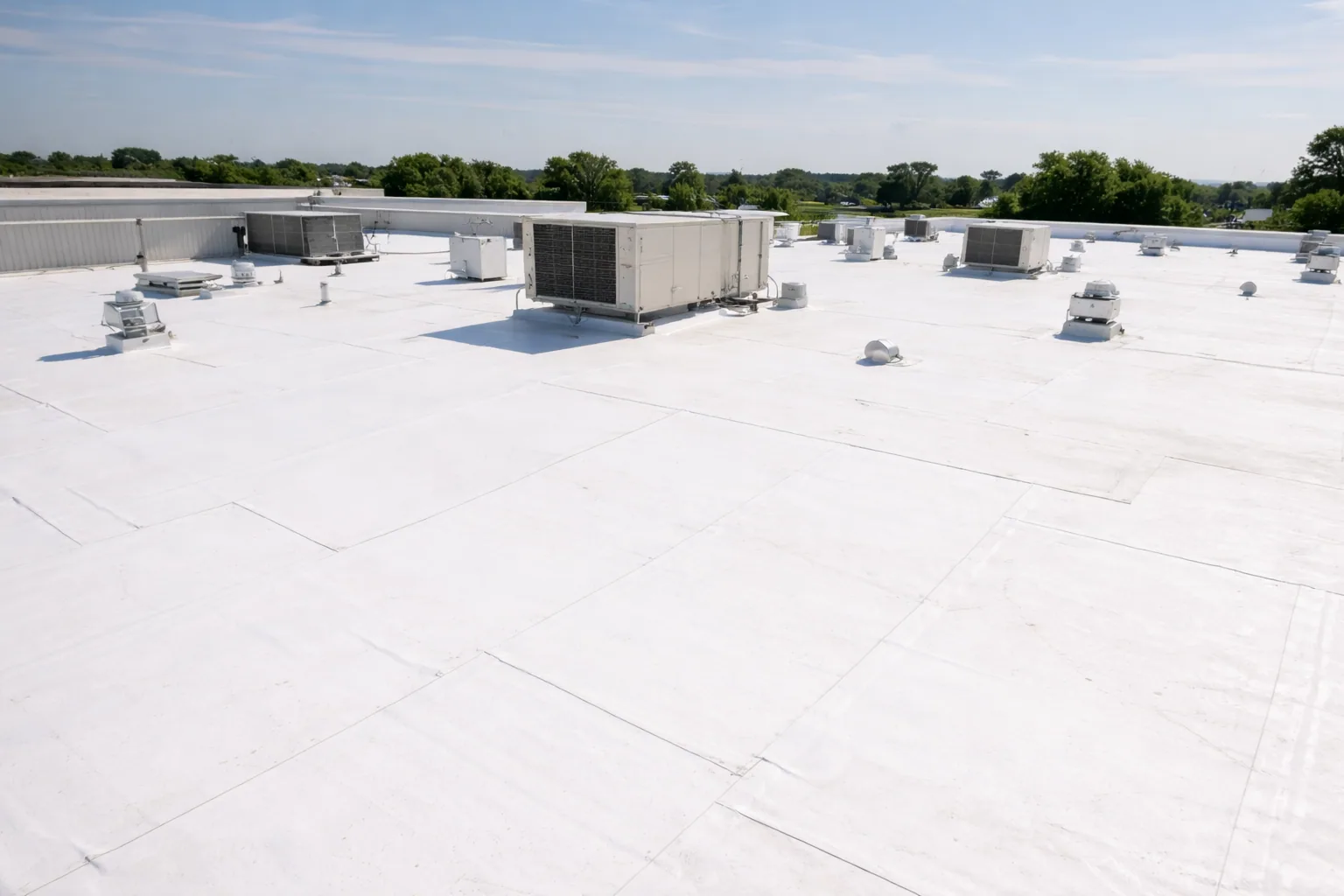
Commercial Roofing in the Cole Grade and Valley Center Road Commercial Area, Valley Center, CA
Service Areas · Escondido, CA
A shallow pond beside a roof drain can turn into a larger scope question. Near Cole Grade Road and Valley Center Road, the County plan identifies a contained commercial village serving local daily needs. It calls for centralized commercial services compatible with Valley Center's rural residential character. Those land-use decisions do not establish a building's roof type or drainage performance. We inspect the roof, confirm the flow path, and note where water remains. Then we separate a correctable drain issue from membrane, insulation, or deck work. A commercial roof inspection gives ownership a condition record to price.
A village area, not a property label
The Cole Grade and Valley Center Road area is one of two contained commercial villages identified in the community plan. The policy favors centralized services and compatibility with nearby rural homes. It does not show what a parcel contains today. We confirm the property's location, current use, access, and roof assembly with the project contact. The commercial-area designation helps describe the broader target. It cannot tell us whether a particular roof has a single-ply membrane, metal panels, coating, or another system.
That distinction changes how a proposal is built. We begin with the actual roof area and divide it by assembly or observed condition. We note parapets, penetrations, slope changes, drains, and transitions between additions. If prior plans differ from the site, we record that gap before choosing a repair. A photo-based condition report can make the difference visible to ownership and the general contractor. Each finding should state its location, impact, and next step.
Drainage where the membrane meets the outlet
Water should follow a designed route to a drain or scupper. We check whether the roof plane falls toward that outlet, whether the strainer remains open, and whether the flange ties into the field membrane. Cracked sealant alone may not explain standing water. We look for a low area, a restricted outlet, displaced insulation, or a lap that interrupts flow. Cleaning and repair are different tasks. The inspection record should say which condition was observed before the estimate assigns labor or materials.
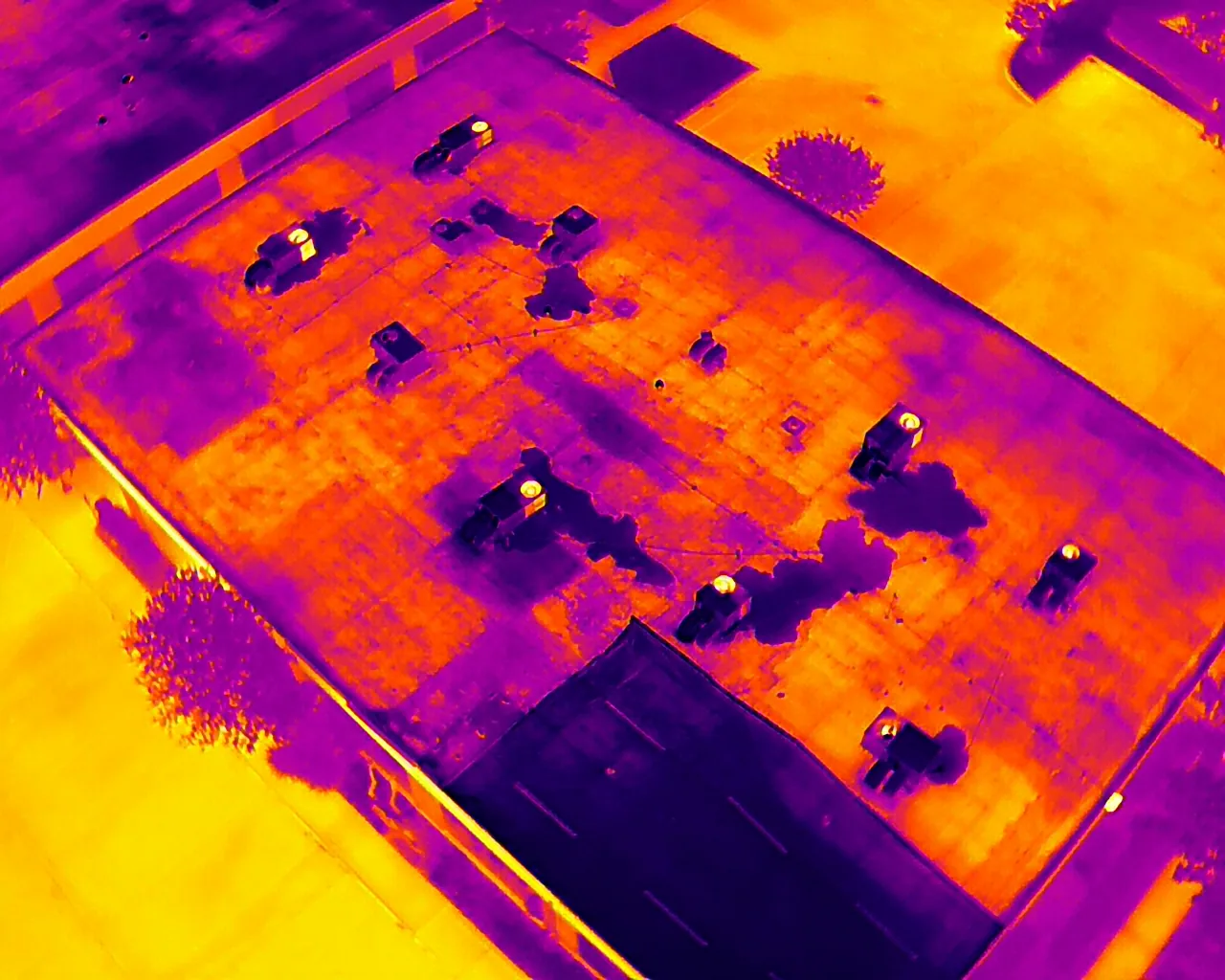
If moisture may extend beyond the visible pond, infrared moisture testing can help map areas for closer review. Results should be checked against an opening or other evidence where the assembly requires confirmation. A scan does not decide whether the roof is recoverable. We relate the findings to membrane condition, attachment, and repair history. That gives ownership a sounder basis for comparing localized work with broader renewal.
Wind checks at corners and penetrations
Santa Ana winds across Southern California are dry and often warm or hot. The National Weather Service places their common season between September and May and notes that they can damage property. During an Escondido market roof review, we pay attention to edge metal, corners, flashing terminations, and exposed curb details after a reported wind event. We look for displacement, opened joints, and membrane separation. The regional description is Escondido context, not a separate weather measurement for Cole Grade.
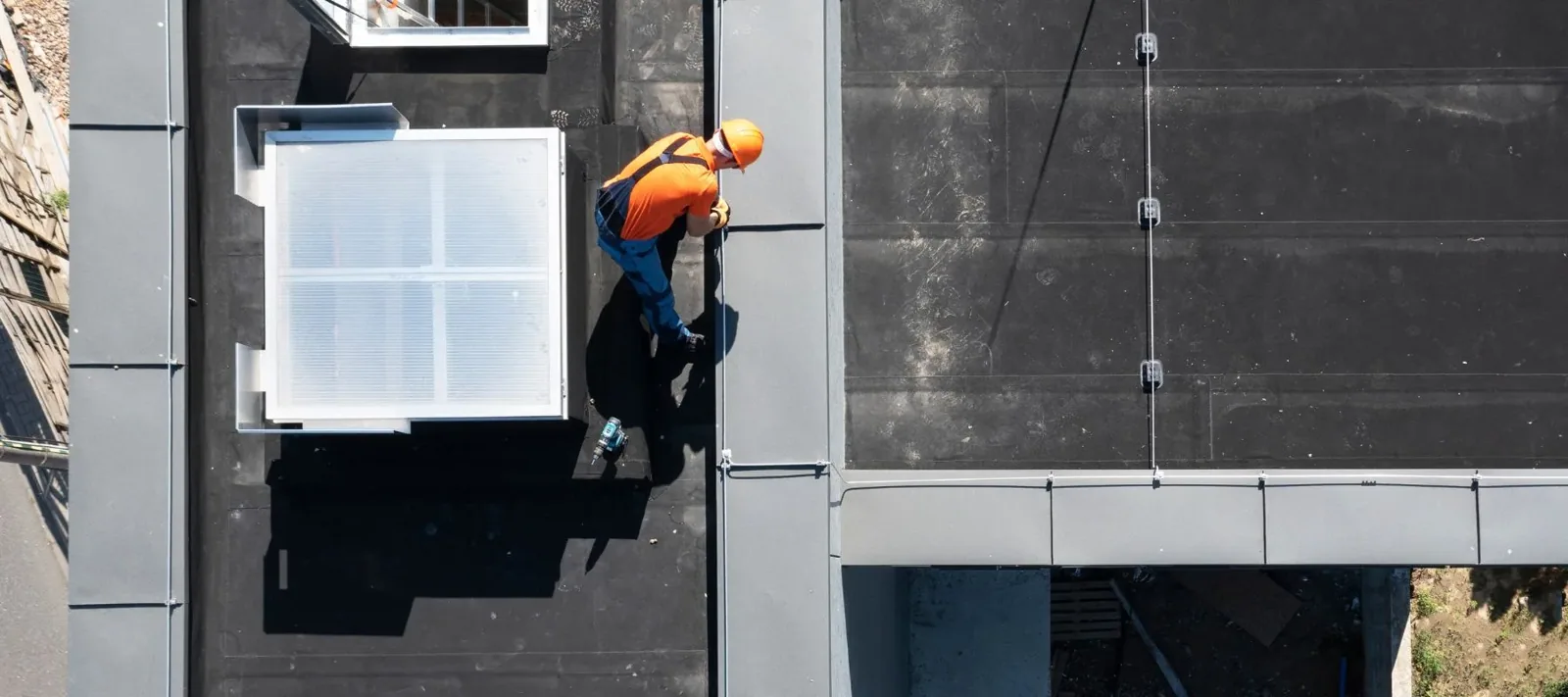
After a reported wind event, we inspect the affected area, photograph visible movement, and record whether temporary protection is needed. A wind repair review should define the components to reset or replace and the check required at completion. Unaffected zones remain outside the work boundary unless new evidence changes the decision.
Scope options by observed condition
Localized repair can make sense when the membrane around a defect remains sound and the existing assembly accepts a compatible tie-in. A coating or restoration may be worth review when the substrate, drainage, and adhesion support it. Replacement becomes more relevant when wet insulation is extensive, attachment has failed, or repeated repairs no longer isolate the problem. We do not choose by property label. We document the roof condition and show what each option includes, what stays in place, and what could change after opening.
Pricing depends on repair length, surface preparation, membrane compatibility, edge work, access equipment, disposal, and the schedule available to crews. A recover should be weighed against moisture extent and attachment. A recover assessment checks those conditions before adding another layer. If the project calls for a defined repair, we identify the opening, tie-in, protection, and closeout process. The budget window can then reflect observed work rather than an assumption based on the commercial village designation.
Site access and surrounding operations
Access rules set the inspection route and the work sequence. We confirm roof hatch keys, ladder placement, lift access, staging limits, and any time restrictions before setting a date. A general contractor may also be coordinating utilities, paving, interior work, or deliveries. We identify who can approve a changed condition and who must be notified when roof access shifts. For an occupied property, a phased work sequence can help keep one area secure while another is under repair.
Rooftop equipment requires a separate decision with the mechanical trade. We ask whether the unit can be lifted, who protects it, and how flashing clearance will be maintained. The roof crew should not assume access to a curb that remains in operation. We record responsibilities before mobilization. The nearby Woods Valley and Valley Center Road commercial area is a distinct contained village; Valley Center covers the wider community. Each property still needs its own inspection.
Frequently Asked Questions
Does the Cole Grade plan identify existing roof drainage?
It identifies a commercial village and land-use direction. Drain slopes, outlets, and membrane conditions must be checked at the property before repair work is priced.
Should standing water mean the entire roof is failing?
The extent follows the flow path, insulation moisture, and membrane condition. We inspect the outlet and adjacent roof, then identify whether cleaning, localized repair, or testing is appropriate.
What makes a recover worth considering?
Attachment, trapped moisture, surface compatibility, and drainage set the limits. We review those conditions before comparing an overlay with repair or replacement.
Can wind damage be limited to one roof edge?
The inspection establishes the affected length and tie-in. We photograph the observed movement, check adjoining details, and keep unaffected areas out of the repair unless findings require more work.
What information helps coordinate an occupied site?
Roof access, tenant hours, delivery windows, equipment restrictions, and approval contacts help define the sequence. We use them to set staging and notice requirements before mobilization.
Define the inspection and scope
Arrange a roof inspection near Cole Grade Road and Valley Center Road. Bring roof plans, leak notes, prior repair records, site access instructions, and operating hours to help establish timing.
Call 555-555-5555 or email [email protected].