
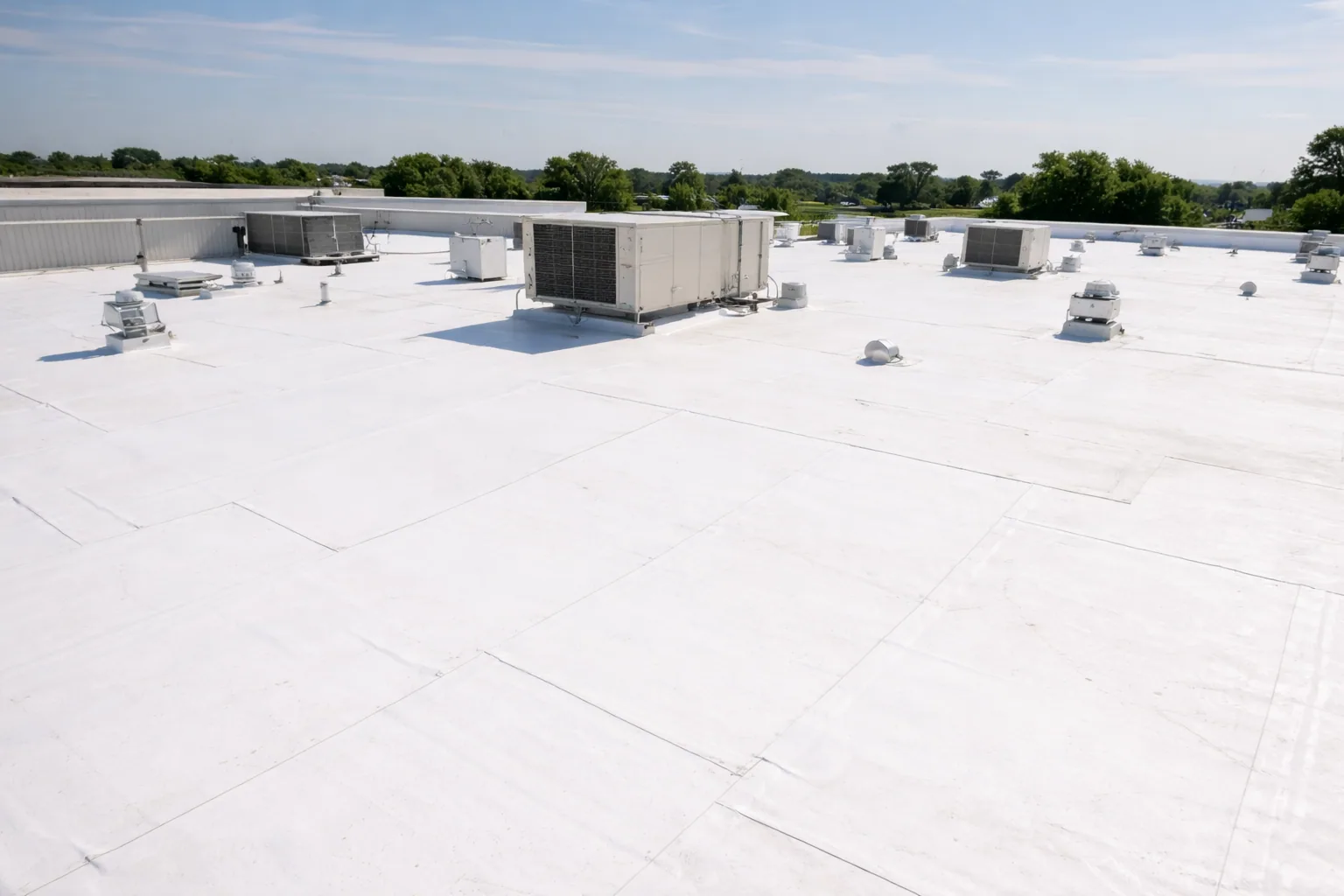
Metal Roof Retrofit in Escondido, CA
Roof Systems · Escondido, CA
A loose washer at an exposed fastener can be a small repair or a wider panel issue. We check the screw, rib, purlin, and adjoining sheet before pricing a retrofit. In Escondido, dry, often warm Santa Ana winds make roof edges and panel laps useful inspection points. The city's land-use plan identifies manufacturing, technology, office, and shopping employment areas. That context raises practical access and operation questions, but the frame and panels must be confirmed on site. The owner gets a boundary for screw replacement, metal repair, coating, or a new over-roof system.
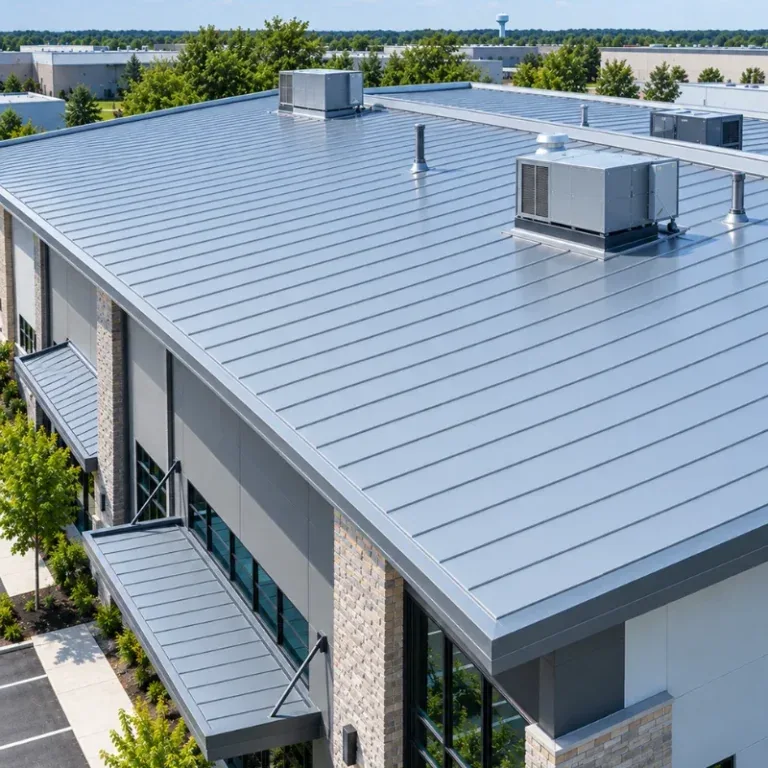
Exposed-fastener roofs use screws through the panel into supports. Washers age, holes can enlarge, and panels may corrode around fasteners or laps. A retrofit can mean selective repair, restoration coating, or a new assembly over the existing panels. We price the option that matches attachment, substrate, structure, drainage, and code conditions.
Screw Lines and Panel Ribs
We inspect washer compression, loose or missing screws, elongated holes, panel laps, ridge closures, and end laps. A fresh screw in a stripped opening will not provide a durable connection. We examine whether the support remains sound and whether the hole can accept a different repair detail. Rust at a panel edge may call for replacement rather than a coating. Marked rows keep the quantity tied to the actual roof slope and support line.
Interior leaks often follow a fastener, lap, or transition, but water can travel before it shows below. We map the report to the roof panel and inspect adjoining penetrations. A commercial roof review records panel condition and sampled attachment. Leak tracing can help narrow a reported entry path. If the substrate beneath panels is uncertain, a controlled opening may be needed before a retrofit design is priced.
Structure, Supports, and Added Load
A new roof over old metal adds load and height. We need the support layout, connection condition, and structural review before setting an assembly. Wet insulation or corrosion at a purlin can change the repair limit. The scope should state whether the existing panels remain, where they are secured, and how the new system transfers loads. Drainage also changes when a new plane covers the ribs. We identify the new edge, eave, and penetration details for review.
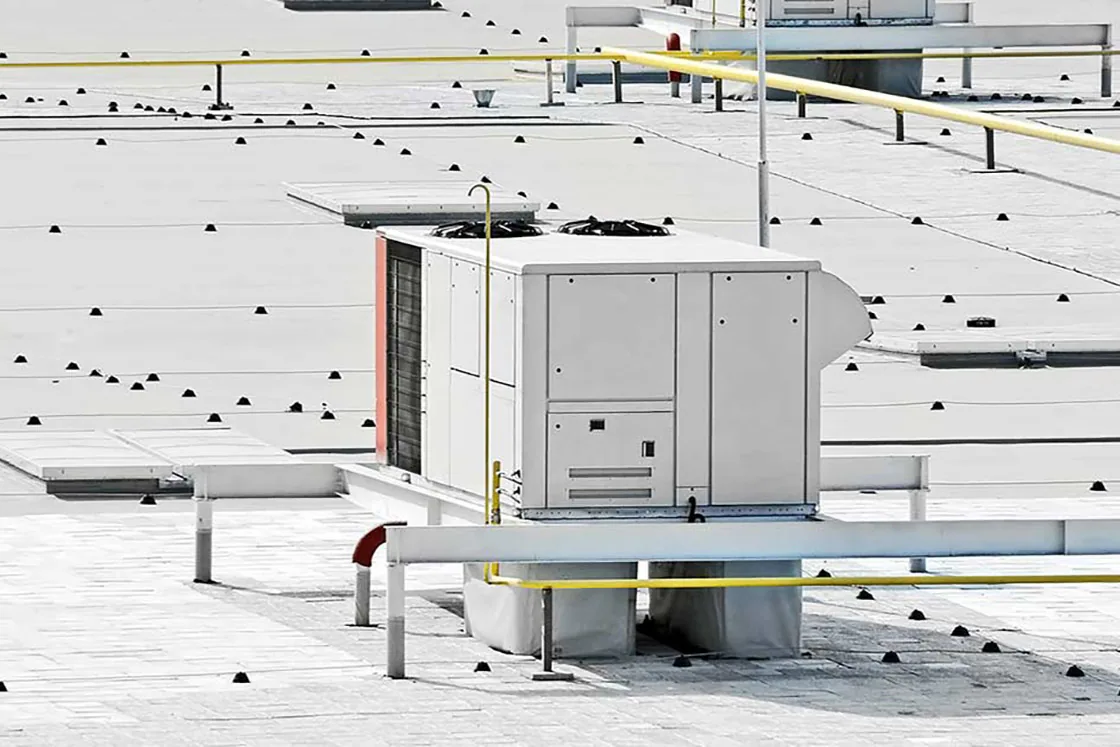
At a mechanical curb, the support needs to carry equipment independently of the panel skin. We note loose framing, displaced fasteners, and abandoned openings. A curb and support scope can separate structural work from panel restoration. Escondido planning includes the Harmony Grove Industrial Park as a business area, where loading and equipment use vary by property. We do not assume a particular facility's construction from its district.
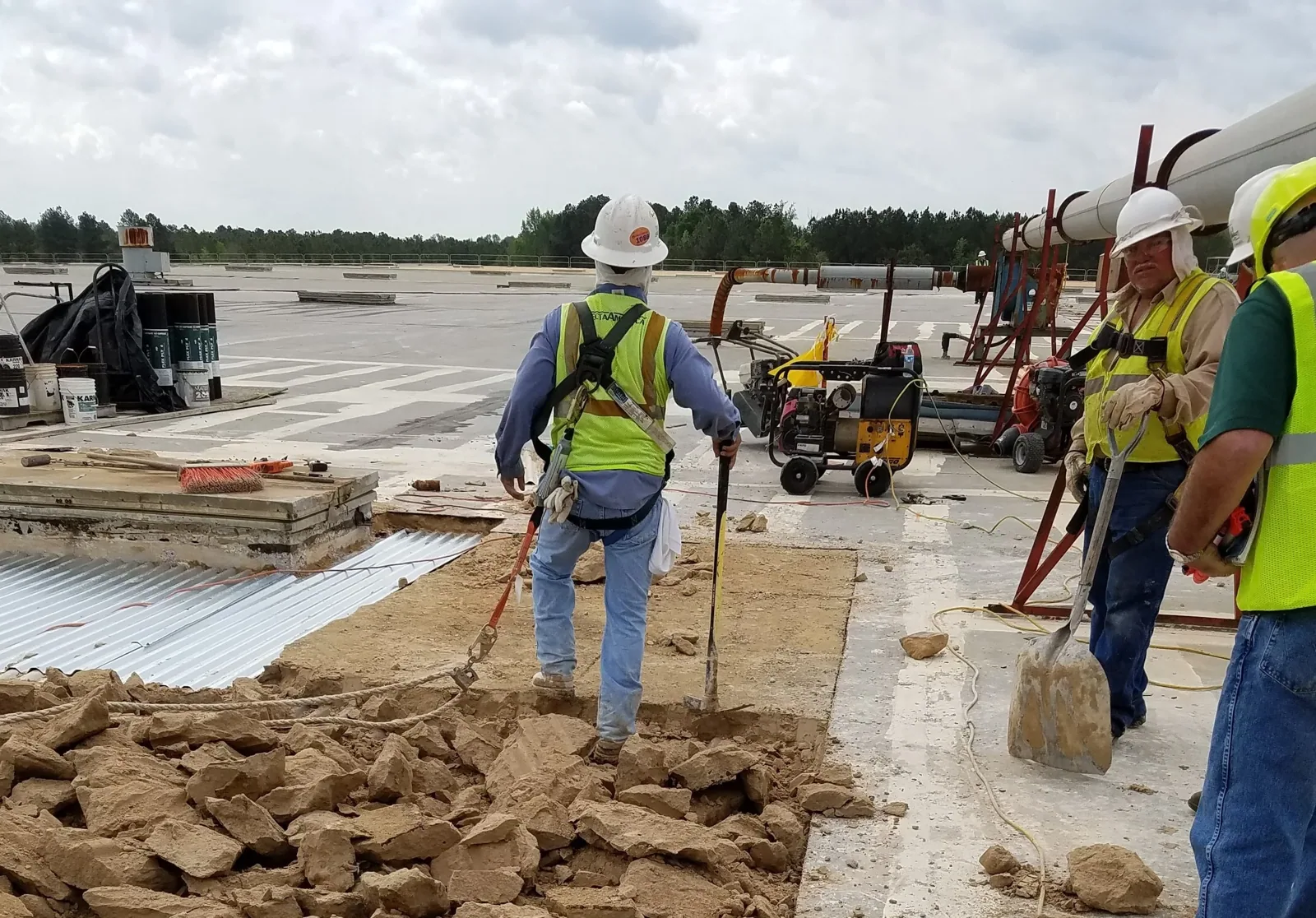
Existing screws can connect a panel to a purlin, but they do not establish the purlin's remaining strength. A retrofit design may need field measurements, selective exposure, or engineering review of the frame. We show that gate before pricing a complete assembly. An owner can approve investigation first and keep the restoration quantity separate until the support condition is documented.
Repair, Coat, or Cover
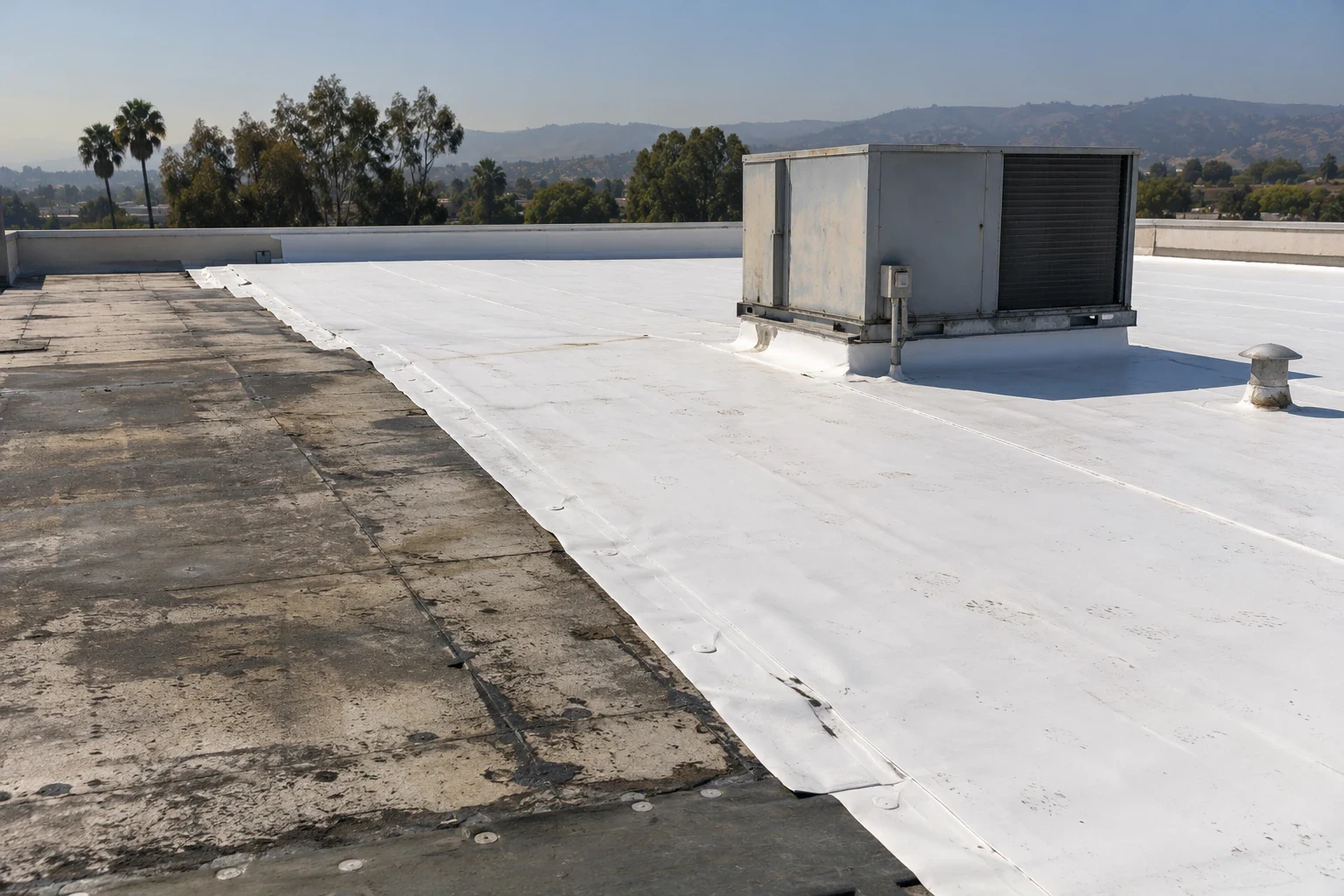
Isolated fastener failures with sound surrounding metal may support a targeted repair. Broad corrosion, open laps, or repeated leaks can call for more testing. A coating needs a clean, stable panel surface and compatible sealant at seams and screws. It does not rebuild missing metal or correct weak supports. A new over-roof system may reduce exposure to old fastener paths, but only if structure, attachment, drainage, and edge terminations support it.
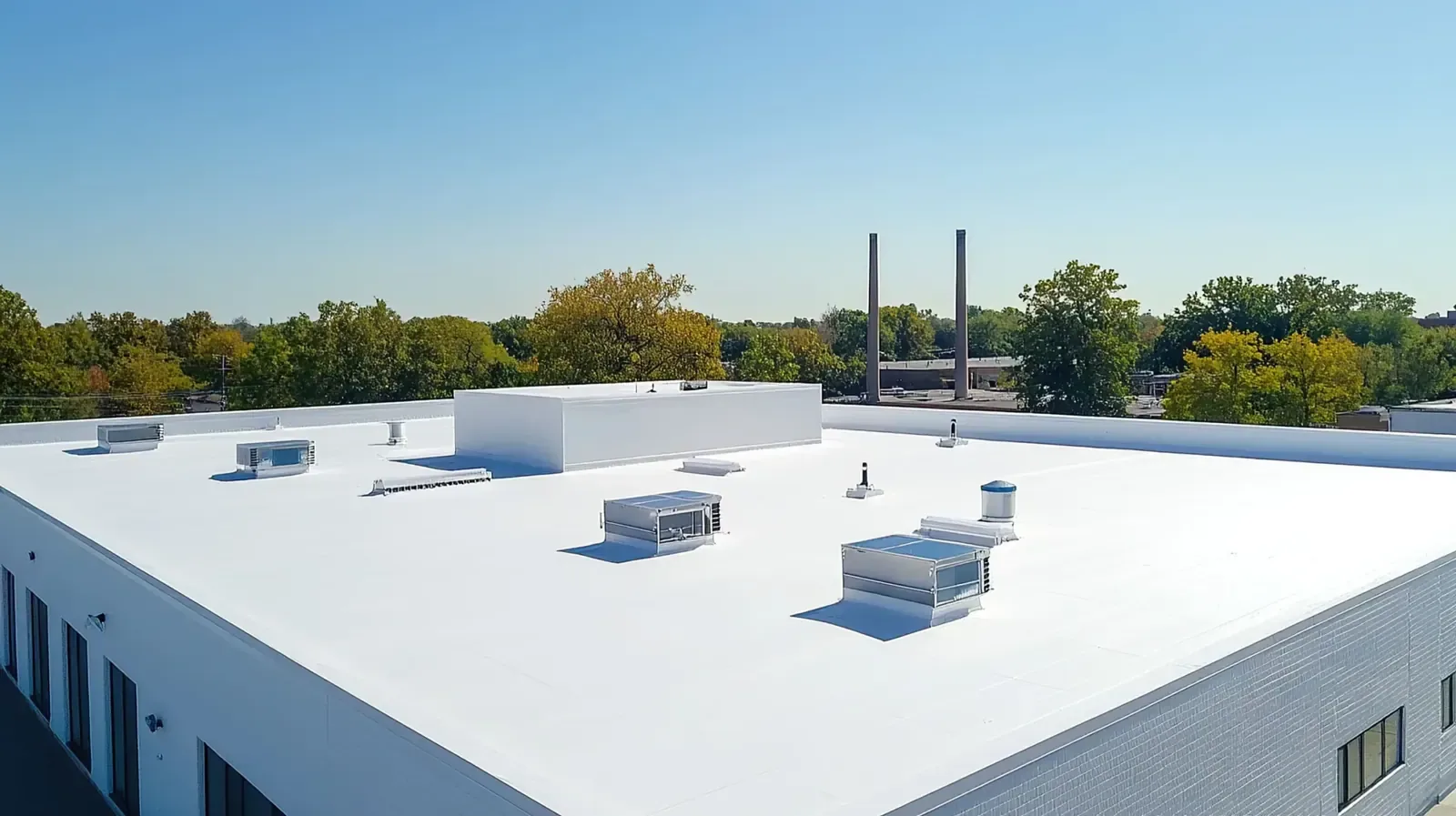
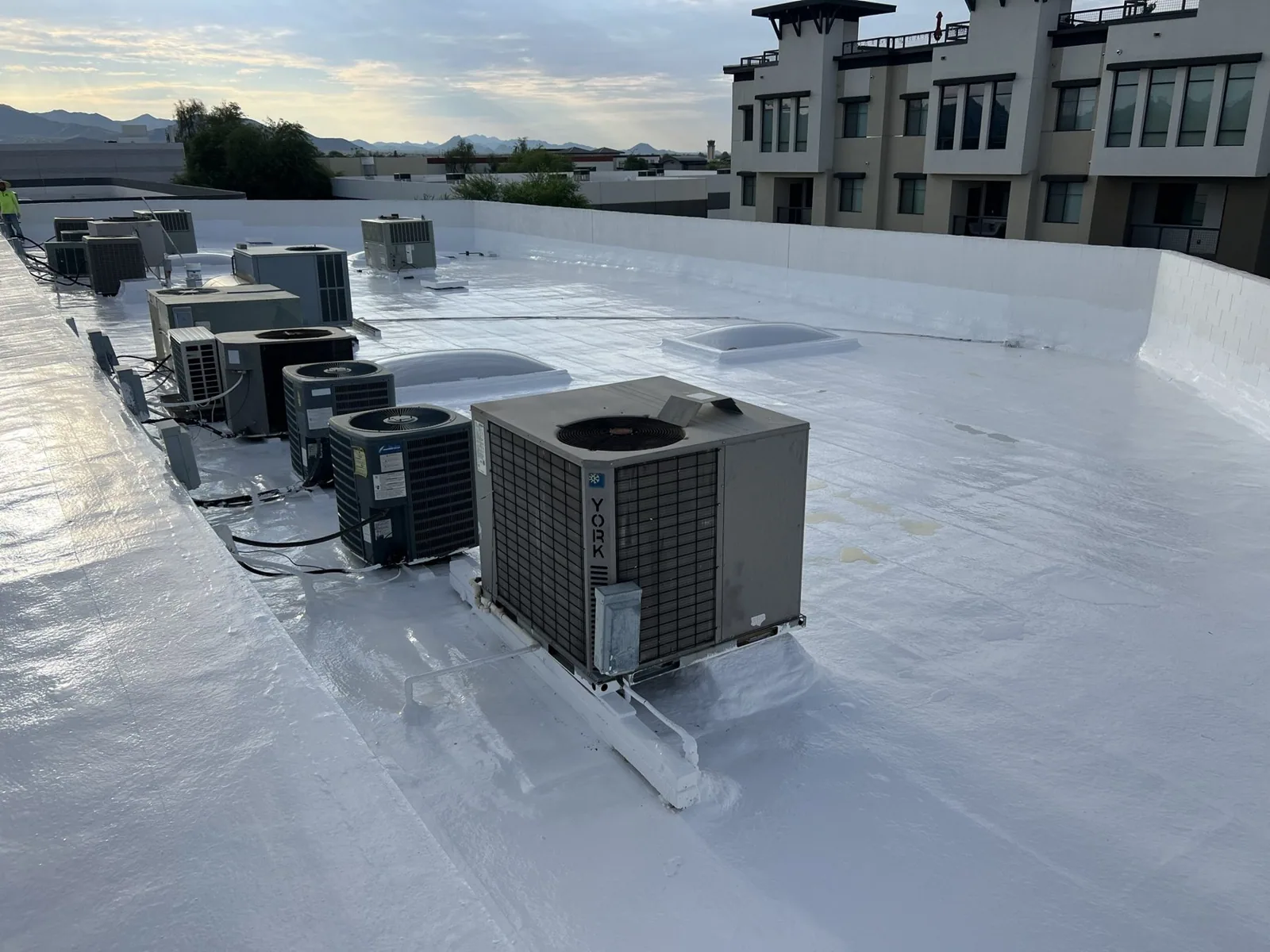
We compare the options using the same panel area and access assumptions. A standing-seam system reduces exposed through-fasteners, while silicone restoration needs suitable panel condition and preparation. Those approaches are not interchangeable. A recover review should identify test openings, added weight, curb extensions, and perimeter work before an owner selects a budget.
Eaves, Closures, and Water Flow
Panel ribs channel water toward eaves and gutters. Debris, a damaged closure, or an open end lap can redirect flow under the sheet. We check valleys, ridge caps, rake edges, gutters, and downspouts while tracing the slope. An overflow route matters if a primary outlet blocks. The work scope separates gutter capacity and attachment from panel repairs when those quantities differ.
Santa Ana winds can bring warm or hot, dry conditions through local mountain passes. We inspect edge metal and closures as part of the condition review, then plan exposed work around current weather. In Downtown Escondido, access and delivery windows still depend on each property. A perimeter metal scope can list gutters, rake trim, and securement separately. Photos should tie each open closure to a slope and drainage outlet.
A Retrofit Quantity the Team Can Review
Document panel profile, gauge if known, support spacing, fastener counts, corrosion limits, and test locations. For a cover system, show attachment pattern, insulation build-up, drainage plan, edge elevation, penetrations, and structural review. Separate base quantities from uncertain decking or purlin conditions. For restoration, state cleaning, seam treatment, screw work, primer, coating limits, and inspection steps. No line should hide an unresolved structural question.
The fire-hazard map classifies portions of Escondido at different levels. New construction within higher zones has ignition-resistant requirements. The project team must verify the parcel and permit scope before applying those standards to a retrofit. We request roof plans, maintenance logs, leak locations, and any structural drawings. A photo condition report keeps the findings with the bid. Set an access date and a decision deadline. We will return a repair boundary and the conditions that could move the project to replacement.
When coating appears in the comparison, show surface preparation, seam reinforcement, fastener treatment, and dry-film target as separate specifications. If panels require replacement, list the profile, finish, and transition metals. A side-by-side scope lets the owner compare restoration against a new assembly without treating unlike work as equivalent. Document exclusions and the evidence that would reopen the price.
Frequently Asked Questions
Can we tighten existing metal-roof screws instead of replacing them?
We inspect the washer, hole, support, and surrounding panel first. A screw that spins in a damaged opening needs another repair detail. Tightening every fastener without inspection can distort the panel or miss corrosion. The quantity follows marked rows and conditions.
Does a retrofit cover the old panels completely?
The assembly depends on structure, attachment, drainage, height, and opening details. We identify which existing panels remain and how the new system transfers load. The scope also shows edge, curb, and gutter changes. A structural review can be required before final pricing.
When is coating a poor fit for exposed-fastener metal?
Perforated metal, active corrosion, loose panels, or weak supports need correction before coating. We review screw heads, seams, surface contamination, and compatibility. The proposal lists preparation and replacement quantities separately. A coating does not restore missing metal or connection strength.
Why does water appear away from the failed screw?
Panels and underlayment can carry water downhill before it reaches an interior opening. We trace slope, laps, curbs, and the reported room location. A test or controlled opening may clarify the path. The written finding marks the route and repair boundary.
What information should a contractor gather before pricing a retrofit?
Roof drawings, panel specifications, support spacing, leak history, access limits, and structural records are useful. We compare those documents with field conditions and note conflicts. Equipment loads and drainage changes also affect the assembly. Unknown attachment conditions should be resolved before a fixed quantity is issued.
Set the Metal Retrofit Decision
Send panel records, roof plans, leak history, and available structural drawings. We will assess fasteners, supports, and transitions before pricing a repair or over-roof assembly. Call to arrange a site review.
Call 555-555-5555 or email [email protected].