
Standing Seam Metal Roofing in Escondido, CA
Roof Systems · Escondido, CA
A raised seam that has backed out of its clip changes the panel repair. We inspect the seam, clip spacing, fasteners, and roof-to-wall transitions before setting the limit. In Escondido, dry Santa Ana winds can be warm or hot, so exposed edges deserve the same walk as panel joints. City planning identifies business and employment activity along East Valley Parkway and the Felicita Road area. Those places do not prove what metal is on a particular building. We record panel profile, substrate, slope, drainage route, and attachment before pricing repair or replacement.
Standing-seam panels join at raised longitudinal seams. Concealed clips allow movement while holding the panels to the structure. An exposed fastener or sealant line may indicate another profile, not a standing-seam detail. We confirm the system and identify the part that moved. The owner gets a specific repair quantity instead of a generic metal-roof allowance.
Panel Movement and Clip Lines
We inspect seam engagement, clip attachment, panel ends, fastener rows, and metal condition around penetrations. Oil canning can be visible without proving a leak. A seam opening, loose clip, or torn panel end gives a more direct repair question. We mark the affected run and compare it with adjoining panels. Where the panel length or concealed clip cannot be confirmed visually, the proposal calls for a controlled opening before ordering replacement parts.
Thermal movement can stress fixed points when a panel cannot slide as designed. We check end laps, ridge details, eaves, and changes in direction. An inspection record should map each panel run and the locations sampled. If staining appears inside, trace the roof slope and penetration route before attributing it to the nearest seam. The scope should identify that entry detail, not only the room below.
Valleys, Eaves, and Wall Transitions
Metal panels shed water through formed channels, but the transitions govern where flow changes direction. We inspect valleys, ridge caps, eaves, parapets, curbs, and pipe penetrations for loose closures or failed sealant. A fastener washer can compress or crack. Replacing one screw does not correct a panel that has shifted off its clip line. The repair detail should identify compatible metal, finish, attachment, and the place where movement remains free.
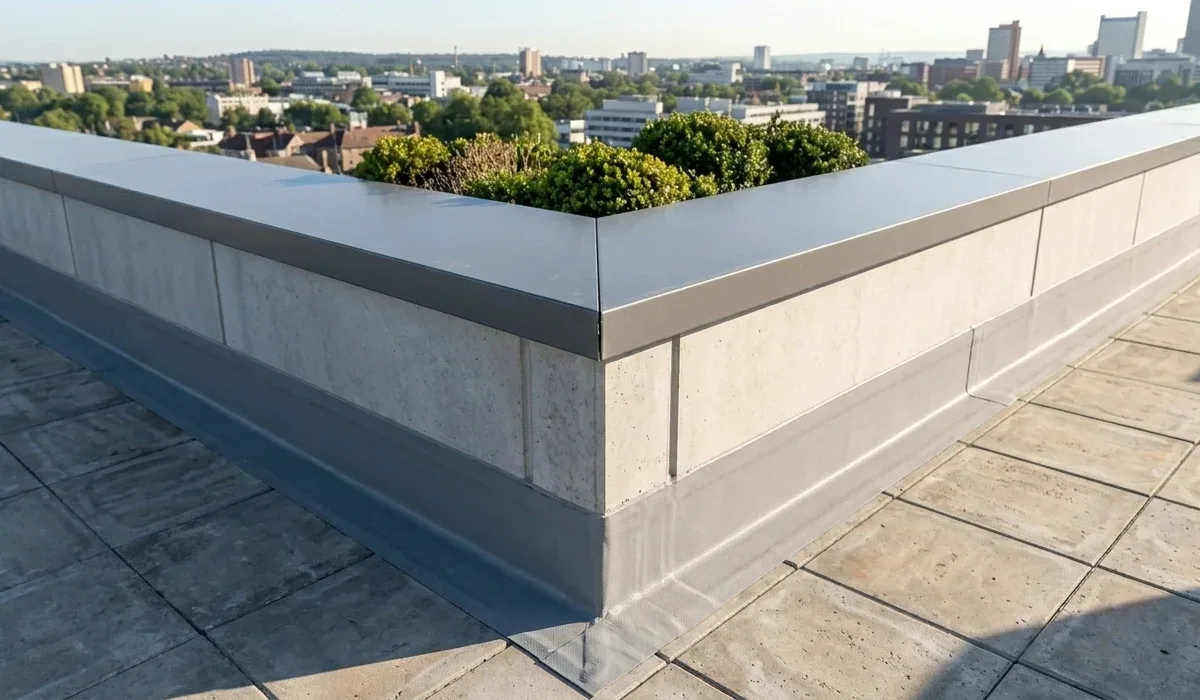
Escondido's economy plan identifies the Centre City Parkway Commercial Corridor as a mixed commercial area. Service access, deliveries, and work hours still come from each facility contact. A roof-edge scope can separate perimeter sheet metal from field panels. For curbs and pipes, penetration flashing should show closure material and panel direction. We photograph each transition before and after the repair.
Finish Wear and Metal Compatibility
Scratches, cut edges, and standing water can expose metal to corrosion. We check whether deterioration is on the panel surface, at a fastener, or where dissimilar materials meet. A coating needs a prepared surface and compatibility review. It cannot restore a thin or perforated panel. We note where metal replacement is required and where surface treatment may be considered. The scope also separates cleaning from repair so preparation is priced clearly.
A recover over standing seam changes panel height and may affect clips, penetrations, and drainage. We review the structure and attachment before covering a metal system. A recover review should identify added load, fastener pattern, and edge termination. If a low-slope addition meets the metal roof, compare it separately with TPO membrane work or EPDM sheet roofing. Those assemblies need different slope and flashing details. We do not blend them into one roof type for bid convenience.
Access and Panel Replacement
Long panels can require special handling, lift capacity, and staging space. We check delivery access, roof height, panel lengths, and where an old sheet can be lowered safely. Occupied spaces below need protection from fasteners and metal debris. The general contractor identifies shutdowns, crane windows, and other trades sharing the work area. A measured panel schedule helps avoid ordering short pieces that create unnecessary end joints.
Dry, warm Santa Ana episodes are common in this region during fall and winter. We secure each opened panel run and base the day's sequence on the forecast and site conditions. Local red-flag periods commonly coincide with dry weather and strong Santa Ana or east winds from the northeast. We document a temporary boundary and the return date if permanent panel material is not ready for the first mobilization.
Before a lift is booked, confirm turning radius, overhead lines, staging room, and the route that keeps visitors away from the drop zone. The crew also needs a secure place for removed sheets until disposal. A clear site sketch can prevent a second equipment move and keep the roof schedule aligned with other trades.
Panel Quantities and Closeout
The proposal should identify panel profile, length, finish, clip type, attachment points, closures, underlayment, and flashing work. It should distinguish confirmed dimensions from areas requiring an opening. Separate access equipment and protection below from sheet-metal quantities. If decking or structural attachment is concealed, define the approval process before removal. Photos should show the panel run, connection, and repair closeout from a repeatable reference point.
Escondido planning shows office development around the Interstate 15 and Felicita Road interchange as an opportunity area. For a building near this planning area, the property contact confirms access; a roof walk establishes the panel and attachment details. We request roof plans, leak history, prior metal work, and panel product records. The Felicita Road and Interstate 15 Office Area identifies the broader planning district. A photo condition report preserves the measured scope. Arrange a site review with the person who can approve panel openings and equipment access. We will return repair limits and a replacement comparison the team can schedule.
When only one run needs replacement, match its gauge, profile, finish, and attachment to adjoining sheets. If several panels have moved, check whether the source is clip placement, a fixed point, or failed substrate. That distinction changes the labor and order quantity. The owner can keep a sound run in place when the connection supports it. We identify where a test or opening is needed before issuing a final number.
Frequently Asked Questions
Can a loose standing seam be crimped back into place?
The panel profile, clip engagement, and metal condition decide whether reseating is appropriate. We inspect the adjoining run and check for torn edges or displaced clips. A localized correction may work when the panel remains sound. The scope names any clip replacement and the closeout check.
Why does a metal roof leak away from the reported stain?
Water can travel along a panel or under a transition before it appears inside. We trace slope, seam direction, penetrations, and interior reports. The marked roof area records both the suspected path and the test performed. Repair quantities follow the connection we can identify.
What records help price standing-seam panel replacement?
Panel schedules, manufacturer details, finish data, past repairs, and roof plans help confirm what must be ordered. We measure run length, access, and attachment before setting replacement quantities. Where clip type stays concealed, the proposal identifies an opening and decision step.
Can coatings stop corrosion on standing-seam panels?
A compatible coating may address surface wear after cleaning and preparation. Perforated metal, loose seams, or failed clips need repair or replacement first. We inspect cut edges and dissimilar-metal contact as well. The bid separates coating area from panel work.
How should panel work be planned around active operations?
We map lift access, delivery timing, panel lowering, and protection below before mobilization. Long sheets may need a clear route and a reserved crane window. The superintendent identifies occupied zones and competing trades. Each opened run receives a defined temporary or permanent closure before crews leave.
Review the Standing-Seam Connection
Share panel records, roof plans, leak locations, and access limits. We will inspect attachment and transitions before pricing repair or replacement. Call to reserve a site review.
Call 555-555-5555 or email [email protected].