
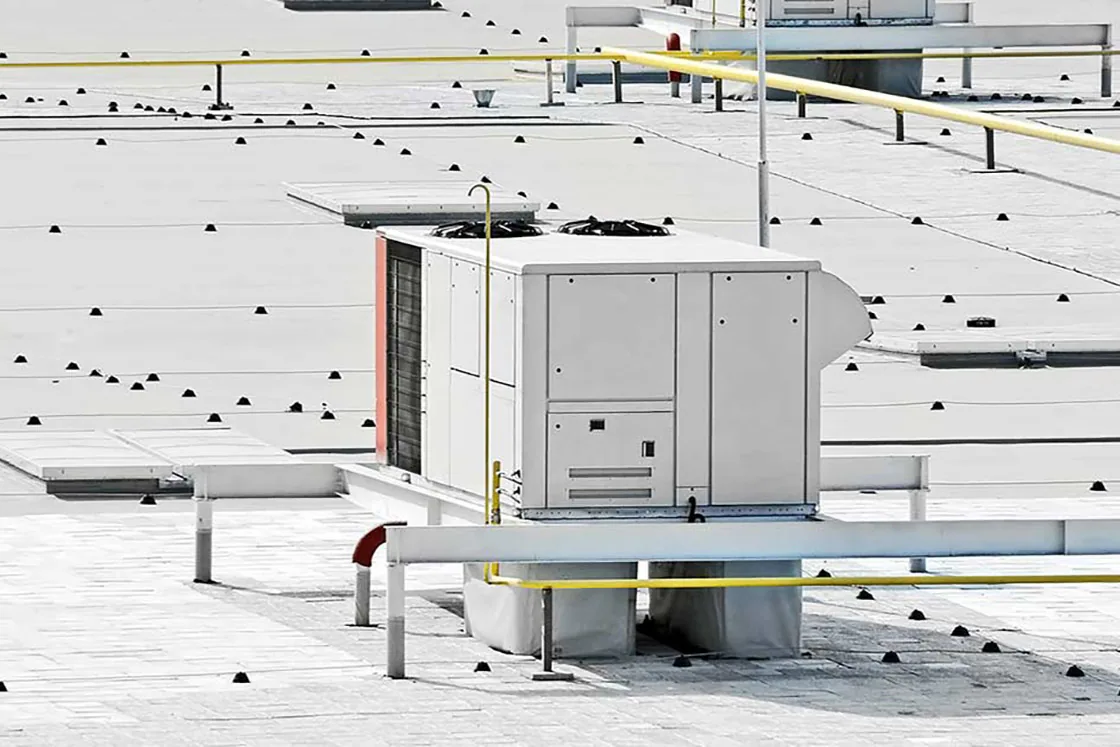
Grocery Store Roofing in Escondido, CA
Property Types We Roof · Escondido, CA
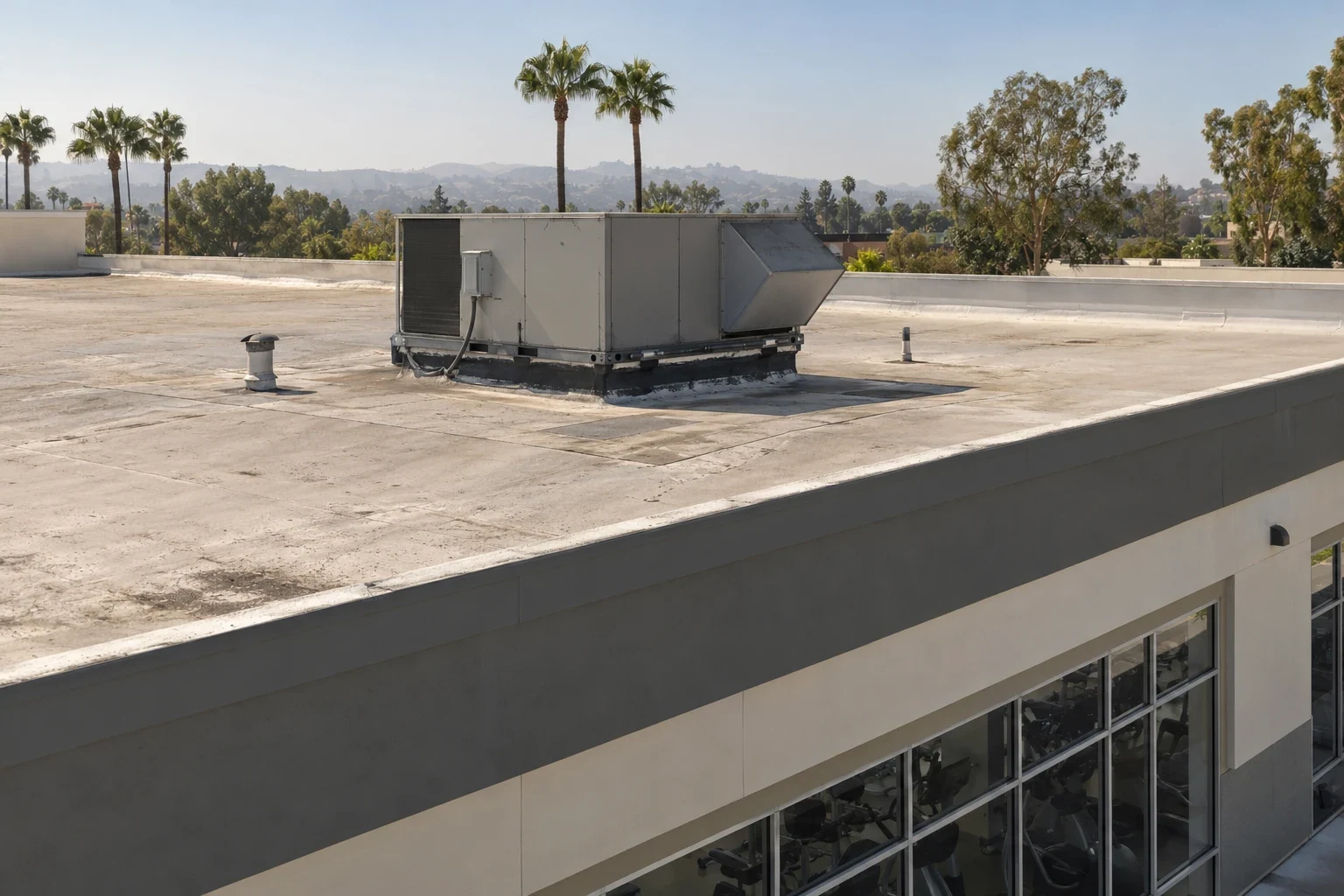
Santa Ana winds are typically dry and warm or hot, can damage property, and occur most often from September through May. For a grocery roof, record edge attachment and curb flashing condition before coordinating refrigeration access. At the store, the inspection records the observed condition at each roof edge and curb before we set repair limits.
Protect refrigeration and roof penetrations
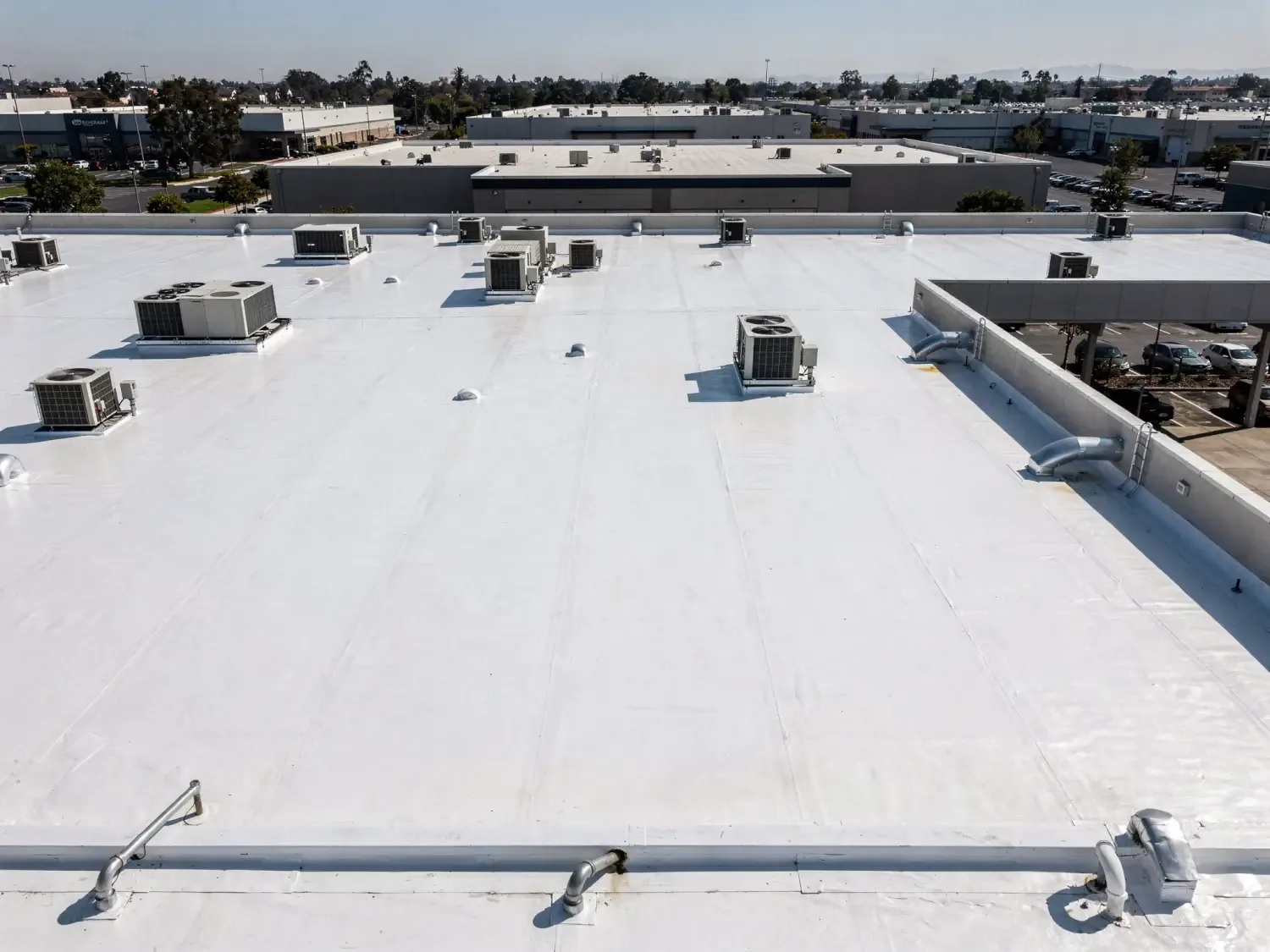
Walk-in coolers, exhaust fans, refrigeration lines, and electrical feeds can pass through the roof. We inspect each curb, pitch pocket, conduit, and support for failed flashing or movement. A leak near a line set may travel before it reaches the ceiling. We photograph the roof detail and identify the interior area at risk. If equipment must be disconnected or moved, the mechanical contractor owns that task. A curb and support review can define the roofing handoff before removal starts.
Escondido's employment uses include technology, manufacturing, office, professional services, and shopping. That is citywide context, not proof of a particular grocery roof or refrigeration layout. We ask the store team for equipment schedules and any shutdown limits. Rooftop work may need a protected service route to keep other technicians clear of fresh membrane. The Harmony Grove Industrial Park has planned employment uses with multiple lot sizes, but its layout does not substitute for the store's staging plan.
Trace water without risking product areas
Water above a sales floor, prep room, or cold-storage area requires prompt containment. We protect exposed stock and coordinate any interior isolation with the manager. Above, we follow the drainage route and inspect seams, flashings, drains, skylights, and equipment curbs. A leak repair visit should identify both the immediate opening and the work needed to keep water from returning. A temporary cover can stabilize an opening while a permanent repair is prepared.
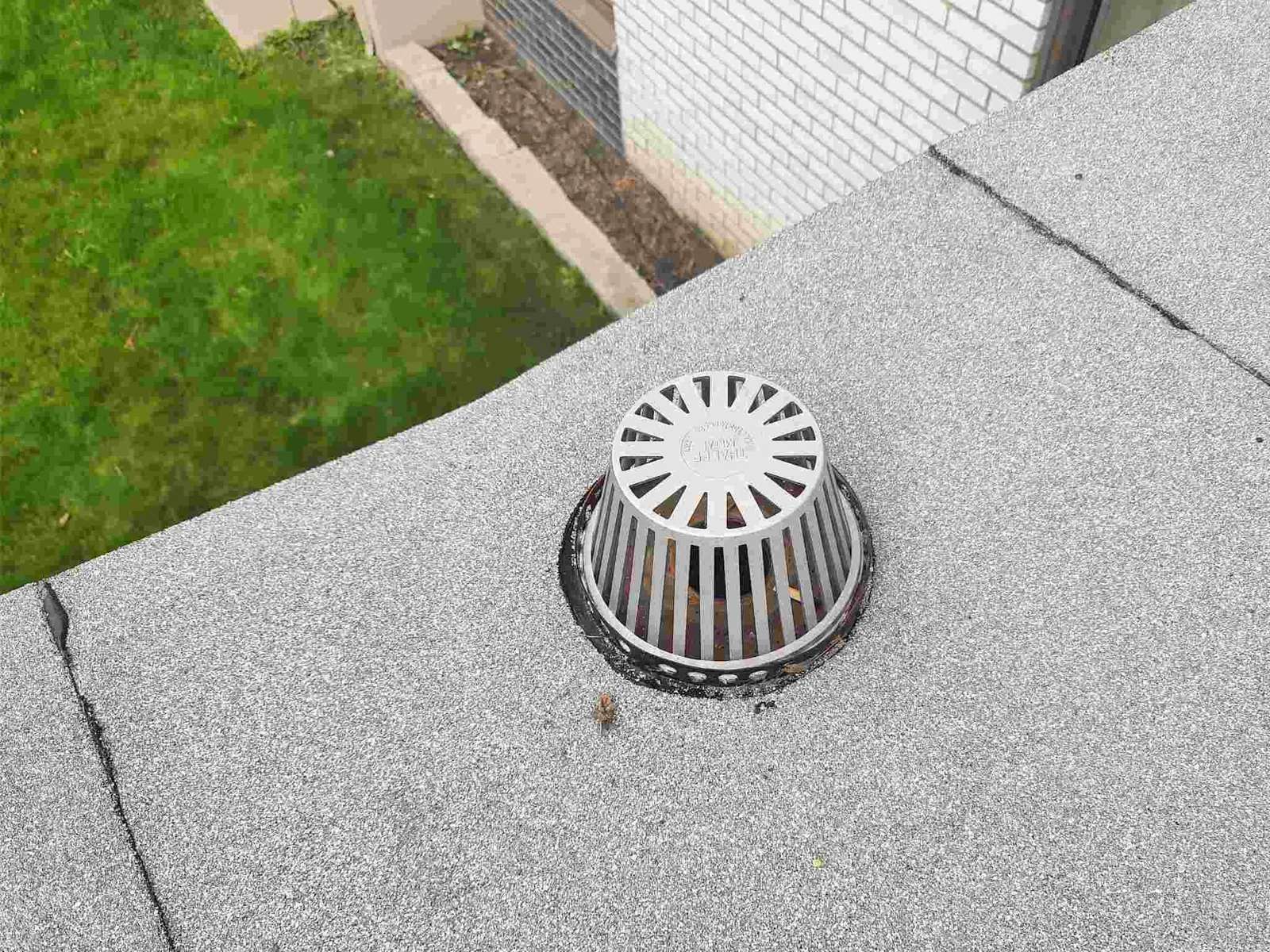
Drain bowls and overflow points deserve careful review where refrigeration condensate or rooftop service work creates additional water paths. We distinguish roof drainage from equipment discharge and plumbing. A blocked strainer, low area, failed seam, and open curb seal each require different work. The drainage inspection records the roof-side condition, while the report identifies any work that belongs to another trade. We keep food-area protection, ceiling access, and cleanup responsibilities in the scope.
Match the repair to the membrane
Grocery roofs can contain several materials or additions. We identify the installed membrane, seam method, insulation, and metal transitions before choosing a patch. Thermoplastic sheet, EPDM, built-up roofing, and metal require different compatible materials. A small puncture may be repairable if the surrounding surface is clean, dry, and sound. Repeated seam openings or wet insulation can move the boundary beyond one detail. A PVC assembly needs repair materials suited to its sheet, while another system may require a different method.
Escondido Boulevard includes coordinated retail, office, visitor-serving, and residential uses. At a grocery store, identify the actual roof assembly before selecting repair or replacement work. We inspect the actual roof before preparing an option. If conditions support recover or coating, we state the moisture, attachment, and drainage requirements. When they do not, replacement may be the clearer path. The replacement scope should show tear-off limits, insulation, cover board, edge details, and the plan for keeping the building dry as work advances.
Schedule around receiving and trading
Grocery operations rely on receiving windows, refrigeration service, food preparation, and customer access. We confirm which doors stay open and where trucks can turn before mobilizing. The work plan names roof access, lift position, material storage, debris route, and daily dry-in boundary. When noise or temporary shutdown affects the store, the manager approves the timing. A roofing sequence for an occupied store can coordinate with refrigeration and electrical trades.
Seasonal wind exposure can be relevant when a refrigeration contractor plans rooftop service. After a reported wind event, inspect edge attachment and curb flashing at the store before coordinating refrigeration work or setting repair scope.
Separate urgent repair from capital work
A localized opening may need immediate repair while a broader roof decision remains open. We set temporary water control apart from permanent patching and distinguish both from replacement. The recommendation considers seam condition, insulation moisture, attachment, drainage, and repair history. If sampling could change the choice, we identify the test area before opening the roof. A restaurant roof plan may emphasize exhaust and customer paths, while a grocery building adds cooler lines and receiving needs.
The proposal should separate membrane, curb flashing, drains, insulation, interior protection, and equipment coordination. Those details affect labor, materials, access, and the work window. We note what is included and who approves concealed deck repairs. A photo-based condition report can help facilities staff compare zones and track repeat leaks. A big-box retail roof scope also weighs long work runs and delivery access, though it may not include refrigerated cases. Share prior invoices, roof drawings, refrigeration service plans, store hours, and the next budget date. We can then define a repair scope with clear alternatives rather than combine unknown items into one allowance.
Frequently Asked Questions
Can a roof leak affect refrigeration equipment?
Water near equipment curbs, electrical feeds, or line sets needs prompt inspection. We document the roof detail and coordinate any shutdown or disconnection with the responsible trade. The repair scope keeps roofing work separate from equipment service.
How do you protect food and stock during repair?
We identify the area below the roof work and coordinate temporary protection with store management. The work plan includes access, daily dry-in, debris handling, and any temporary closure needed near exposed product or preparation space.
Does standing water mean the roof needs replacement?
Not by itself. We check drains, overflow paths, slope, deck condition, and the membrane. A localized drainage issue may have a focused correction; repeated ponding with wet insulation can support a broader scope.
Can repairs happen while the store stays open?
Often the work can be divided by roof zone and scheduled around receiving or service windows. The store confirms access, customer routes, and any noise limits. We state the dry-in boundary and protection plan before work begins.
What information speeds up a grocery roof review?
Provide roof drawings, leak reports, refrigeration equipment plans, service records, store hours, and delivery rules. We use them to identify roof penetrations and schedule an inspection without guessing about equipment access.

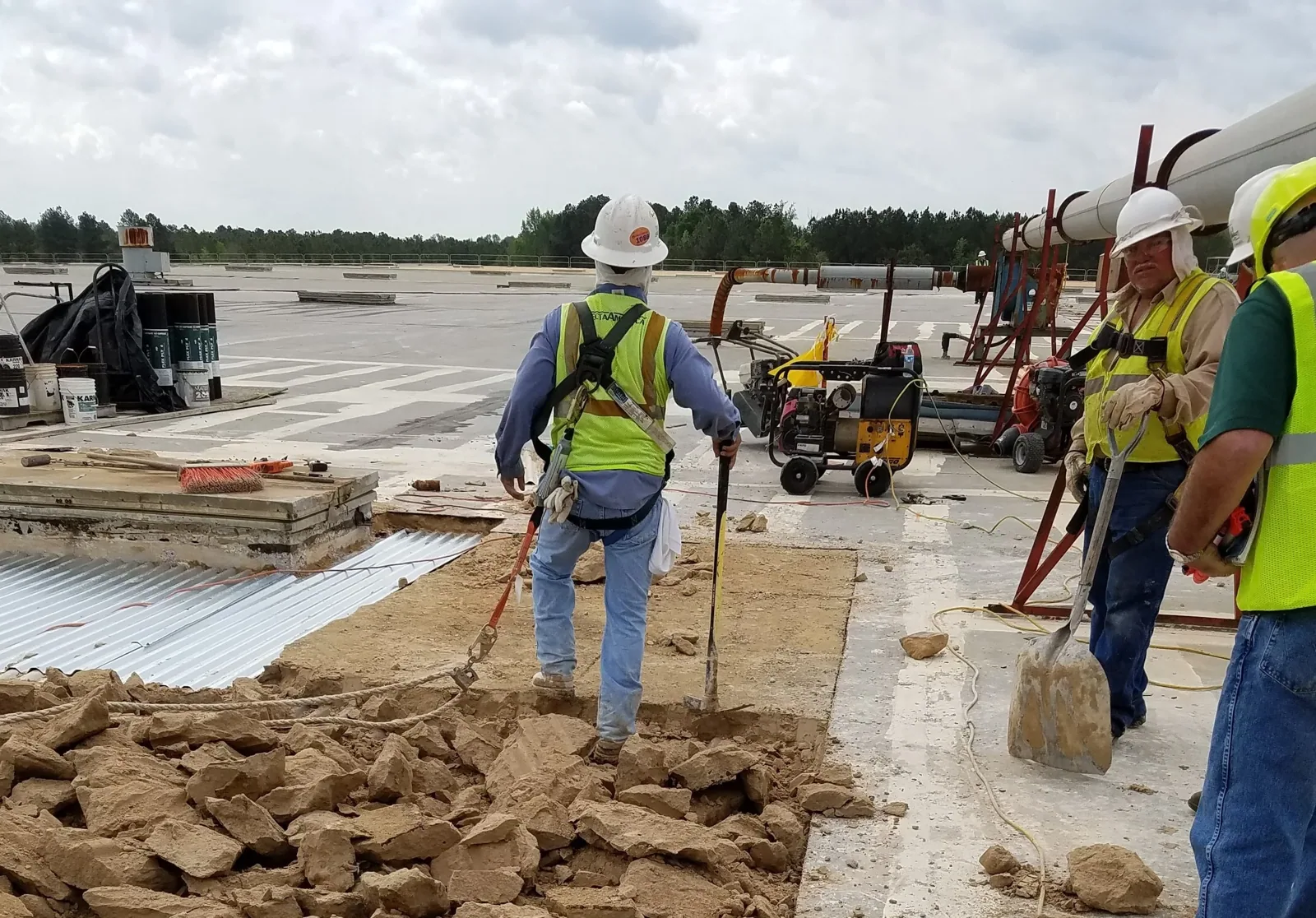

Coordinate a grocery roof review
Share roof plans, leak locations, cooler and exhaust details, store hours, and receiving rules. We will inspect the assembly and prepare a defined repair sequence. Call Commercial Roofers Escondido to arrange an inspection.
Call 555-555-5555 or email [email protected].