
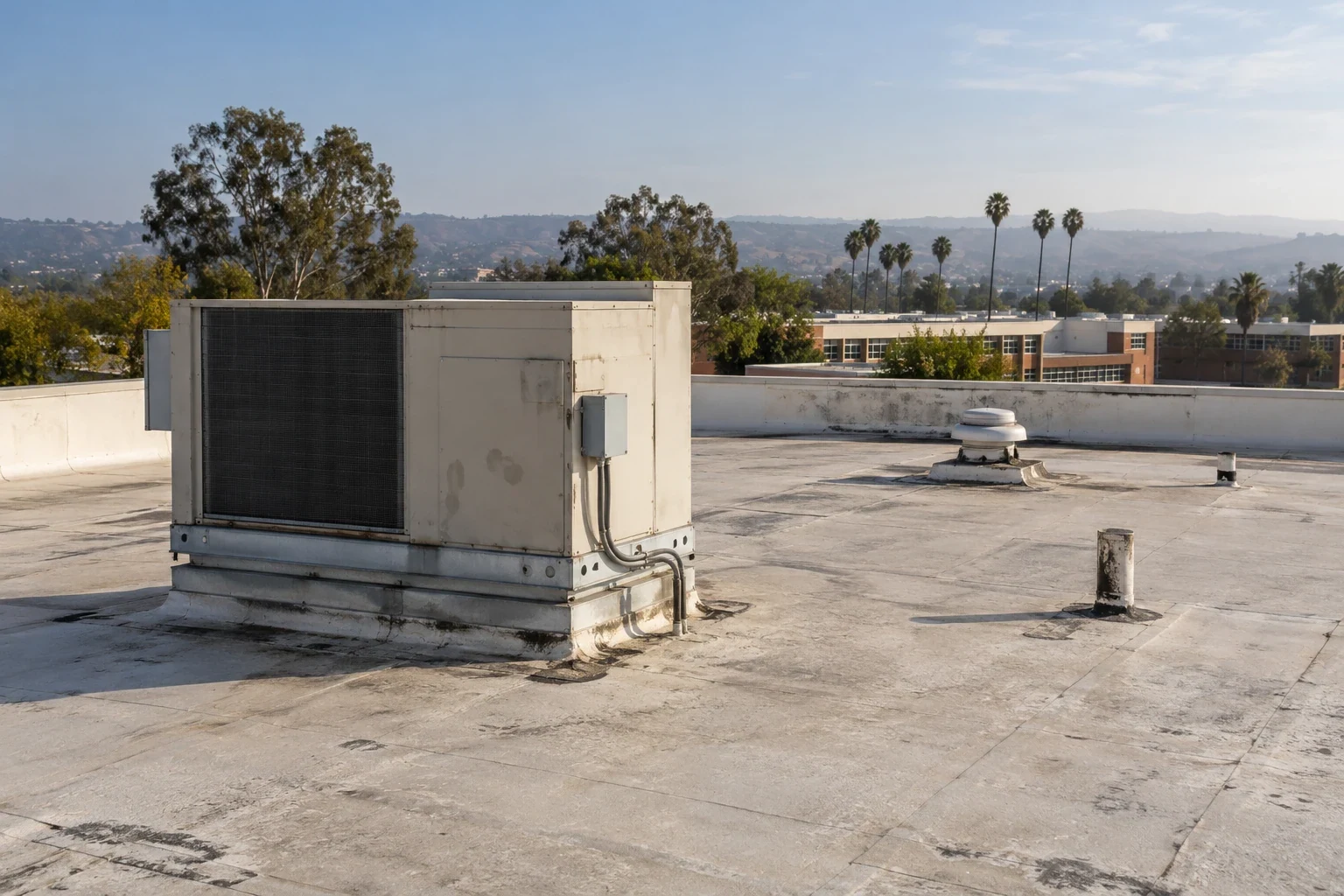
Government Building Roofing in Escondido, CA
Property Types We Roof · Escondido, CA

A leak over a public counter can turn routine service into a facilities issue. The response must protect occupants while keeping access predictable. Commercial Roofers Escondido reviews the roof assembly, public routes, drainage, and project documents before pricing work. Downtown Escondido and the I-15 and Felicita Road office-planning area are different local settings, so delivery and staging must be confirmed at the actual property. The City administers a 2026 Escondido Fire Code alongside the 2026 San Diego County Consolidated Fire Code. That identifies the fire-code edition; it does not establish the adopted building-code edition. The responsible permitting authority and agency procurement file determine which reviews and approvals apply to a municipal reroof. We define roof areas, repair limits, bid assumptions, and approval steps. The general contractor receives a scope that can be priced and scheduled, with public access and operating hours included from the start.
Public service and building access
Government properties may continue serving residents during construction. Identify counters, meeting rooms, public entrances, loading areas, accessible routes, and emergency exits before work begins. The facility representative should state when rooms are open, where visitors queue, and which paths must remain clear. Map crew access separately from public circulation. A temporary closure should have a notice method, approval contact, and reopening check.
Public meetings, elections, permit deadlines, and scheduled services can constrain noisy work. Ask the agency to provide known dates and hours. The roofing sequence should show each zone, deliveries, lift positions, and interior protection. Confirm whether staff can move equipment or records before a ceiling area is covered. Do not assume a city building follows a commercial tenant schedule. Public records and IT rooms may restrict photography or access. Ask the agency which areas crews can document and how records should be handled. If an opening sits above an occupied office, coordinate interior covers and inspection windows with the facilities contact. Keep visitor notices separate from crew instructions so each group receives clear routes and controls.
School facilities share some public-occupancy issues, but have their own calendars. A phased school roof sequence needs a classroom calendar and public-route plan, while house of worship roof work may protect public entries during scheduled services.
Bid quantities and agency decisions
Use the solicitation and issued drawings as the pricing basis. Confirm roof areas, existing materials, removal limits, specified system, alternates, schedule milestones, insurance documents, and submittal requirements. The proposal should separate base bid, allowances, unit prices, and optional work. State who supplies protection, moving rooftop equipment, security, and temporary access. A general description of roof replacement cannot replace project-specific quantities and details.
Identify approval authority for concealed deck damage, moisture findings, and changed conditions. The bid should show the notification process, documentation required, and cost method. Include anticipated inspection hold points and time for review. If procurement documents leave a detail unresolved, raise a question before the bid deadline. Do not assume verbal direction changes the contract. Keep clarifications in the agency file and circulate revisions to bidders or affected trades as its process requires. A timely written response prevents different assumptions from following the project into mobilization.
A roof condition inspection can support a scope narrative and quantity review. For broader work, a replacement scope should name insulation, cover board, membrane, flashing, drains, and edge details. A built-up assembly is one option only when the documents and building conditions support it.
Observed condition and work limits
Inspect the roof before finalizing repair quantities. Record seams, penetrations, curbs, parapets, drains, scuppers, and previous patches. Map interior leak reports to the roof area above, but keep staining and active water entry distinct. Surface review may not reveal concealed insulation or deck conditions. State what testing is included and where additional approval is required.
Localized failures may need repair while the remainder stays in service. Repeated leaks, widespread moisture, weak attachment, or deteriorated deck can change the scope. Explain the evidence for each option and price additions separately. The agency can compare repair, recover, and replacement without combining them into one open allowance. Keep temporary protection active until the permanent detail passes inspection.
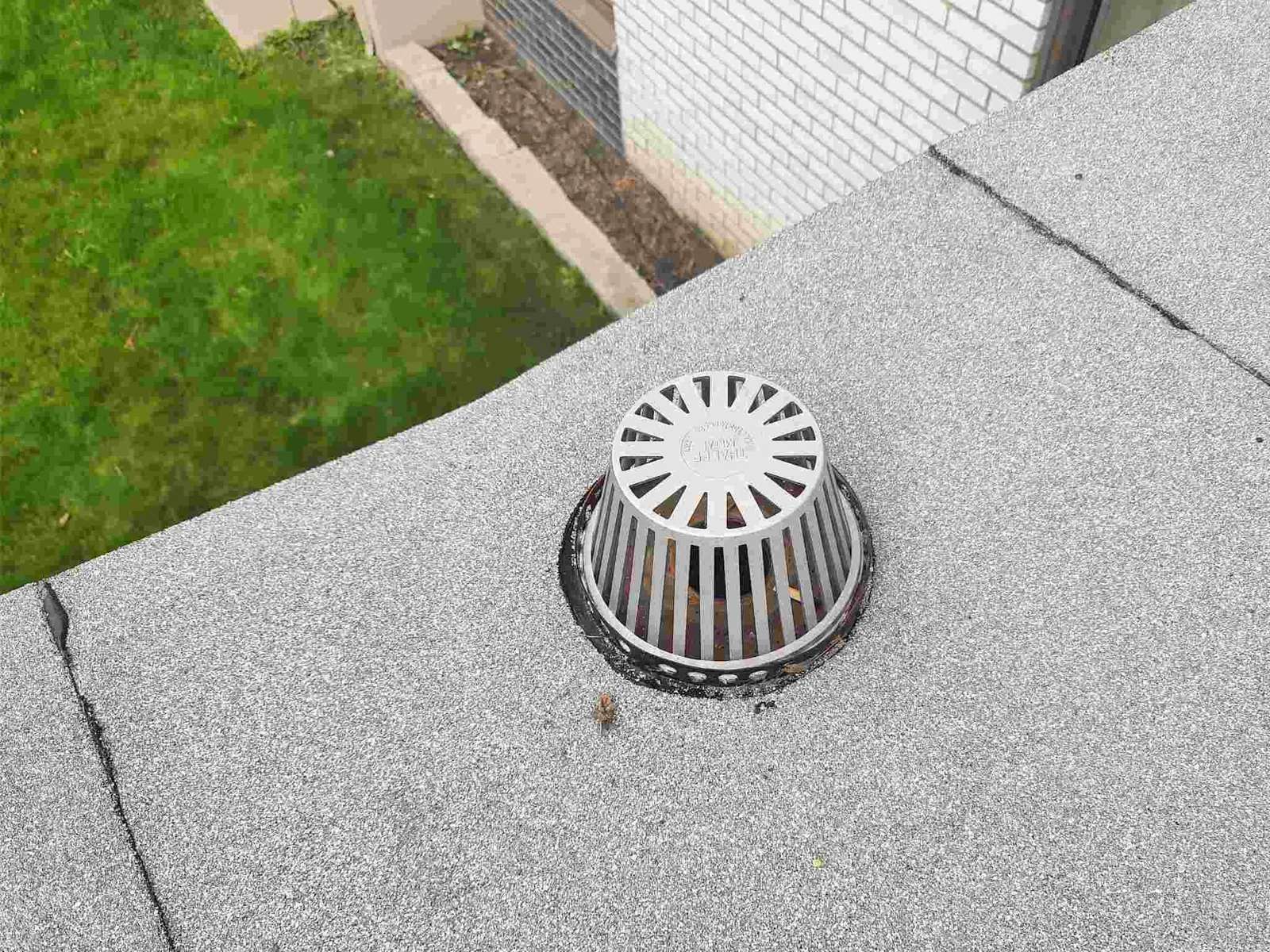
Plan drainage corrections with the same roof map. A drain and scupper review can identify blocked paths, drain-bowl details, overflow provisions, and transitions requiring coordination. A recover alternative should be offered only when the existing assembly, moisture condition, and contract requirements permit another layer.
Code review and site safety
Escondido administers a 2026 Fire Code alongside the 2026 San Diego County Consolidated Fire Code. Confirm the building, permit, inspection, and fire-review requirements that apply to this project with the responsible agency. Record written direction and align submittals with that review. The fire-code edition alone does not establish the adopted building-code edition.
A public facility needs a parcel-specific fire review before the project locks its roof details. Escondido's 2025 hazard map includes moderate, high, and very-high classifications in different portions of the city. Ignition-resistant standards apply to new construction in high and very-high zones. Confirm the project's parcel and permit scope with the authority having jurisdiction before applying that requirement to a reroof.
Set hot-work procedures, material storage, fire-watch responsibilities, exit access, and emergency contacts before crews mobilize. Keep public paths free of tools and debris. A changed safety condition may require a pause or new work window. Write that decision path into the sequence. The Downtown Escondido area has public streetscape elements; confirm current delivery and staging limits with the building representative.
Records, inspection, and closeout
Before award, collect roof plans, leak logs, previous repairs, permit contacts, agency access rules, and operating hours. Confirm how residents or staff will receive notices. Include after-hours work only when it is authorized and priced. The scope should describe weather protection, site cleanup, inspection requests, and the person empowered to approve changes.
During construction, retain dated photographs, daily reports, delivery records, submittal approvals, marked plans, and written change direction. Note each completed roof area and unresolved item. Closeout should provide product information, applicable warranties, inspection records, and maintenance instructions. A maintenance visit can help facilities staff track drains and flashings after handoff. Keep any post-project response window distinct from warranty terms.
Arrange a roof review with drawings, procurement dates, building hours, access rules, and inspection contacts available. We will document conditions and identify unresolved scope questions before pricing. That gives the agency a practical basis to compare bids and plan work without disrupting public services unexpectedly.
Frequently Asked Questions
Which code edition should a government reroof proposal cite?
Use the project documents and written direction from the responsible permitting agency. Escondido’s Fire Code page identifies its fire-code edition, not the adopted building-code edition. Confirm each applicable requirement before finalizing the assembly or permit schedule.
Can public service continue during roof replacement?
Often, when entrances, accessible routes, work hours, notices, and roof phases are agreed in advance. The agency should identify essential services and meeting dates. Some areas may need temporary restrictions while crews work overhead.
How should agencies compare roofing bids?
Compare quantities, removal limits, assembly, flashing, drainage, allowances, alternates, exclusions, schedule, submittals, and approval steps. Separate concealed-condition pricing from base work. That makes differences visible without assuming bids cover identical scope.
Who approves concealed repairs after tear-off?
Name the contract-authorized representative and documentation process. If crews expose damaged deck or wet insulation, pause at the approved limit, photograph it, and request written direction before expanding or covering the work.
What records belong in the facility closeout file?
Keep approved submittals, marked roof plans, dated photographs, inspection records, daily reports, authorized changes, product information, and applicable warranty documents. Include maintenance and roof-access instructions for the facilities team.
Define the Public-Facility Roofing Scope
Arrange a review with solicitation documents, roof drawings, access rules, operating hours, and permit contacts available. We will document the assembly and identify decisions that affect bid scope and timing.
Call 555-555-5555 or email [email protected].