
Commercial Roofing in Oceanside, CA
Service Areas · Escondido, CA

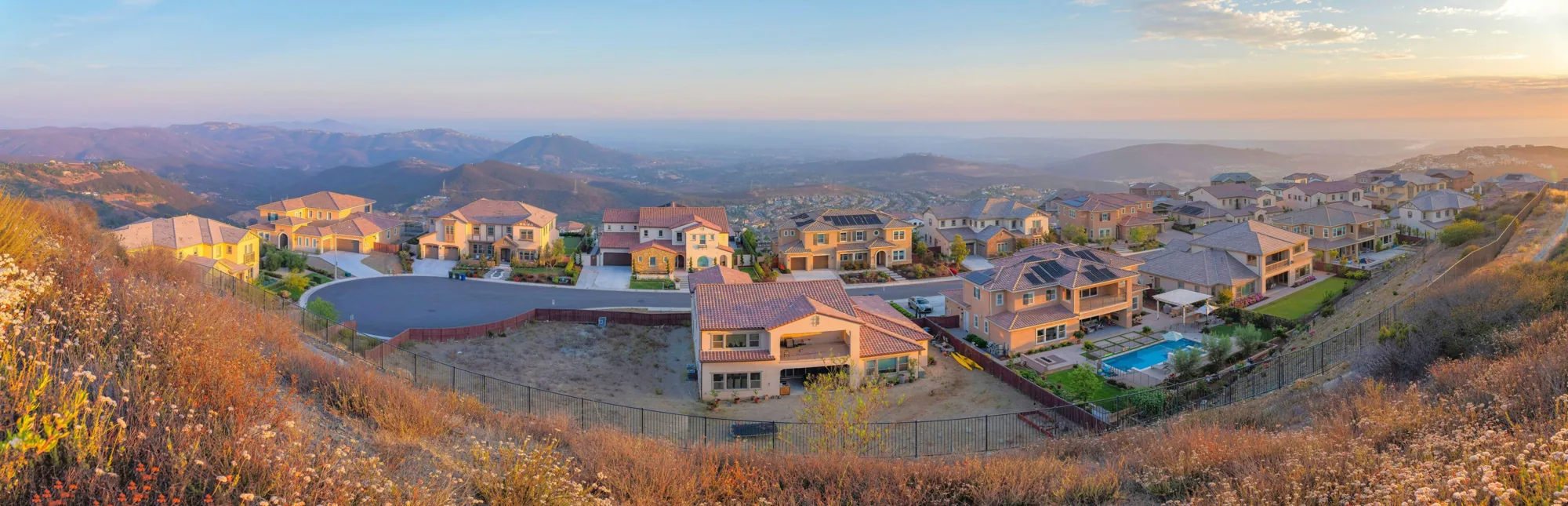
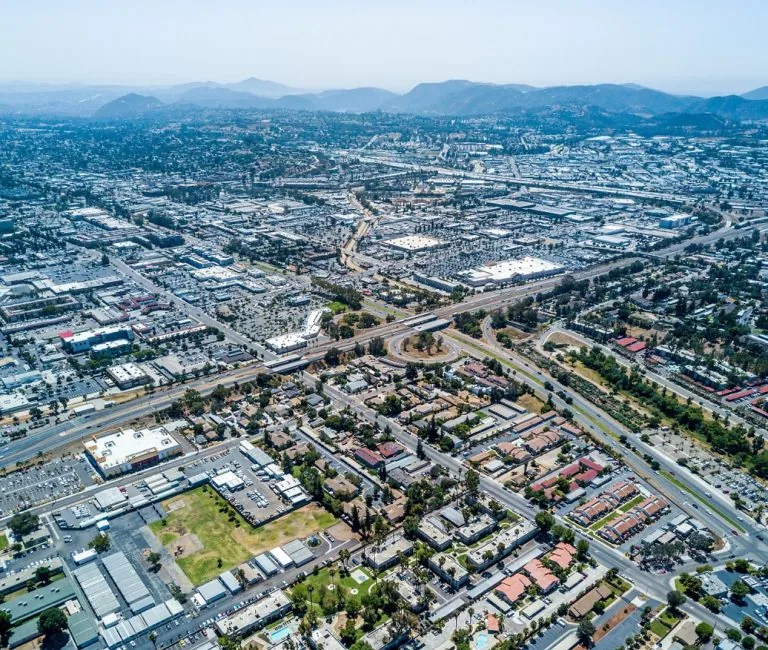
Three named roads connect Oceanside with neighboring jurisdictions. Interstate 5, State Route 76, and State Route 78 shape access planning, but the roof still needs a building-level inspection. Infill and redevelopment are directed toward Oceanside commercial corridors, while industrial areas remain primarily for industrial use. Those broad land-use rules do not establish a roof condition. We inspect the actual assembly, reported leak, edge details, drains, penetrations, and previous repairs. Then we record what can be priced now and what needs a test. Properties in Poway need roof records tied to their own assemblies, leak history, and access limits. Project access and scope must match Oceanside's city context.
Begin with the area where water appeared and mark it on a roof plan. Trace the drainage path uphill before assigning a repair boundary. A stain indoors does not identify the membrane defect by itself. We compare visible conditions with the reported timing, recent work, and building schedule. The resulting notes help the owner choose an inspection, temporary protection, bounded repair, or broader evaluation. No system is assumed from the city name.
Inspection Limits and Roof Records
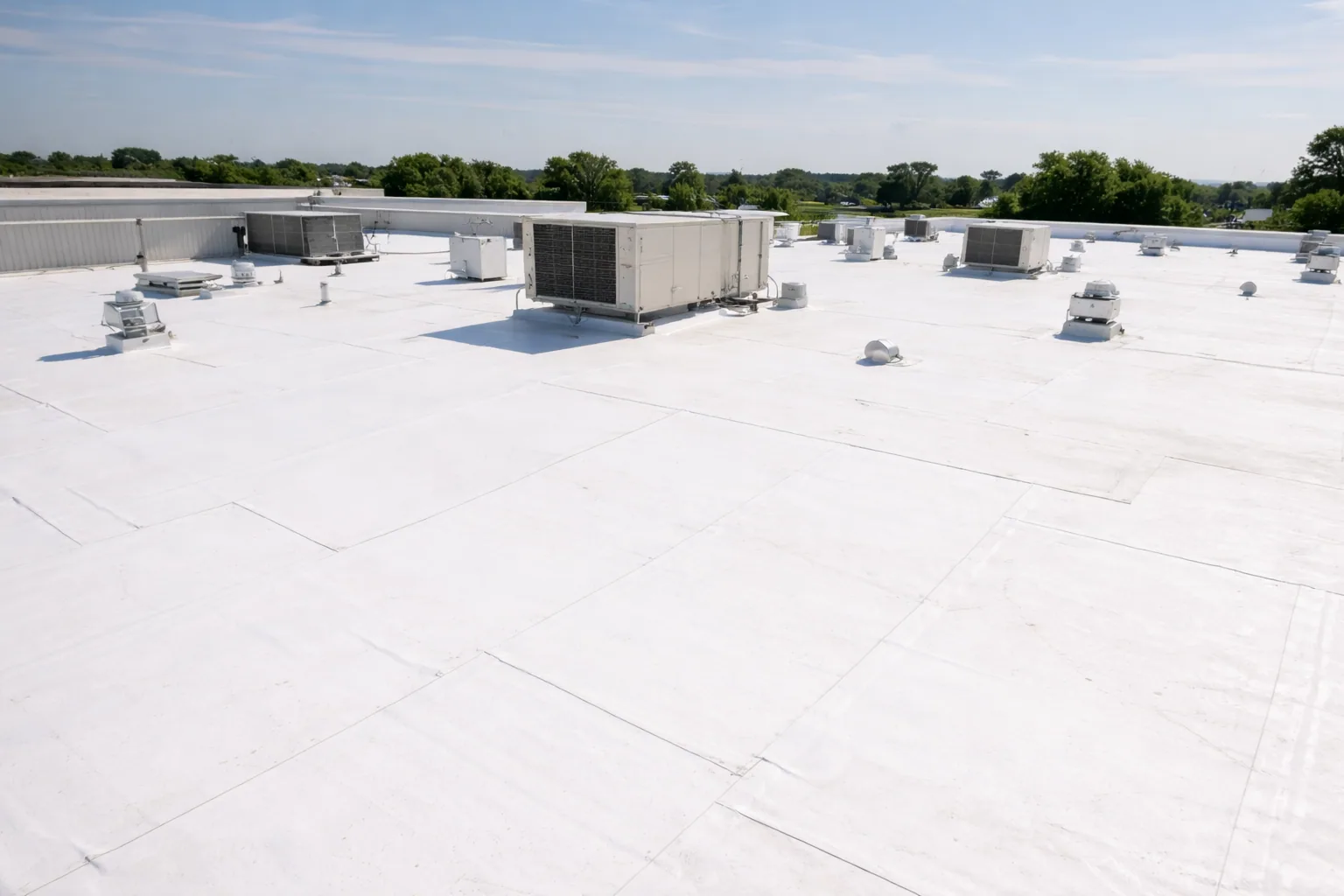
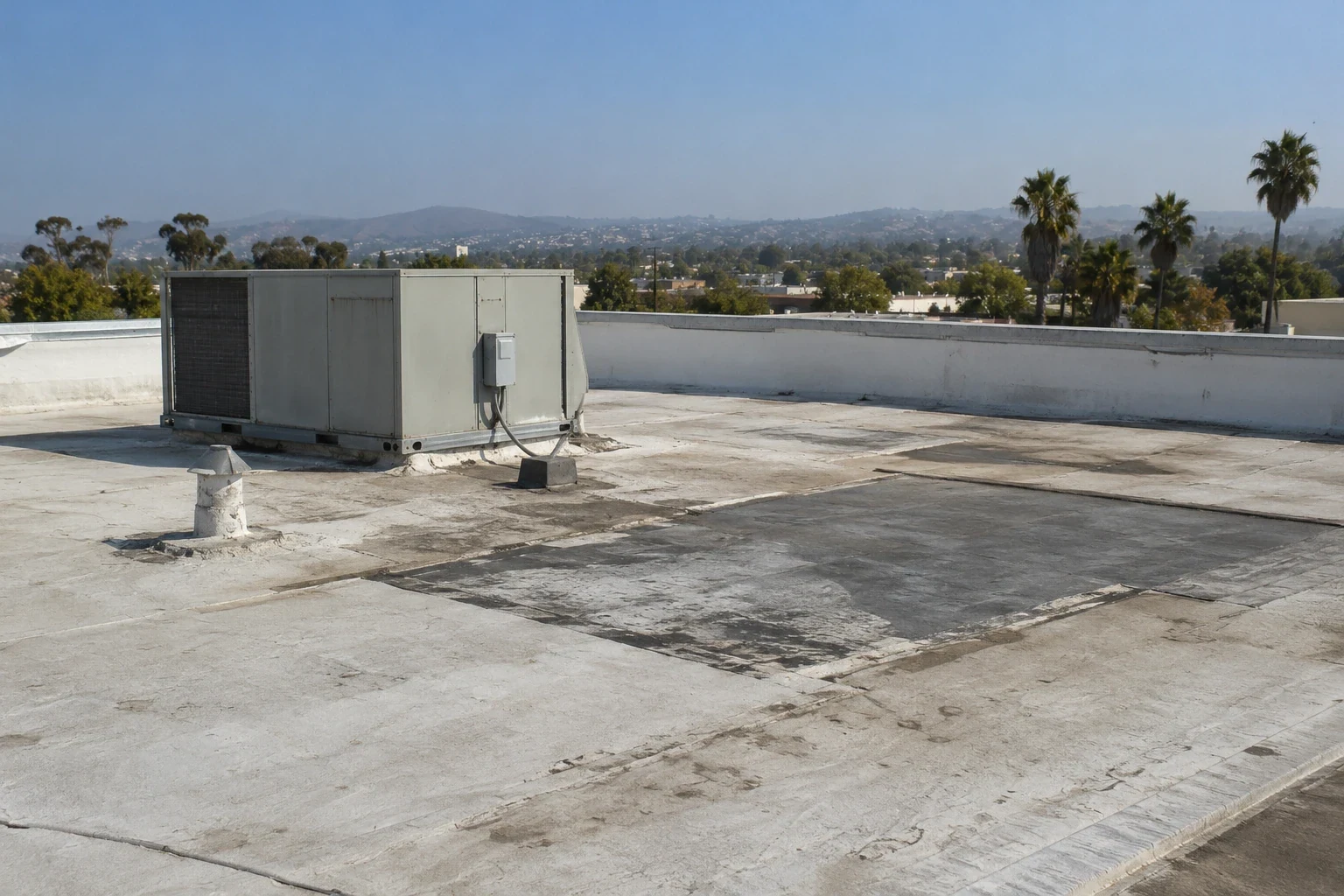
A useful first walk has a defined access plan and question. Confirm the roof hatch, escort, fall-protection rules, restricted rooms, and active work areas. Note the roof assembly when visible and identify any uncertain layers. Photograph seams, laps, penetrations, drains, flashings, and edge metal by roof zone. The commercial roof inspection can establish a condition baseline without promising concealed findings. Each note should identify its location and next action.
Separate a visible defect from a suspected condition. If moisture may extend beneath the membrane, record where testing would clarify the limit. Do not treat an interior stain as proof of roof-wide saturation. The owner can then compare a limited opening, non-destructive survey, or focused repair. For a nearby rural service district, Bonsall Country Town commercial roofing receives its own geographic and access review.
Drainage, Seams, and Transitions
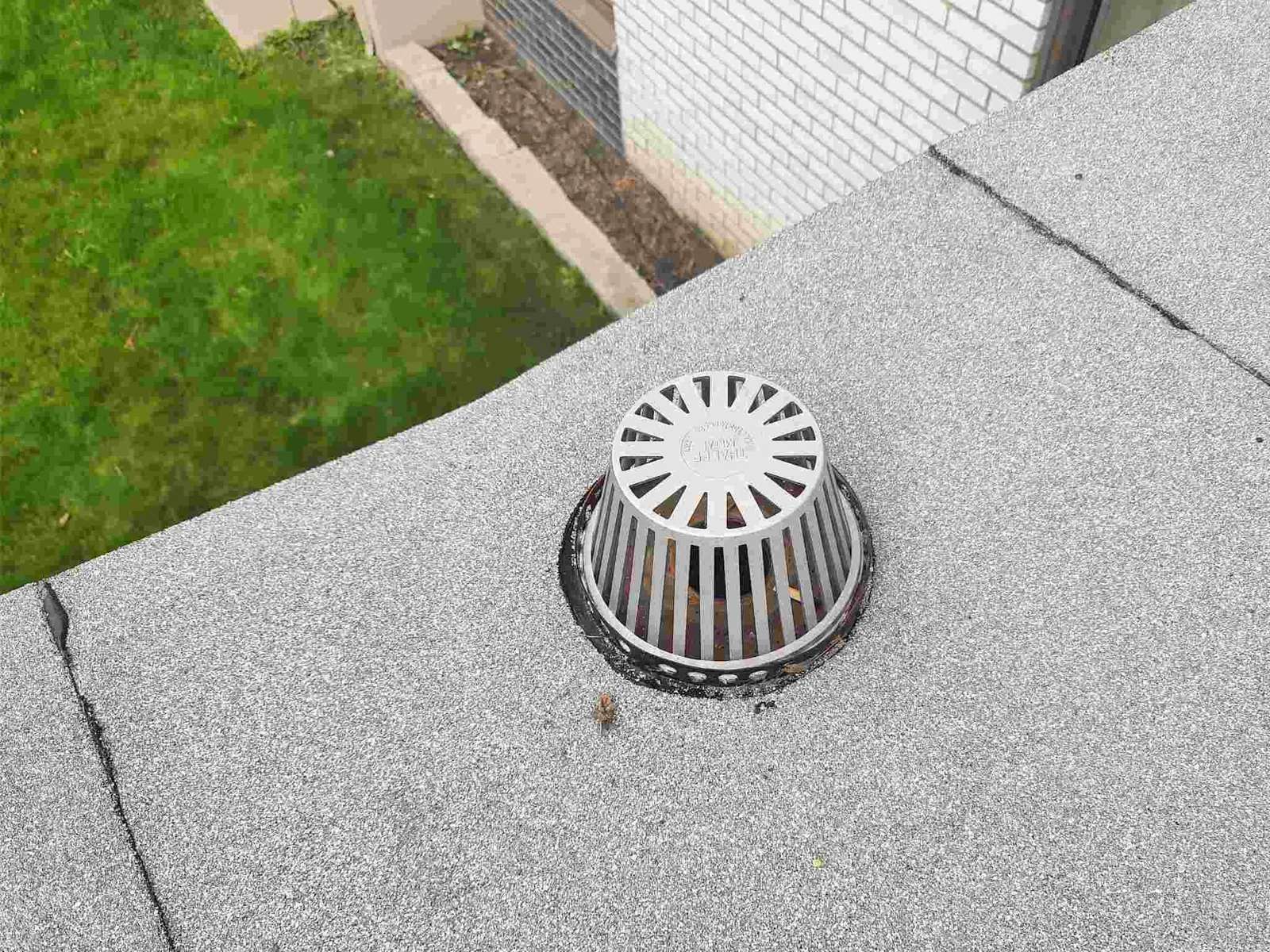
Water management depends on the roof's actual slope and outlets. Follow each drainage path from high area to drain or scupper. Look for debris, displaced strainers, open seams, damaged sealant, and ponding indicators. A drain can be clear at the surface while the surrounding membrane remains compromised. The drainage scope should state which outlet and adjacent details are included. Photograph each location before materials are moved.
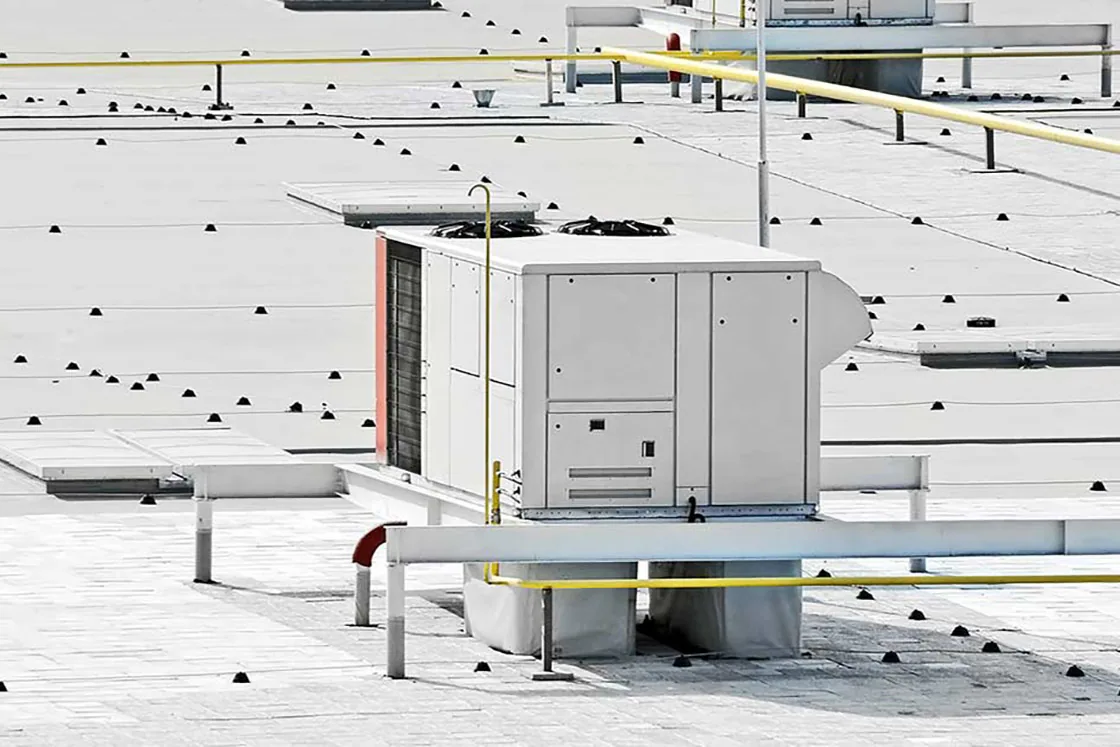
At walls and curbs, inspect the transition rather than only the field membrane. Check termination bars, counterflashing, corners, pitch pockets, and fastener lines. Equipment changes may have disturbed the original detail. The curb and support review can clarify trade responsibilities before a repair begins. Keep each penetration tied to a roof-zone reference so later pricing reflects the same work area.
Repair Scope by Confirmed Condition
A bounded seam opening or failed flashing can support a repair when nearby materials remain stable. The inspection should document the defect, repair limits, preparation, compatible materials, and closeout check. If water entry recurs at several points, compare those locations before expanding quantities. A commercial repair scope can distinguish isolated work from a broader correction. The estimate should separate confirmed work from allowances for concealed conditions.
Access and staging affect production. Note lift placement, loading restrictions, roof traffic, and the path for debris removal. Confirm whether work must pause for tenants, deliveries, or another contractor. A repair price should identify labor assumptions and any protection of occupied space. Those details make bids easier to compare and reduce changes after mobilization. The owner can approve a defined first phase while preserving the option to extend work if testing supports it.
Replacement and Recover Decisions
Replacement becomes a separate decision when repairs no longer address the documented condition. Review the existing assembly, moisture evidence, attachment, drainage, deck concerns, repair history, and project timing. A recover is appropriate only when existing layers and compatibility allow it. The replacement evaluation should describe removal, insulation, cover board, membrane, edge metal, drains, curbs, and disposal assumptions. A roof condition report can preserve findings for a later budget window.
Do not compare options by membrane name alone. Confirm substrate, attachment method, penetrations, warranty requirements, and access constraints. Where a roof contains multiple additions, keep each assembly and scope distinct. The written recommendation should state what evidence supports repair, recover, replacement, or monitoring. A property owner can then align capital timing with actual risk and operating needs, rather than treating a single leak as an automatic replacement trigger.
Weather Holds and Daily Closeout
Dry Santa Ana periods can bring warm or hot winds across Southern California. Escondido's red-flag periods commonly involve dry northeast winds. These regional facts support checking exposed edges and flashings after a reported event. They do not establish damage at an Oceanside property. Inspect the actual detail and photograph any movement before selecting a repair boundary.
Before opening a roof, identify the area that can be secured by shift end. Confirm the person responsible for temporary protection and the next weather check. Keep materials and tools clear of active access routes. A phased reroof sequence can define daily closeout when operations continue below. The schedule should include weather holds, inspection points, and who can authorize a change in scope.
Frequently Asked Questions
What should an Oceanside roof inspection include?
Start with access, leak history, and the roof assembly. Record seams, drains, penetrations, edges, flashings, and prior repairs by zone. State where testing may be needed before setting a final repair limit.
Can one roof leak require a full replacement?
A single leak does not settle that question. Compare the defect with moisture evidence, repair history, roof layers, drainage, and deck condition. Replacement needs a documented basis and defined scope.
How do you plan repairs around active operations?
Confirm work hours, escorts, staging, deliveries, and occupied areas first. Then define daily opening limits, temporary protection, and the person approving a schedule change.
When does roof testing help clarify a scope?
Testing can help when visible symptoms do not show the full affected area. Identify the roof zones, method, and access approval before including testing or concealed-condition allowances.
What information helps set project timing?
Provide roof plans, leak dates, prior repair records, access rules, and operating windows. These details help sequence inspection, pricing, approvals, and any weather-dependent work.
Arrange an Oceanside roof review
Share the roof plan, leak history, and available work windows. We can define access needs and the next scope decision.
Call 555-555-5555 or email [email protected].