
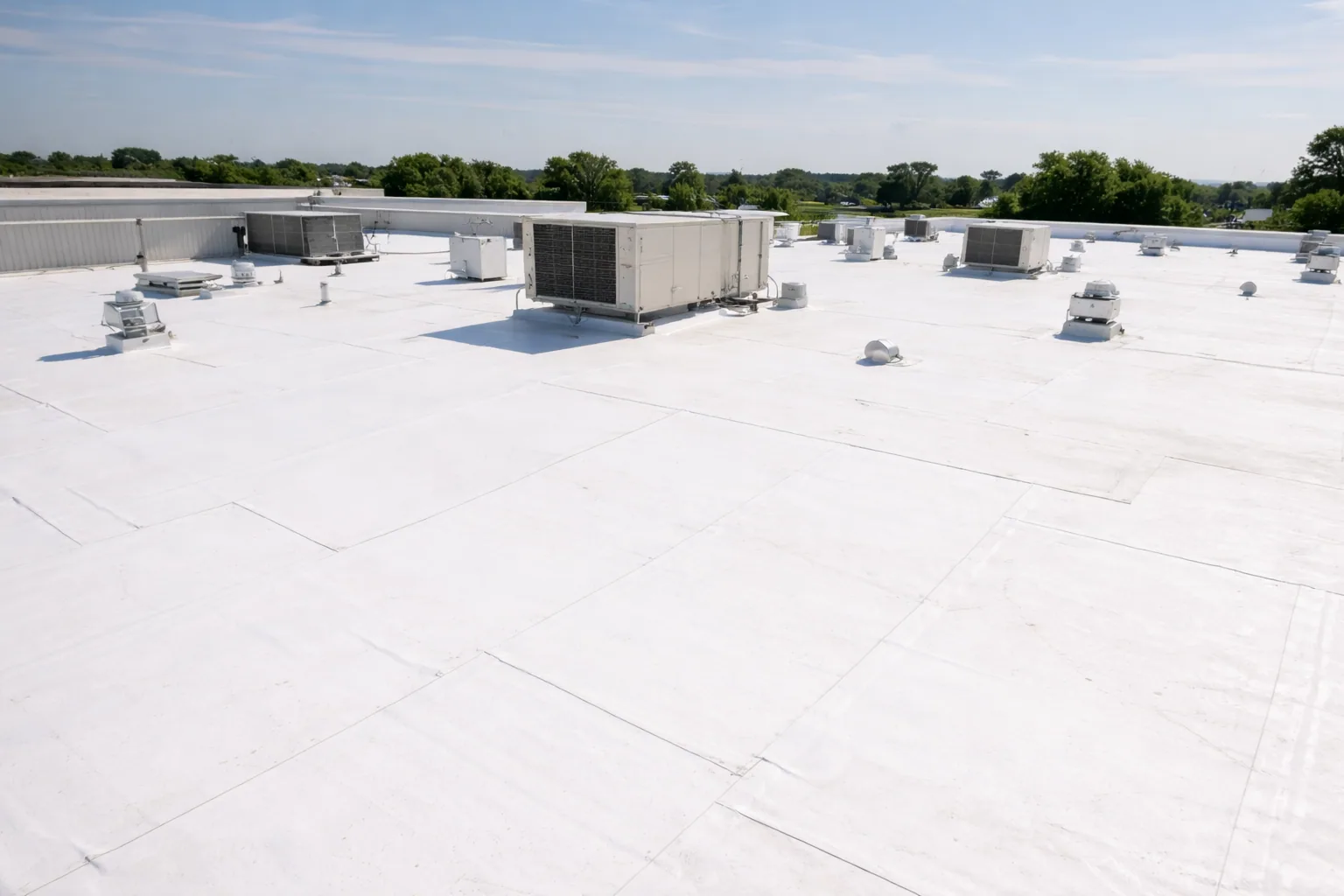
Commercial Roofing in Bonsall, CA
Service Areas · Escondido, CA
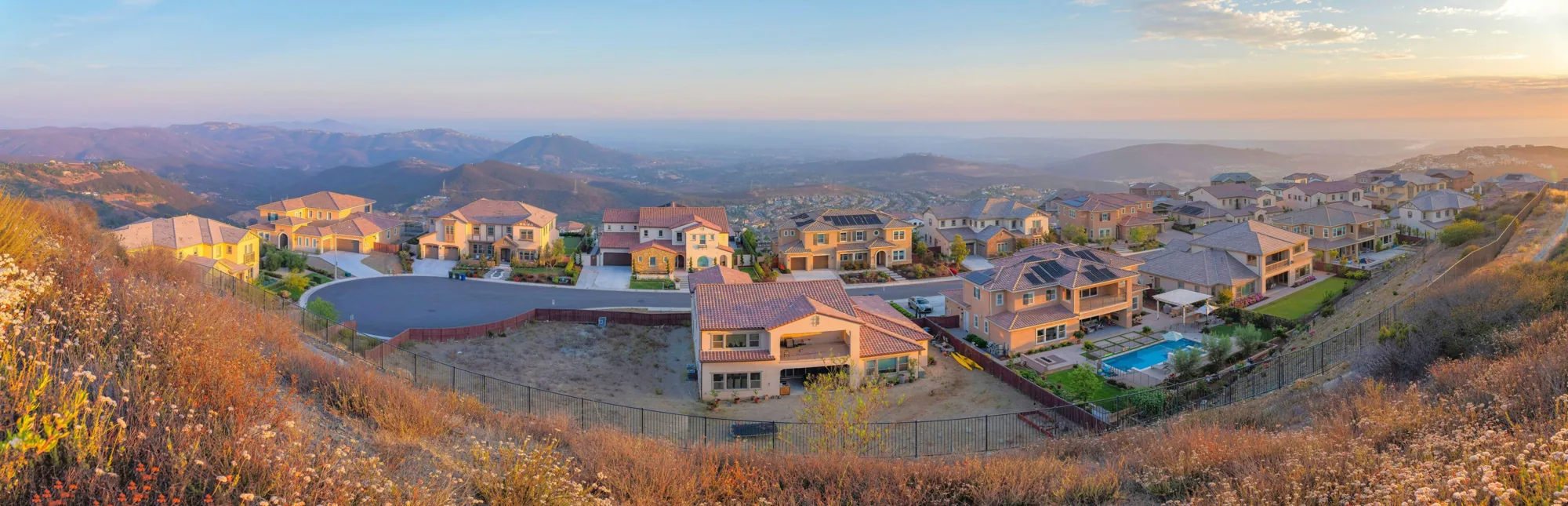
A roof repair in Bonsall begins with the exact area that can be reached and observed. Commercial activity near Mission Road, Olive Hill Road, and Highway 76 makes access planning part of the first roof visit. Bonsall's hills, valleys, drainage areas, estate lots, and agricultural uses form a broader setting, while the roof still needs a building-level inspection. We record actual slope, membrane, transitions, and drainage at the property, then tie each finding to a repair boundary. The owner can plan a lift, delivery, and work window against that measured scope. We can arrange an inspection and photo report before pricing repair work.
Define what the roof walk can establish
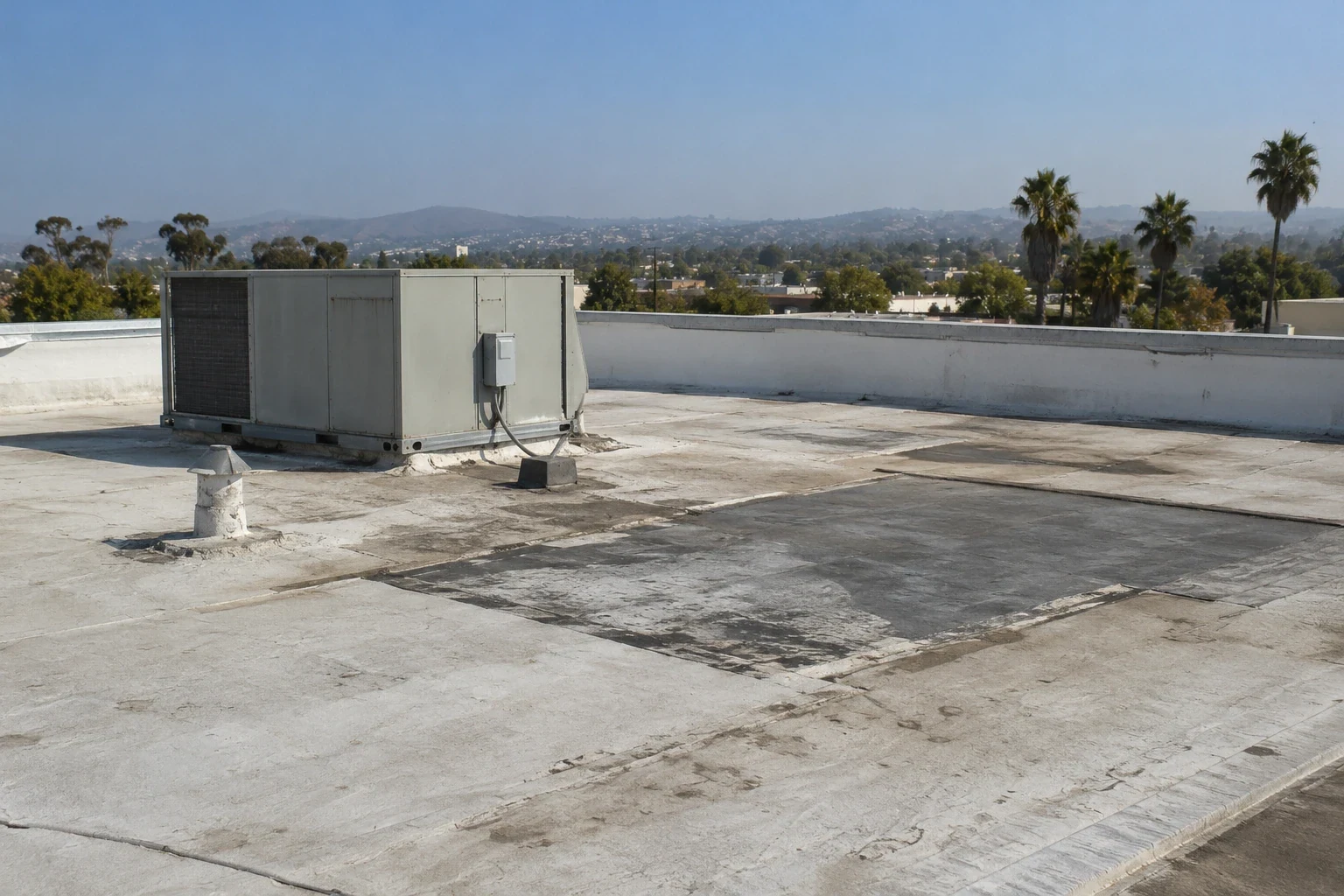
Confirm the building, roof access point, interior contact, and areas included before setting a visit. Ask for plans, repair records, leak logs, and any prior moisture testing. We compare those documents with the roof surface, seams, flashings, penetrations, edge metal, and drainage details we can reach. If a section is locked or unsafe to enter, we list that limit. A visible roof walk may identify a split lap or displaced metal. It cannot confirm every concealed layer without an approved opening.
Bonsall spans about 32.8 square miles in unincorporated northern San Diego County. Its wider setting includes hills, valleys, drainage areas, estate lots, and agricultural uses. At the building, we record actual slope, transitions, ponding, and material before defining what can be repaired. A condition report with dated photographs gives the owner a record tied to observed areas rather than a broad label.
Keep the service area grounded
Commercial activity near Mission Road, Olive Hill Road, and Highway 76 gives the service area a practical reference for scheduling a visit. The property contact confirms the gate, staging point, roof hatch, and any route through occupied space before crews arrive. If work needs a lift or material drop, confirm the location and hours before mobilization. A Fallbrook Downtown visit has a different district setting, while Bonsall work remains tied to its own access plan.
The valley and agricultural setting does not determine which assembly covers a commercial building. We identify the roof system from visible material, seams, fasteners, flashings, and available records, then mark any concealed condition that needs testing. If the building serves several operations or tenants, name the hours and spaces that cannot be disrupted. We can build an occupied-building sequence around the approved limits and keep roof work separate from interior access concerns.
Choose between a repair and a larger scope
A localized opening at a seam, penetration, or flashing may support a limited repair when adjacent material is stable. Repeated leaks or moisture across several roof areas call for a broader review. We document the location, likely water path, and repair boundary before recommending a system-wide project. If insulation or deck condition is concealed, testing may be needed. That question should be listed separately from a confirmed repair quantity, so the owner can approve one step without accepting an undefined scope.
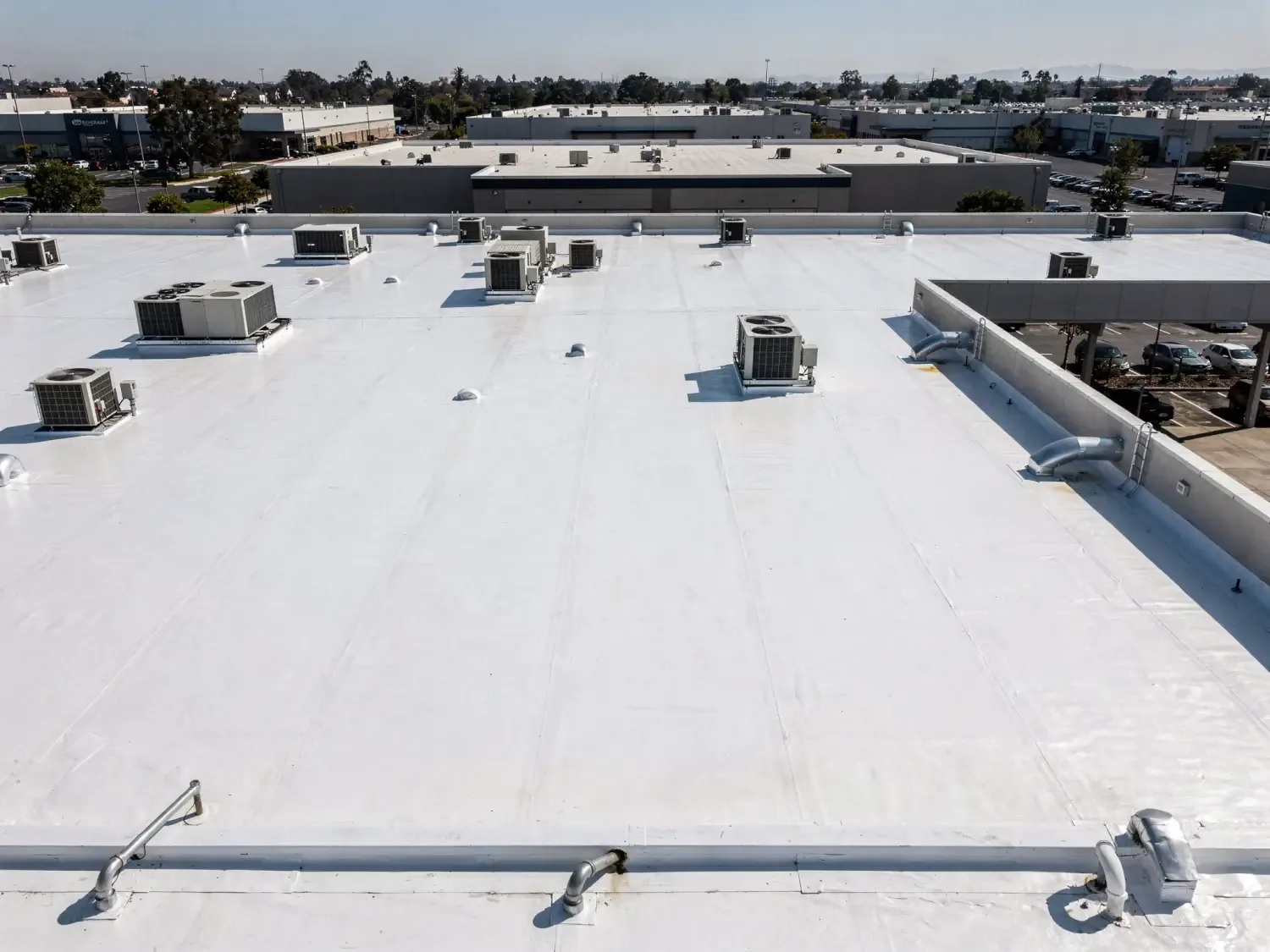
For a repair, define preparation, compatible materials, tie-ins, and the check after work. A commercial repair scope should state both included details and exclusions. A coating may help only when the existing surface and moisture conditions support that system. A recover needs a review of existing layers, attachment, drainage, and code limits. If those checks point toward broader work, compare them with a replacement proposal that identifies insulation, perimeter details, penetrations, and disposal.
Coordinate the work window
Cost and schedule change with roof access, material lead time, the number of details, and any interior protection or equipment coordination. For active water entry, give intake the affected area and roof-access conditions, then confirm current availability before setting a visit. A permanent scope still depends on safe access and approval of the work plan. Before a repair begins, decide who can close off the area below, who can authorize a test opening, and how the building contact will receive updates. Those details reduce avoidable pauses once the crew is on site.
The Bonsall area includes drainage areas within its broader terrain. On the roof, we check the actual path to drains or outlets and note debris, ponding, and low points. If runoff enters a valley or gathers at a transition, record the observation with a photograph and roof-zone label. For larger planning questions, drainage corrections may be priced as a distinct scope. We compare that work with any seam or flashing repairs instead of burying separate causes in one allowance.
For a site with several roof elevations, keep each section on its own sketch. Mark where a low-slope area meets a pitched edge, where a wall turns, and where a penetration interrupts the field membrane. Those transitions often define the repair labor and the material tie-in. Record the length and condition only after measuring accessible areas. A budget allowance can cover an unresolved quantity, but the proposal should state how it will be reconciled before work proceeds. That is especially useful when a building contact needs to coordinate approval with an owner who is not present during the inspection.
Leave a record the next manager can use
The closeout should show the work area, the repair completed, and any item left open. Keep before-and-after photographs with the approved scope and note whether the result was checked from the roof or an interior location. A repair can close a documented defect without resolving unrelated questions elsewhere on the assembly. If testing is still needed, assign an approval contact and a follow-up date. The next budget review can then distinguish completed work from a recommendation that was deferred.
Commercial activity near Mission Road, Olive Hill Road, and Highway 76 is distinct from Escondido's Research and Technology Center employment area. We keep each roof finding tied to the correct property's name, plan, and photographs so a later manager can follow the work history. Call Commercial Roofers Escondido with the Bonsall property location, reported leak area, available plans, and access contact. For a multi-level roof, sketch which drains serve each area, where materials change, and which transitions need a ladder or lift for inspection. We can inspect the roof, prepare a repair-versus-capital comparison, and set the next step around your budget window. Owners coordinating properties near Carlsbad can keep those findings in separate site files.
Frequently Asked Questions
Does the Bonsall area description tell you what roof system is on my building?
No. It describes land uses and the broad commercial center, not a particular roof. We identify visible materials from the site and records, then note any concealed assembly that needs testing.
What access details matter before an inspection?
The roof hatch, staging point, occupied areas, gate contact, and any lift route affect the visit. Share those limits with the leak history and plans so we can define the walk and any needed interior coordination.
Can a small leak be priced without testing?
A visible defect may support a bounded repair. If water has reached concealed insulation or the deck, the scope may need an approved opening before quantities are set. We separate confirmed work from that investigation.
How are temporary protection and permanent repair scoped?
Contact intake with the active leak, building access, and interior conditions to confirm availability for an assessment. If we visit, temporary water control is documented separately; a lasting repair is scoped after inspection, materials, and approval.
How should a repair be closed out?
Keep the approved scope with dated photographs and a note of the repaired roof zone. We identify follow-up items that remain open so a new manager can see what was completed and what still needs review.

Set a Bonsall roof inspection
Share the building location, roof records, leak notes, and access contact. Call Commercial Roofers Escondido to arrange a field review and define the repair scope.
Call 555-555-5555 or email [email protected].