
Heat and UV Roof Repair in Escondido, CA
Roof Damage Repair · Escondido, CA
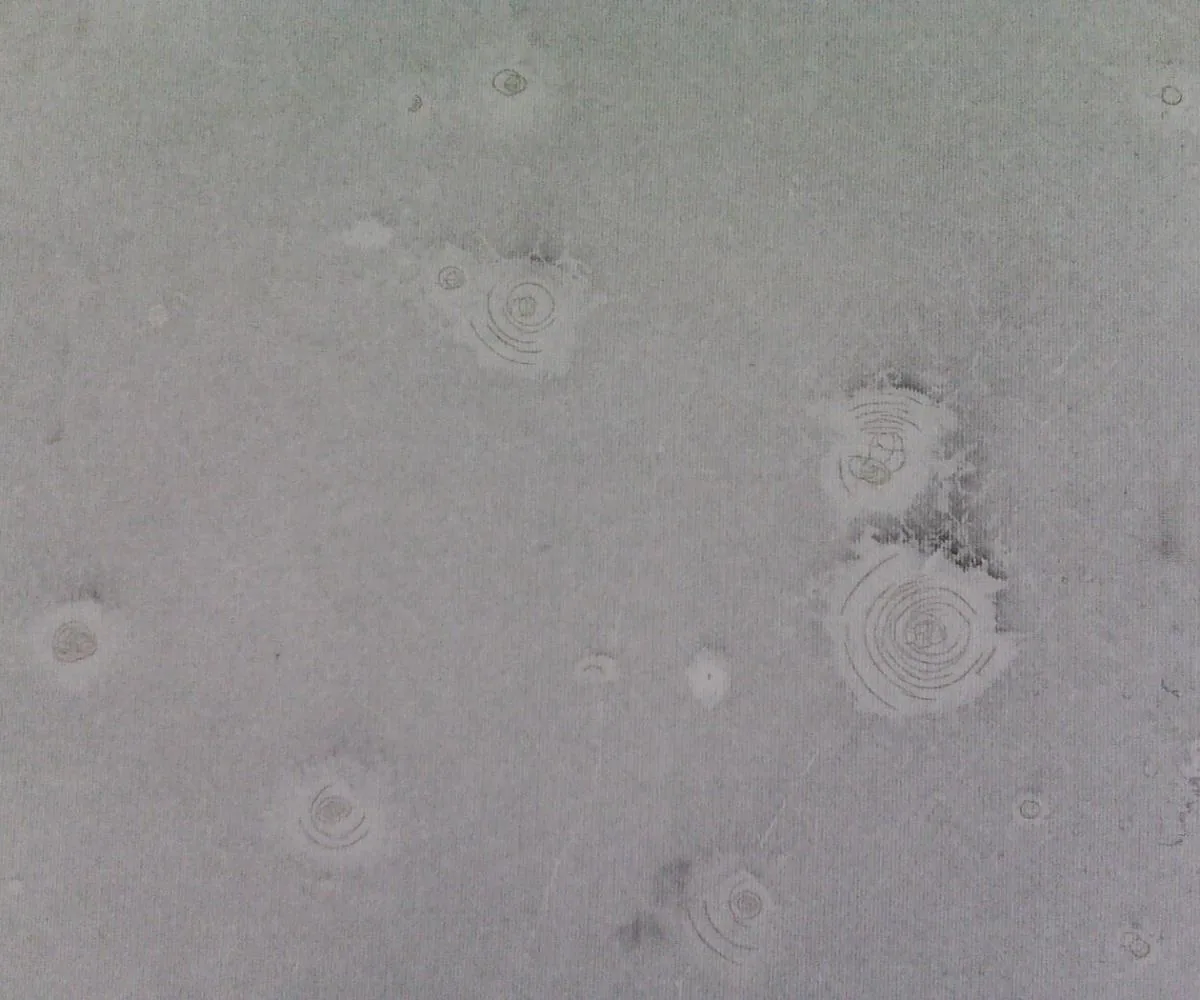
A chalked coating or brittle seam can change the next repair choice. The National Weather Service describes Southern California Santa Ana conditions as dry winds that can be warm or hot and move across the region through mountain gaps. Roof surfaces also receive ordinary solar exposure between storms. We inspect membrane condition, seams, flashings, edges, and drainage before deciding whether a local repair or broader restoration fits. A general contractor needs to know which defects are active and which reflect surface aging. We document the roof assembly, access, and work boundary. That helps the owner compare a patch, coating, or replacement without assuming the entire roof has the same condition. The East Valley Parkway Commercial Area plan supports office and professional uses, rehabilitation of commercial centers, and access consolidation to improve circulation. At each property, operating needs shape timing; observed material condition sets the scope.
Read the membrane surface
We look for exposed reinforcement, surface cracking, shrinkage, blisters, loss of coating, and open field seams. A faded color alone does not show whether a membrane remains serviceable. We test the surface and inspect transitions where heat and movement meet. The report marks any area with loose granules, powder, or failed adhesion. If the membrane is sound beneath a worn top coat, a restoration option may remain. If the sheet is brittle or the substrate is wet, coating over the condition can hide the problem.
Dry northeast winds typically accompany local red-flag periods, when wildfire can spread more readily. Wind can carry debris and increase stress at exposed edges during an event. We inspect perimeter metal and terminations after those conditions, then record material movement separately from general aging. A wind damage review can document lifted details if they are present. This distinction matters to the project team. One roof may have local edge repair needs while its field membrane remains suitable for other work.
Check the assembly below
Heat-related surface wear does not reveal what is happening below the sheet. We inspect seams, penetrations, insulation transitions, and the deck where access permits. Moisture testing can help define a repair boundary if the roof shows blisters, soft areas, or interior symptoms. We note the test method and limits. If a controlled opening is needed, the owner approves its location before material is removed. The finding then separates surface aging from concealed assembly damage.
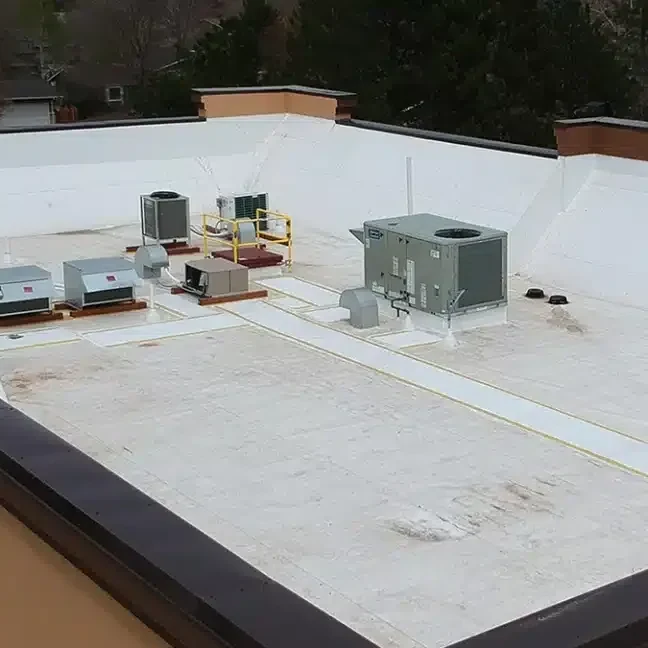
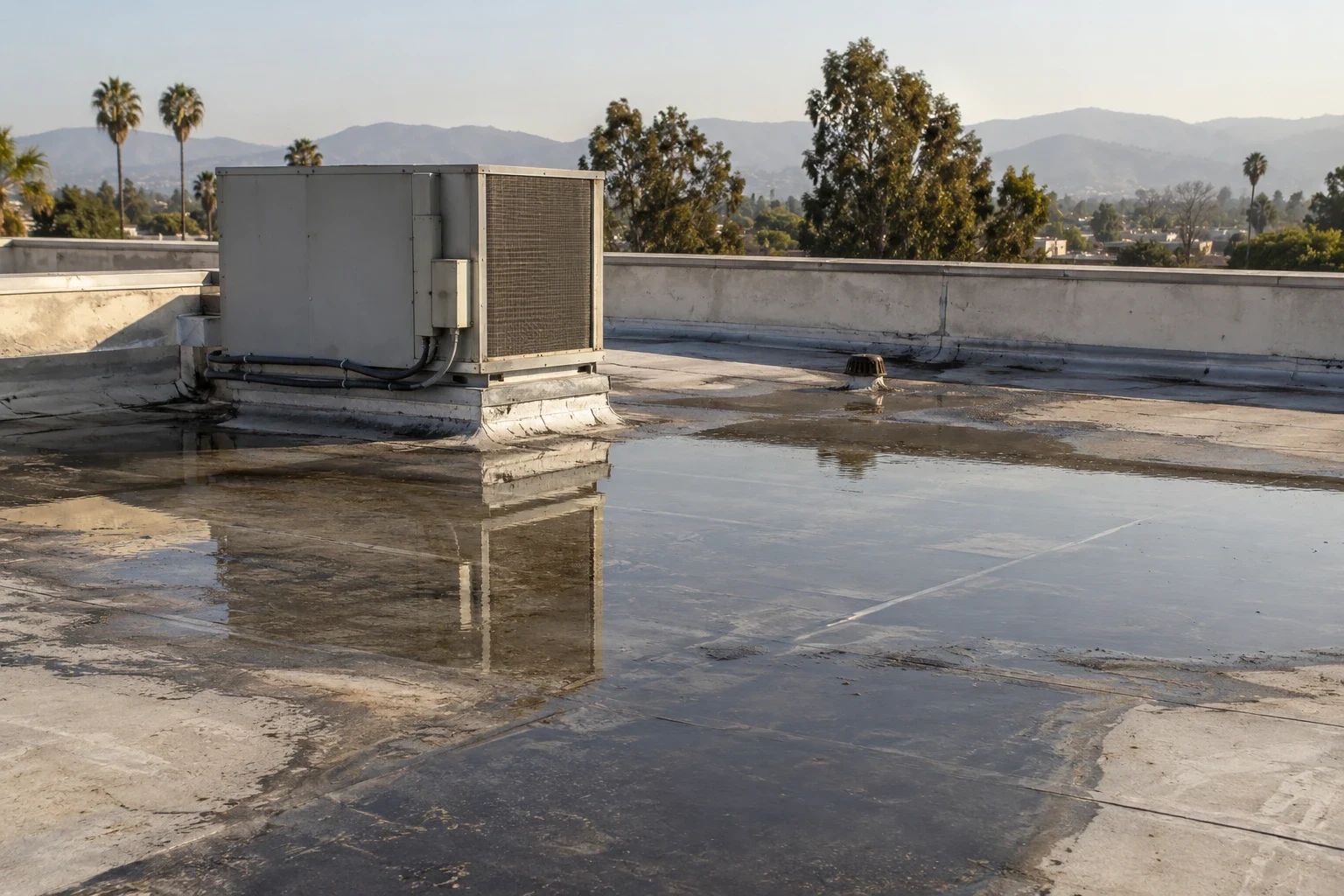
An active facility can depend on equipment access and planned shutdown windows. We ask the site contact about rooftop service routes and operating limits before staging repair work. If a curb seal has hardened near a mechanical unit, it receives its own detail assessment. The flashing repair scope addresses wall and equipment transitions. A roof with retained water also needs a drainage review before coating options are considered.
We compare brittle material with similar areas under different shade and equipment conditions. That helps determine whether deterioration follows the whole assembly or a limited exposure. A repair may need to extend around a roof opening where maintenance traffic concentrates. If several zones show the same loss of flexibility, we record the pattern and identify a larger sample area for review. The owner can then decide whether additional testing belongs in the current budget.
Compare repair and restoration
A localized patch may fit where damage has a clear edge and the surrounding membrane remains sound. A coating may renew a compatible surface when seams, flashings, and drainage are ready. Replacement becomes relevant when deterioration is widespread, moisture affects multiple areas, or repairs cannot restore reliable performance. We explain the observations behind each option. The owner can compare disruption, access, and timing against the building’s capital plan.
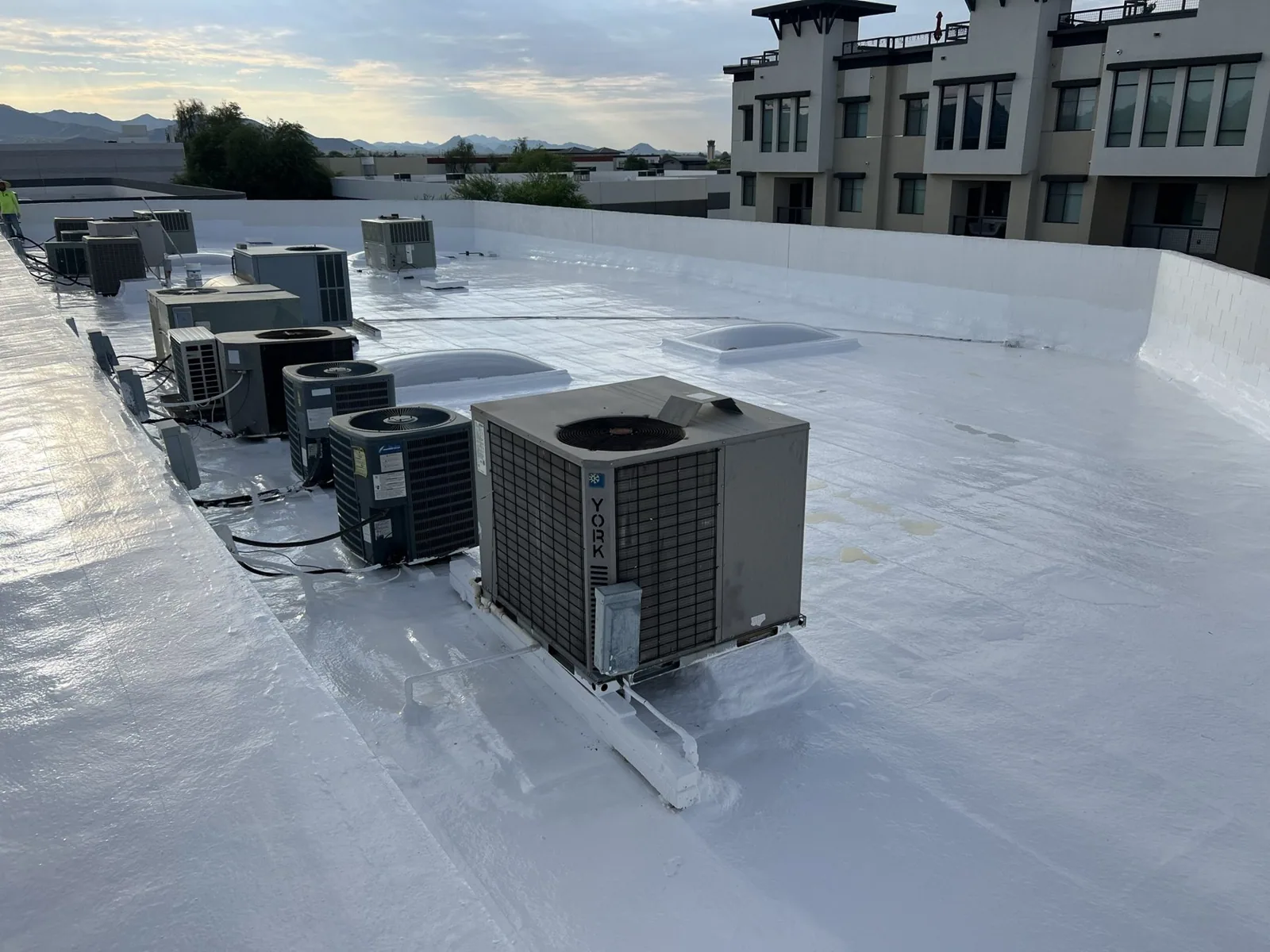
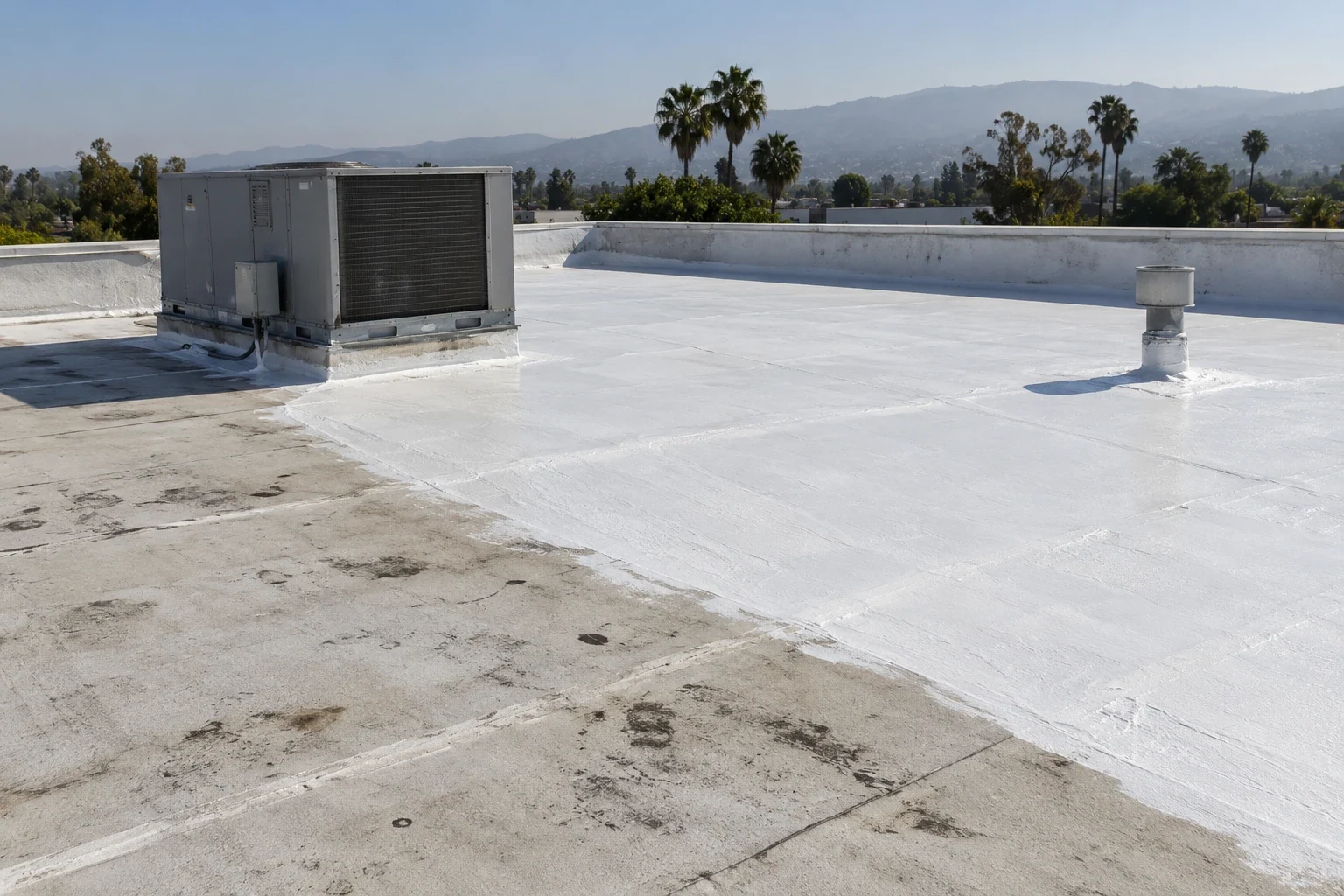
Coating selection follows exposure, surface preparation, existing material, and moisture conditions. Silicone and acrylic products have different water exposure limits. Neither can correct an unstable substrate or a failed slope. The silicone coating system may suit some assemblies, while acrylic coating work has different service conditions. We identify the preparation and film requirements for the selected material. If those requirements cannot be met at the site, the scope should say so before the crew mobilizes.
Set preparation and timing
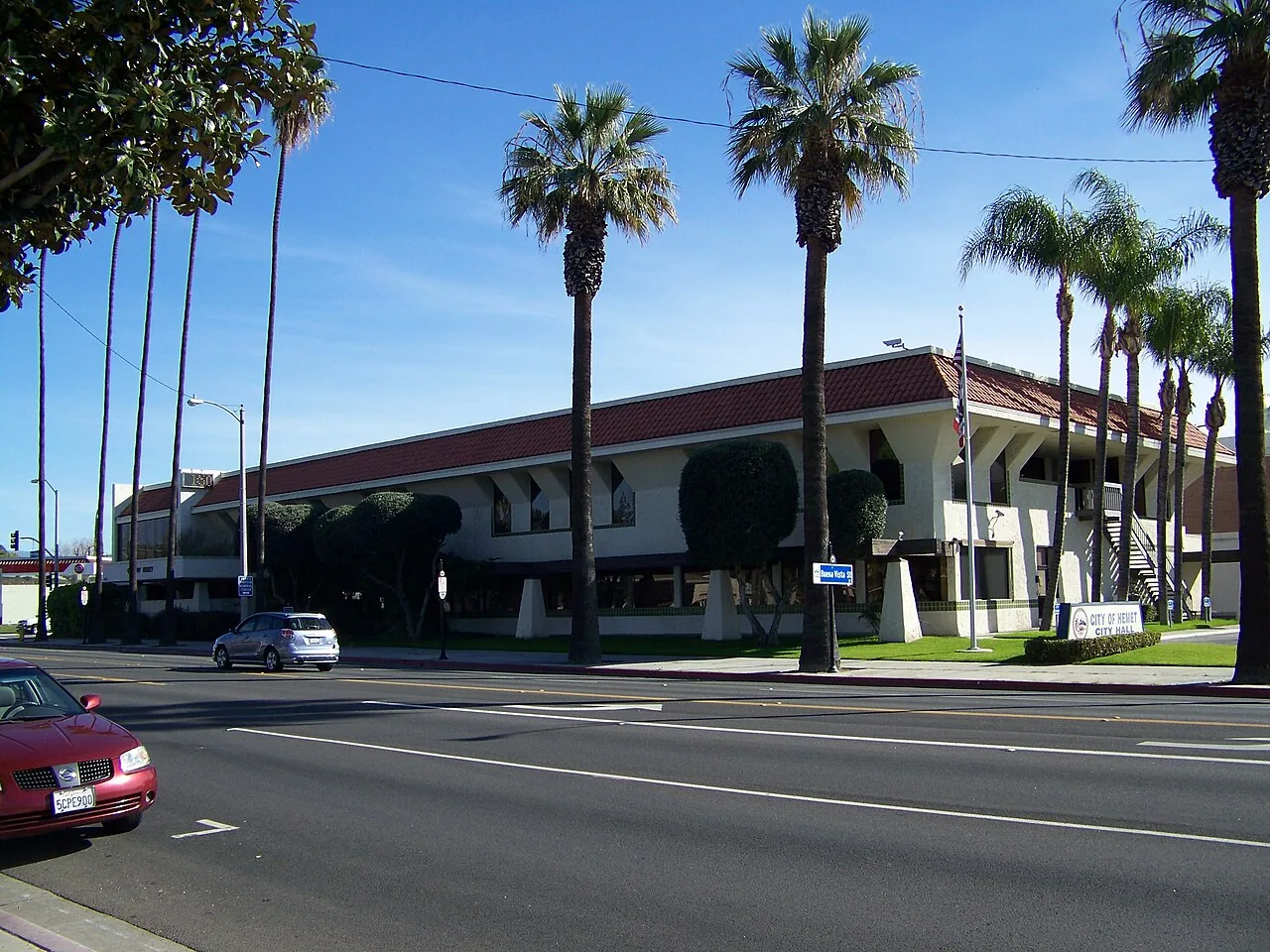
Surface repairs need clean, dry material and a defined weather window. We identify pressure washing, scraping, primer, patch work, cure time, and protection of nearby equipment. The schedule includes roof access and any tenant notification. City records put completion of Grand Avenue Vision Phase I in 2022 and Phase II in June 2025; the corridor work includes wider sidewalks, diagonal parking, and traffic-calming roundabouts. Downtown Escondido includes retail, office, visitor-serving, and residential uses; property staff can set the lift position and loading rules for its own roof project.
Before lift setup, ask facilities to identify equipment that cannot be interrupted and the hours when rooftop service access is released. Put those directions on the day plan so repair sequencing matches the building’s actual operating limits. A general contractor receives a sequence for preparation, application, inspection, and closeout. If another trade must cross the roof, we identify when the surface is ready for foot traffic and what protection applies. A clear handoff prevents fresh work from being damaged by later access.
Record the next inspection point
After a patch or coating, we document coverage, repaired seams, flashing transitions, and any excluded areas. The closeout states when the material can be exposed or walked on, based on the product requirements. Photos identify the roof zones. The owner receives a record of preparation and applied work, not a broad claim that heat exposure has ended. That distinction helps the next maintenance review compare conditions over time. The closeout also notes any rooftop route that should remain protected after the repair. We can attach the marked roof plan to the final scope.
If aging is widespread, we can map repairable zones and identify where a capital review is warranted. The restoration option can be priced separately from local repairs. A capital plan can then use condition and timing to structure future work. Bring roof records, previous coating data, access rules, and current leak locations. We can arrange an inspection in Escondido and define a scope the project team can schedule.
Frequently Asked Questions
Does a faded roof mean the membrane has failed?
No. Color change is one surface observation. We inspect seams, transitions, adhesion, and the assembly beneath before recommending repair, coating, or replacement. The report separates cosmetic wear from defects that affect water control.
Can a coating fix heat-related roof damage?
A coating may protect a suitable existing surface after preparation. It cannot stabilize wet insulation, open seams, or correct a low area by itself. We verify those conditions first and list preparation in the scope.
How do you decide between patching and restoration?
We compare the number and distribution of defects, membrane condition, moisture findings, and repair history. A local problem can support patching. Broad but stable wear may support restoration. The recommendation follows the observed assembly.
Will rooftop equipment need to be shut down?
That depends on the equipment and work location. We identify clearances, service routes, and any shutdown requested by the owner. The schedule assigns access windows and keeps other trades away from fresh repairs.
What should we provide before the roof walk?
Share the roof plan, membrane or coating records, leak locations, equipment schedule, and site access rules. We can then focus the inspection and prepare a scoped recommendation. Call to set an inspection time.
Review heat-aged roof areas
Bring roof and coating records, leak locations, roof access rules, and upcoming equipment work. We will inspect the assembly and compare repair, restoration, and replacement boundaries. Call Commercial Roofers Escondido to arrange a review.
Call 555-555-5555 or email [email protected].