
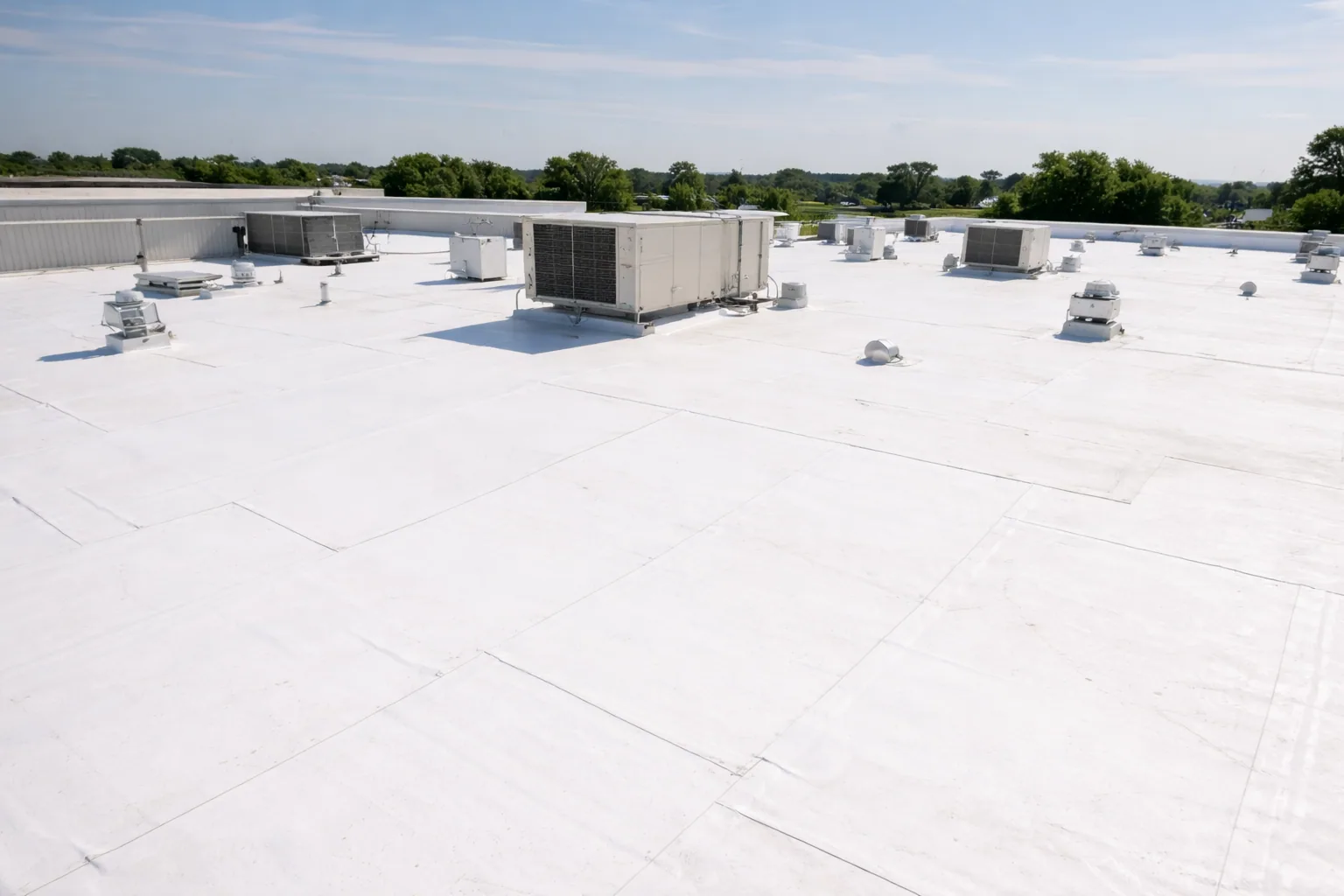
Commercial Roofing in the Ramona Town Center Industrial Area West of State Route 78, Ramona, CA
Service Areas · Escondido, CA
A roof scope in the industrial area west of State Route 78 begins with what the site plan and field walk can establish. The Ramona Community Plan allocates an industrial area within Town Center, west of Highway 78. It describes industrial activity as support for local employment and construction needs. The same plan calls for light industry to remain clean and compatible with nearby homes. These are planning standards, not proof of a particular operating property or roof. We confirm the building, assembly, access, and leak history before pricing a commercial roof inspection.
The planned area and the site in front of us
The plan's industrial designation is tied to Ramona Town Center west of State Route 78. It describes intended land use and compatibility. It does not identify the existing tenant, roof construction, or current condition of any specific building. We start by confirming the property contact and roof access. The visit then records membrane or panel type, transitions, equipment, drainage, and visible repairs. If site documents describe a different assembly than the field conditions, we mark the discrepancy before setting the work boundary.
Light-industry planning can make access, deliveries, and coordination with ongoing work relevant. We ask which areas stay active, what vehicle paths must remain clear, and who can authorize staging changes. Those are property questions, not assumptions about every industrial parcel. A written condition report links photographs to specific roof areas and explains which next step is needed. Ownership can distinguish a confirmed repair from additional investigation before funding a broader project.
Check attachment before setting a repair limit
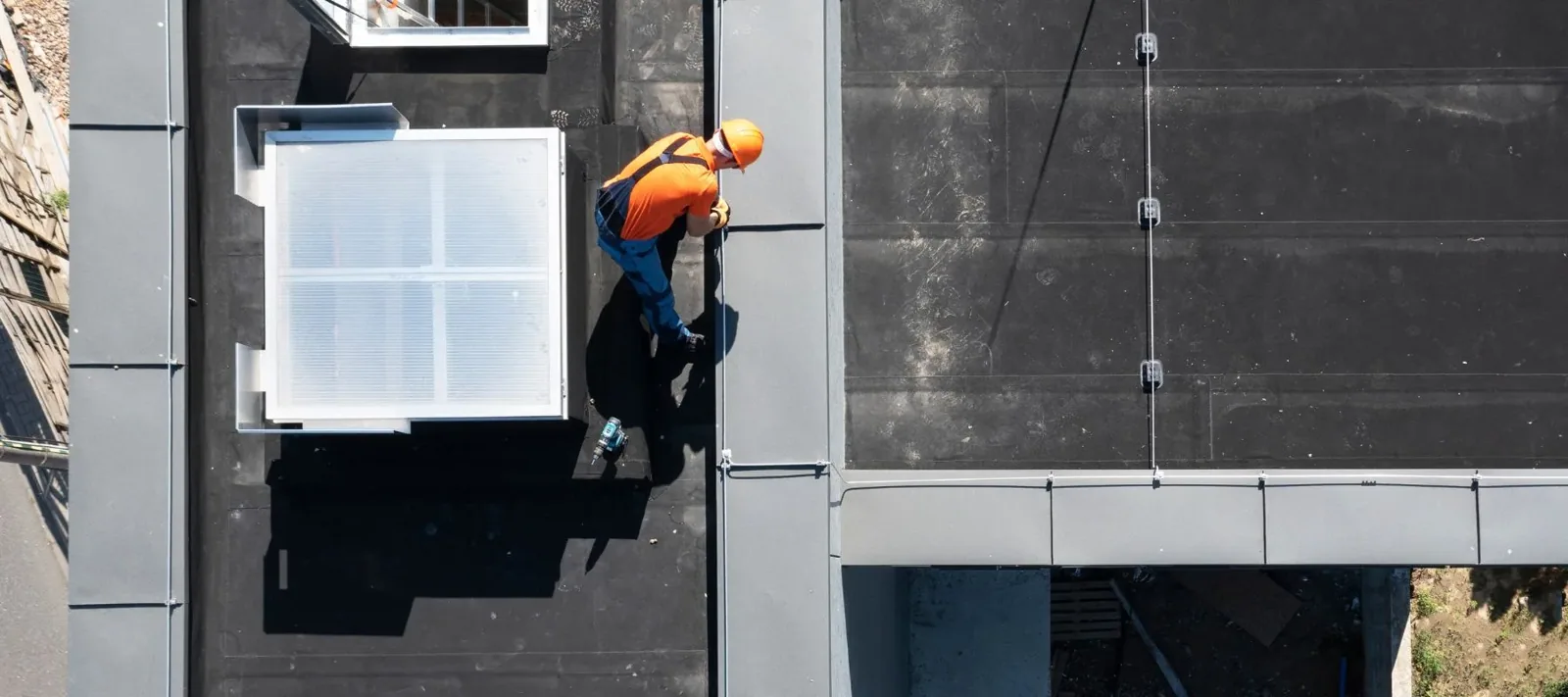
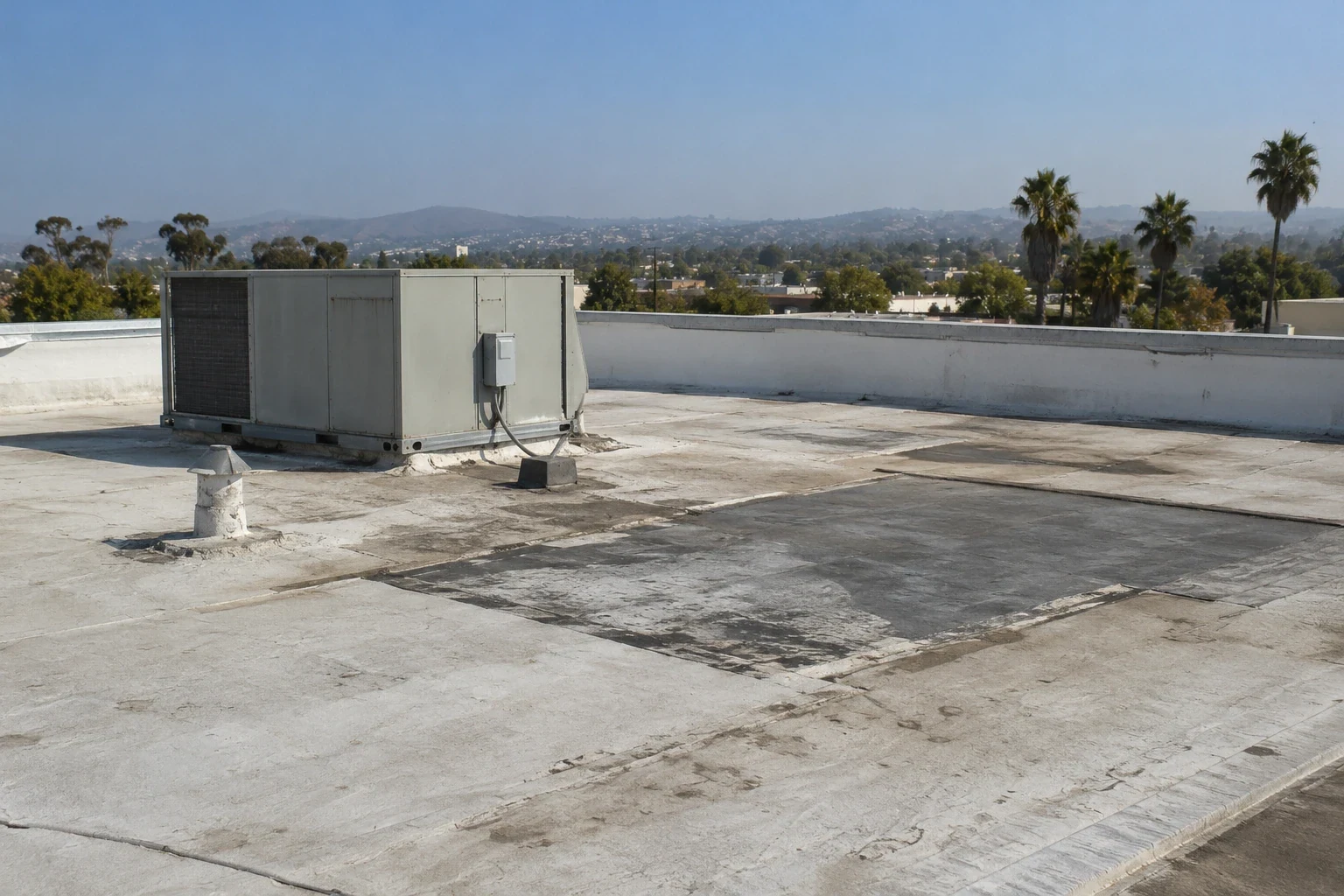
On low-slope roofs, water entry can start at a seam, a curb, a wall termination, or a failed drain connection. We inspect the roof surface and the details that connect it to equipment, walls, and edges. We look for displaced metal, open laps, punctures, deteriorated flashing, and signs of ponding or movement. The reported interior location guides the walk, but it does not set the repair perimeter. We map the likely path and note any hidden area that needs testing or opening.
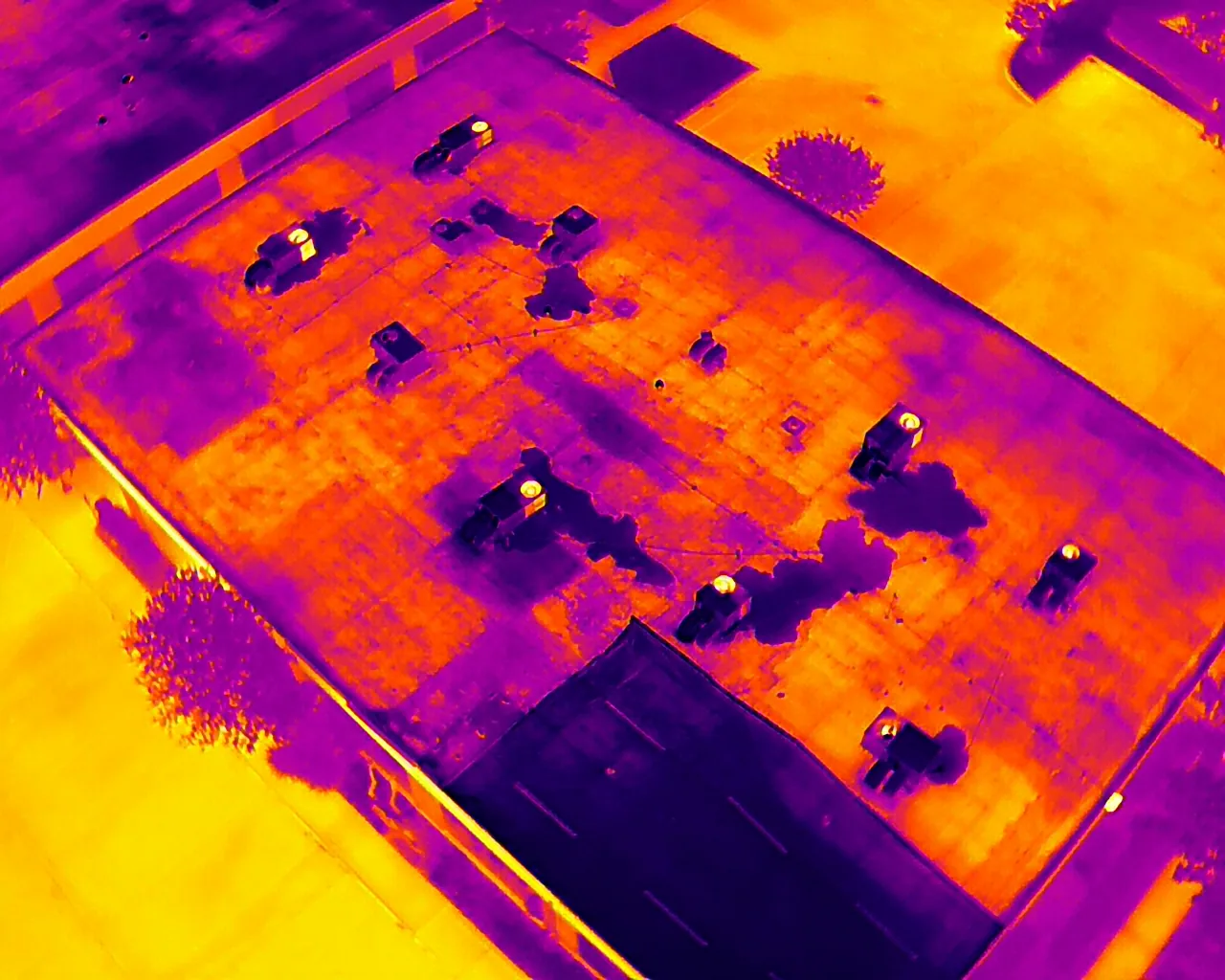
Where the assembly may contain wet insulation, a moisture survey can help target confirmation. Results must be weighed with construction records and the condition of the membrane. We identify where a test could clarify whether repair remains local or extends to a larger section. If the roof has undergone earlier repairs, we inspect those tie-ins rather than assume they remain secure. The proposal can then state what is verified and what requires a separate approval.
Perimeter metal after a dry wind
Use the reported date and affected roof zone to frame a wind review for the Highway 78 employment area. The National Weather Service describes Southern California Santa Ana events as dry, often warm or hot, most common from September through May, and capable of property damage. We document actual displacement or an opened joint, then compare adjoining membrane and attachment before defining repair extent. The field condition, not the seasonal pattern, sets the repair boundary.
A wind-damage evaluation can separate loose components, torn membrane, and sound adjacent areas. If water is entering, we can provide immediate protection and then scope permanent work after the roof is safe to review.
Separate building repair from capital work
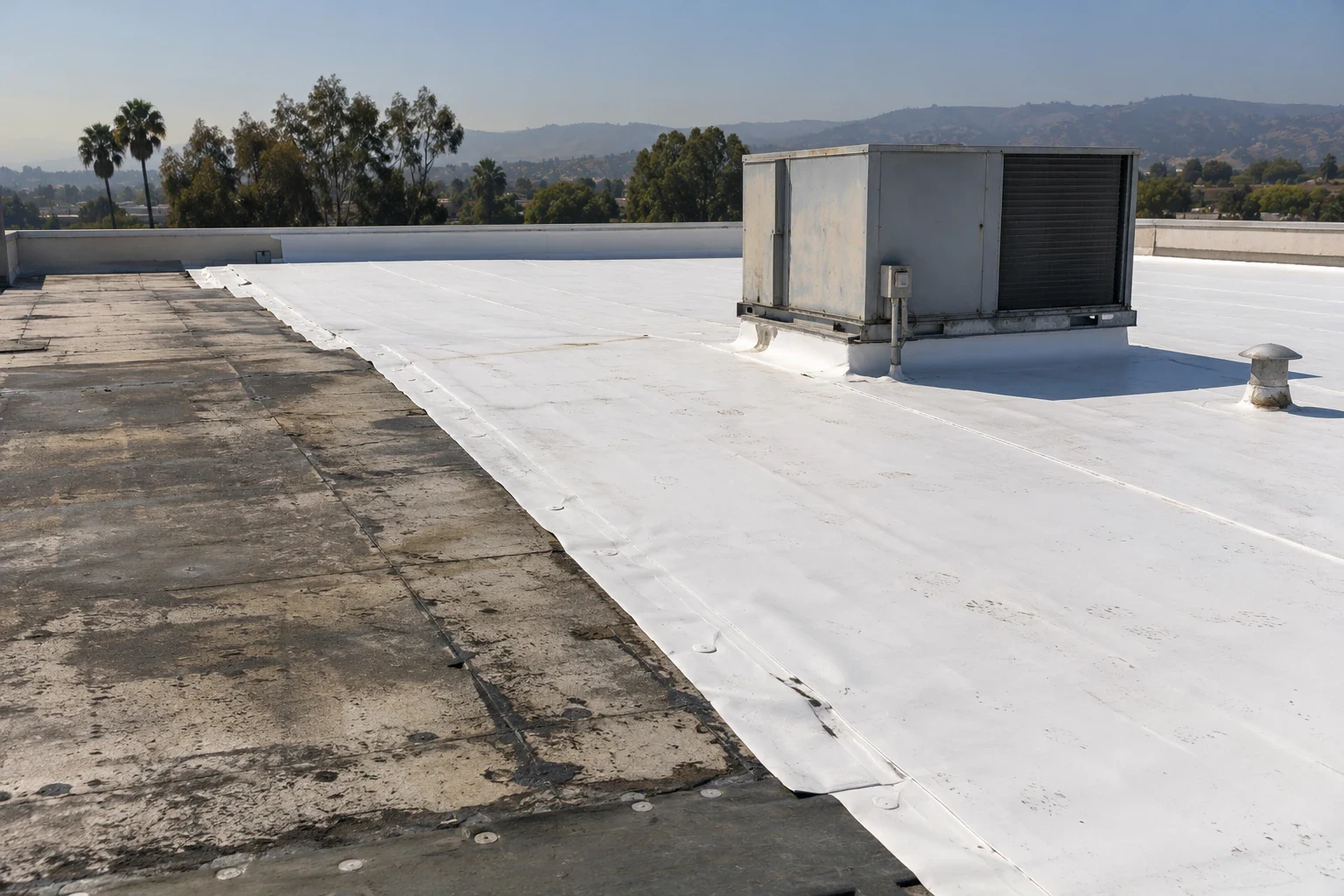
A localized repair is appropriate when the defect is limited, the surrounding system is stable, and a compatible tie-in can be made. A coating or restoration requires a suitable substrate and adequate preparation. Replacement may be the better budget comparison if moisture extends across several roof zones, attachment is failing, or previous repairs no longer isolate the leak. We present each option against observed conditions. We do not infer the roof's age, type, or service life from the industrial designation.
Cost changes with the area opened, tear-off depth, insulation, metal details, disposal, equipment movement, and staging. The timing also depends on deliveries, operational restrictions, and available access. A repair proposal should state its limits and closeout check. A recover option needs confirmation of moisture, attachment, and drainage before another layer is considered. That keeps the owner's budget window tied to a decision the field findings support.
Trade access and material staging
Industrial work areas can involve equipment service, deliveries, and construction crews. We confirm the actual site's access rules rather than treat the planning label as an operations report. The project contact can identify roof hatches, escort needs, loading limits, staging zones, and safety restrictions. We also ask which hours are available for noisy or disruptive work. The staging map should show where rolls are unloaded, how they reach the roof, and where debris exits. Keep equipment paths away from occupied entries and note any surface that cannot support a lift. If a loading lane must remain open, stage smaller deliveries or split the sequence. Record who can approve a route change during the shift. If the property stays active, a phased roof work plan can keep the open section controlled while adjacent operations continue. We ask whether staging can remain overnight, how crews sign in, and who receives updates when weather interrupts a planned opening. A clear contact chain keeps decisions with the person responsible for them.
Mechanical units, exhausts, and supports require coordination with the trade responsible for them. We agree on lift or disconnect responsibility, temporary protection, and the finished flashing review. A curb that cannot be moved may alter the method or require a separate approval. The scope should identify that dependency before crew mobilization. For the broader Ramona market, we also assess conditions around Town Center properties, where planned commercial uses and residential uses meet. Each site receives a distinct access and roof record.
Frequently Asked Questions
Does the Ramona plan confirm current industrial buildings west of Highway 78?
It allocates an industrial area and describes intended compatibility. We confirm what is operating at the property and inspect its roof before assigning any condition or scope.
Can the roofing team work around deliveries and construction activity?
We set staging, access, and work periods with the site contact. Active routes and trade schedules determine the sequence and any temporary protection needed.
What makes an equipment curb part of the repair?
We inspect flashing, curb movement, nearby seams, and the equipment trade's access. If a unit cannot be lifted or disconnected, the proposal states the resulting work limit.
When should we compare a repair with a recover?
Moisture, attachment, drainage, and substrate condition set the comparison. We verify those factors before including an overlay as an option.
Which details should a wind inspection record?
The report should locate displaced metal, opened joints, membrane tears, and unaffected adjoining areas. We use that evidence to define temporary protection and permanent repair separately.
Review the roof before setting the work window
Schedule an inspection for the industrial area west of State Route 78 in Ramona. Roof plans, access rules, leak history, and trade schedules help define timing and the next scope decision.
Call 555-555-5555 or email [email protected].