
Storm Damage Roof Repair in Escondido, CA
Commercial Roofing Services · Escondido, CA
A storm report starts a roof inspection, not a repair quantity. In Southern California, Santa Ana winds are dry and can bring warm or hot conditions. During an Escondido storm call, we inspect exposed edges, flashings, rooftop equipment, and drainage, then mark the actual roof zone that needs protection. The owner receives separate notes for immediate work and permanent correction. For an active opening, the emergency roof response begins by confirming safe access, temporary protection, and the site contact.
Immediate roof protection
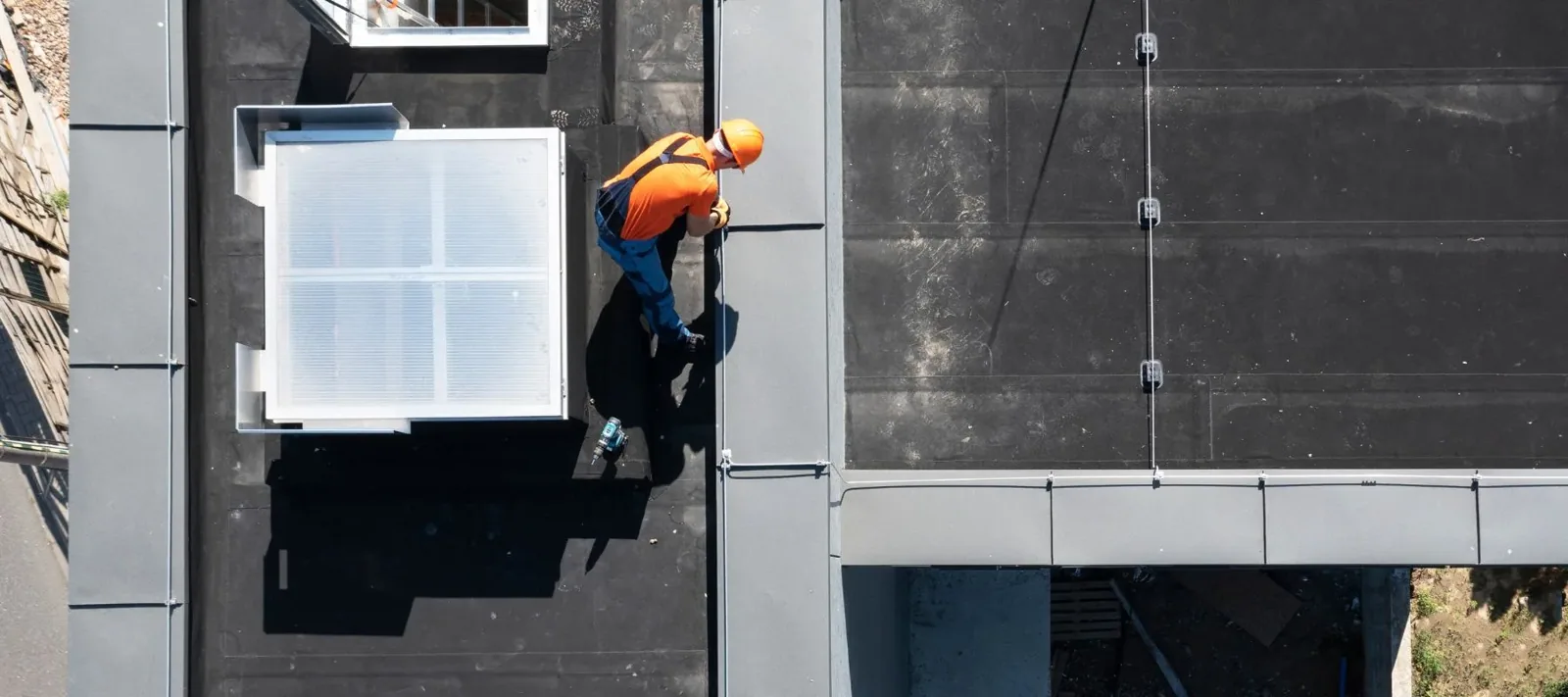
We first confirm that roof access is safe. Wind-blown debris, wet surfaces, and damaged metal can change the route. The site lead identifies electrical hazards, interior leaks, and spaces that need protection. We isolate an active opening with a temporary measure suited to the roof condition. The crew records where the material was placed and what weather limit applies. This action is separate from permanent repair. It gives the general contractor time to coordinate access and obtain approval for a defined scope.
The West Mission Avenue Specific Plan area includes existing retail space considered for adaptive reuse. A roof opening above an active tenant changes how we protect inventory and sequence interior work. We define the opening, dry-in step, and person who can approve an expanded repair before removal begins. In the East Valley Parkway Commercial Area, the plan supports access consolidation and commercial-center rehabilitation. That planning context makes the property’s own delivery path worth confirming before a lift or debris container is placed. The West Mission Avenue commercial-area roof visit still starts with the actual building contact and approved access route.
Observed damage and extent
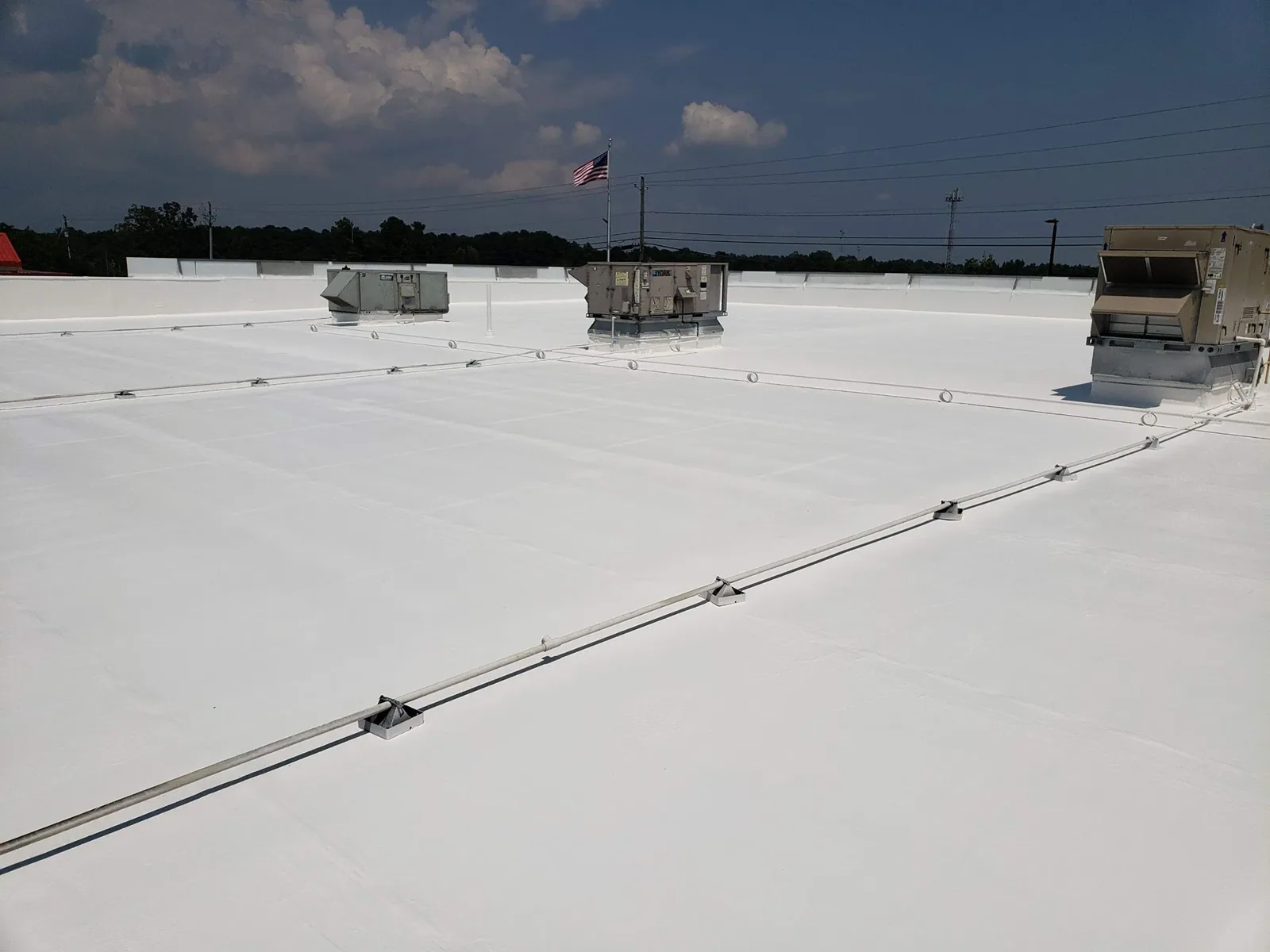
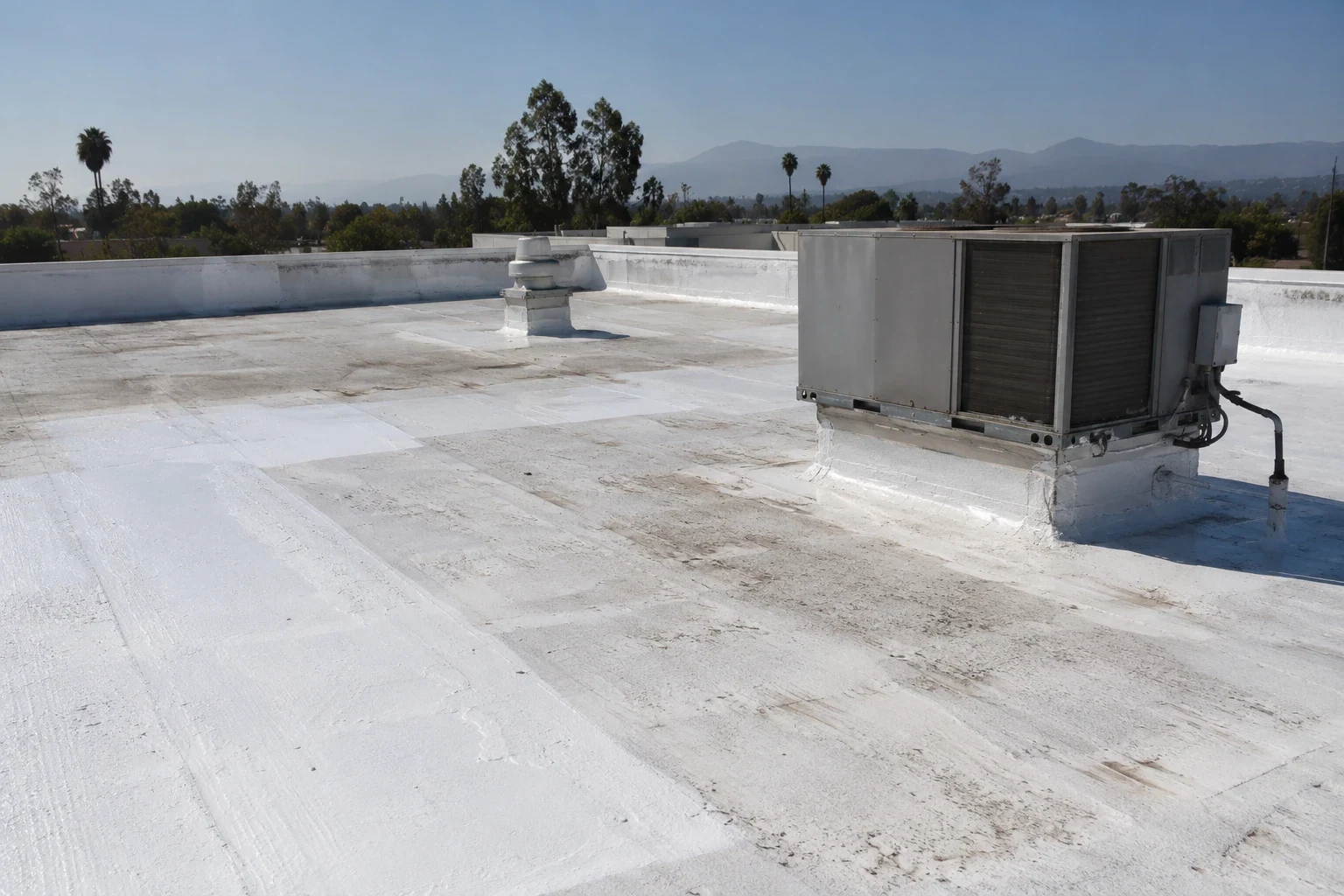
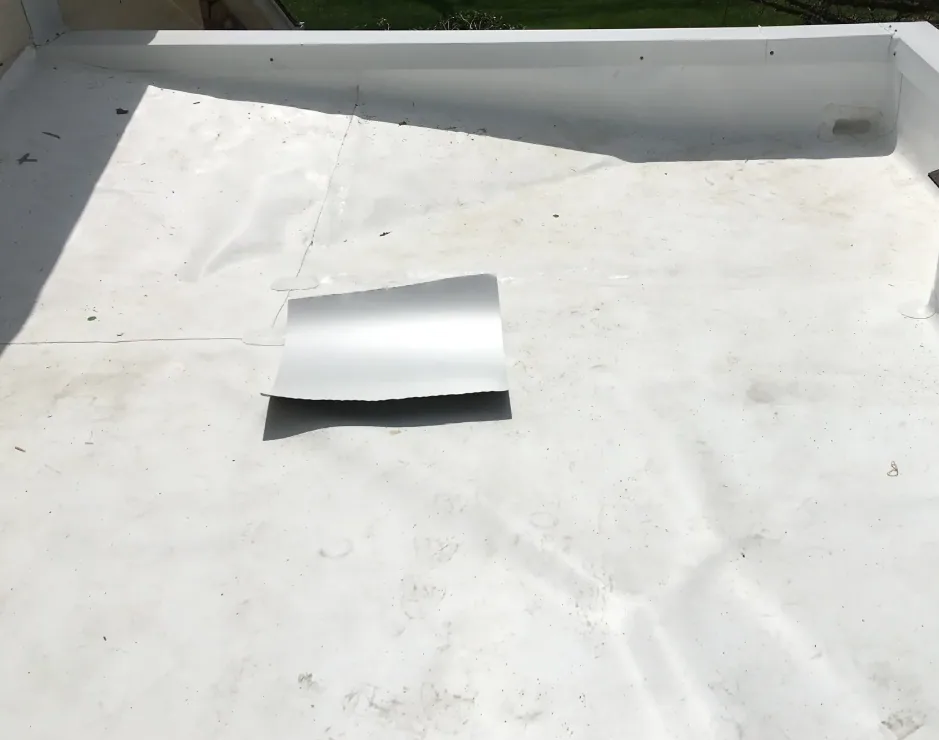
We inspect the roof field, edges, seams, penetrations, drains, and equipment interfaces. A displaced edge, punctured sheet, or opened lap receives its own location mark. A dent in a rooftop unit cover does not prove damage below it. A ceiling stain does not show the roof entry point. We compare the interior report with the surface condition and note whether testing is needed. The wind-related roof review can define edge and perimeter observations. Hail marks need a separate assessment of the membrane and accessories.
Escondido red-flag conditions usually involve dry, commonly warm Santa Ana or east winds from the northeast. Strong winds with dry weather can increase wildfire spread risk. We follow current site safety direction, keep access routes clear, and document only roof effects observed at the property. Each opening also gets a named contact, temporary-cover note, and inspection point before permanent work proceeds. If heat or smoke exposure is reported, the owner should identify the affected section and any equipment shutdown. We document visible change and avoid extending the repair boundary beyond observed or tested conditions.
Testing hidden roof conditions
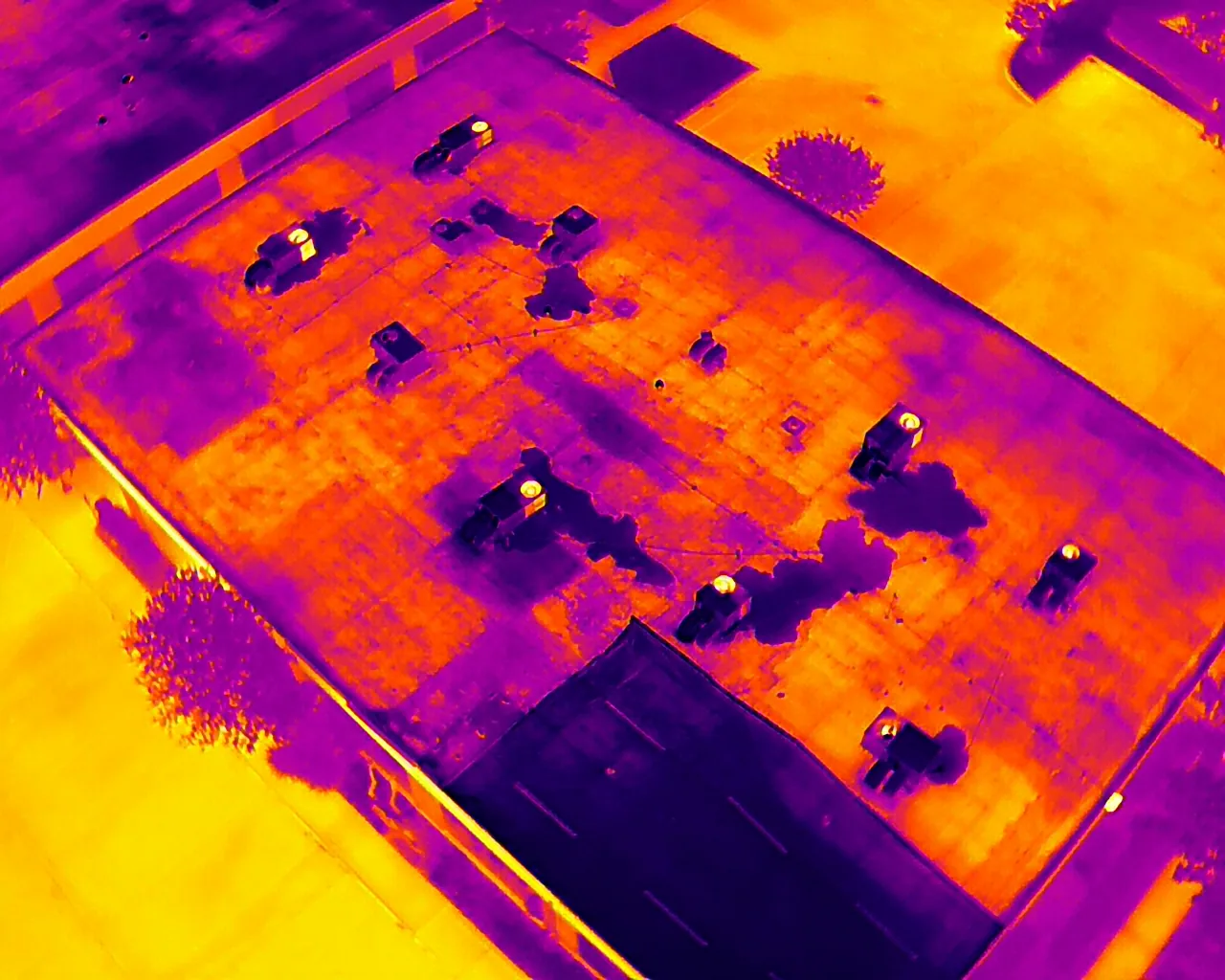
Water may move below a membrane before appearing indoors. We trace the likely route and compare it with seams, drains, and transitions. A moisture survey can identify contrasting readings, but the method and limits must be stated. If a result affects the scope, a controlled opening may confirm the material condition. We agree on the location, size, and closeout before cutting. The infrared survey can help select a test area; it does not replace direct verification when the assembly remains uncertain.
A roof opening over an active commercial space needs a named person responsible for dry-in, debris control, and approval. We mark the route from the access point to the affected roof zone, then keep removed material away from drains and equipment. If rain or wind returns, the supervisor records which temporary measure is in place and who checks it. A second opening requires a separate boundary and approval, even when the first repair is still underway. The work record also notes any interior area that needs protection and the next trade expected on site. Those details give the general contractor a clear handoff without turning an observed defect into an open-ended repair allowance.
Claim and project records
Owners benefit from dated photos, a marked roof plan, weather information, and an event timeline. The report separates what was directly observed from what needs testing. It lists temporary protection, permanent repair options, and exclusions. If a claim is involved, the property team can provide carrier instructions and requested forms. We document roof conditions and repair work, but policy coverage remains a decision for the insurer. The claim documentation service can organize records for review without assuming approval.
Dated photographs should identify the affected building, roof zone, and condition before temporary protection changes the surface. We match each image to a plan mark and note the time, weather, and person who observed it. A condition report ties findings to locations and notes any area that could not be inspected. The general contractor can use that record to compare the approved scope with the completed tie-in and keep later work orders tied to the same roof area.
Permanent repair decisions
A permanent scope identifies preparation, compatible materials, tie-in dimensions, and a final check. The crew removes damaged material only to a defined boundary. If moisture extends beyond it, the owner sees the finding before authorizing more work. A commercial repair can address localized damage. Widespread wet insulation, repeated openings, or poor attachment may require a larger comparison. We explain what supports each option and what remains unknown.
Weather can shift during the repair window. The plan includes a method to secure exposed materials if rain or wind returns. We coordinate the next trade before leaving an opening. The property contact confirms any equipment shutdown and interior protection. A project schedule should reserve enough time for surface preparation and dry-in rather than assuming every repair can close immediately. The result is a scope the team can price and coordinate against the event record.
Frequently Asked Questions
Can you respond before regular business hours?
Report active water entry through the property contact; confirm current availability, safe access, and next steps. We confirm safe access and protect active openings before defining permanent work.
Does a storm-damaged HVAC cover mean the roof is punctured?
Not by itself. We inspect the equipment interface and nearby membrane, then document any visible opening or test needed to confirm the assembly condition.
What belongs in the first damage record?
Include the event date, leak locations, dated photographs, temporary protection, and roof-plan marks. We add observed conditions and identify areas needing additional testing.
Will your report determine insurance coverage?
The report describes roof conditions and completed work. The insurer interprets policy terms and coverage. We can organize records requested for that review.
When does temporary protection become a permanent repair?
They are separate scopes. We inspect beneath the temporary material, confirm the repair boundary, and obtain approval for permanent correction.

Arrange storm roof response
Share the event date, roof access contact, leak locations, and any carrier instructions. We will protect active exposure and document the permanent repair options. Call Commercial Roofers Escondido for timing.
Call 555-555-5555 or email [email protected].