
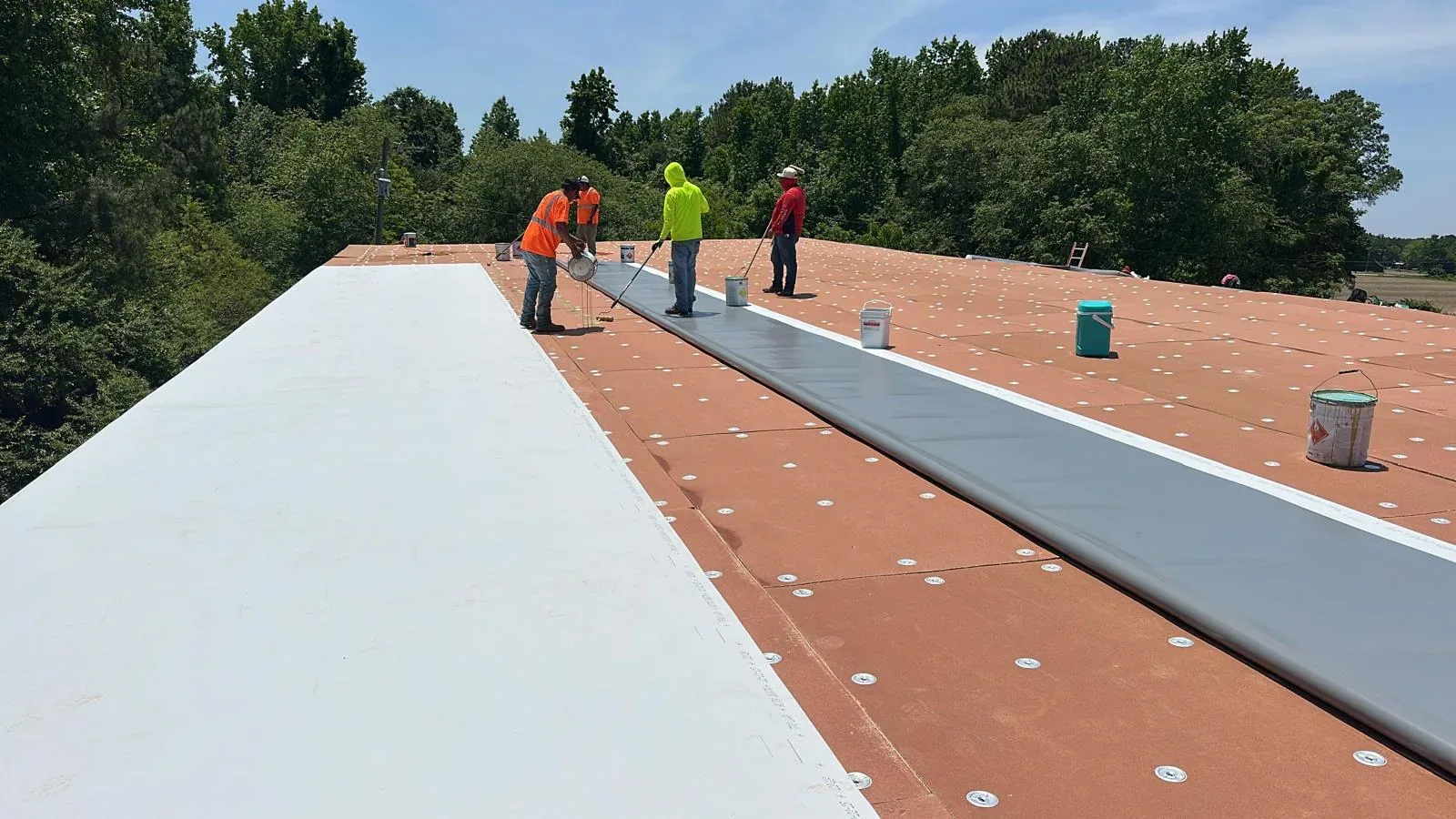
Versico Commercial Roofing in Escondido, CA
Roofing Manufacturers · Escondido, CA
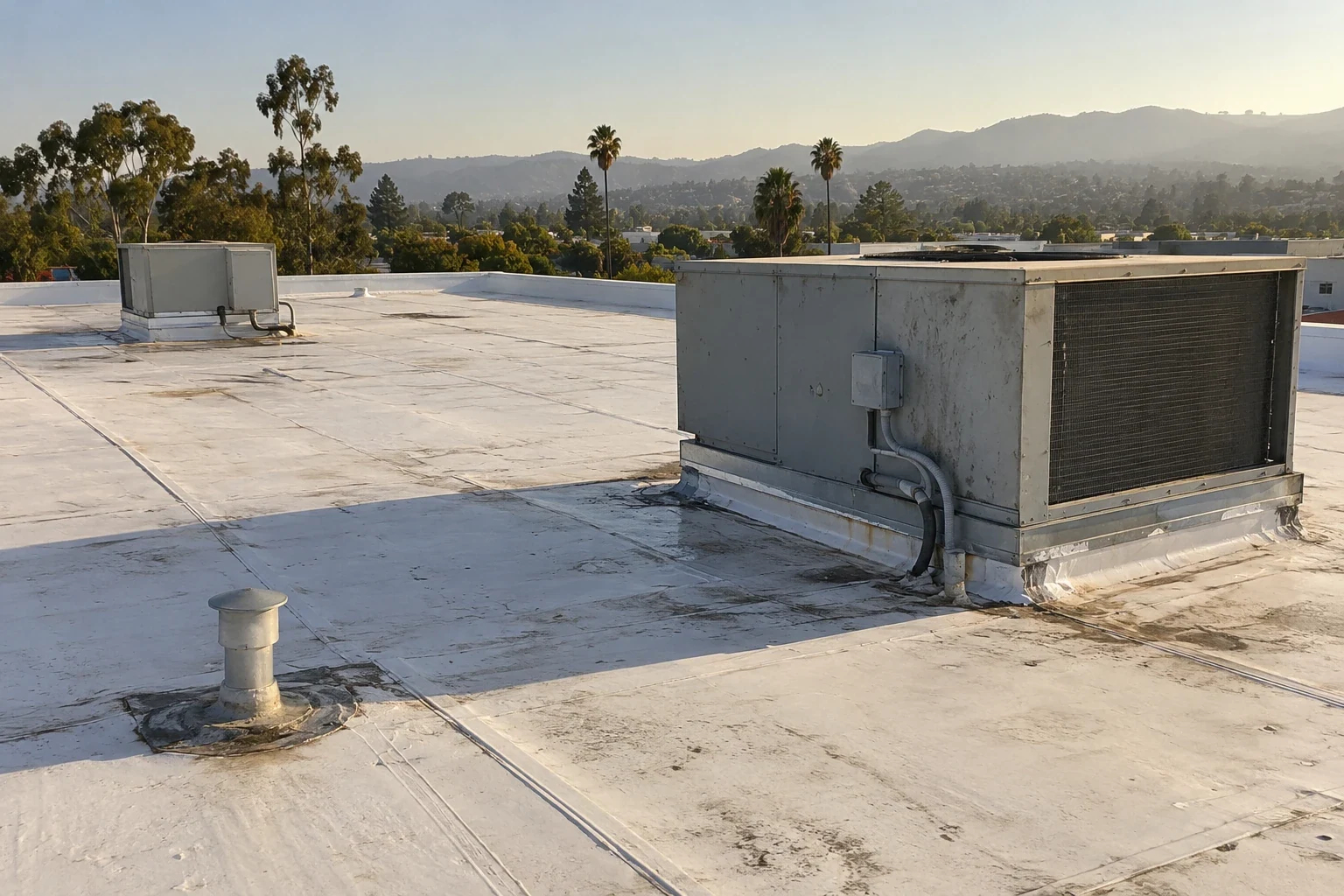
Escondido has varied commercial roof settings; records and a field review, rather than a land-use category, identify the membrane and attachment at a particular property. A TPO system review can help distinguish field-sheet repairs from issues at curbs or perimeters.
We start with roof records and the reported leak area. Field markings, fasteners, adhesive traces, and previous patches provide clues. A roof may have additions from different projects, so we confirm each zone separately. The scope states what we could verify and where a test opening is still needed. This gives a general contractor a repair quantity that can be scheduled and priced.
VersiWeld, VersiFlex, and VersiGard
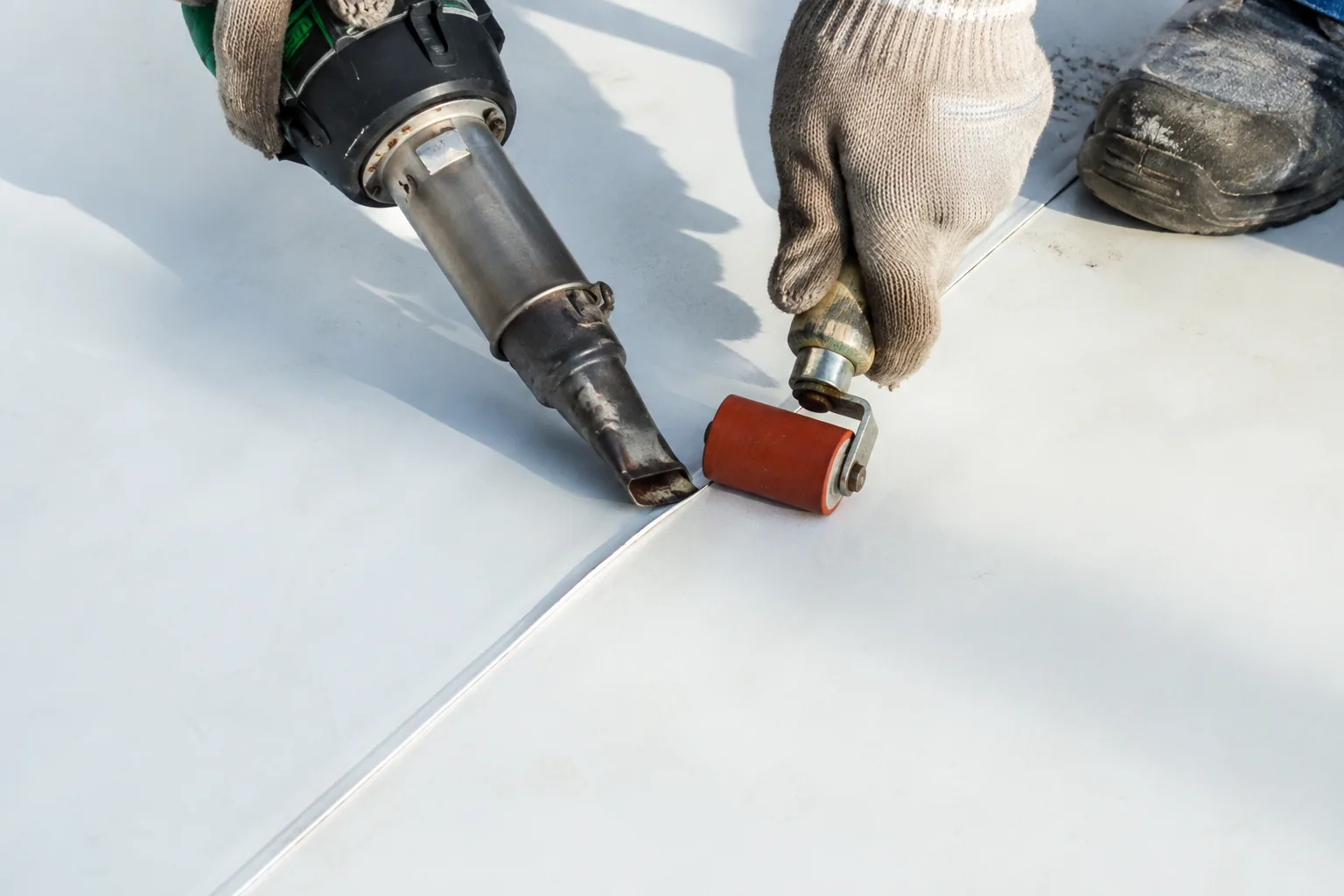
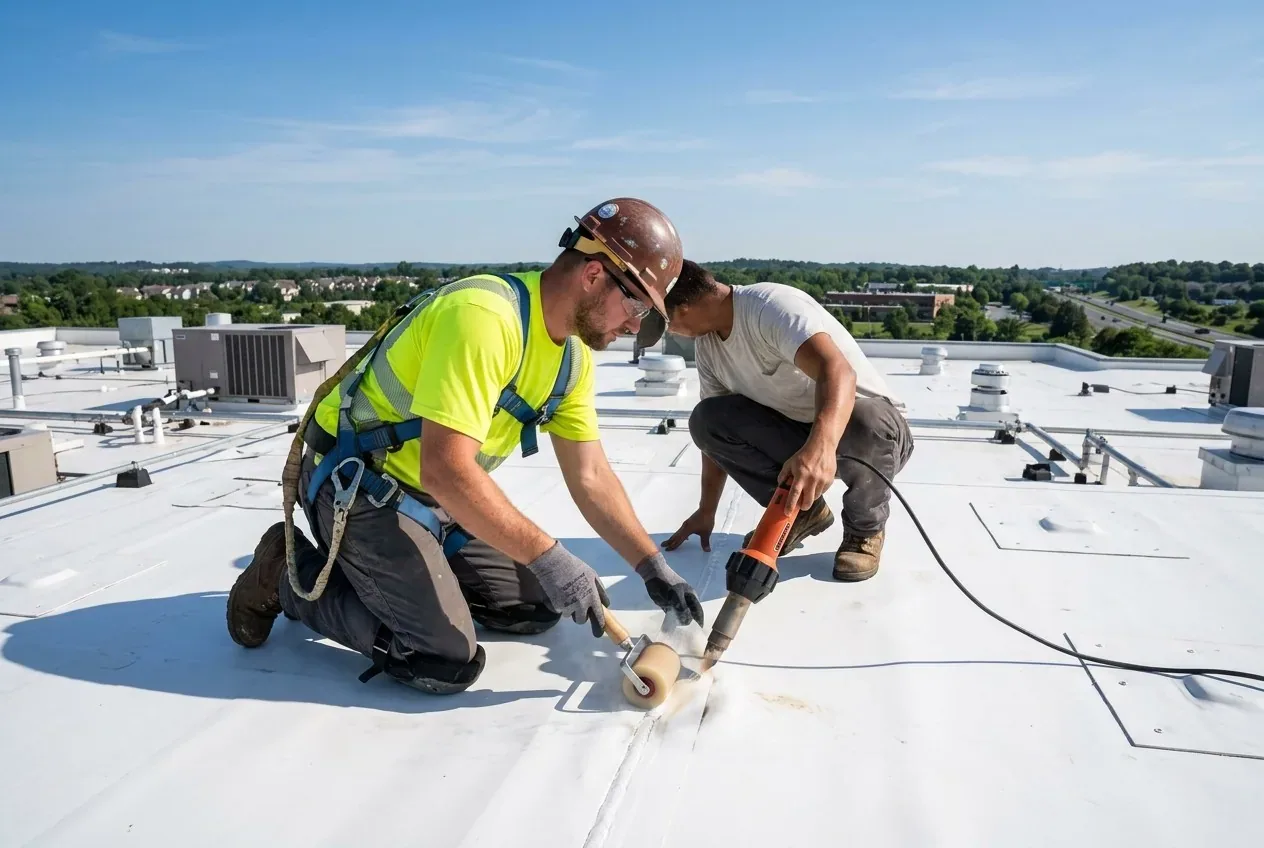
VersiWeld is Versico's TPO membrane line. VersiFlex covers PVC, including fleece-backed choices, and VersiGard is the EPDM family. Their surface layers and seam methods differ. We identify the installed system before preparing a repair. A TPO or PVC lap is heat welded; an EPDM joint uses compatible seam tape or adhesive. A patch that bonds to one family may not suit another, even when the leak appears similar.
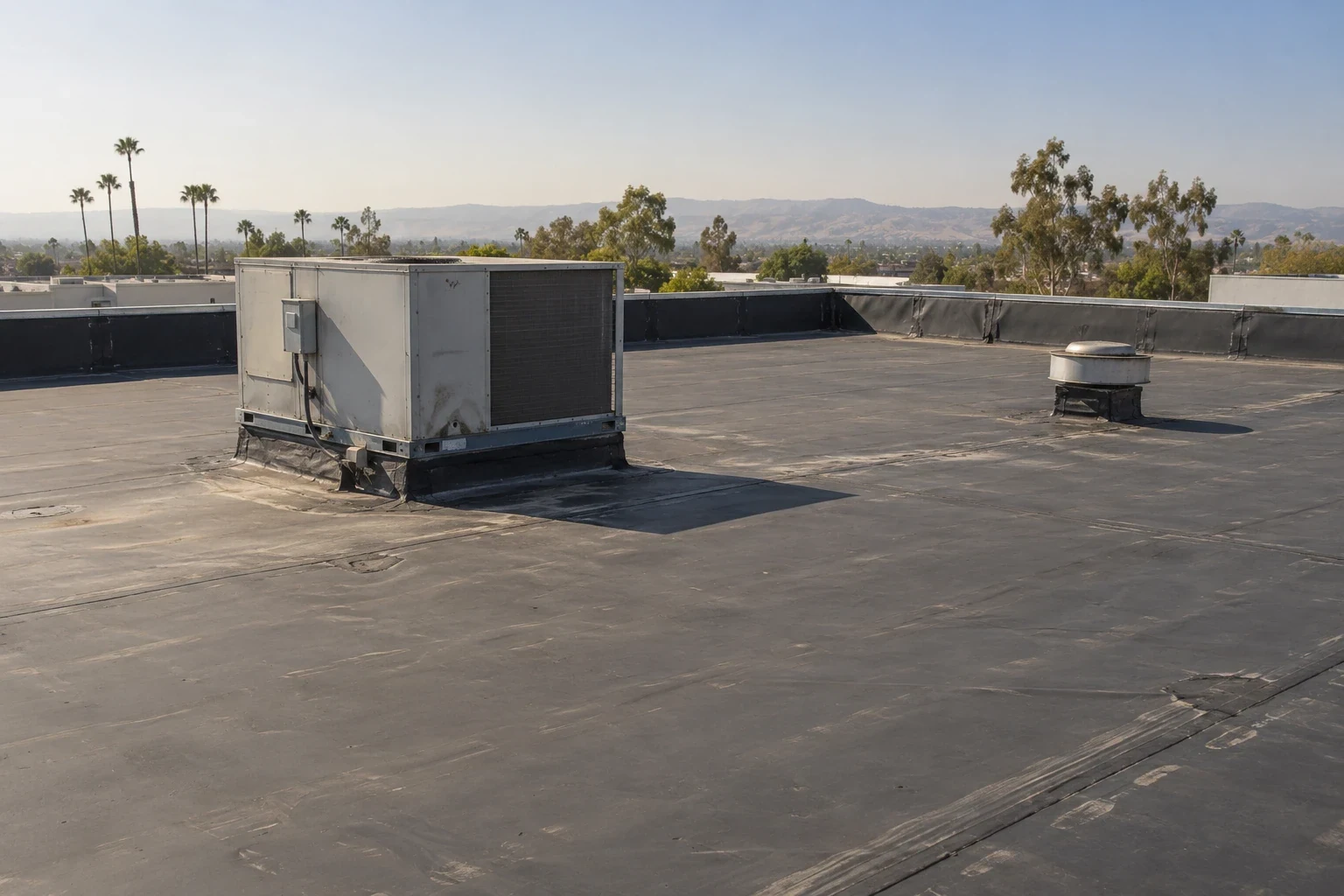
The attachment can be adhered, mechanically fastened, or induction welded, depending on the designed assembly. A VersiWeld, VersiFlex, or VersiGard assembly has its own attachment and detail requirements. We compare the project records with exposed plates, field sheet, deck, and perimeter conditions before choosing compatible repair materials. The PVC roof assembly and EPDM seam details show why sheet identity matters before repair. A Carlisle Sure-Weld comparison or GAF TPO review is only useful after the existing attachment is known.
Weld quality and attachment
We inspect seams for incomplete welds, contamination, wrinkles, and movement. An induction-welded area also requires attention to the coated plate and the bond between membrane and plate. A mechanical system has a different fastening pattern, especially near edges and corners. We review the field and perimeter details together. The proposal names the confirmed attachment method and the repair material needed to restore it.
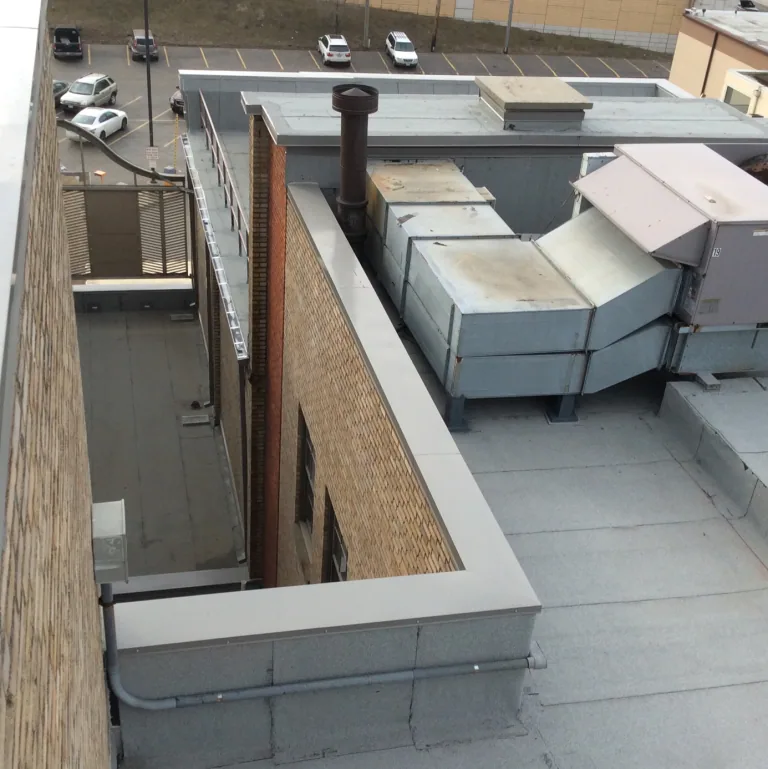
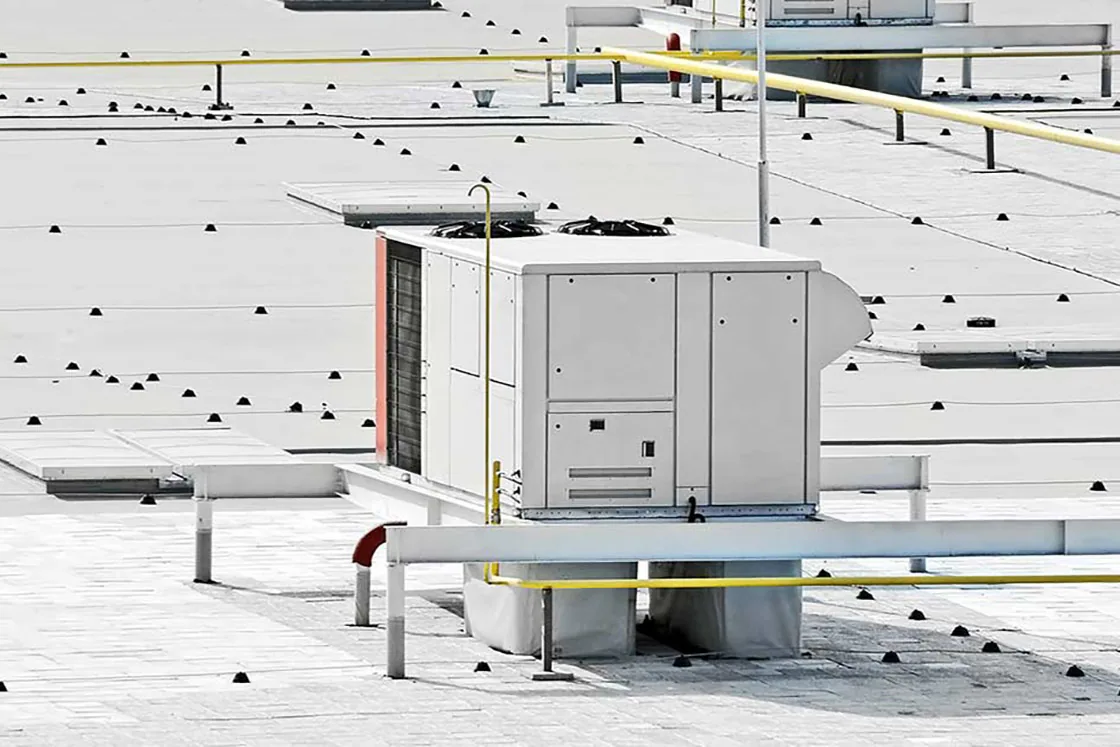
At penetrations, we check boot condition, curb corners, base flashing, and the membrane termination. Equipment changes can alter curb height or leave old supports in place. A curb coordination scope should show disconnect and reset responsibilities, plus who will inspect the finished flashing. A water path may lead away from the damaged point, so we compare interior reports with roof drains and transitions. If insulation moisture is uncertain, targeted testing can guide the next opening.
Repair boundary and replacement trigger
A localized puncture or open lap may be repairable when adjacent sheet and substrate stay sound. We remove loose material and prepare a compatible tie-in. Broad moisture, repeated seam failures, or loose attachment can extend the investigation. We map confirmed defects separately from conditions that remain hidden. If the roof has multiple product families, each receives its own repair plan and material check.
A recover depends on dry layers, stable attachment, compatibility, and drainage. Additional thickness can change curb transitions, drains, and edge-metal height. If those conditions do not support an overlay, we compare the recover alternative with removal and replacement. Office development is planned around Felicita Road and Interstate 15. That corridor context does not establish a Versico assembly; we confirm the building's equipment, access, and membrane in the field.
Occupied schedule and daily close-in
Roof access may involve a hatch, ladder, lift, controlled loading area, or escort. We confirm the route before material arrives. The owner or general contractor can identify occupied spaces below, work hours, and any equipment shutdown. A day with exposed insulation needs a defined close-in point. Trade sequencing matters at rooftop units, where a roofing crew cannot complete flashing while equipment remains in the work zone.
A Santa Ana season usually runs September through May, with dry winds moving west through mountain passes and sometimes bringing warm or hot air. On an induction-welded repair, we check the exposed plate bond and wind conditions before handling sheet. A regional weather pattern cannot establish movement on the roof in front of us. For an active leak, the property team can follow its water-control procedure and identify a safe work window before a permanent roof repair is selected.
Plans, labels, and repair record
Send product information, roof plans, prior leak logs, repair invoices, and any closeout package. We compare those documents with visible seams and attachment. An employment-area designation says nothing about a particular building's roof product or attachment; we confirm those details through records and field inspection. A condition report can show the roof zone, seam, transition, and the decision left open.
At each completed repair, the record should identify preparation, materials, weld or lap details, and the final review. Photos should include close details and a wider location reference. Downtown is a broader commercial area where staging still needs property-level confirmation. For Downtown Escondido roof work, staging still requires confirmation with the property's access contact. That same property-level check applies throughout the city.
Frequently Asked Questions
How do you distinguish VersiWeld TPO from VersiFlex PVC?
Product markings, records, and exposed sheet details can identify the membrane. We check each roof section, then confirm compatible repair materials. The proposal keeps different additions separate instead of assuming one product covers the entire building.
Does an induction-welded Versico roof need a different inspection?
Yes. We check the membrane-to-plate bond, plate layout, field seams, and perimeter attachment. A visible lap does not establish the plate connection below it. If attachment remains uncertain, a test location can answer that question before repair.
Can VersiGard EPDM be repaired with a TPO patch?
Those membrane families use different joining methods and are not interchangeable. We identify the EPDM sheet and use compatible preparation and seam materials. The work record names the material and checks the completed splice.
What can make a Versico recover unsuitable?
Moisture, poor attachment, incompatible layers, drainage changes, or project restrictions can rule out a recover. We inspect the assembly and define any test cuts needed. The proposal lists the layers that stay and the conditions that need correction.
What should a property team document when a Versico leak is reported after hours?
Record the room, time, roof zone, and any temporary protection already in place. The roof review should confirm membrane identity, site access, and operating limits before permanent seam or flashing work is scoped.
Set a Versico Repair Scope
Arrange an inspection with Versico labels, roof plans, leak history, and access rules ready. We will identify the assembly and mark the repair boundary. Call to plan a site visit in Escondido.
Call 555-555-5555 or email [email protected].