Soprema Commercial Roofing in Escondido, CA
Roofing Manufacturers · Escondido, CA

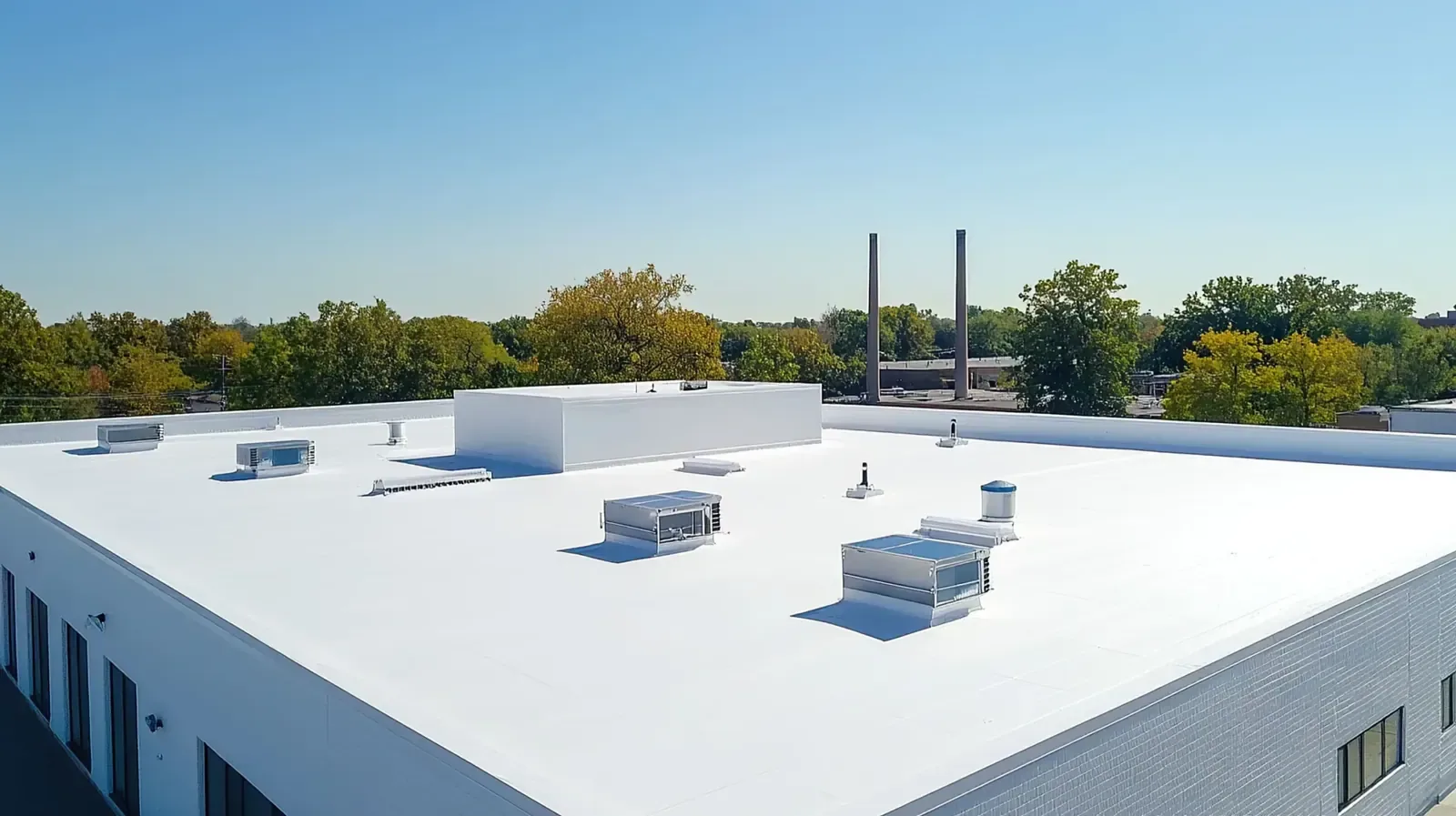
Granule loss beside a patched wall can point to a Soprema roof assembly with several layers to check. We identify the material family and prior work before pricing a repair. Soprema's commercial range includes PVC single-ply, SBS-modified bitumen, and PMMA or PMA liquid-applied membranes. Each has its own preparation, transition, and installation details. East Valley Parkway's planned commercial district extends about two miles from Hickory Avenue to Citrus Avenue; Downtown also carries mixed retail and office uses. Both places still require building-level access confirmation. Those districts can have different loading and access conditions. We verify the individual roof, then set a defined boundary. A modified bitumen review or PVC assembly check can help frame material differences.
We inspect the field, laps, flashings, drains, edges, and previous repairs. A liquid-applied product over one detail does not identify the full roof beneath it. Records and exposed transitions help separate a coating, resin flashing, and membrane layer. The owner receives a scope that states what can be confirmed, what remains concealed, and which test would affect the work decision.
PVC, SBS, and liquid-applied systems
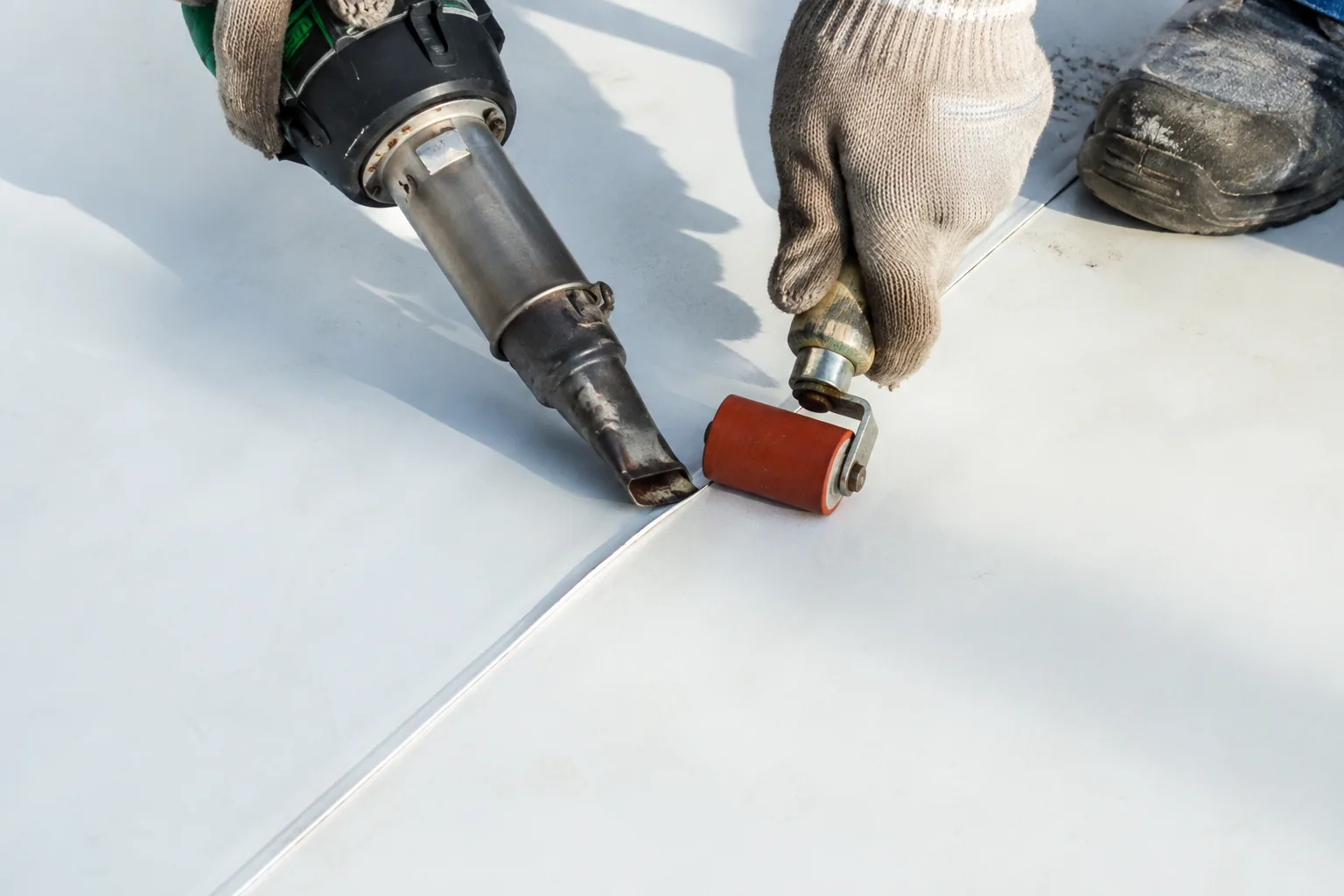
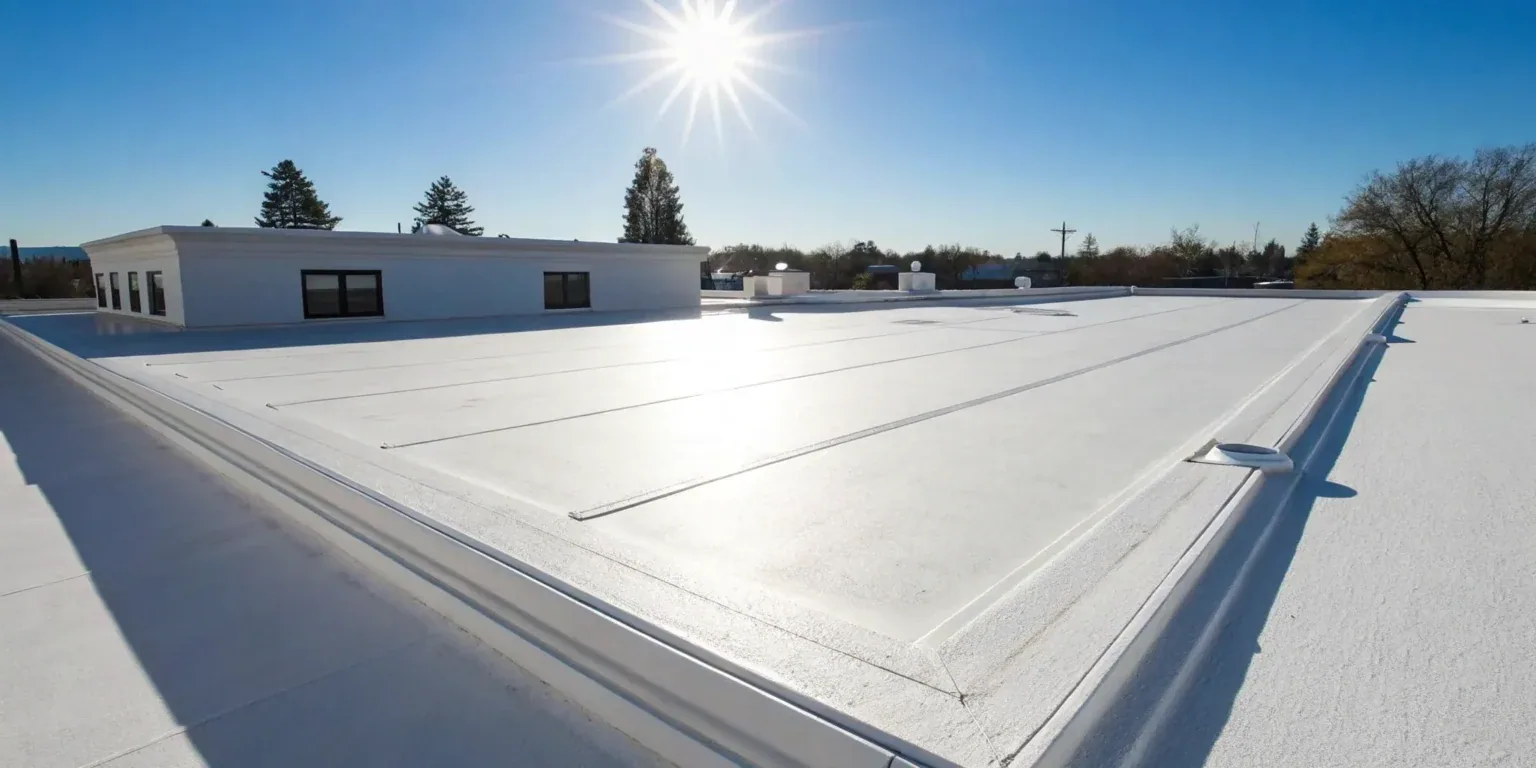
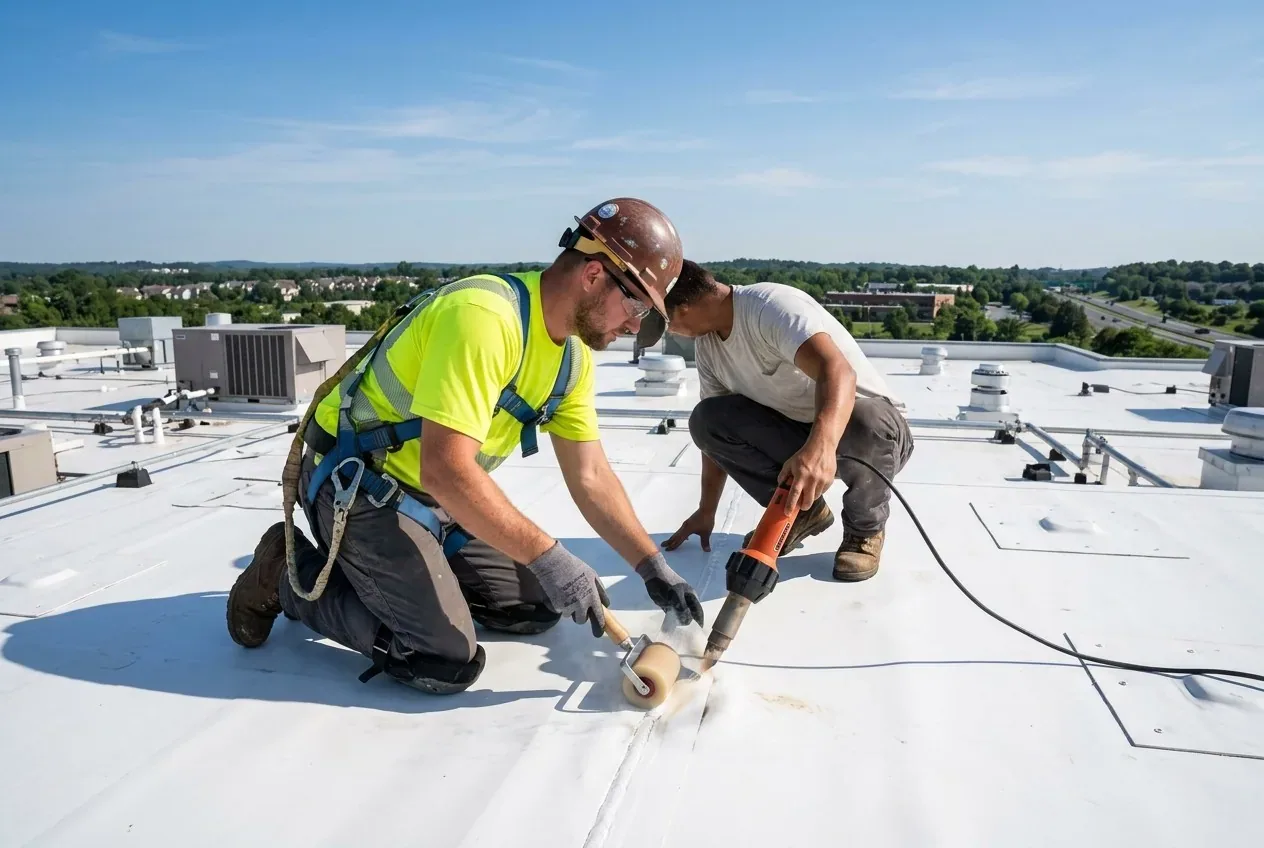
Soprema manufactures synthetic PVC membranes, SBS-modified bitumen sheets, and PMMA or PMA liquid-applied products. These are not interchangeable repair materials. PVC uses welded laps. Modified bitumen uses layered asphaltic construction. A liquid resin system depends on substrate preparation, reinforcement, and the approved detail. We identify what sits at the surface and check whether a repair would bond to sound material below.
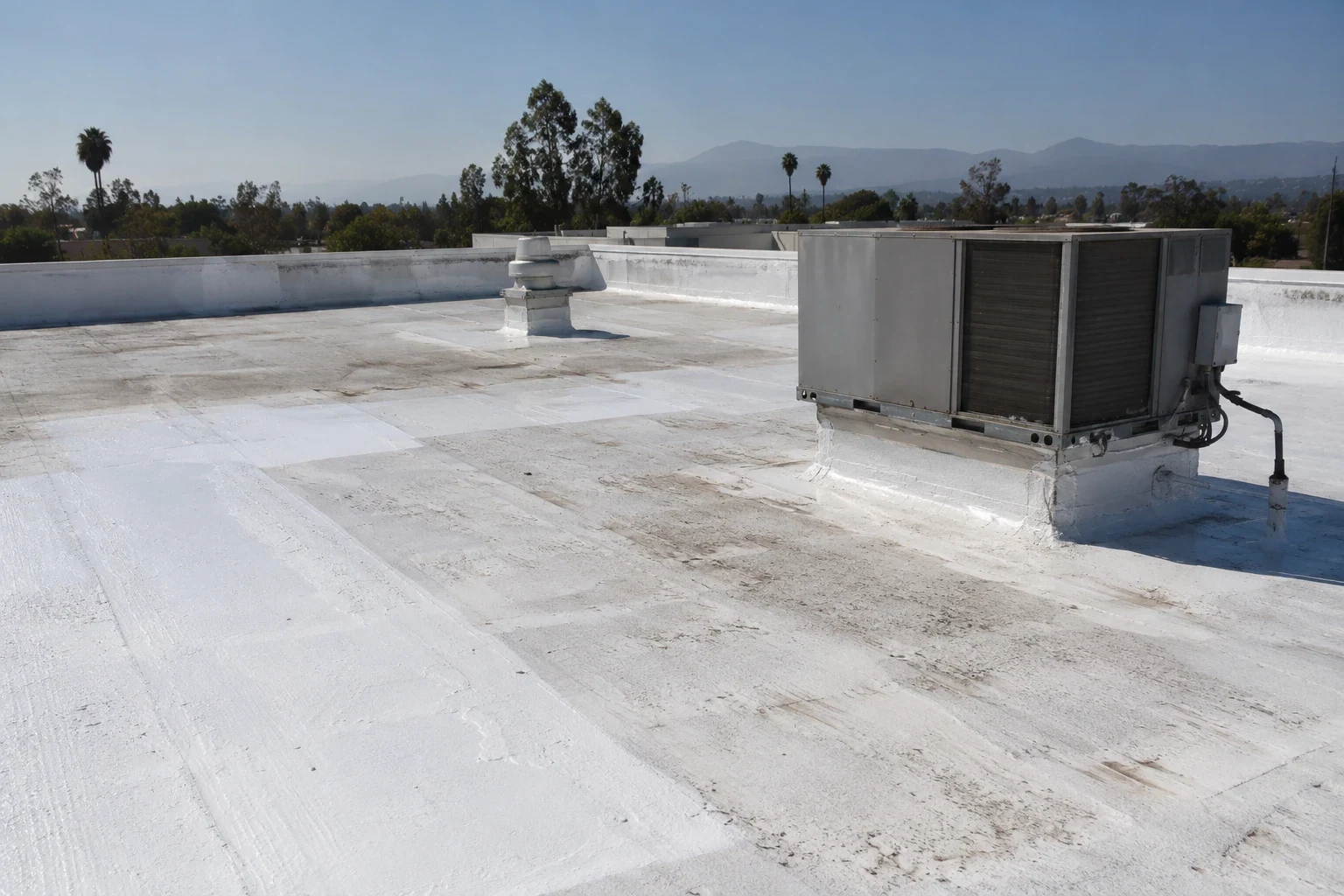
A roof can combine old and new work after additions or earlier recover projects. We inspect accessible cuts and edge metal, then compare them with drawings or product records. If insulation or deck is unknown, a test opening must answer a specific question. The coating restoration review considers surface condition and compatibility before a liquid system is proposed. Johns Manville membrane options and a GAF system comparison may also help distinguish material families when a label is incomplete.
Seams, flashings, and transitions
A PVC seam needs a continuous weld, while a modified bitumen lap needs secure adhesion between asphaltic layers. At a liquid-applied flashing, we inspect substrate, reinforcement, thickness, and termination. The scope names the repair material and preparation. We check for a loose edge, contamination, cracking, blisters, or a patch that bridges unstable material. If water has reached insulation, the membrane repair alone may not address the full condition.
Roof-to-wall transitions, equipment curbs, drains, and perimeter metal deserve separate review. We inspect corners, counterflashing, pipe boots, drain bowls, and the field sheet around each penetration. East Valley Parkway connects commercial centers with mixed-use, office, and professional activity, while access improvements remain part of the corridor's planning context. Those district conditions do not describe an individual roof. They do make staging and operating hours a practical question when arranging work in the area. We confirm them with each site's contact.
Repair limit or assembly change
A local tear or open lap can take a repair if surrounding material remains sound. We remove failed material, prepare the substrate, and close the detail with a compatible method. Repeated failures, wet insulation, movement at several transitions, or poor attachment can expand the investigation. We map those conditions by roof zone. The proposal separates confirmed work from test cuts or concealed conditions that need approval.
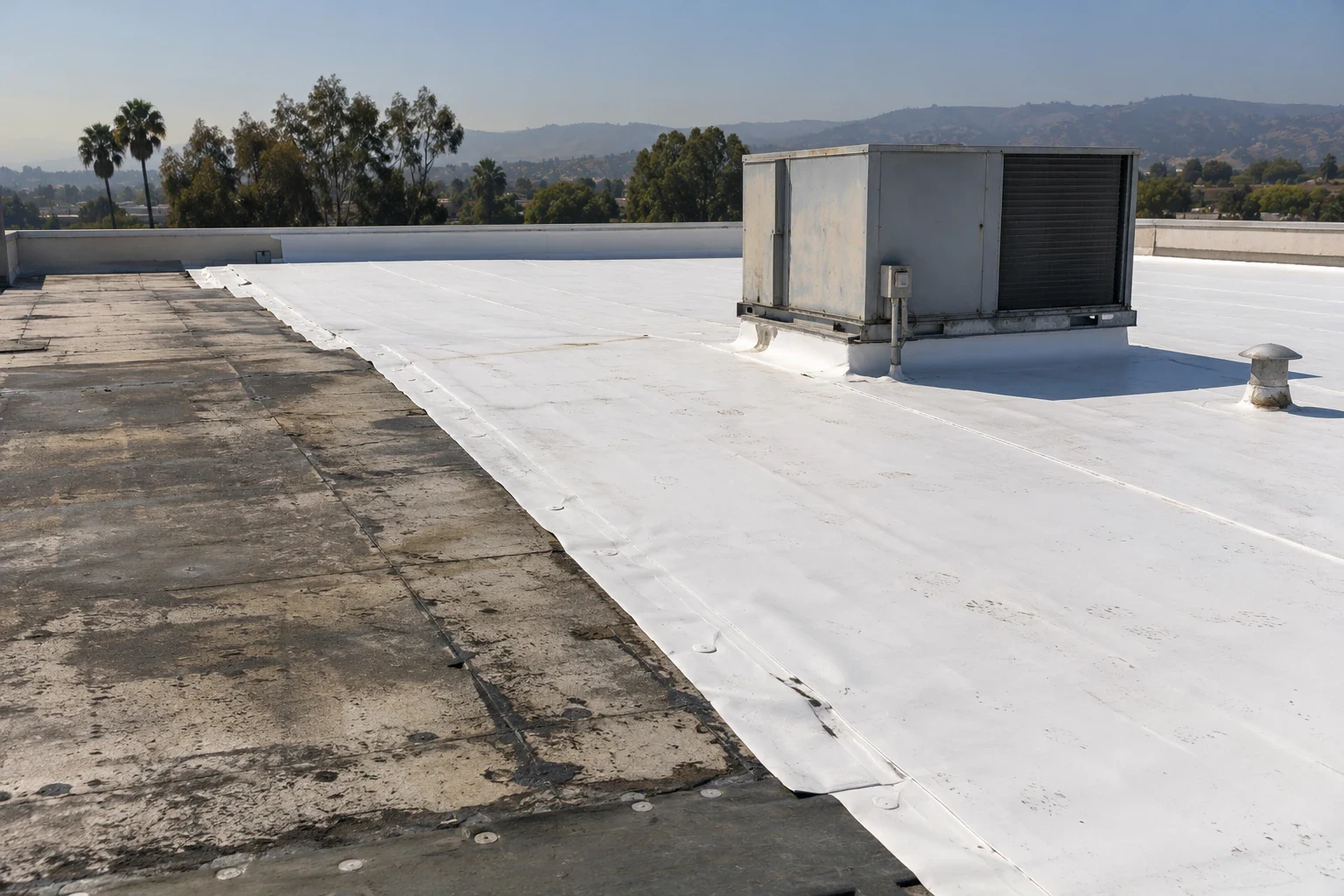
A recover may suit an existing roof when it is dry, stable, compatible, and within project limits. Added layers can affect drainage, edge height, curbs, and roof-to-wall details. Tear-off exposes the assembly but changes debris handling and interior protection. A recover option and a replacement scope should identify the same roof areas for comparison. If only one layer needs correction, the work plan keeps other zones outside the base scope.
Preparation and access timing
Surface preparation and weather conditions determine when a liquid-applied product or membrane repair can proceed. We confirm dry-in requirements, access equipment, staging, and work hours before setting a start. Removal can uncover wet insulation or damaged deck, so the proposal needs an approval point before the opening grows. If production or retail operations continue below, the work sequence identifies protection and any temporary route change.
From September through May, dry Santa Ana air commonly moves west through area passes and may be warm or hot. For a Soprema resin detail, actual surface and weather readings matter before the crew applies and protects a liquid flashing; seasonal wind patterns are not a substitute for that check. For active water entry, contact the service team and confirm current availability; temporary control depends on safe access. We set the permanent repair review after confirming membrane compatibility, site operations, and the conditions needed for the selected product.
Product records and completed work
Provide the Soprema product label, roof drawings, previous repair invoices, leak notes, and closeout records. Those documents may identify SBS plies, a PVC membrane, or a resin flashing. We compare them with the accessible roof. If a prior recover obscures the older assembly, we mark what is unknown and identify any test location. The report should not turn one opening into a claim about the full roof.
The closeout record identifies preparation, materials, repaired transitions, and final review. Photos connect the work to a roof zone and show what remains outside scope. Escondido's East Valley Parkway district runs from Hickory Avenue to Citrus Avenue, a roughly two-mile commercial corridor. East Valley Parkway roof access still depends on building-specific loading and staging. For work near Harmony Grove Industrial Park, access connects with Citracado Parkway between Auto Park Way and Avenida del Diablo. The building contact should identify the lift lane, material drop point, and delivery window before roofing crews mobilize. A condition report can preserve that distinction for a later budget review.
Frequently Asked Questions
How can we identify which Soprema system is on the roof?
Product records and exposed layers can identify PVC, SBS-modified bitumen, or liquid-applied materials. We check accessible edges and prior repairs. Where a recover obscures the assembly, a test opening can confirm layers at that point.
Can a Soprema liquid-applied flashing be placed over any membrane?
Compatibility, substrate condition, preparation, and the approved product detail determine whether it fits. We inspect the surface and identify what lies beneath. The repair proposal states required preparation and reinforcement instead of assuming a coating will bond.
When should an SBS-modified bitumen roof be opened for testing?
Testing makes sense when moisture, deck condition, or layer count could change the repair boundary. We choose a location tied to that question and document the opening. The result applies to that test point, not automatically to every roof area.
Can you compare a Soprema recover with a full tear-off?
Yes. We inspect moisture, attachment, drainage, edge conditions, and existing layers. The estimate compares the same zones and lists what stays, what is removed, and how concealed deck findings will be approved.
What should a project team provide before roof work in Escondido?
Send roof plans, product information, leak history, access procedures, operating hours, and any equipment work. We confirm staging and protection at the property. Those details help turn the inspection into a defined, priceable scope.
Review the Soprema Roof Assembly
Arrange an inspection with Soprema product records, roof plans, repair history, and access rules ready. We will identify the roof layers and set the next repair or replacement boundary. Call to schedule a site review.
Call 555-555-5555 or email [email protected].